
Written by Elham Khosravipour
02/11/2026
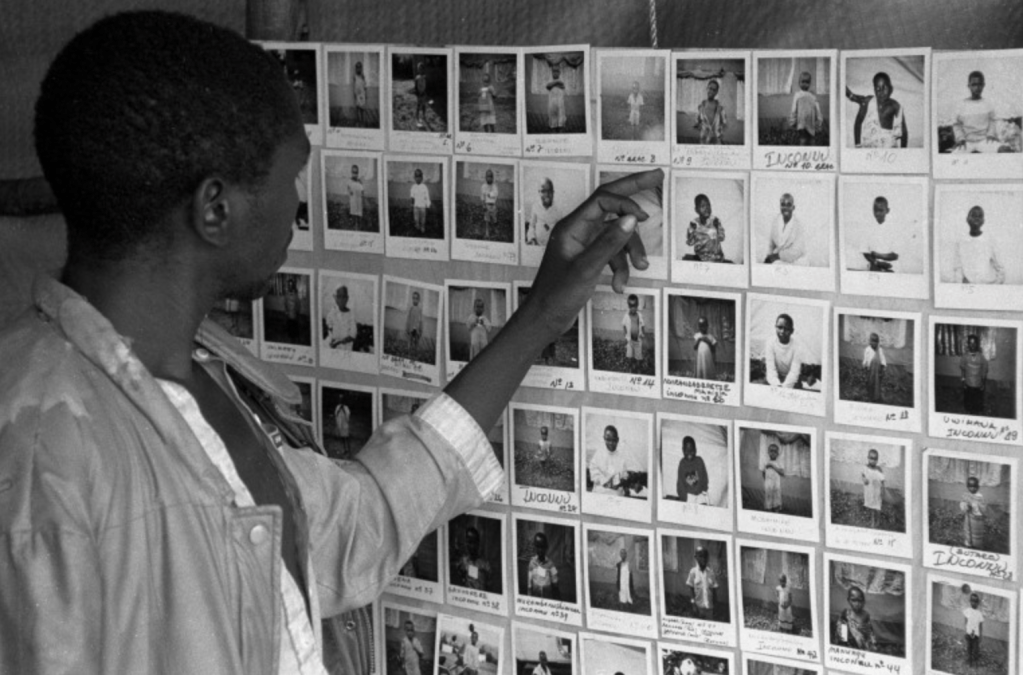
On the 6 April 1994, a plane carrying then president of Rwanda, Juvénal Habyarimana, was shot down. Within one hundred days, an estimated five hundred thousand to one million civilians, mainly Tutsi, were killed and around two million Rwandese had become refugees in neighbouring countries. Whilst a common misconception roots the genocide in tribal violence, the Rwandan genocide of 1994 was caused by a complex interplay of factors. The Rwandan genocide was caused by an intersection of colonial legacies, internal political and economic instability, propaganda, and the failure of the international community. These factors worked together to uphold and exacerbate ethnic divisions, constructed during Belgian rule in Rwanda, creating the conditions for genocide to occur.
Belgian colonialism transformed fluid social categories into rigid racial hierarchies, institutionalising divisions that were later exploited by various political actors. Unlike many ethnic divisions that turn towards mass violence, the divide between the Tutsis and the Hutus is not quite as evident or longstanding. While there are minor biological differences between them, they share a common language, common customs, and share a religion. Their identities and social hierarchy were mainly based on occupations – Tutsis were cattle herders and the Hutu were farmers – and on wealth; however, though most of the elite were Tutsis, the peasantry was compiled of both Tutsis and Hutus with social mobility possible and intermarriage common. All this changed with European colonialism which brought the fiction of race science and the ‘Hamitic hypothesis,’ claiming that Tutsis were natural rulers due to their ‘Caucasoid’ Hamitic origin which made them superior to the Hutu ‘race.’ The Belgians also chose to highlight the Hutus’ darker skin and wider noses compared to the Tutsis’ lighter skin and tall, elegant bodies in order to reinforce the notion of a racial divide. These distinct ethnic identities were institutionalised during Belgium’s colonial rule, including through the creation of identity cards which labelled a person’s ethnicity, entrenching Tutsi privilege. This pseudoscientific racism and subsequent creation of racial hierarchy, institutionalised during Belgian colonial rule, worked to construct ethnic divisions which would linger long after independence.
Belgian rule took a drastic turn when pressure from the UN and Catholic missionaries forced Belgium to introduce reforms to improve the political standing of Hutus, to the dismay of the Tutsi elite. With these reforms came the rise of Hutu political consciousness and power culminating in the Hutu Revolution of 1959 and a new social order. The following years saw the birth of Hutu ethnic nationalism and commenced the rule of the Parmehutu party who promoted an ideology which considered Hutus as Rwanda’s rightful heirs. However, for the Parmehutu it was not enough to eradicate Tutsi privilege: they wanted to simply eradicate Tutsis, prompting the massacre of thousands of Tutsis in the early 1960s. This violence resulted in a massive exodus of Tutsi refugees to neighbouring countries and creating a Tutsi diaspora. What followed was a Hutu-dominated state first headed by Grégoire Kayibanda who would rule an autocratic Rwanda until 1973 with a ruling Hutu elite dominating. Kayibanda’s regime reinforced colonial rationale by othering the Tutsis and defining them officially as a distinct race group, solidifying the notion of fundamental, immutable differences between the two groups.
A military coup would bring Juvénal Habyarimana to power in 1973 who established a single-party state. Though Habyarimana reduced overt anti-Tutsi discrimination relative to his predecessor, he maintained adapted colonial legacies of ethnic division. Habyarimana’s government implemented a system of ethnic quotas in areas like education and employment aimed at rectifying historical imbalances. Additionally, Habyarimana introduced an affirmative action program, but it explicitly considered ethnic affiliation in allocating employment. These quotas, therefore, simply worked to institutionalise ethnic categories and perpetuated the colonial focus on ethnic identity as a primary determinant of position. Furthermore, despite shifting the official vocabulary from ‘race’ to ‘ethnicity’ when referring to Hutus and Tutsis, Habyarimana never dismantled the political significance of this categorisation.
The increasingly embittered divisions would come to be exploited by political elites facing crises in the 1980s and 1990s. The perpetuation of colonial ethnicization fosters gradual ethnic polarization as well as resentment, creating the conditions for genocide.
Economic collapse, civil war, and democratisation pressures would instigate the exploitation of ethnic divisions and racist ideologies. The Rwandan economy faced a crisis in the 1980s. Coffee exports were very important for the Habyarimana regime since a large part of government revenue was dependent on these exports. When the world market price for coffee collapsed in the late 1980s it was detrimental. Habyarimana’s government had to cut social services by forty per cent because of the decrease in the state’s revenue and incomes for rural workers were reduced significantly. Rwanda was also facing resource scarcity and lacked land that was available for cultivation. Declining incomes, decreasing average farm holdings, and rural unemployment economically marginalised and infuriated much of the population. Subsequently, the ruling elite resorted to exploiting existing ethnic divisions to maintain power amidst unpopularity. This economic crisis challenged Habyarimana’s legitimacy. Since he never won any elections, the legitimacy of his party rested on his ability to foster economic development. Once Habyarimana failed to deliver on his economic promises, his legitimacy was challenged. Therefore, to divert attention, the ruling elites blamed the Tutsis for the economic crisis, and they mobilised the unemployed youth by recruiting them into paramilitary units aimed at targeting the Tutsi minority.
Blaming Tutsis for the economic turmoil in the country became easier with the 1990 invasion of the Rwandan Patriotic Front (RPF) – comprised mostly of the Tutsi diaspora created during the Hutu Revolution. So began the Rwandan Civil War. The war confirmed racist depictions propagated by the Hutu elite of Tutsis as “aggressive and dangerous” people as well as providing the aforementioned paramilitary units with an opportunity to eliminate the Tutsis.
Around 1990 Rwanda also faced mounting international pressures to democratise and liberalise in the wake of the end of the Cold War. With the subsequent arrival of fifteen new political parties at the scene, the political elite felt threatened. For Habyarimana’s regime, the challenges of the Civil War were amplified by the loss of their monopoly on power due to democratisation. Therefore, to counteract losses, some of the elites “trained militias, circulated weapons, developed assassination plans, and funded racist propaganda.” This resulted in local massacres between 1990 and 1992 which were organised with the aim of retaining power, fostering Hutu unity, and exacerbating ethnic tensions.
Propaganda and the media played a crucial role in the causation of the Rwandan genocide by disseminating hateful ideologies, dehumanising the Tutsi population, and mobilising individuals to participate in violence. Rwandan media outlets, most notably Radio Télévision Libre des Mille Collines (RTLM), Radio Rwanda, and the newspaper Kangura became central instruments of Hutu nationalist ideology. These outlets broadcasted messages that dehumanised Tutsis by repeatedly referring to them as “cockroaches,” “rats,” and “snakes.” The use of this dehumanising language created the impression to listeners that violence against such animalistic beings was justified and even necessary. Furthermore, various newspapers and radio stations regularly spread explicit calls for the killing of individual Tutsis as well as mass murder, especially after Habyarimana’s death. They would also encourage listeners to identify and attack Tutsis based on physical characteristics such as a small nose. This directly invokes colonial race science and demonstrates the lasting colonial legacies of ethnic categorisation being utilised for extremist mobilisation. The radio was a particularly significant medium for spreading messages due to high illiteracy rates in Rwanda and how rare televisions were. These propaganda outlets were “morally and financially supported” by Hutu elites and the Habyarimana government. The constant barrage of hateful rhetoric across all these various media outlets contributed to desensitising listeners to violence.
The international media also played its part in the genocide. Initial international media coverage framed the genocide in terms of “ancient tribal hatred”, as they tended to do with most African issues. This simplistic and often racist framing demonstrates international ignorance about Rwandan history and contemporary prejudices towards Africans. The media’s framing of the Rwandan genocide along these lines allowed Clinton to get away with a limited response. Prior to the genocide, the UN deployed a peacekeeping force to Rwanda which sent the UN Secretariat a ‘genocide fax,’ explaining that an informant had warned that Hutu militias were preparing to exterminate Tutsis. They requested reinforcements, insisting that they could prevent genocide; however, the UN Security Council provided neither troops nor money, but withdrew almost all peacekeepers despite the escalating violence.
In conclusion, the Rwandan genocide of 1994 was the result of the culmination of deeply entrenched colonial legacies of ethnic division, political and economic instability, extremist propaganda, and global inaction. Each regime leading up to the genocide worked to manipulate, perpetuate, and exacerbate the ethnic tensions constructed during the colonial era. Therefore, these ethnic tensions had time to intensify to an extreme level over eight decades, creating the right conditions of fervent hatred and desensitisation to violence, which facilitated mass participation in genocide.
Bibliography
Barnett, Michael N. “The UN Security Council, Indifference, and Genocide in Rwanda.” Cultural Anthropology 12, no. 4 (1997): 551–78. http://www.jstor.org/stable/656636.
Chalk, Frank. “Hate Radio in Rwanda 1.” In The Path of Genocide, edited by Howard Adelman and Astri Suhrke. London: Routledge, 1999.
Geheran, Michael and David Frey. “Leadership in War and Genocide: Roméo Dallaire in Rwanda.” In Historians on Leadership and Strategy, edited by Martin Gutmann. Cham: Springer International Publishing, 2020. https://doi.org/10.1007/978-3-030-26090- 3_2.
Guichaoua, André. From War to Genocide: Criminal Politics in Rwanda, 1990-1994. Madison: The University of Wisconsin Press, 2015.
Jefremovas, Villia. “Contested Identities: Power and the Fictions of Ethnicity, Ethnography and History in Rwanda.” Anthropologica 39, no. 1/2 (1997): 91–104. https://doi.org/10.2307/25605855.
Kamola, Isaac A. “The Global Coffee Economy and the Production of Genocide in Rwanda.” Third World Quarterly 28 no. 3 (2007): 571–92. https://doi.org/10.1080/01436590701192975.
Lemarchand, René, “Rwanda: The State of Research, Mass Violence & Resistance,” SciencesPo, June 25, 2018, https://www.sciencespo.fr/mass-violence-war-massacre- resistance/en/document/rwanda-state-research.html.
Livingston, Steven and Todd Eachus. “Rwanda: U.S. Policy and Television Coverage.” In The Path of Genocide, edited by Howard Adelman and Astri Suhrke. London: Routledge, 1999.
Loyle, Cyanne E. “Why Men Participate: A Review of Perpetrator Research on the Rwandan Genocide.” Journal of African Conflicts and Peace Studies 1 no. 2 (2012): 26–42. https://digitalcommons.usf.edu/jacaps/vol1/iss2/4.
Mamdani, Mahmood. When Victims Become Killers: Colonialism, Nativism, and the Genocide in Rwanda. Princeton: Princeton University Press, 2001. https://doi- org.eux.idm.oclc.org/10.1515/9780691193830.
Mann, Michael. The Dark Side of Democracy: Explaining Ethnic Cleansing. Cambridge: Cambridge University Press, 2004.
McDoom, Omar Shahabudin. The Path to Genocide in Rwanda: Security, Opportunity, and Authority in an Ethnocratic State. Cambridge: Cambridge University Press, 2021.
McNab, Robert M, and Abdul Latif Mohamed. “Human Capital, Natural Resource Scarcity and the Rwandan Genocide.” Small Wars & Insurgencies 17, no. 3 (2006): 311–32. https://doi.org/10.1080/09592310600671588.
Prunier, Gérard. The Rwanda Crisis, 1959-1994: History of a Genocide. London: Hurst & Company, 1995.
Straus, Scott. The Order of Genocide: Race, Power, and War in Rwanda. Ithaca, NY: Cornell University Press, 2013. https://doi-org.eux.idm.oclc.org/10.7591/9780801467158.
Strong, C. William. “The Failure of the United Nations Assistance Mission in Rwanda: A Dearth of Intelligence.” American Intelligence Journal 37, no. 2 (2020): 139–42. https://www.jstor.org/stable/27087731.
Uvin, Peter. Aiding Violence: The Development Enterprise in Rwanda. Boulder: Lynne Rienner Publishers, 1998. https://doi-org.eux.idm.oclc.org/10.1515/9781565492516.
Verwimp, Philip. Peasants in Power: The Political Economy of Development and Genocide in Rwanda. Dordrecht: Springer, 2013.
Image Credit
“1994 Rwandan genocide” by British Red Cross / Wikimedia Commons / CC BY 2.0

