
Written by Isabella Zuñiga
02/11/2026
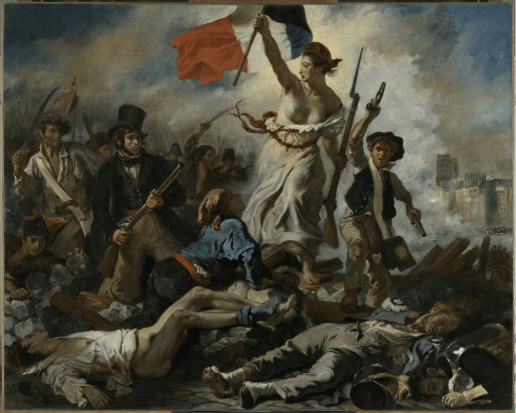
Between December 1792 and early February of 1793, Thomas Muir, Thomas Fyshe Palmer, William Skirving, and Maurice Margarot were sentenced to transportation – that is, exile – to Botany Bay, Australia, for the alleged undermining of British state security. By late February 1793, the news had reached the Comité de Salut Public, the most powerful political body of the new French Republic. Louis Antoine de Saint-Just, one of the committee’s most notorious members, endeavored to save them.
The political intersection between the French and the Scottish has the French Revolution as its backdrop. Shaken by the reforms in France of 1790, the British ruling class pronounced liberty, democracy, and republicanism as a problem; many others saw the revolution as a herald of progress and a call to end oppression. The Scottish Martyrs saw themselves aligned with this opinion.
While the name given to them is somewhat of a misnomer – only Muir and Skirving were Scottish, while Margarot and Palmer were English – nevertheless the latter two held significant positions of leadership in the Scottish Societies of the Friends of the People. They supported democracy and promoted Irish, English, and Scottish republican unity; in December of 1792 the society held a convention in Edinburgh, and the four helped promote liberty and unity for social and political reform across Britain and Ireland. Muir read the following message of solidarity from the United Irishmen of Dublin:
‘We rejoice that the spirit of freedom moves over the face of Scotland: that light seems to break from the chaos of her government; and that a country so respectable in her attainments in science, in arts and in arms… now rises to distinction, not by a calm contented secret wish for a Reform in Parliament, but by openly, actively and urgently willing it, with the unity and energy of an embodied nation.’
Such was the threat of unity that Margarot and Skirving were arrested for in Edinburgh on the 2nd of December; Muir and John Fyshe Palmer were also tried on charges of sedition in February 1793 for their speeches in Edinburgh, alongside their broader reformist works.

The derision the British ruling class held for Muir and the rest of the martyrs’ democratic ideals can be summed up in the following comments. One made by Lord Henderland during Muir’s trial, who spoke in favour of his removal: “What security could we have against his future operations, but a removal from this country, to a place where he could do no further harm.” The other, written by Robert Hughes following the martyr’s transportation: “[Muir] could preach sedition to the thieves or the cockatoos, or to the wind. Nobody would care.” Robert Hughes and Lord Henderland would go on to be proved wrong by the youngest member of the National Convention.
When the Comité de Salut Public convened on the 26th of February, Antoine Saint-Just was one of the strongest voices who sought to see the martyrs continue their legacy abroad. He was reported to have exclaimed: “May Margarot return from Botany Bay! May he not perish! May his destiny be stronger than the government which oppresses him!” It was by his hand that the order of retrieval was signed.
Nevertheless, how may we reconcile the view of the French Revolution as international? How can we understand it against the backdrop of critical voices claiming Montagnards and Saint-Just as radicals that are merely political actors devoted to the internal and external destruction of their enemies, with some scholars even denouncing Saint-Just for perpetuating nationalism and xenophobia? To address this question, we must first examine Saint-Just and question the origin of these charges within his political work, as well as examine why they are sensationalized. Then, we may propose a conclusion on the internationality of his work.
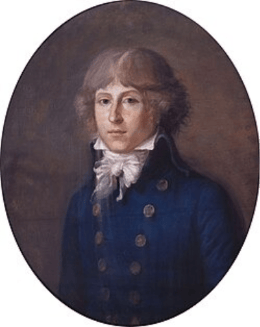
Louis Antoine de Saint-Just, who dropped his first name for its resemblance to royalty and the bourgeois pretension of ‘de’, was merely twenty-five years old when he began representing Aisne (now Picardy) in the National Convention. His work spanned from 1792 to 1794, arguably one of the most turbulent and polemical periods of the French Revolution. Saint-Just was not short of achievements. He was the youngest member of the National Convention as he rose to his call as deputy. He was also a military representative and a political theorist whose work had been published since 1790; he co-authored the radical 1793 constitution which decriminalized homosexuality, criminalized slavery as a crime against humanity, made French citizenship independent from national identity, and gave citizens a duty to revolt against a government that violates their rights.
I will point out the obvious – this is not the work of a xenophobic and nationalistic political actor. Instead, one could level these charges at the British government at the time. With the establishment of the French Republic, the British government tied its citizenship to ultra-loyalism to hierarchy, the crown, and Protestantism. The descriptor of ‘nationalistic xenophobia’ arises from Saint-Just’s support for the mass detention of English and other foreign subjects in France in his report of 25 Vendémaire An II (16 October 1793). Scholars interpret this as the pivotal point where the myth of internationalism ends because the document uses the word ‘étranger’ (stranger) to describe the enemies of the republic; the word was interpreted to mean those who did not hold French citizenship.
In light of the 1793 constitution, his defense of the Scottish Martyrs, and Saint-Just’s own writings, this interpretation would be a misconception. Nevertheless, following the mass detentions, Thomas Paine and the Irish general Kilmaine were imprisoned. So, what did ‘étranger’ mean, and how does its correct definition aid the quest of internationality for the French Revolution?
Let’s backtrack to the Scottish Martyrs. All of them opposed regicide; Saint-Just famously argued for it.
When the fate of Louis XVI was being decided, Saint-Just argued the National Convention should not hold a trial for him, and should not stall the execution, because he was an ‘étranger’ among the people. In other words, Saint-Just viewed people who oppressed, plotted, or waged war against the French Republic as ‘étrangers’ regardless of their actual nationality. When he voiced support for the detention of the Irish general Edward Jennings de Kilmaine, Saint-Just argued that, if French nationals could be ‘étrangers,’ how could they trust a general who had retreated in battle during a pivotal moment in war?
The soundness of his judgment during these decisions is not the point of the article; I invite its critique. Nevertheless, this shows race and nationality were not a factor in deciding who was a stranger to the French Republic or who was not. ‘Étranger’ thus refers to a political stranger to the cause of liberty and democracy. This is why, in the 1793 constitution, Saint-Just says slavery is a crime against humanity, because it does not champion liberty. Furthermore, it is on these very grounds of shared ideas of liberty that the Scottish Martyrs were attempted to be rescued by Saint-Just.
Saint-Just believed that the measures he took against ‘étrangers’ would help aid a revolution in England: “…help them [the English] to break their chains, if they are worthy of liberty; the court of London is Carthage for us, and not England.” In his final writings, ‘De La Nature,’ Saint-Just envisioned the ideals of the French Revolution extending beyond France. He believed in the creation of a unified society without slavery, inter-social oppression, and national rivalries. His writings go as far as to detail a derision of political power. His position was not one of anarchy; rather he believed political power made citizens socialize through force and power hierarchies.
What ‘natural’ refers to is not as clear as what ‘étranger’ meant to him. It did not mean primitive, since Saint-Just disliked the cyclical nature of history, where grievances over power structures accumulate. It also did not mean something spiritual, as Saint-Just believed religion was another structure that corrupted societies.
We can conclude, however, that what was ‘natural’ to him applied to societies worldwide.
Saint-Just, one could argue, believed in international unity under the ideals expressed by the French Republic:
“It has always seemed to me that the social order was implicit in the very nature of things, and required nothing more from the human spirit than care in arranging the various elements… that man was born for peace and liberty, and became miserable and cruel only through the action of insidious and oppressive laws. And I believe therefore that if man be given laws which harmonize with the dictates of nature and of his heart he will cease to be unhappy and corrupt.
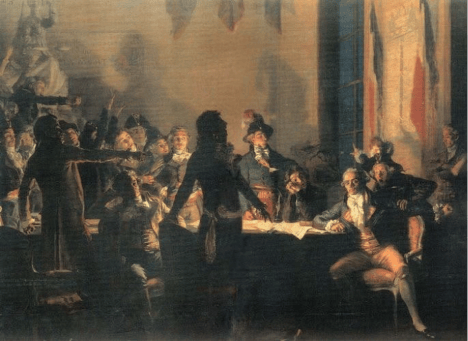
Just as Muir remained steadfast in his beliefs of democracy and the right to liberty, at the end of his trial he declared he did not regret his duty to the Scottish people:
I can look danger, and I can look death in the face, for I am shielded by the conscience of my rectitude… Nothing can destroy my peace of mind, arising from the remembrance of having discharged my duty.
So did Saint-Just believe that his political work and theories for an egalitarian society would influence the coming revolutions of Europe and abroad:
I despise the dust that forms me and speaks to you. This dust you may persecute and kill, but I defy you to rob me of that independent life I have given myself down through the ages and in the heavens…
Bibliography
Archives, The National. n.d. “The National Archives – Homepage.” The National Archives. Accessed October 26, 2026. https://www.nationalarchives.gov.uk/help-with-your- research/research-guides/criminal-transportation/.
Christian Auer, “The Transportation of the Scottish Martyrs in 1793: A Particular Form of Exile?”, Études écossaises 13, (2010), 79-89.
Conor Muller, The Scottish martyrs, Scotland and internationalism in revolutionary France, 1794–99, French History, 2026;, crag017, https://doi.org/10.1093/fh/crag017
Edinburgh University Press. Rachel Bennet and Lauren Darwin, 2026. “The Scottish Martyrs and the Antagonisms Between Scots Law and British Penal Practice.” Edinburgh University Press Blog. February 12, 2026. https://euppublishingblog.com/2026/02/12/scottish-martyrs/
Louis Antoine de Saint-Just, Œuvres complètes de Saint-Just: avec une introduction et des notes par Charles Vellay (Paris: Charpentier et Fasquelle 1908), 378-490.
Mathieu Ferradou. Between Scylla and Charybdis? Irish Republicans between the British Empire and the Early French Republic, 1792–1794. French Historical Studies, 44 (3), (2021), pp.429-453.
Image Credits
Delacroix, Eugène. July 28, 1830. Liberty Leading the People. 1830. Oil on Canvas. Louvre Museum, Room 700, Paris, France. https://collections.louvre.fr/en/
Hamilton, Thomas. Political Martyrs Monument. 1844. Ashlar Sandstone. Category A, Old Calton Burial Ground on Calton Hill, Edinburgh, Scotland. <https://en.wikipedia.org/wiki/Political_Martyrs%27_Monument>
Verrier-Maillard, Angélique-Louise. Portrait of Antoine de Saint-Just. 1793. Pastel. <https://en.wikipedia.org/wiki/Louis_Antoine_de_Saint-Just>
Weerts, Jean-Joseph. Saint-Just and Robespierre at the Hôtel de Ville of Paris, night of 9 to 10 Thermidor Year II (July 27 to 28, 1794). 1897. Oil on Canvas. <https://en.wikipedia.org/wiki/Fall_of_Maximilien_Robespierre>

