
Written by Millie Oliver
16/11/2026
On 17 April 1551, some twenty years following the arrival of Spanish conquistadors to Peru, the Spanish city fathers bought a cloistered nunnery which they named Santa Clara. This would become the first religious house for women in the Americas and the host for one of the post-colonial state’s most confusing new identities.
The Spanish intrusion into Peru changed the fabric of Incan society, one aspect of which could have been hard to predict the Mestizo sons and daughters of Peru. The word mestizo was coined in the seventeenth century to describe a distinct socio-ethnic category, the children born to Spanish colonisers and indigenous women. They were considered an inferior ethnic group to most Spaniards given their being mixed caste, and whilst the lives of the Mestizos (male children) tell their own stories about life after the Spanish occupation, the lives of the Mestizas (female children) are that much more interesting when it pertains to the legacy of colonisation still prevalent today.
Diego Maldonado, a prominent Spanish influence in Peru, tells us the reason for the establishment of Santa Clara was to remedy the relationship between the Mestizas and native Andean women. However, it likely also acted as an institution to care for the orphans of Spanish comrades who had fallen during the civil war. Additionally, Polo de Ondegardo illustrates the primary purpose for Santa Clara was to protect the virtue of the Mestizas whose virginities were at ‘constant risk’ and had to be preserved at all costs.
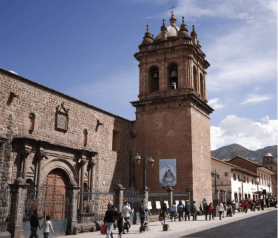
An unfortunate aspect of Santa Clara often not fully realised in scholarship is the taking of these girls away from their indigenous mothers by force in order to advance Christianity in the Andes. Santa Clara had a reproductive role, redirecting its energies to childrearing to increase the female Christian population in Cuzco. Abbess Francisca de Jesus assumed the role of these girls’ mother and kept them cloistered until they were old enough to profess or take on roles in the Christian society which their fathers carved for them.
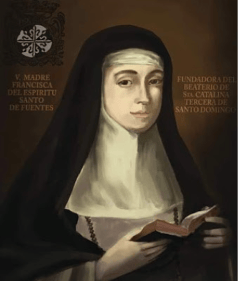
Unlike most instances in Spanish history, Spaniards saw their mestiza daughters as a way to consolidate their power in Incan and Spanish society. This was in opposition to their sons who were seen as a threat to the Spanish government, fearful they would claim their father’s inheritances and revolt. The creation of a holy institution made specifically for their illegitimate children proves just how much it mattered to them that their daughters had a respectable place to grow up. This is conveyed by the modest annual stipend most mestiza girls were afforded by their fathers during their seclusion at Santa Clara.
While being mestiza came with its benefits (being afforded the safety, wealth and paternal attention to thrive into adulthood), it also had its definitive drawbacks. This is no more evident than in the case of Francisca Pizarro. Dubbed the ‘first mestiza woman of Peru’ or at least the first legitimate one, she was the daughter of Francisco Pizarro and the Inca princess Quispe Sisa. Her life had a much better start than those of most mestizas: given her royal status, she was afforded an education in the style of a legitimate Spanish noblewoman and to a European standard. However, her life took a turn when her parents separated in 1538, with her father marrying another Incan princess and her mother being married off to one of his inferiors. Francisca was then moved to Spain to live with her uncle for her safety, but despite his supposed role as her protector he would later marry her instead, most likely for her fortune.
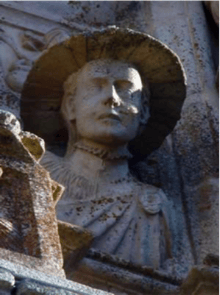
The turbulence of the lives of Mestizas was central to how the culture operated. Given that the majority of indigenous and Spanish ‘partnerships’ were illegitimate, it was common practice for Spanish men to leave their current partners for other indigenous women or to marry Spanish women from their homelands. These fractious parent relations are largely reflected in the lives of their children, particularly that of their mestiza daughters who were constantly shipped to different countries at the whims of their fathers. This erratic lifestyle was a result of their potential marriage prospects, which must have been a constant reminder that their father’s attentions always had an economic incentive.
Francisca’s story is one of many and is typical for a large proportion of Mestizas who left Santa Clara when they became of age. Her contemporaries might have viewed her life as successful given she was of Mestiza ethnicity but culturally Spanish, having received her education in the country and brought up within its culture. This “achievement” was seen as the ideal outcome for the mestizo children. The Spanish fathers of Peru did not want their progeny to become ‘lost among the Indians’ so they were taken to Spain to pursue more profitable outcomes which did not involve the indigenous influences of their mothers. Whilst the Mestiza archive remains slim, there is still some evidence regarding the experiences of those who chose to remain in convent life. The “veil controversy” highlights the structural tension within Santa Clara, in which Spanish nuns wearing black veils signalled their religious superiority in relegating Mestiza nuns to wear white veils, distinguishing them as novices subordinate to their Spanish sisters.
This illustrates how closely these women’s statuses were tied to their social position. mestizas who went on to marry Spanish men were considered good marriage material given their heritage and Christian upbringing, but it is clear that those who did not choose a life of marriage were never positioned as equals to their fellow religious sisters who viewed themselves as racially superior. It has been made clear that the best outcome for these girls according to Spanish authority was to marry good Spanish men and in turn we have a better lives and experiences. However, the fates of the remaining mestizas are less certain. It is estimated that eighteen girls professed as nuns, twice as many (thirty-three) left Santa Clara after a Christian upbringing, ten of whom were married to Spaniards. We have little to no information about the eventualities of the remaining twenty-three.
Unfortunately, that is primarily the extent of our knowledge regarding these fascinating women, as the archives do not reveal much about them excepting their parentage and marital status. This archival silence is not unintentional; the Mestizas lived in a climate in which their racial status would negatively impinge on their appearances in our sources. However, despite their obscurity they still have a legacy which has followed them into the twenty-first century. The term ‘mestiza consciousness’ is a theory of Chicana feminist Gloria E Anzaldua who describes it as the lived experiences of women who are of mixed ancestry, predominantly those who are indigenous and European and how they navigate intersectional cultural, racial and linguistic borders. This framework aims to dismantle colonial epistemic domination and gives us a glimpse at the richness of experiences we would have potentially had from firsthand accounts of the original Mestiza women of Peru. We do not know how these women thought about themselves and how that affected how they chose to represent and perform their identity, but perhaps given the increase in scholarship regarding the experiences of mixed-race women more attention will be diverted to the Mestiza ancestors which could uncover a world of knowledge free from colonial constraints.
Bibliography
Burns, Kathryn. 1998. “Gender and the Politics of Mestizaje: The Convent of Santa Clara in Cuzco, Peru.” Hispanic American Historical Review 5-44.
Hernandez, Amanda D. 2020. “Developing a Mestiza Consciousness Theoretical Framework.” Mid-South Sociological Spectrum 303-313.
Mangan, Jane E. 2013. “Moving Mestizos in Sixteenth-Century Peru: Spanish Fathers, Indigenous Mothers, and the Children in between.” Centering Families in Atlantic Histories 273-294.
Vasquez, Vanessa. 2017. Adventurous Travel. Accessed November 7th, 2026. https://adventuroustravelguide.com/francisca-pizarro-the-first-mestiza-of-peru/.
Image Credits
Image 1: The Church and Convent of Santa Clara taken from the Wikipedia website
Image 2: Portrait of the venerable Abbes Francisca de Jesús from the Pintakasi website
Image 3: Statue of Francisca Pizarro at the Palacio de la Conquista taken from the Wikipedia website

