
Written by Jahnavi Kumar
16/11/2026
During the 19th Century the Western medical establishment became increasingly concerned with public health. Some of this concern translated into presenting indigenous medicine and its disseminators as ignorant, with scholars arguing that colonial medical handbooks reflect scepticism towards the tropics’ medical knowledge and practices. Bacteriological discoveries and its institutionalisation were largely geared towards addressing epidemics. Interventions in preventing maternal mortality and women’s health were not a priority of the colonial establishment. The study of bacteriology in the tropics was reframed through the lenses of race and culture: for instance, in relation to childcare, it was speculated that moving to the tropics hampered the nursing capabilities of European women. Although the milk produced by European women was deemed ‘stronger’, there was a reliance on women from the subcontinent to become wet nurses for infants from the colonial regime.
Despite relying on women in the Indian Subcontinent as wet nurses, indigenous midwives and birth attendants or dais were subjected to abject discrimination. Katherine Mayo, a journalist from the United States, chronicled sensationalist depictions of the dais in an account titled Mother India. Mayo stated that they were evidence of the fact that India could not be seen as competent enough for self-rule. She characterised practices of midwifery in the subcontinent as unsafe and unhygienic. This disregard for the native population functioned in conjunction with a commodification of their bodies. Many handbooks laid down strict parameters for scrutinising the bodies of wet nurses. Male physicians commented on the appearance of the breasts of wet nurses. Detailed anatomical descriptions of breasts were present in medical handbooks. It was also believed that their appearance was integral to the ‘production of milk’. These accounts dehumanised women and reduced them to this function.
The professionalisation of midwifery was tied to the wider concerns of the indigenous medical practise. The colonial regime wanted to capitalise on the trust that people had in practitioners such as midwives and redirect this faith towards Western medical practices instead. The rejection of Western medical interventions was becoming associated with patriotism, creating a need for the colonial government to curb these notions. Public perceptions towards nursing shaped the cultural space occupied by the medical professions of colonial India.
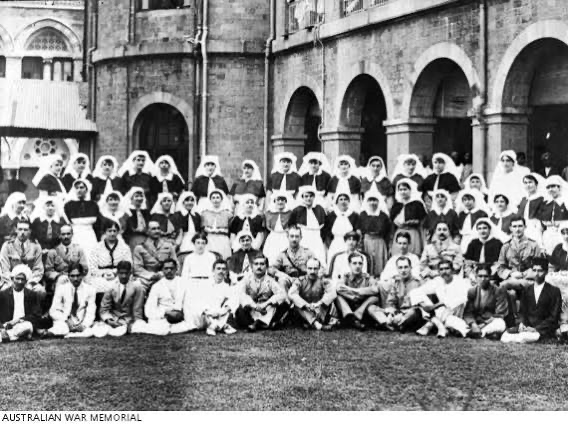
Organisations such as the Trained Nurses Association of India (TNAI) began to play a key role in increasing the recruitment of women. TNAI advocated for more training programs and centres with specialisations for nursing while simultaneously reinforcing caste, race and class-based hierarchies present in the profession. Biblical references were present in every issue of the journal, which was also representative of the ideology of the TNAI. However, there were no Indian or Anglo-Indian nurses present at the TNAI conference of 1920 as attendees. Other practises were implemented to heighten the segregation of this space. Notably, dining tables were segregated until 1939. Nursing training was used to enforce a hierarchy: most South Asian nurses were not qualified for higher supervisory positions in hospitals within the Indian subcontinent. Nursing examinations were only conducted in English which was another attempt to restrict access to training and limit the scope of applicants.
On a provincial level, inequalities and segregation were also apparent. In the Madras Presidency, two registers, one for vernacular qualifications, and one for English language ones, were maintained from the 1930s. Western-trained nurses were also less likely to view Indian women trained within the subcontinent as competent. Even when they were equally as qualified for their roles, they were often not paid as much as their white counterparts. British officials complained about their presence as unorderly, though perceptions gradually shifted as more nurses were required and training centres were established in the subcontinent.
An association of pollution with medical practice made upper-caste and well-off families within the Indian subcontinent refrain from sending women from their households for training within the profession. Women from marginalised communities that did not have these apprehensions gravitated to the profession, seeing it as an opportunity for upward mobility. Nurses from upper castes and nurses with foreign training were worried about the saturation of nurses from marginalised backgrounds. They believed more people from elite backgrounds should be incentivised to become nurses.
TNAI expressed discontent about how the profession of nursing had been associated with sexual promiscuity. This association was tied to the working conditions of nurses and their ability to make ends meet based on their limited salaries. The conditions the women were subjected to were inhumane and unsanitary. During Diana Hartley’s visit to India, she was tasked with exploring the hospitals, drawing parallels between the conditions of a pigsty and the nurses’ quarters.
Instead of a focus on the enablement of nurses, much more of the attention was given to the negative connotations associated with the profession. Anxieties about sexual promiscuity and the lower-class status of many nurses were present well into the mid-twentieth century. For example, Lady Lazarus, the first Indian woman to become a director of a prestigious medical college, released a pamphlet where she expressed a growing need to uplift its status by incorporating women from higher social statuses into the profession.
Making higher-quality training more accessible was not a priority of the colonial regime. The Director General of Indian Medical Service (DGIMS) noted in correspondence with Dr Ruth Young, a person arguing in favour of pedagogical overhauls for nursing training in India, that nurses were to be provided ample training with respect to midwifery, as the maternity training was an essential feature of ‘whatever final form of nursing would be undertaken.’ The Director also insisted that the training period for nurses should not be extended and that the focus on midwifery should remain the priority.
The hierarchical occupational structure within the nursing establishment limited the growth of Indian nurses in the subcontinent even when the need for their presence became paramount in the mid-twentieth century. Internal dynamics within the medical establishment also exacerbated pre-existing tensions. Tensions and exclusion between ‘respectable’ nurses who deserved their positions and the nurses perceived as threats to the status of the nursing profession resulted in a fractured employment structure.
At the time of independence, the number of practising nurses in India was about seven thousand. These nurses were supposed to cater to the healthcare requirements of a population of about 350 million people. However, nurses still lacked the professional status that was granted to other occupations within medical practices.
Sir John Bhore, a member of the Indian civil services, was tasked with evaluating the status of healthcare services and medical infrastructure within the subcontinent before the departure of the British.1 The Bhore Committee report of 1946 advocated for the medical facilities being offered on different levels within the country to be revamped. It is suggested that both curative and preventive practices should be a priority of the medical establishment. The report subsequently resulted in the formation of the Indian Nursing Council in 1947, which was tasked with monitoring the status of education and training that nurses were being provided all over the country.2
Medical research, public trust in established practices, and their merits were subject to many overhauls in the decades leading up to 1947, shaped by colonial priorities, interests, and perceptions. Despite pushes for investment in training beyond midwifery, the regime continued to express reluctance. The evolution of nursing within the subcontinent is definitely marred by subjugation, contestation and overt racism.
Bibliography
Arnold, David. Colonizing the Body : State Medicine and Epidemic Disease in Nineteenth-Century India. Berkeley: University of California Press, 1993.
Chakrabarti, Pratik. “‘Signs of the Times’: Medicine and Nationhood in British India.” Osiris (Bruges) (CHICAGO) 24, no. 1 (2009): 188–211. https://doi.org/10.1086/605975.
Healey, Madelaine. Indian Sisters : A History of Nursing and the State, 1907-2007. London: Routledge, 2013.
Nair, Sreelekha, and Madelaine Healey. “A Profession on the Margins: Status Issues in Indian Nursing.” IDEAS Working Paper Series from RePEc (St. Louis), January 1, 2009.
Saha, Ranjana. Modern Maternities : Medical Advice about Breastfeeding in Colonial Calcutta. Abingdon, Oxon: Routledge, 2023.
“The Nursing Journal of India: Reflecting the Lives of Nurses in British India, 1910-1939.” The UKAHN Bulletin: ISSN 2049-9744. Accessed November 9, 2026. https://bulletin.ukahn.org/the-nursing-journal-of-india-reflecting-the-lives-of-nurses-in-british-india-1910-1939/.
Tiwari, Rajnarayan R., Kavya Sharma, and Sanjay P. Zodpey. “Situational Analysis of Nursing Education and Work Force in India.” Nursing Outlook (NEW YORK) 61, no. 3 (2013): 129–36. https://doi.org/10.1016/j.outlook.2012.07.012.
Watts, E. A. “The Handbook of the Trained Nurses’ Association of India.” The American Journal of Nursing 33, no. 6 (1933): 621. https://doi.org/10.2307/3412396.

