
Category: Academic
-
Bitter Weed: Tea, Empire and Everyday Luxury
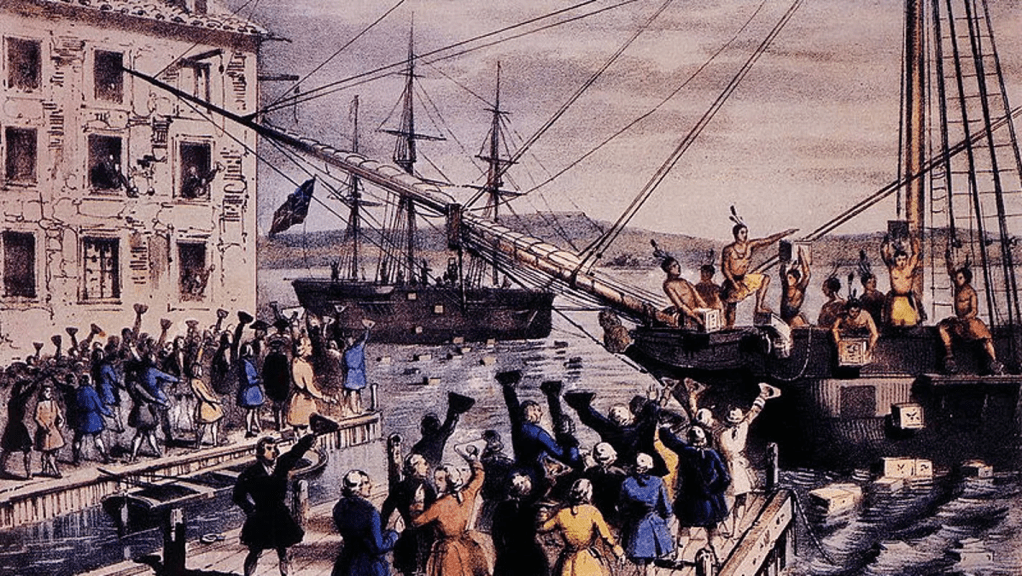
Written by Jack Bennett. Unprecedented unrest erupted in Boston on December 16, 1773 when the Sons of Liberty protested the increasing British taxes by disposing of 342 tea chests with a value of $1 million into the harbour. The Boston Tea Party of 1773 became a pivotal event in the history of a nation and…
-
Red Dawn Rising: Global Communism, Anti-Colonialism and Freedom in India

Written by Jack Bennett. By focusing on the emergence of communism in India, in relation to anti-colonial independence movements during the first half of the twentieth century, both indigenous and global currents are revealed which produced international conservations and deep engagement across state structure, operating in transnational networks.
-
Modernisation Theory: Challenging British Exceptionalism and the Unilinear Model

Written by Ella Raphael. Modernisation Theory refers to a model of societal transition, originally meaning the movement from a ‘traditional’ society to an ‘advanced’ society. Since the seventies it has been a topic of contentious debate.
-
Teach-Out Review: Indigenous Politics and Revolutionary Movements in Latin America

Written by Anna Nicol. On Tuesday 3 March, Dr Emile Chabal, the Director of the Centre for the Study of Modern and Contemporary History, organised a Teach-out led by Dr Julie Gibbings (University of Edinburgh) and Dr Nathaniel Morris (University College London). Focusing on Mexico, Guatemala and Nicaragua, Dr Gibbings and Dr Morris aimed to…
-
Teach-Out Review: How Slavery Changed a City: Edinburgh’s Slave History

Written by Lewis Twiby. As part of the teach-outs currently happening in solidarity with the UCU Strike, the History Society and the African and Caribbean Society hosted a very informative talk on Edinburgh’s connection to the slave trade.
-
Casualisation, Contracts, and Crisis: The University in the early 21st Century

Written by: Jamie Gemmell. Following the publication of Dr Jake Blanc’s letter to his students, Jamie Gemmell has conducted interviews with other striking lecturers to shed light on why UCU voted in favour of industrial action.
-
Beyond Pop: The Extremes of 1970s Britain

Written by Jack Bennett. The music of the 1970s reflected the extreme divisions and polarisations within Britain, revealing the intersection of popular culture, politics and economics. What emerged during this decade was a cyclical process of adoption and outpacing regarding cultural trends.
-
War & Peace: Art in Ducal Milan

Written by Joshua Al-Najar. Art was a key tool for renaissance cities to disseminate ideas and fashion an identity in a pluralistic, competitive society. Scholarship has tended to focus on the programmes undertaken in republics, such as Florence and Venice – perhaps less considered is how dynastic systems were able to deploy the Renaissance’s lessons…
 Retrospect Journal