
Category: Academic
-
What does it mean to be a woman? Female Ideology, Editorial Strategy and Historical Erasure: Re-examining the Role of the Literary Wife in Nineteenth-Century Russia.
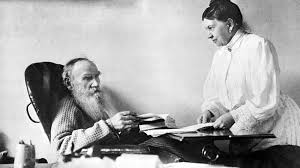
Lavinia Bird examines the significant yet often undervalued contributions of Russian literary wives, specifically Anna Dostoevskaya and Sophia Tolstaya. Her piece highlights their roles in their husbands’ successes and the complex female ideology of literary wifedom.
-
The Assassination of Patrice Lumumba and the Legacy of Neocolonialism in the Congo

With the recent anniversary of the assassination of Patrice Lumumba, the first democratically elected prime minister of the Democratic Republic of the Congo, Edie Christian explores the enduring legacies of Cold War power struggles and neo-colonialism.
-
From Mexico to Greenland: A History of American Expansionism

American Expansionism has a long, and often violent, history. Eva Beere charts the development of the idea of ‘Manifest Destiny’, noting its relevance to contemporary politics.
-
Beyond Devotion: The Multifaceted Functions of Early Netherlandish Altarpieces

At first glance, early Netherlandish Altarpieces seem to have primarily devotional and religious functions. However, they also have more subtle societal purposes, representing a community’s collective identity. Emily Jones explores the fascinatingly intricate and diverse meanings behind these cultural artefacts.
-
Trapping a Witch in Your Boot: Three Curious Counter-Witchcraft Methods in Early Modern England

Elida Lyons outlines some of the superstitious practices early modern society engaged in to prevent witchcraft, from dried cats to concealed shoes.
-
Journey to Banana Land: How the United Fruit Company colluded with the CIA to Topple Guatemala’s elected government

Cold War politics and propaganda affected countries all over the world. Jake Beecroft explores the rise and fall of the United Fruit Company’s economic and political monopoly over Guatemala.
-
“It is not good for Francis to be alone […] and in this way Clare was created”: Hagiographical Phenomenon and Saintly Adolescence
![“It is not good for Francis to be alone […] and in this way Clare was created”: Hagiographical Phenomenon and Saintly Adolescence](https://retrospectjournal.com/wp-content/uploads/2025/02/nuremberg_chronicles_-_alpaidis_holy_woman_and_seer_from_cudota_ccvv.jpg?w=1024)
Harry Fry examines socio-cultural differences among adolescent saints, revealing a broader understanding beyond elite-centric narratives in medieval hagiography.
-
Playing God: The “Other Coup” of the Greek Military Junta (1967-1974)
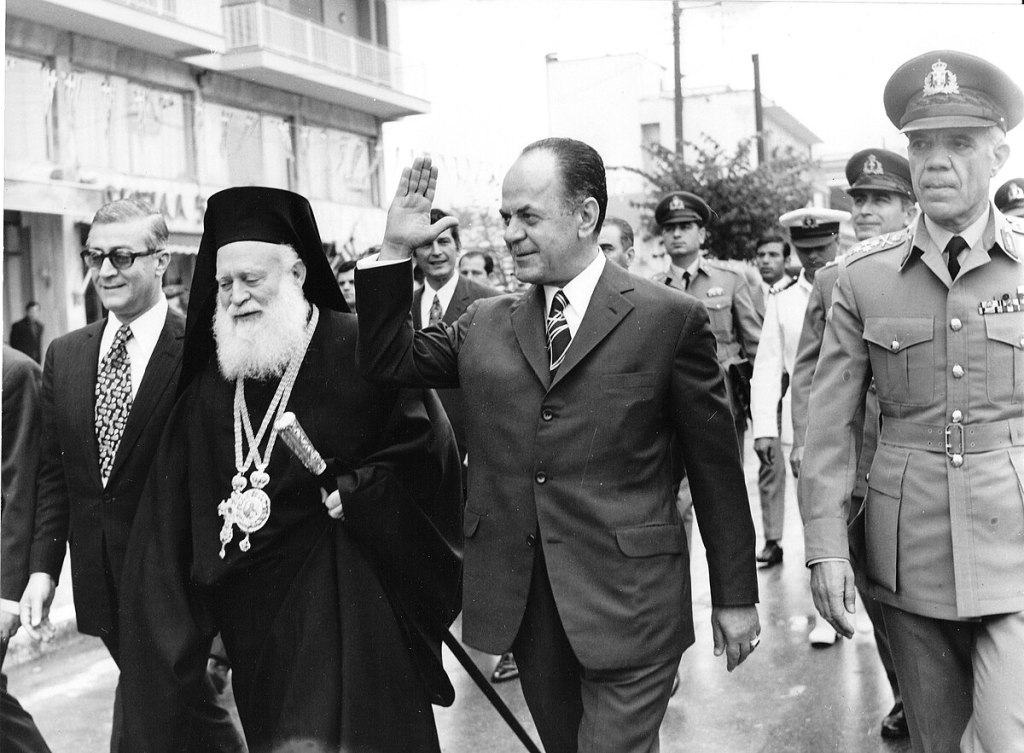
Alexander Stroem traces how, between 1967 and 1974, the Greek Military Junta leveraged religious authority to legitimize and maintain its dictatorial regime.
 Retrospect Journal