
Written by Yixiang Zhang
This article is an adaptation of a presentation given at the International Migration & Intercultural Communication – A Cross-Disciplinary Student Congress | University of Edinburgh 11–12 May 2026
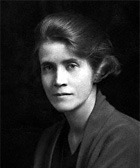
Travel writing rarely offers a faithful record of the world it encounters. Travellers create their own little worlds, colouring them with their own perceptions and emotions. For many interwar British writers, as David Farley notes, travel became, paradoxically, an escape from postwar exhaustion that was itself bound up with restlessness and anxiety. English novelist Stella Benson (1892–1933) belongs to this context, and her writing shows how the making of such little worlds becomes a response to affective disorientation.
Throughout her travelogue anthology The Little World (1925), Benson frequently depicts situations of spatial disorientation, from disrupted itineraries to moments of bodily instability aboard ships. However, in her case, much of the disorientation also occurs as an example of Sianne Ngai’s term “affective disorientation”, where subjects lose a stable sense of how to interpret and respond to the world around them. In these moments, familiar emotional coordinates dissolve, while no alternative framework of meaning emerges in their place.
Such disorientation appears when ordinary modes of understanding fail. One example is the frequent use of “eye dialect.” Benson renders foreign accents in phonetic transcription. Also, she repeatedly records her own attempts at deep communication. Moreover, she observes the colonial resistance to such mutual understanding, noting drily that British colonial wives in India consider any interest in India “most unladylike.” The title The Little World, drawn from Shakespeare’s Richard II and originally referring to England, carries irony: we all inhabit our little worlds of national and personal identity, indifferent to everything beyond.
Whenever Benson finds herself unable to feel at home, ordinary landscapes in her writing repeatedly slip into myth. For instance, when she travels through wilderness late at night in the US, an abandoned foundry she comes across appears to have been built by “an extinct race of giants.” In war-time China, a moonlit temple garden is imagined as a space where ancient emperors and dragons might return. Therefore, these mythopoetic writings can be understood as Benson’s affective strategy, a way of soothing her physical and mental strain.
“The Remembering Air”
The word “myth” entered English in the 1830s. Later, Max Weber used the term “disenchantment” to describe the rationalisation of the world. Benson’s own fiction resists such disenchantment. In Living Alone (1919), her witches and wizards are “never Modern.” She writes that to the “magic eye,” the ordinary world remains strange and full of possibility. Benson’s mythopoesis in travelogues thus can be understood as a way of re-enchanting a world flattened by modern ways of seeing.
One form of mythopoesis is the animation of objects. Travelling in America, Benson names her Ford car Stephanie, and once named, she acquires biography and temperament: “[H]er voice is like that of the nightjar in midsummer; her profile is Grecian in its exquisite simplicity.” When Stephanie breaks down in Philadelphia, the incident is narrated as a contest of wills: Stephanie “sat smiling like a black devil.” With this comic personification, Benson transforms her own helplessness in an unfamiliar environment into a relationship with a difficult companion.
Another form is the mythologisation of ruins and nocturnal landscapes. Walking through the forests of the American South by moonlight, Benson and her companion encounter an abandoned iron foundry:
Huge pale towers and halls seemed to have been built by an extinct race of giants. One imagined that they were only reconstructed on the remembering air when the old moon shone full.
The phrase “remembering air” indicates that myth lay hidden in the landscape waiting for moonlight and an attentive audience to bring back into memory. Industrial ruins are drawn into deep time, and Benson’s fear during this night walk becomes mythic perception.
This form of mythopoesis becomes most apparent in Benson’s description of Peking. She depicts her moonlit rickshaw ride with a series of sensory details:
“No passage through Peking in dancing rickshas down the soft dusty roads, in the filigree shadow of the carvings above the shopfronts, in the soft light of paper lanterns, in the sound of cymbals and flutes from the theatres — could ever be prosaic.”
Then, in the temple garden, the boundary between present and ancient time disappears: “By moonlight surely the old emperors would walk again […] to turn again the first furrow of the Imperial year with a plough drawn by dragons…” It is worth noticing that this visit happens during a period of political turmoil in Peking. The historical time she inhabits is one of factional warfare and civic chaos. The mythopoeic writing creates a little, temporal world. A world that allows Benson to live safely under the light of the sacred moon. This approach should be distinguished from anachronism. Benson consciously chooses to see the city through a lens that makes wonder possible where anxiety might otherwise dominate.
The most interesting instance of mythopoesis in The Little World occurs in the Hong Kong classroom. Benson teaches English to fifty boys. Her students, educated into Western rationalism and its critique of “native superstitions,” turn the weapon back on the Westerner when she tells them the Bible stories: “But that only superstition, marm, didn’t it?” Benson responds in a conceding and defianttone: “Superstition…no…yes…but anyway beautiful and amusing…” She then retreats to the blackboard, on which she draws microbes in “top hats” and the story of David facing Goliath. She describes the blackboard as “a bridge between fact and fancy” and their shared “refuge.”
Benson knows the mythic stories are, in any factual sense, false. What she defends is their function, their ability to make experience habitable. The classroom becomes perhaps the abstracted concentration of the book, transforming modern disorientation into narrative sovereignty via a self-conscious creation of imaginative worlds.
“Cāngliáng” and the Use of Antiquity
Benson understood that mythopoesis is a strategy rather than a solution. But this way of writing proved durable, and its durability becomes clearer when we trace it beyond Benson to a writer who encountered her travel writing under difficult historical conditions.
In 1944, Eileen Chang (1920-1995), one of the most celebrated female authors in Chinese history, nominated Benson as “one of her favourite writers.” Chang encountered Benson’s works when studying at Hong Kong University in 1939. As Nicole Huang has discovered, the university library held, at that time, at least three of Benson’s books; one of them was another of her travelogue collections Worlds within Worlds. In Hong Kong, Chang lived through the Japanese occupation. One can easily imagine how Benson’s whimsical style helped her endure this difficult time.
In the stories Chang wrote after returning to Shanghai in 1942, she developed a sensibility later described by critics as 蒼涼(cāngliáng). In Writing of One’s Own, Chang describes cāngliáng as “scallion green paired with peach red,” an “uneven contrast” that leaves a more lingering resonance. Cāngliáng is an aesthetic that draws upon accumulated memory of the past in the present, where antiquity survives amid the ruins of modernity. The ancient and the contemporary coexist in a single moment of perception. In both Benson and Chang, ancient world enters the present, but cāngliáng differs from Benson’s strategy in significant ways.
Cāngliáng appears in Love in a Fallen City (1943). Bai Liusu, having returned to her Shanghai family home after a humiliating divorce, dances as her brother plays the huqin. Chang’s prose renders the scene through a characteristic temporal displacement: the ancient melody of the instrument seems to draw into itself the sound from centuries past. The humiliation Liusu suffers at home is thus reframed as an iteration of a historical condition stretching back generations through Chinese patriarchal society.
Rice-Sprout Song (1954), written in exile from mainland China, extends the strategy into an explicitly political terrain. During a scene of village riot under the Communist land-reform campaign, Chang describes the sounds of the mob in terms that reach far beyond the immediate political context: “the ceaseless clanging awakened an ancient terror, as if the village were being invaded by bandits.” By describing an “ancient terror”, Chang refuses to grant the revolution an ideological framework.
For Benson’s part, mythopoesis often leans toward comedic and stabilising enchantment. Her strategy is primarily personal: it organises her own perception, makes the alien world inhabitable, converts disorientation into narrative sovereignty for a traveller who, however marginal in British literary culture, moves through empire’s peripheries from a relatively safe position. Chang’s cāngliáng is somehow darker: she is a Chinese woman writing from within colonies and political upheaval that Benson was only passing through.
Bibliography:
Benson, Stella. The Little World. London: Macmillan, 1925.
Benson, Stella. Living Alone. London: Macmillan, 1920.
Chang, Eileen. Love in a Fallen City. Translated by Karen S. Kingsbury. New York: New York Review Books, 2007.
Chang, Eileen. Rice-Sprout Song. New York: Scribner, 1955.
Farley, David. ‘Modernist Travel Writing.’ In Routledge Companion to Travel Writing, edited by Carl Thompson, 278-287. Abingdon: Routledge, 2016.
Huang, Nicole. Hong Kong Connections: Eileen Chang and Worldmaking (in Chinese). Hong Kong: The Chinese University of Hong Kong Press, 2020.
Ngai, Sianne. Ugly Feelings. Cambridge, MA: Harvard University Press, 2005.
Shakespeare, William. Richard II. Edited by Anthony B. Dawson and Paul Yachnin. Oxford: Oxford University Press, 2011.
Image credits: https://commons.wikimedia.org/wiki/File:Stella_Benson.jpg


