
Written by Zicheng Zhang
This article is an adaptation of a presentation given at the International Migration & Intercultural Communication – A Cross-Disciplinary Student Congress | University of Edinburgh 11–12 May 2026
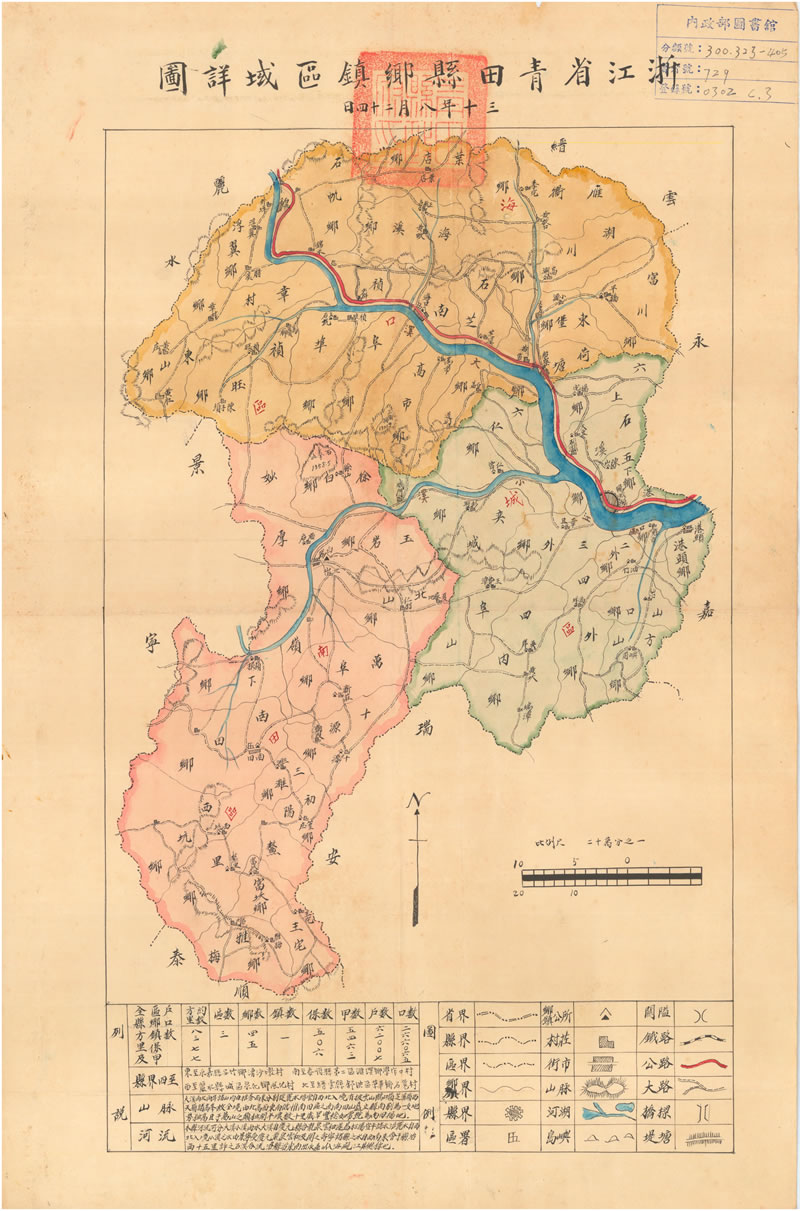
When viewed on the map, Qingtian might best be described as a rather unremarkable locality in China, let alone the wider world. Nestled in the misty hills of southeastern Zhejiang, it is a place far removed from the imperial capitals and coastal cities that usually dominate narratives of Chinese history. Yet this seemingly marginal county became one of China’s most significant qiaoxiang (overseas Chinese hometown), producing a diaspora that now extends across Europe and beyond. What is particularly striking is that despite their remarkable geographical dispersion, Qingtianese migrants have maintained a persistent and cohesive cultural identity linking them back to their place of origin, while also actively participating in the economic and social life of their host societies.
Conventional accounts often attribute this social cohesion either to primordial feelings of nostalgia and homesickness, or to the assumption that the community is inherently ‘static’ and ‘closed off’ from the outside world. This article argues that such explanations risk reinforcing popular stereotypes instead of reflecting the historical realities of the community. Instead, the cohesion of the Qingtianese diaspora was produced through a self-reproducing migration system, in which chain migration, family and business networks, and evolving forms of communication jointly sustained a community that is in constant renewal, adaptation, and expansion. The example of Qingtian therefore shows how a localised migration system could produce a diaspora that was geographically dispersed, yet still culturally attached to its origin.
The emergence of Qingtian as a major source of Chinese diaspora was not sudden. While the English edition of the 1935 Chinese Yearbook noted traces of Qingtianese emigration before the nineteenth century, these movements remained sporadic and limited in scale. Early migrants were often itinerant traders or craftsmen dealing in carved Qingtian stone products, and there was not yet a physical infrastructure to allow migration to develop into a stable and self-reproducing system.
A decisive transformation came in the nineteenth century, when local mobility became connected to new global transportation and commercial networks. The opening of nearby Wenzhou as a treaty port after the Chefoo Convention more directly integrated southern Zhejiang into international maritime commerce. Around the same time, the opening of the Suez Canal and later the Trans-Siberian Railway reduced the practical difficulty of long-distance movement between China and Europe. By the late nineteenth and early twentieth centuries, migrants from Qingtian travelled via both maritime and overland routes in ever-increasing scale and frequency. Some moved northward from Shanghai to ports such as Lüshun and Yingkou before continuing through Siberia toward Moscow and other European destinations. Others followed marine routes through Hong Kong, Singapore, the Suez Canal, and Mediterranean ports.
Crucially, these routes did more than move individuals. Earlier Qingtianese migrants could establish commercial contacts, lodging networks, and employment opportunities that later relatives and fellow villagers could follow, providing the conditions through which Qingtianese emigration could gradually shift from scattered journeys to a durable chain migration system. Beyond enabling more people to leave Qingtian and connect with overseas localities, the significance of this chain migration lay in how it linked migrants’ visions of opportunity and success with expectations and obligations at home, giving rise to what Gregor Benton describes as the structural and cultural logic of chain migration. After establishing themselves as “bridgeheads,” early migrants would provide both financial assistance and practical knowledge of unfamiliar destinations for later arrivals, in turn ensuring that they rarely had to enter Europe as isolated, disconnected individuals. This is what made migration self-reproducing. Each successful migrant abroad could become a point of connection for others at home, while each new settlement in Europe became another node in a wider transnational network. Migration cannot, therefore, be reduced to the simple movement of people from one place to another. It was a social structure through which labour, capital, information, and trust travelled across borders.
Chain migration was also a cultural phenomenon. Benton describes this as a “culture of emigration,” in which migration became embedded in the expectations and social imagination of particular home communities, something especially prevalent in Qingtian. Over time, towns and villages in Qingtian became increasingly oriented toward overseas mobility. Remittances uplifted local living standards, while successful migrants gained enormous prestige through philanthropy, business investment, and public works. Migration thus became not only an economic strategy, but a culturally expected and desirable path toward social advancement.
Studies of migration in the wider Wenzhou region by Irene Rodrigues further illuminate this process. While aspirations for prosperity and cosmopolitan status encouraged many young people from Qingtian to migrate, traditional ethics of filial piety (xiao) and self-sacrifice (qinlao) continued to bind dispersed migrants to their families and hometown. To emigrate could be understood not as abandonment, but as a form of responsibility; as migrants pursued wealth and status abroad, their achievements would acquire full meaning only when translated into support for parents, improved prospects for children, and dignity within the social world back home.
So, instead of simply retreating to static conservatism, the Qingtianese diaspora actively reworked and adapted through migration, finding a balance where older values of filial duty and family sacrifice could coexist with modern aspirations for mobility and success. In this sense, tradition helped close the circuit of chain migration, transforming outward mobility into continuing obligation, and allowed the Qingtianese diaspora to spread geographically while remaining culturally anchored.
The culture of emigration also had direct economic consequences. By making overseas mobility appear desirable and meaningful, Qingtianese society continually channelled successive waves of new migrants into existing transnational networks. The labour, ambition, and entrepreneurship supplied by these migrants are what enabled the Qingtianese diaspora to economically reproduce itself in Europe. Francesco Carchedi and Marica Ferri show that in practice, chain migration has profoundly shaped migrants’ employment patterns, business formation, access to capital, and settlement after arrival. Most newcomers first sought to work in firms and businesses already established by families and fellow villagers, which, aside from providing employment and accommodation, also functioned as centres of social aggregation, where migrants reinforced shared identities through everyday work, language, and kinship ties.
This family-enterprise model allowed the migration system to expand. Younger migrants could begin as workers or apprentices before eventually opening their own businesses, usually with capital raised through family savings and community-based credit arrangements. Economic reproduction was therefore not separate from kinship or culture but organised through them, and as urban niches in cities such as Milan, Barcelona, Berlin, and Amsterdam became saturated, migrants moved into provincial towns and smaller markets, carrying their networks with them. Each new restaurant, workshop, or import-export business became another point of contact in a wider European migration system. Over the course of a century, and particularly in recent decades, Qingtianese-linked communities grew from a few migrant enclaves into a continent-wide network stretching far beyond Europe’s major capitals.
Paradoxically, this geographical dispersion enhanced, not weakened, cultural cohesion. Migrants continued relying on shared dialects, hometown associations, family enterprises, and kinship-based business networks, and so the migration network was able to simultaneously reproduce common social and cultural identities across borders; so much so that the Zhejiang Chinese in countries “as far apart as Denmark and Italy” continued to share the same cultural, linguistic, and socio-economic background rooted in southern Zhejiang.
The same networks that sustained Qingtianese chain migration also help to explain its later transnational character. As Steven Vertovec argues, migrant transnationalism is not entirely new: migrants have long maintainedcross-border ties through family, remittances, associations, and return visits. What changed in the late twentieth and twenty-first centuries was the intensity and immediacy of these connections. Telephones, Chinese-language media, cheap travel, the internet, and platforms such as WeChat did not replace older obligations, but allowed them to operate across greater distances, at greater speed, and on a larger scale.
This does not mean that Qingtian was an entirely exceptional case. Similar patterns of chain migration and hometown networking can be found among older Chinese diasporas in Southeast Asia and North America, as well as among many non-Chinese migrant communities. What makes Qingtian particularly interesting is its European direction. Traditionally it was Southeast Asia, not Europe, that acted as the main destination of Chinese emigration. From the late nineteenth century onward, however, Qingtianese migration helped to turn Europe into a new frontier of Chinese mobility. The county of Qingtian therefore offers a micro-level example of China’s expanding integration into global economic and demographic systems.
More broadly, Qingtian also provides a micro-historical lens onto the evolving China–Europe relations, from nineteenth-century commercial contact and early migration routes, through interwar tensions and Cold War stagnation, to renewed mobility in the age of globalisation. It also demonstrates the need to interweave European and Chinese historiography. Earlier European scholarship often viewed Chinese migration from the outside, recording where migrants settled but less clearly explaining where they came from or why local identities persisted. Chinese local sources reveal internal dynamics of kinship, aspiration, obligation, and village-based migration. The history of Qingtianese migration, then, cannot be written from one side alone.
Bibliography
Benton, Gregor, and Frank N. Pieke, eds. The Chinese in Europe. Basingstoke: Macmillan Press; New York: St. Martin’s Press, 1998.
Benton, Gregor. “Introduction.” In The Chinese in Europe, edited by Gregor Benton and Frank N. Pieke, 1–18. Basingstoke: Macmillan Press, 1998.
Carchedi, Francesco, and Marica Ferri. “The Chinese Presence in Italy: Dimensions and Structural Characteristics.” In The Chinese in Europe, edited by Gregor Benton and Frank N. Pieke, 261–277. Basingstoke: Macmillan Press, 1998.
Liu, Hong. “New Migrants and the Revival of Overseas Chinese Nationalism.” Journal of Contemporary China 14, no. 43 (2005): 291–316.
Rodrigues, Irene. “Migration and Social Aspirations: Chinese Cosmopolitanism in Wenzhou Region (China).” Urban Science 2, no. 2 (2018): 32.
Thunø, Mette. “Chinese Emigration to Europe: Combining European and Chinese Sources.” The China Quarterly 150 (1997): 400–419.
Thunø, Mette, and Yiwen Wang. “China’s Smart Diaspora Governance: Extraterritorial Social Control Through Digital Platforms.” China Information 54, no. 1 (2024).
Vertovec, Steven. Transnationalism. London: Routledge, 2009.
《青田县志》[Qingtian County Gazetteer]. Qingtian: Qingtian County Gazetteer Editorial Committee.
《青田华侨史》[History of Overseas Chinese in Qingtian]. Hangzhou: Zhejiang People’s Publishing House, 2011.
Image credits: https://commons.wikimedia.org/wiki/File:1941年《浙江省青田县乡镇区城详图》.jpg


