
Written by Lauren Hood
The type of leisure pursuits available to women in Britain increased as the nineteenth century began and progressed. Women enjoyed a variety of activities in their free time, including religious and charitable pursuits, political campaigns, sport, and creative hobbies such as music, reading and writing. The activities which a women had access to depended very strongly upon her social class, leading to middle and upper-class women having more varied leisure opportunities than working-class women. As the variety of activities women occupied their free time with increased, so did the resistance to certain types of women’s leisure, with women burdened with the pressure to comply with gender expectations.
Religion played a massive role in the lives of many women in nineteenth-century Britain, shaping their lifestyle and how they spent their free time. Occupying their time doing religious activities, such as teaching children in Bible lessons, allowed women to socialise with each other through a mutual interest. Women such as Maria Charlesworth from Suffolk used their faith to connect with and educate other women in their community. Religion gave many women purpose within their local community, and the chance to take on some responsibility which they could not otherwise achieve. A common pastime for middle-class British women which religion strongly influenced was voluntary and charity work. Women were drawn to this type of activity as it tended to be similar to their domestic roles and allowed them to use skills which they had already developed, such as teaching. Many would visit less fortunate local families, providing them with gifts, often of food, Bibles or advice. This community-orientated leisure offered women opportunities to socialise as well as independence, which many would not otherwise achieve. This independence and lack of a controlled environment which middle-class women’s charity work normally involved raised some concerns. The most common fear regarding community visits was uncontrolled interactions with working-class people. Birmingham preacher John Angell James held this fear, declaring that “nothing could be more repugnant to my sense of propriety” than young women visiting as charity work. Despite many middle-class women pursuing charity work because it fit expectations of their gender and involved their religion, there was nevertheless questions raised about the appropriateness of women volunteering through visiting, particularly from religious figures such as Angell James.
Lots of women enjoyed creative pursuits in their free time. Many middle-class British women enjoyed reading. The books which they tended to read offered similar storylines and characters, typically centered around traditional British gender roles. The content of these books reinforced gender roles by making them relatable to the readers’ lives. Despite this, fears were created by the increasing number of middle-class women who read, fueled by the belief that unsupervised reading could harm a woman’s health. These fears were eased by religious influences in books aimed at women which offered them a stronger understanding of and connection to their religion. A passion for reading often led to women taking up writing. Many women wrote and journalled for their own enjoyment, noting what they had been up to that day, while others managed to turn their love for writing into a profession. Mary Wright Sewell is one such example, managing to sell over one million copies of her book Mother’s Last Words in the 1860s. Derek Scott argued that this interest in writing created a “ballad market” among women, where songs written by women and discussing their traditional roles were shared. While women had limited opportunities to actually make music, they did tend to learn and play these ballads at home. Acknowledgment of female musicians grew as the nineteenth century progressed, leading to some women being accepted to partially study music degrees at university in 1885, although for the high tuition cost of £80. British women found peace and enjoyment through their creative pursuits, with some managing to gain an income from their talents. As with other leisure opportunities for women, high costs and time commitments meant that they became limited to wealthy women.
Although many participated in leisure activities which fit expectations of their gender, some women pushed these expectations to participate in political campaigns and activism. Anti-slavery organisations like the Glasgow Ladies’ Auxiliary Emancipation Society allowed women to build skills through public speaking and campaigning. The involvement of women in anti-slavery campaigns and organisations led to emancipation commonly being regarded as a feminine issue, with campaigns targeting women, such as the campaigns for sugar boycotts. Women also played their part in the dress reform movement of the 1870s and 1880s, where campaigns called for women to change the types of clothing they wore, believing that clothing like dresses played a strong role in women being regarded as inferior. The Rational Dress Society was launched in 1881 as a scientific and health-orientated organisation, calling for women to ditch corsets, heels and heavy skirts and dresses. Dress reform campaigns and anti-slavery movements strongly relied on the women who gave their time to them, highlighting that despite the gender expectations pushed onto British women, many still filled their time with campaigning, showing that gender expectations did not constrain women completely.
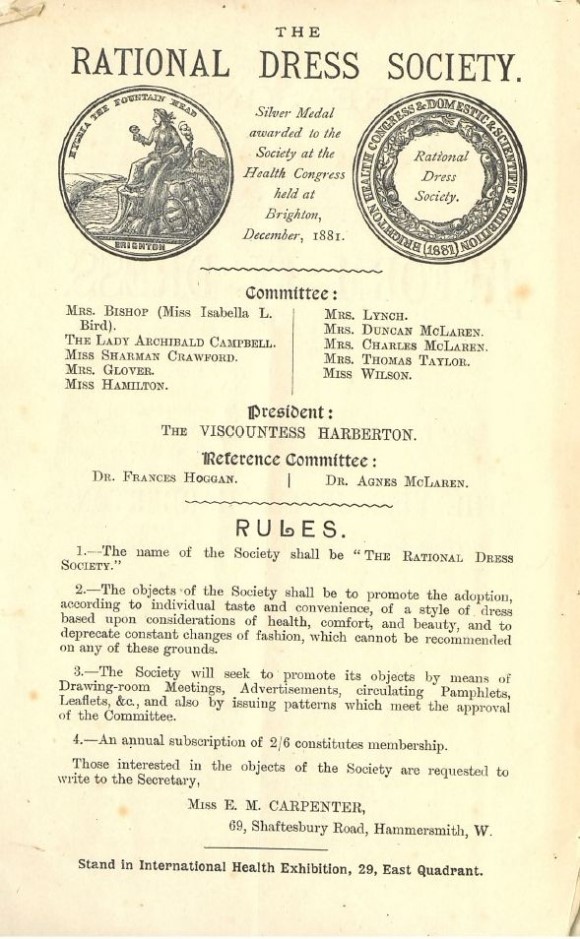
Figure 1: rules of the Rational Dress Society
Popular sports filled women’s free time, while also raising concerns about their impact on women. Rollerskating was a popular hobby amongst young people in the nineteenth century, becoming extremely popular across Britain in the 1870s. The popularity of rollerskating was partially caused by the disregard of societal expectations from participants. Young girls were chaperoned at skating rinks but found ways around this surveillance such as skating faster than their older chaperones or speaking at the rails of the rink. Young girls took agency over their own leisure in this activity, finding ways around attempts to control their behaviour. Another popular sport amongst women in the nineteenth century was hunting. Hunting was a crucial aspect of rural communities and an activity which women would do alongside male relatives. As the nineteenth century progressed this changed, with hunting being viewed as a masculine pastime and therefore unacceptable for women. Tennis and golf became common after they were deemed appropriate for female participation due to the personal space and respectability which could be maintained when participating.
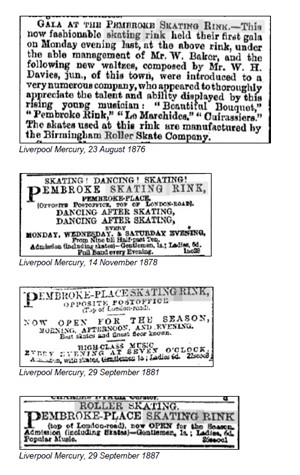
Figure 2: adverts for rollerskating in Liverpool
Despite the popularity of sport amongst female participants, this was not without controversy. The use of bicycles spread across England at the start of the nineteenth century, becoming particularly popular amongst women. Cycling allowed women to participate in an activity in the same way as men, while also allowing women more control over their own socialisation, in a similar way to that offered by rollerskating. Prices for bicycles dropped quickly after their invention, allowing for more diversity in who owned them. Jihang Park argued that this “broke through the upper-class monopoly on games” as most sports had previously been expensive, limiting who took part. Concerns over the appropriateness of cycling for women led to an increased organisation of chaperoning. Trends in sport were met with concerns over their suitability for female participation.
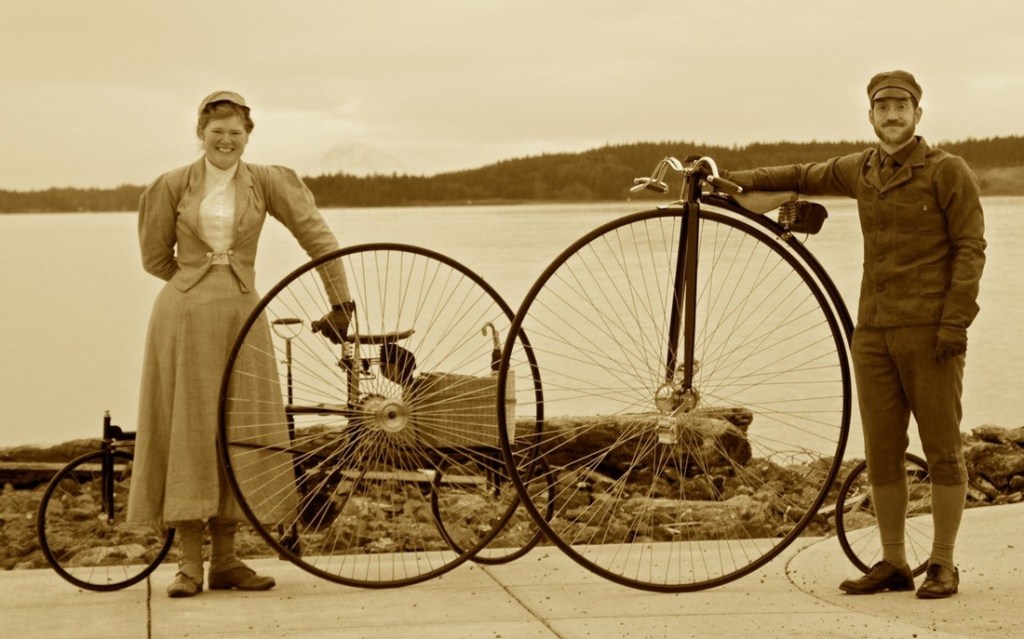
Figure 3: nineteenth-century bicycle
As the opportunity for leisure activities increased for middle-class women as the nineteenth century progressed, this excluded working-class women from many forms of leisure. Literacy rates amongst working-class women in Britain increased during industrialisation, with the technological advancements of the period allowing for a growth in book production and easier access to books amongst the country’s poorest. Despite these perfect conditions for increased reading amongst working-class women, working women had less time to devote to their leisure and had financial limitations on the material which they could access. Working-class women were also widely excluded from sport due to their lack of time and finances. Many did not have enough time to attend swimming clubs designed specifically for working women due to their roles as mothers and their domestic duties. This stresses the extent to which working-class women had their leisure shaped by their domestic responsibilities, as even when sport was molded to suit their lifestyles, it was still inaccessible. This strongly contrasts the increase in middle-class women’s involvement in sports as the nineteenth century progressed, showing that class strongly determined leisure for British women.
Strong expectations were placed on women to act in a respectable manner, with these expectations extending to the activities which they spent their free time doing. These expectations shaped general societal attitudes to different leisure pursuits, but many women had some agency over their hobbies, as long as they were deemed acceptable for women. Middle and upper-class women had access to a larger variety of hobbies and activities, with the time and financial restrictions placed on working-class women restricting not only their free time, but also how they spent it.
Bibliography
Bailey, Peter. “‘A Mingled Mass of Perfectly Legitimate Pleasures’: The Victorian Middle Class and the Problem of Leisure” in Victorian Studies 21, no. 1. Bloomington: Indiana University, 1977.
Best, Geoffrey. Mid-Victorian Britain:1851–1875.London: Weidenfeld and Nicolson, 1971.
Boos, Florence. Memoirs of Victorian Working-Class Women: The Hard Way Up. London: Palgrave Macmillian, 2017.
Branca, Patricia. Silent Sisterhood: Middle Class Women in the Victorian Home. London: Routledge, 2013.
Davidoff, Leonore & Hall, Catherine. Family Fortunes: Men and Women of the English Middle Class, 1780-1850.London: Hutchinson, 1987.
Day, Dave. “Swimming Natationist, Mistresses, and Matrons: Familial Influences on Female Careers in Victorian Britain” in International Journal of the History of Sport 35, 2018.
Hargreaves, Jennifer. Sporting Females: Critical Issues in the History and Sociology of Women’s Sports. London: Routledge, 1994.
Harrison, Brian. “Religion and Recreation in Nineteenth-Century England” in Past & Present 38, no.1, 1967.
Mitchell, Sally. “Sentiment and Suffering: Women’s Recreational Reading in the 1860s” in Victorian Studies 21, no. 1, 1977.
Morris, R.J. “Clubs, Societies, and Associations” in The Cambridge Social History of Britain, 1750-19503, ed. F.M.L. Thompson. Cambridge: Cambridge University Press, 1990.
Park, Jihang. “Sport, Dress Reform and the Emancipation of Women in Victorian England: A Reappraisal” in International Journal of the History of Sport 6, 1989.
Roberts, Elizabeth. Review of ”’More than Mere Amusement’: Working-Class Women’s Leisure in England, 1750-1914″, by C.M. Parratt in The English Historical Review 119, no. 483 2004.
Roche, Clare. “Women Climbers 1850-1900: A Challenge to Male Hegemony?” in Sport in History 33, no. 3 2013.
Scott, Derek. “The Singing Bourgeois – Songs of the Victorian Drawing Room and Parlour” in Sociological Review 38, no. 4, 1999.
Southgate, Henry. Things a Lady Would Like to Know Concerning Domestic Management and Expenditure. Edinburgh: W.P. Nimmo, 1881.
Summer, Anne. “A Home from Home: Women’s Philanthropic Work in the Nineteenth Century” in Fit Work for Women 9, ed. by Burman, Sandra. London: Routledge, 1979.
Veblen, Thorstein. The Theory of the Leisure Class. Oxford: Oxford University Press, 2007.
Vertinksy, Paula Atkinson. The Eternally Wounded Woman: Women, Doctors and Exercise in the Late Nineteenth Century. Manchester: Urbana, 1989.
Yan, Shu-Chan. “Emotions, Sensations, and Victorian Working-Class Readers” in Journal of Popular Culture 50, no. 2, 2017.
Figure 1: Rules of the Rational Dress Society printed in Viscountess Harberton’s Reasons for Reform in Dress. Accessed via Untold Lives Blog: https://blogs.bl.uk/untoldlives/2021/10/the-rational-dress-society.html
Figure 2: Adverts for rollerskating in Liverpool. Accessed via Liverpool Musuems: https://www.liverpoolmuseums.org.uk/stories/roller-skating-victorians
Figure 3: Victorian bicycles. By Don Willot. Accessed via This Victorian Life: http://www.thisvictorianlife.com/cycling.html

