
Written by Ryan Henderson
A second sun rises over Edinburgh. The Scott Monument, Edinburgh Castle, and every building in the city centre are splashed like water as superheated air shoves a pressure wave outward. The target, Waverley Station, a key infrastructure node for transport across the length of Britain, has ceased to exist under a widening funnel of radioactive debris and smoke that reaches high into the stratosphere. Five kilometres west, battered and shaken, but nonetheless alive, the nearly four hundred men and women hidden underneath Corstorphine Hill begin work to restore governance and control to the blast zone. Across the UK, more bombs fall.
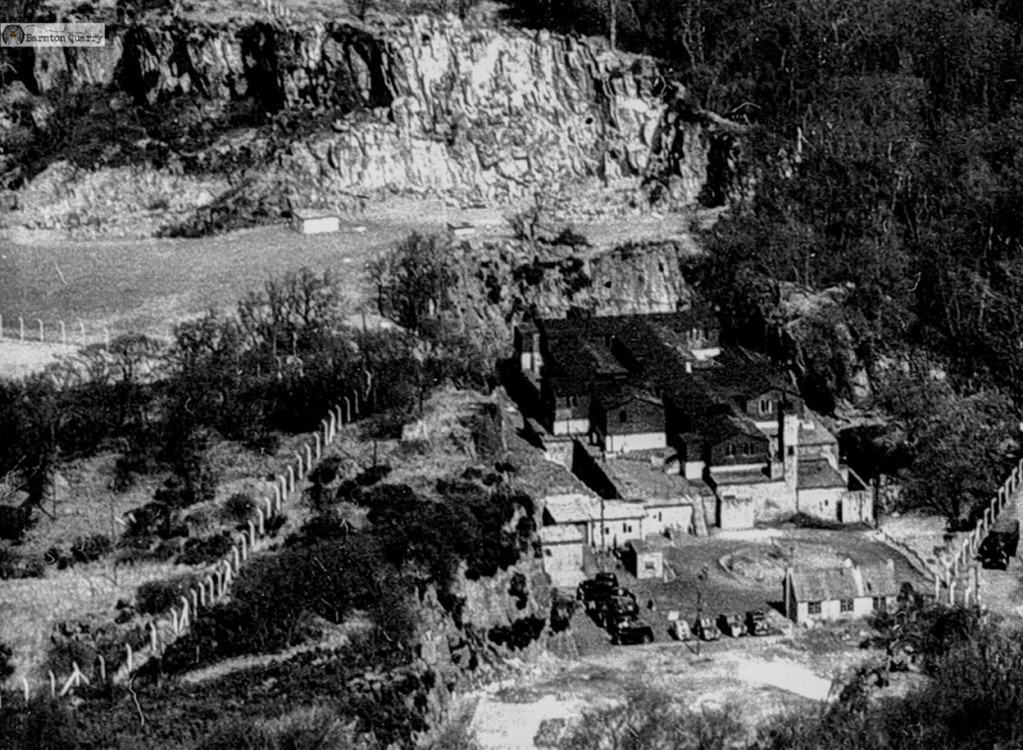
Built in Barnton Quarry on Corstorphine Hill, the original site served as an above-ground Fighter Command Operations Room during the Second World War. The base directed Spitfires and Hawker Hurricanes, defending the skies above Edinburgh and Lothian from German air raids. After serving this vital role in the Second World War, the site was chosen as the Sector Operations Centre (SOC) for the whole of Scotland, given the role of integrating with the new ROTOR network of radar stations to defend Britain’s airspace.
ROTOR was a top-secret government project that utilised WWII-era Chain Home and AMES radars for defence against air attack. After the Berlin Blockade and detonation of the first Soviet atomic bomb, war seemed to loom across Europe and the threat of Soviet air attack on the UK seemed likely. Reorganised out of the existing RAF Fighter Command, the role of Sector Operations Centres was to link with nearby radar stations to track aircraft crossing from Europe and the North Sea. The SOC at Barnton Quarry would link with radar sites across the Shetlands, Aberdeenshire, and the length of the East Coast, with RAF officers plotting the positions of incoming air raids before passing this data to RAF airbases and Anti-Aircraft Operations Rooms located across Scotland.
The shock of the first Soviet hydrogen bomb test in 1953 had galvanised the British government with a zeal comparable to that of the post-Hiroshima atomic preparations. Fears of this vastly more destructive kind of atomic weapon, referred to in the press as the ‘Monster,’ lead to a reinvigoration of British civil defence. To facilitate survival in the world of the H-bomb, a new facility had to be built. The first of its kind to be built to ROTOR level R4 specifications, an expansive and sturdy bunker was built. A three-level complex, with reinforced walls up to twelve feet thick, topped with a composite steel-concrete roof and buried under over three metres of soil, the new bunker was designed to survive Soviet air attack. The bunker would theoretically have been able to survive a three-megaton thermonuclear blast in Edinburgh City Centre. Designed to hold almost four hundred politicians and civil servants during an all-out nuclear exchange, the bunker housed resources for thirty to eighty days of self-sufficiency. Included was an advanced air-filtration unit that would prevent the entrance of poisonous fumes emitted from the burning city to the east, the unit was also rated for chemical weapon agents like Sarin and VX, which were likely to be deployed against static targets in Britain by Warsaw Pact aircraft in the event of conflict.
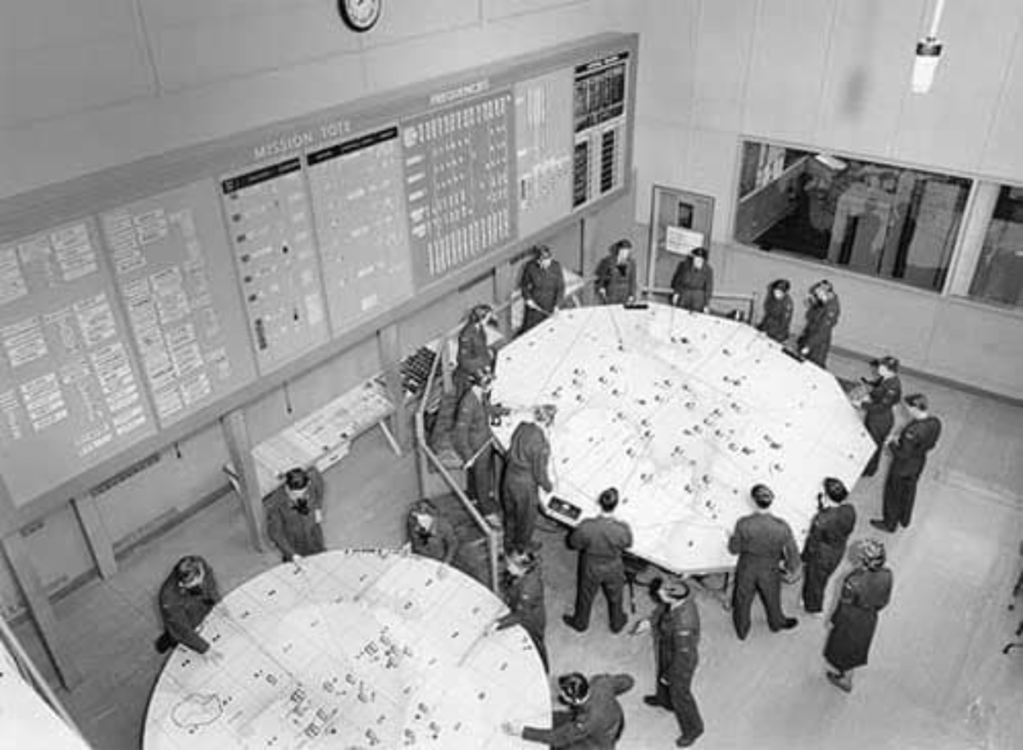
However, as always, the progress of technology marched forth, and within five years, radar became far less important, and the supplanting of airborne nuclear delivery systems with ballistic missiles made the bunker’s role redundant. As such, the control and reporting mission was transferred to the radar sites themselves. During this time, the bunker was occupied by the Royal Observer Corps, a civil defence organisation tasked with tracking and identifying nuclear strikes on British soil. This would not last long, and by the 1960s, the bunker became one of the main headquarters for Scotland’s Secretary of State in the event of war.
In the likely event that London was destroyed or otherwise rendered incapable of governing, political decision-making power would be devolved to Regional Seats of Government across the country, dispersed so as to avoid total governmental incapacitation. Barnton, along with sub-bunkers at Anstruther (North Zone), the war room at Kirknewton (East Zone) and an anti-aircraft station in East Kilbride (West Zone), would help to direct relief efforts across Scotland, including food dispersion, organising healthcare services, reestablishment of communications, and controlling police activities. While the bunker remained largely dormant, it stayed at a constant state of readiness, with phone lines, water tanks, and air filtration systems constantly monitored to ensure its immediate use at any time. The nature of the works on Corstorphine Hill were kept secret from the general public, and of course, any enemies of Britain. Those 400 or so politicians and civil servants were largely unaware of the secret role that had been designated for them, and like many across the country, would only become aware of the small print in their contracts when the time came to file down the steps under Corstorphine Hill.
However, by April 1963, the secret was out. That year, members of the anti-war activist group Spies for Peace were able to gain access to the Regional Seat of Government bunker at Warren Row in Reading, designated as the RSG for Southern England. They published a pamphlet containing images of documents and plans that detailed how the British government intended to govern after a nuclear war. Over three thousand copies of Danger! Official Secret were anonymously sent to members of the press, politicians, church leaders, and anti-war groups, detailing how the UK was going to be run by a group of underground elites in the event of war. The pamphlet further undermined public confidence in the British government, already damaged after the events of the Profumo Affair scandal just weeks before, and prompted renewed fears of war that had reached their peak just six months before during the Cuban Missile Crisis.
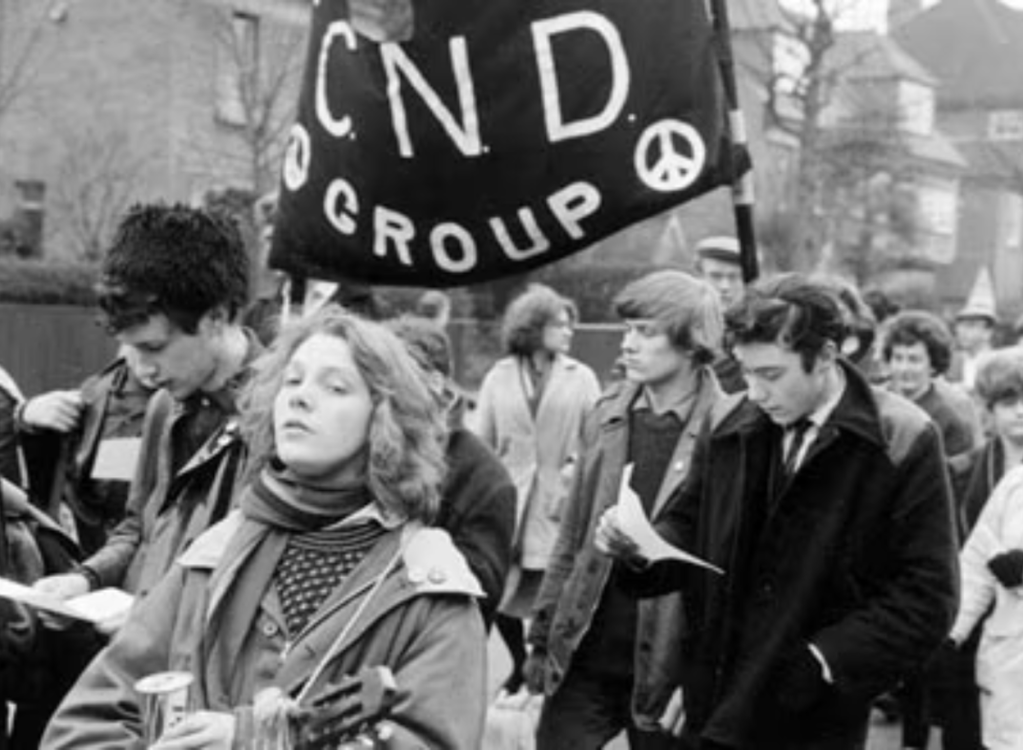
Amongst government condemnation of the raid on RSG-6 (Warren Row), the Campaign for Nuclear Disarmament (CND), the largest anti-war group in Britain, organised a march from the centre of Edinburgh to Barnton. CND openly objected to the idea of building bunkers, arguing that it offered a false sense of security and was part of the government’s attempt to normalise the idea of nuclear war. The marchers picketed the perimeter fence, before breaching the grounds and causing mild damage to the facility. This damage raised concerns about the integrity of the RSG bunker system as a whole, but the Barnton Bunker remained in its role until the 1980s.
In 1983, control of the bunker was transferred to Lothian Regional Council. Intended for use as an Emergency Planning Operations Centre, it was left essentially abandoned until the end of the Cold War in 1991 and was eventually sold to a private buyer and used as a storage facility. Further plans to refit the bunker for use as a shellfish farm, or replace it with luxury apartments, were soon abandoned as the difficulty of demolishing a nuclear bunker quickly became obvious. In 1993, a fire erupted within the bunker that lasted for almost five days. The intense heat from the blaze destroyed much of the bunker’s fittings, equipment and furniture and was hot enough to melt the metal linings off of walls not designed to survive an internal fire. After the fire, several visits from thieves that stripped copper wire and surviving pieces of scrap metal, the bunker was once again abandoned.
After several years of neglect, fly-tipping, vandalism, and further theft, volunteers began to clear the site. Funded by Scotland’s Secret Bunker in Anstruther and Historic Scotland, a massive restoration project was begun, and the bunker was slowly cleared, refitted and turned into a museum, showcasing the site and the legacy of the Cold War in Edinburgh that the government had condemned to uselessness and unimportance.
Today, in an era increasingly defined by international conflict and use of devastating weapons like ballistic missiles and drones, the government is again discussing the importance of these places to national security. After an incredibly destructive event, perhaps some semblance of government would survive to coordinate relief and a return to normal governance, but to what end? If only the elite of society – politicians, military commanders and police chiefs – are able to emerge safely from bunkers, then what is their point, other than to ensure their own survival?
Ultimately, the Banton Bunker is a symbol. A symbol of the reality of the Cold War, of the intentional and meticulous planning that went into preparing for a war that never happened. A symbol of how a state builds for an uncertain future, and the anxieties that can push such construction works forward. In my opinion, the legacy of the Barnton Bunker should be a highlighting of the disparity between the imagined future (four hundred people cowering in a bunker under a radiation-ravaged city) and the reality (an abandoned site, scattered with waste and left to rot), and a sobering reminder of the dangers of weapons whose use is being threatened once again.
Bibliography
Campbell, D. (1982) War plan UK: the truth about civil defence in Britain. London: Burnett Books.
Carroll, S. (2010). Danger! Official Secret: The Spies for Peace: Discretion and Disclosure in the Committee of 100. History Workshop Journal, 69, 158–176.
Cocroft, W.D. and Thomas, R.J.C. (2003) Cold War: Building for Nuclear Confrontation 1946–1989. Edited by P.S. Barnwell. Swindon: English Heritage.
Grant, M. (2010) After the Bomb: Civil Defence and Nuclear War in Britain, 1945–68. Basingstoke: Palgrave Macmillan.
McCamley, N.J. (2002) Cold War Secret Nuclear Bunkers: The Passive Defence of the Western World During the Cold War. Barnsley: Pen & Sword.
McDowall, J. (2016) ‘Our Cold War secret bunker in an Edinburgh suburb’, The National, 18 January. Available at: google.com/url?q=https://www.thenational.scot/news/14901377.our-cold-war-secret-bunker-in-an-edinburgh-suburb/&sa=D&source=docs&ust=1794492877363262&usg=AOvVaw0T9r6xSuCY-aSBP0KeYsS0 (Accessed: 12/11/2026).
McDowall, J. (2023) Attack Warning Red!: How Britain Prepared for Nuclear War. London: Bodley Head
The Barnton Bunker Preservation Society SCIO (2026) Declassified – The history of Edinburgh’s Nuclear Bunker. Available at: https://www.barntonbunker.com/barnton-bunker-history (Accessed: 10 November 2026).
Image Credits: The Barnton Bunker Preservation Society SCIO (2026) Declassified – The history of Edinburgh’s Nuclear Bunker. Available at: https://www.barntonbunker.com/barnton-bunker-history (Accessed: 10 November 2026).

