
Written by Roya Kenny
26/10/2026
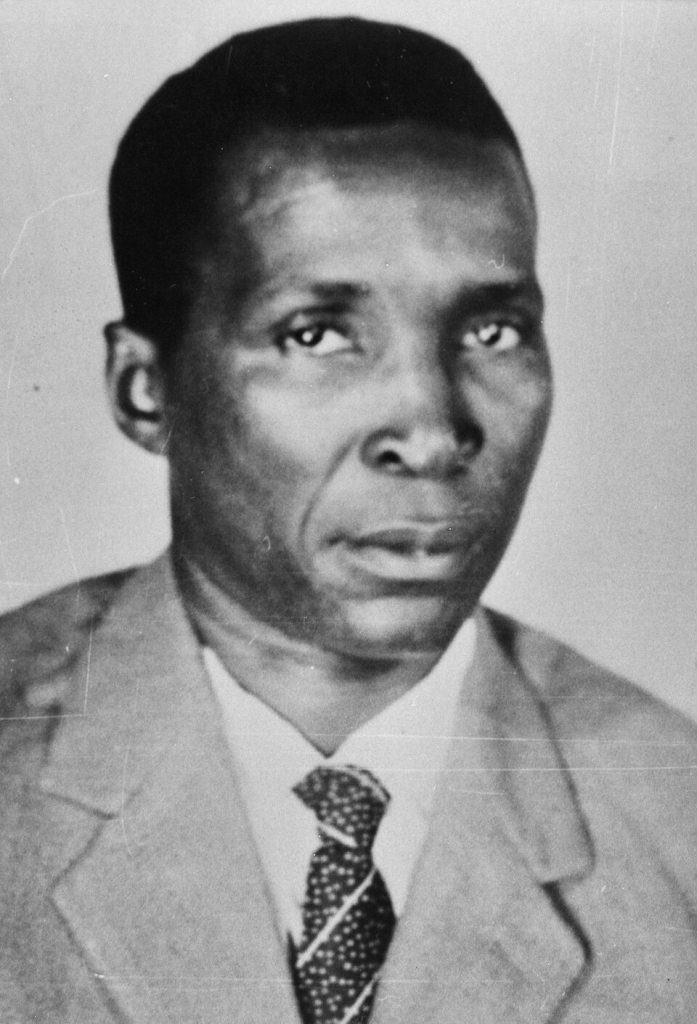
Equatorial Guinea gained independence from Spanish colonial rule in 1968 after nearly two decades of phasing out full Spanish control. Francisco Macías Nguema became president the same year and ruled as an erratic, violent dictator until 1979 when his nephew, Teodoro Obiang, seized power in a coup. Obiang has ruled the nation to this day, seeing it rise from one of the world’s most impoverished nations to one of Africa’s top oil producers. It remains a highly divided society in which only a small elite enjoy the freedoms and economic gain oil discovery produced for the country. Francisco Macías Nguema rose to power in an environment ill-equipped to support democratic foundations, despite postcolonial notions of democracy and self-determination. Although Macías’s rule lasted just over a decade, I argue that, given Teodoro Obiang’s deep involvement in Macías’s regime, particularly the elements most closely tied to state terror, the evidence points to a continuation rather than a true shift in the same regime of terror.
There is distinct irony in the vestiges of a colonial regime under a repressive dictatorship facilitating a democratic postcolonial government. However, such was the case of Franco’s Spain in Equatorial Guinea in the 1960s. Self-determination, the key backdrop to post-World War II decolonising projects, was – in the case of Equatorial Guinea – compressed into its “external dimension,” the clear shift from European rule to full sovereignty. A focus on the “democratic dimension,” as Alicia Campos writes, was often overlooked in favour of the broader focus on independence. This set the groundwork for years of conflicting discourse on the institutions, structures, and founding documents of the newly independent nation. Nearing full independence, there was a clear split in Equatoguinean nationalists at the constitutional convention. Most significantly, tensions were between the Bubi ethnic group and those native to the island now called Bioko against the Fangs of Rio Muni, the majority ethnic group of the mainland region. The Fangs felt the Bubi had been too closely aligned with Spanish colonial rule, while others feared the Fang would dominate the new government. Thus, the distinctly undemocratic political culture under Spanish rule and in mainland Spain itself, coupled with little unanimity among nationalist groups, led to the suspension of the constitutional congresses and pointed to little chance of success in the democratic scheme of decolonisation.
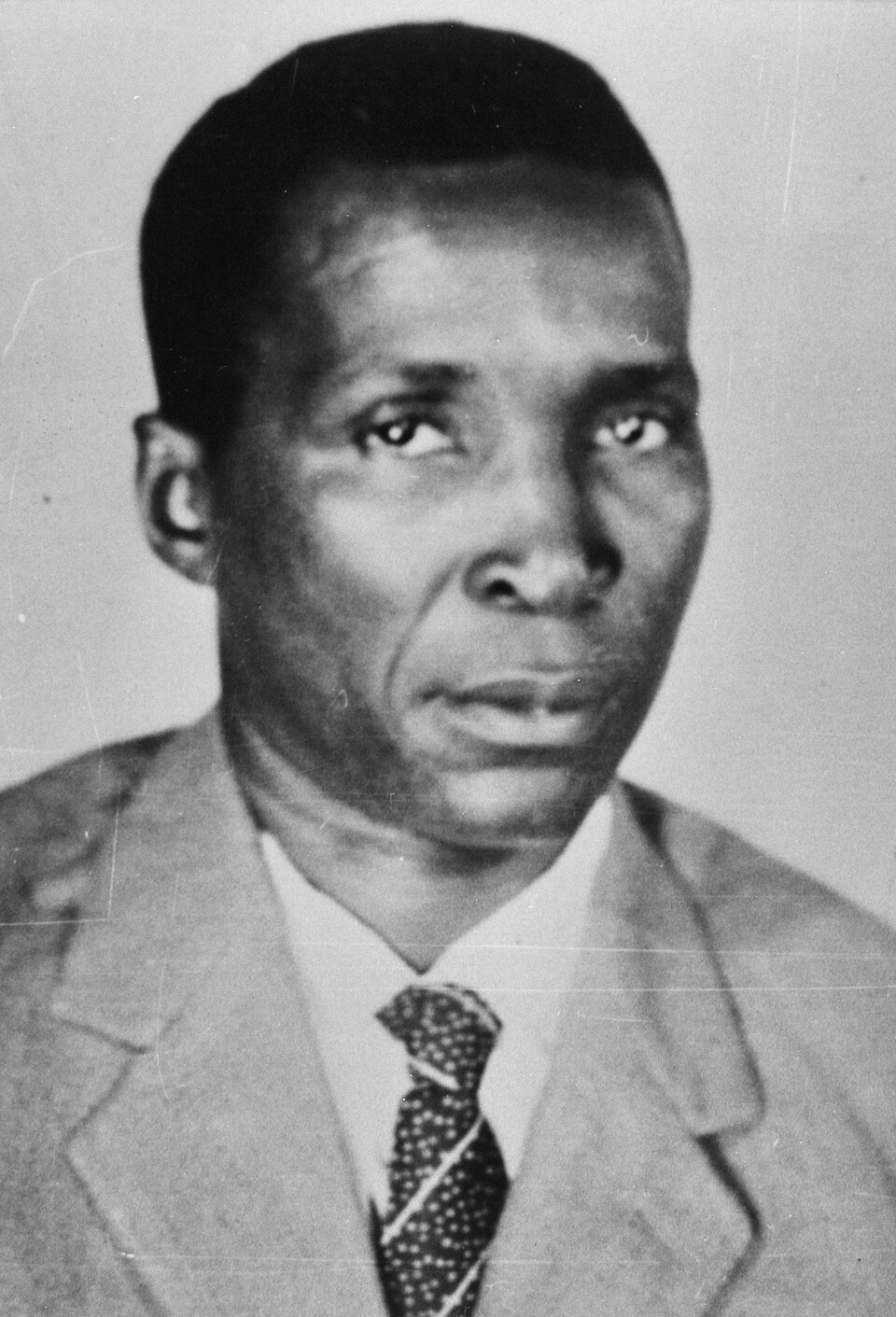
One of the Fang Nationalist leaders was Francisco Macías Nguema, who traveled to New York to speak at the UN. According to Randall Fegley, the UN, swayed by Macías’s passionate speeches, helped finalise the constitution, set final independence dates, and schedule elections. Many Bubi leaders also went to the UN to raise awareness of their concerns. Yet they found little support, as the UN showed little interest in sorting out the specifics of colonial independence. Despite this lack of coherence, the Constitution was still formalised, and presidential elections went ahead; Francisco Macías Nguema won the second presidential election in October of 1968. A former colonial civil servant and vice president of the Autonomous Government Council of Spanish Guinea, he captured many youths with his often jumbled but radical speeches, full of direct promises of what he would do once in power. Likely, Macías was mentally deteriorating before his rise to the presidency. However, his eleven-year regime of terror clearly displayed one of a man who became increasingly paranoid, full of delusion, and used violence and repression as a consistent tool to deal with issues. He purportedly sought treatment in Spain from a psychiatrist at least two times before abandoning that route to the detriment of his country; he was reported to consistently self-administering drugs, often hallucinogenics. After an attempted coup in 1969 with supposed links to the Spanish government, Macías revoked the Constitution, and his United National Workers Party (PUNT) soon became the only party allowed, cementing his rapid descent into becoming the violent dictator of the new country.
Macías consistently ordered the purging of the civil service and eventually anyone in the country accused of sympathising with Spain. He coupled these arbitrary arrests and murders with the introduction of increasingly absurd rules and laws, including, according to Paul Kenyon, the banning of the word “intellectual” and people who wore glasses. Macias’s paranoia about a possible coup turned formerly mundane activities into serious transgressions, including eating imported foods and speaking about the government. The PUNT served to elevate Macias’s cult of personality and create a network of informants to report on neighbours, colleagues, and friends. He focused heavily on persecuting intellectuals and the educated class, as well as ethnic groups such as the Bubi and Annobonese, whom he claimed were sympathetic to the Spanish or seemed to do too well for themselves. The arrests, captures, and murders of anyone suspected of opposition to Macias, from high-ranking officials to those with no power base, were carried out by the military, which Macias filled out with members of his clan, the Esangui, and a band of youth called Juventud en Marcha con Macias (JMM), which translates to Youth on the March with Macias. The JMM was a paramilitary youth section of PUNT, made up of often power-drunk youths. These unregulated youths were some of the remaining few to have access to weapons, often holding self-appointed sham courts to arrest and persecute citizens.
Thus, Equatorial Guinea had become an even more unstable nation than before, with a high death toll, large numbers fleeing the country, and a brain drain that left the ministries empty or, at the very least, a skeleton of what they once were. A lack of record-keeping of this period makes accounting for the true death toll an impossible task. Still, it is estimated that out of the population of at most 300,000 during the late 1970s, a quarter of the population had been killed, putting it, as Paul Kenyon writes, at a greater proportion than that of Stalin’s regime. Furthermore, despite the violent lengths Macias went to prevent people from fleeing the country, it is estimated that about a third of the population successfully left by the end of Macias’s regime. Of those who stayed, no individual was safe, as Macías often targeted those closest to him as well as enabling his supporters to indiscriminately arrest even those with no relation to power or resistance.
The international community rarely discussed this rule of terror. Nevertheless, as Geoffrey Jensen writes of the United States, the “National Security Council staff members labelled the regime ‘one of the bloodiest and most repressive dictatorships in modern history,” making parallels to Pol Pot of Cambodia and Idi Amin of Uganda. Some of the most terrifying stories told by survivors of Macías’s regime speak of their or others’ experiences in Black Beach Prison, notorious for its inhumane treatment of prisoners. During Macías’s purges, authorities took many ordinary citizens and suspected opponents there. Teodoro Obiang Nguema Mbasogo, Macías’s nephew, served as director of Black Beach Prison and held other high-ranking roles, including military governor of the island of Bioko. He was a close ally to Macías for most of his rule, until 1979, when Macías completed yet another round of executions, this time of some of his close family, including Teodoro Obiang’s brother. Obiang then launched a coup, which quickly propelled him to power in August of 1979. Upon the successful deposition of his uncle, Obiang then appointed himself as head of a Supreme Military Council to govern the nation. Macias was quickly found after a last-ditch escape from his presidential palace, put on trial, and executed in September of the same year.
Obiang’s involvement in the many abuses of the previous regime did not signal any hope for significant change in an increase in freedoms or a stop to brutality against ordinary citizens. However, unlike Macías, Obiang has focused on building stronger internal and international ties and maintaining the illusion of an almost democratic system of government, which coupled with the fortuitous discovery of oil has helped him become one of the longest-ruling leaders in the world, if not the longest. He has uniquely avoided many serious attempts at coups through markedly different approaches to Macías, whose paranoia regarding his possible overthrowing led to the collapse of the government and economy and the mass exodus of much of the population. By comparison, Equatorial Guinea under Obiang is far wealthier than it was; however, just over half the population still lives in poverty, and the country is known for high levels of corruption around oil money, as well as human rights violations. Despite Macías’s regime having ended almost half a century ago, Teodoro Obiang has continued the same practice of repression and authoritarian rule, utilising patronage, restrictive laws, and violence, all characteristics of the previous regime. While state terror may have been more disastrous under Macías, it is important to critically examine the violent institutions Obiang helped found and has carried forward into his rule to this day.
Bibliography
Ana Lúcia Sá, Edalina Rodrigues Sanches, The politics of autocratic survival in Equatorial Guinea: Co-optation, restrictive institutional rules, repression, and international projection, African Affairs, Volume 120, Issue 478, January 2021, Pages 78–102, https://doi-org.eux.idm.oclc.org/10.1093/afraf/adaa030
CAMPOS, ALICIA. 2003. “The DECOLONIZATION of EQUATORIAL GUINEA: The RELEVANCE of the INTERNATIONAL FACTOR.” The Journal of African History 44 (1): 95–116. https://doi.org/10.1017/s0021853702008319.
Fegley, Randall. 1989. Equatorial Guinea: An African Tragedy. P. Lang.
JENSEN, GEOFFREY. “Tyranny, Communism, and U.S. Policy in Equatorial Guinea, 1968–1979.” Diplomatic History (OXFORD) 43, no. 4 (2019): dhz020. https://doi.org/10.1093/dh/dhz020.
Kenyon, Paul. 2018. Dictatorland: The Men Who Stole Africa. London: Head Of Zeus.
Matthews, Austin S., and Ana Lúcia Sá. “Elite Strategy in Resilient Authoritarianism: Equatorial Guinea, 1979-2023.” Democratization (ABINGDON) 31, no. 8 (2024): 1823–43.
“Well Oiled: Oil and Human Rights in Equatorial Guinea.” 2009. United States of America: Human Rights Watch.
Image Credits
“Don Francisco Macias” by Government of Equatorial Guinea via Wikimedia Commons is licensed under Public Domain.

