
Written by Mia Hutchins
26/10/2026
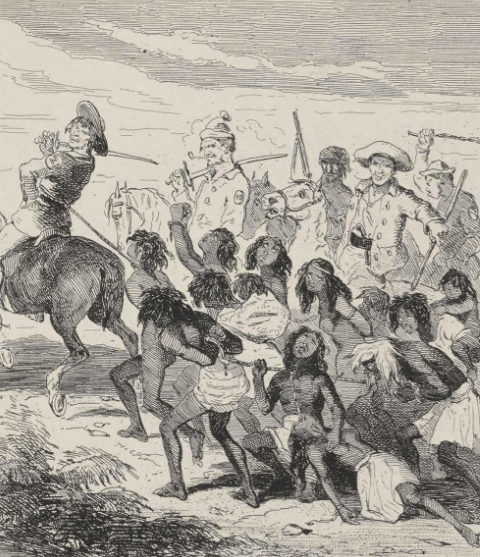
The Myall Creek Massacre is often remembered as the moment colonial justice caught up with Australian frontier violence. It revealed how little the law protected Aboriginal lives. Between 1780 and 1930, more than four hundred massacres of Indigenous people took place on the Australian frontier, resulting in over 100,000 deaths. The Myall Creek Massacre was the only known case in New South Wales (NSW) where the perpetrators of a massacre were convicted and hanged.
On 10 June 1838 at Myall Creek station (near present-day Bingara NSW), a group of eleven men led by John Fleming rode into a camp of Wirrayaraay people on Gamilaraay country. Twenty-eight Wirrayaraay men, women and children were tied together, led away and killed. The station manager, William Hobbs, reported the incident after discovering the burnt bodies. As a result, eleven men were tried before being quickly acquitted. Following this, a second trial was pursued and this time seven men were convicted and hanged on 18 December 1838.
The trial caused huge uproar in the colony. Articles in newspapers such as The Sydney Herald stated that Aboriginal people were not worth the money colonists would have to pay for printing court documents. People argued that the men were not innocent of their killings, but rather that killing Aboriginal people should not be treated as murder. Aboriginal people were also barred from giving evidence in court at the time, so convictions depended on white people who were willing to speak out, like Hobbs. The case only succeeded because of those individuals, not because the system was designed to deliver justice.
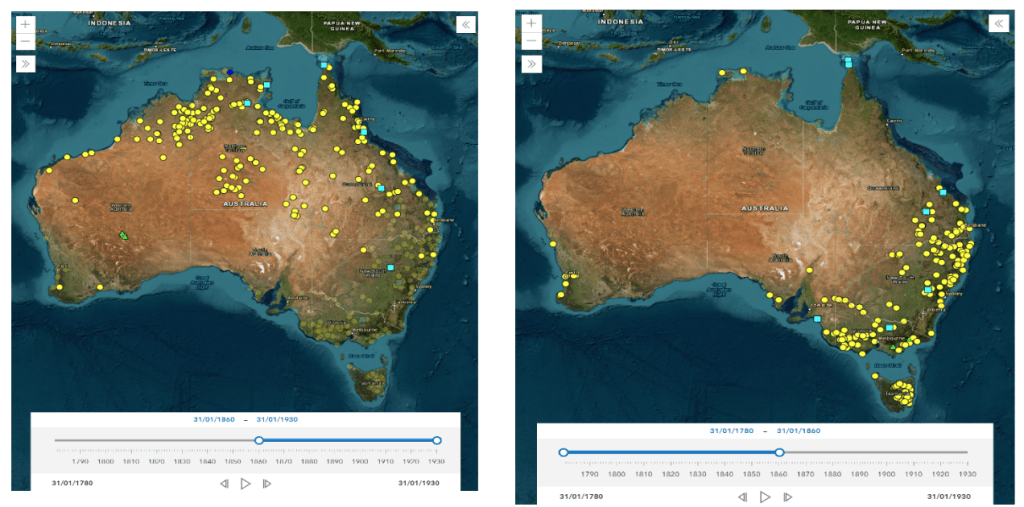
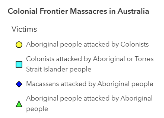
In most of the reported cases after Myall Creek, a code of silence was used, with killings only referred to indirectly. The hostile public response to the Myall Creek trial discouraged accountability for other massacres. The lesson many colonists learnt was not to stop killing but to leave fewer witnesses and less evidence.
In 2000, a memorial was created at Myall Creek. It was developed by descendants of both the victims and the perpetrators and is a significant act of remembrance. In 2023, The Sydney Herald offered an apology for its reporting of the massacre and trial. Over 160 years passed before the people killed at Myall Creek were formally commemorated on the land where they died. This shows how long recognition took. Myall Creek massacre can be used today to show how frontier violence was recorded, denied and eventually remembered.
Bibliography
Lydon, Jane. Remembering the Myall Creek Massacre. By Lyndall Ryan.NewSouth,2018. https://books.google.com/books?id=zGZZDwAAQBAJ .
“Myall Creek Massacre.” Towards Truth,2023.https://www.towardstruth.org.au/themes/country/dispossession/120-frontier-wars/sub0535-myall-creek-massacre .
Nielsen, Georgia. “The Australian Wars: New Insights from a Digital Map.” Australian Academy oftheHumanities, March 24,2023.https://humanities.org.au/power-of-the-humanities/the-australian-wars-new-insights-from-a-digital-map/ .
Ritchie, Jim. “Politics vs. Justice: A Fresh Look at the Third Trial Following the Myall Creek Massacreof1838.” N.d. Accessed October 18,2026.https://www.rahs.org.au/wp-content/uploads/2023/11/Politics-vs-Justice-A-fresh-look-at-the-third-trial-following-the-Myall-Creek-massacre-of-1838.pdf .
“The Myall Creek Massacre: The Trial and Aftermath.” Traces Magazine, August 19,2015.https://tracesmagazine.com.au/the-myall-creek-massacre-the-trial-and-aftermath/ .
University of Newcastle. “Colonial Frontier Massacres, Australia, 1788 to1930.”2019. https://c21ch.newcastle.edu.au/colonialmassacres/map.php
Image Credits
Image credit: Australian Aborigines Slaughtered by Convicts by Hablot Knight Browne (1841) via Wikimedia Commons / Public Domain

