
Written by Emma Clinton
26/10/2026
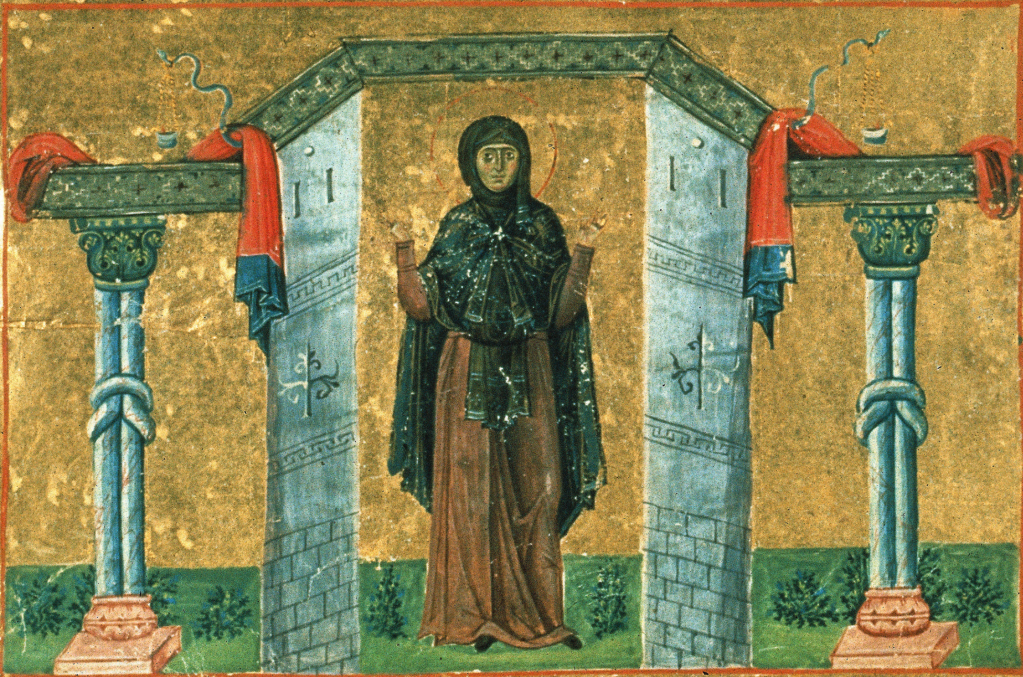
What would you do with all the money in the Roman world? Would you fund amphitheaters and throw Colosseum games in your honour? Or perhaps retire to a sprawling country estate in a Roman province? Melania the Younger, a fourth- or fifth-century Roman elite, chose instead to renounce all material wealth and earthly pleasures to convert to Christian asceticism. The astounding trajectory of her life and deeds marked her as a figurehead of Orthodox Christian piety, especially for women; though our contemporary interpretation of Melania may oscillate between a self-determined, liberated woman and a self-oppressed theological extremist. This article will chart the events of Melania’s life, using them to understand the complex relationship between Late Antique Christianity, female empowerment, and asceticism.
Our main source for understanding Melania is Gerontius’ hagiography The Life of Melania the Younger, written after her death in the 440s. Though it endeavors to give a detailed, biographical account of Melania’s accomplishments, the text is shaded by Gerontius’ personal biases towards her, whom he credits for his salvation. It has been noted as rhetoric-heavy and propagandistic by modern scholars, not to mention its decidedly misogynistic tone endemic to the period. Nevertheless, it is our most detailed and thoughtful account of Melania and will be the main source for this article.
The only daughter of two aristocratic Romans, Melania was born in 383 into a life of guaranteed comfort, marriage, and domesticity. At the age of fourteen she married Pinianus, another Roman aristocrat and inheritor of a vast familial fortune. The couple had two children together, though both died in infancy. Marked by this tragedy, Melania turned to Christianity and convinced her husband to turn their marriage celibate and become her spiritual brother in Christ. Melania became a devout practitioner of asceticism – a lifestyle characterized by self-denial, self-discipline, and the renunciation of pleasure to become closer to God and therefore spiritually ‘pure.’ Melania replaced the fine silks and jewellery of her social order in favour of rough, coarse woolen undergarments as a reminder of perpetual suffering, and practiced ritual bouts of prolonged fasting and prayer throughout the night and day.
Furthermore, Melania and Pinianus attempted to sell their sprawling Roman estate and their belongings, to the displeasure of both their families and household slaves. Once the couple received imperial permission from the Empress Serena, they were able to absolve themselves and vacate their estate. Melania used her remaining income of 120,000 gold pieces, which may have equalled as high as $123 million, to donate to the poor, fund monasteries across the Mediterranean, and embark on holy pilgrimages to Egypt, Jerusalem, and beyond, eventually settling in Palestine in 417.
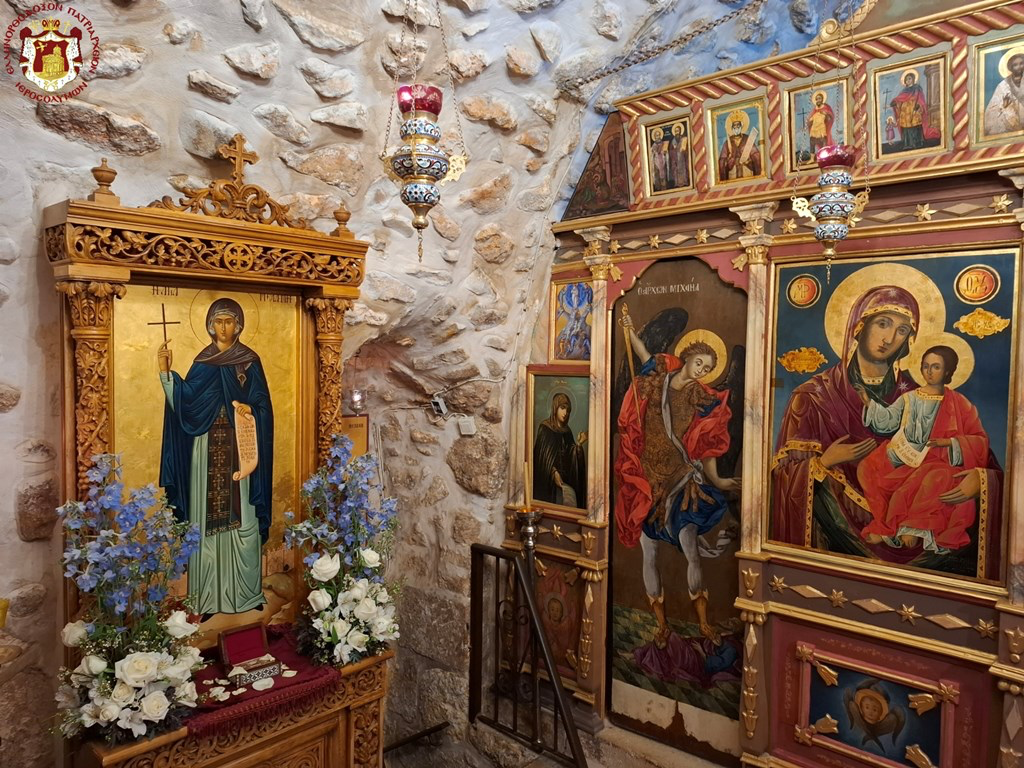
Melania’s most noteworthy site of worship was built on the Mount of Olives in Jerusalem, dedicated to a women-only, virgin-only private monastery. Understanding how Melania taught the monastery can help us understand the state of female Christianity through its practitioners. The first precept of Melania’s monastery was to avoid the gaze of men. As long as the women were not seen, they would be cared for under Melania and her roof. A well was built inside the monastery so as no woman would go outside to fetch water, lest they be seen by a male onlooker. Melania stressed the virtues of Orthodox Christianity to her followers, namely obedience, modesty, wisdom, and above all devotion to God. The women observed constant prayer throughout the day and woke up at all hours of the night to pray. Like Melania, they followed a strict ascetic program of fasting, abstinence, and prayer.
This leads me to my titular question: was Melania’s ascetic lifestyle a means of empowerment, or self-defined oppression? The complicated answer is yes and no. For women of the Late Roman Empire, taking up an ascetic lifestyle meant liberation from the traditional bonds of marriage, childbearing, and domesticity. Monasticism transported women away from the public sphere, whilst creating new private spheres, such as monasteries and oratories. It also allowed for unprecedented freedom of movement, as women were allowed to travel without a husband on holy pilgrimages to biblical sites. Moreover, achieving religious sanctity allowed women to overcome dominant negative stereotypes, such as vanity, lack of intelligence, and sinfulness. Venerated women such as Melania were said to become “men” or “angels,” transcending their subequal position to achieve respect and equality. Indeed, Gerontius begins his biography by noting that Melania should be considered a man for her accomplishments and actions, separating her from the frailer, weaker sex she once belonged to.
At the same time, the values and practices promoted under Melania’s orthodoxy fit neatly into what the male-dominated society desired of women – obedience and humility to the point of self-denigration. While literally out of sight of men, Melania’s monastic women still felt the intense male gaze through internalized religious doctrines. Melania herself strictly avoided acknowledging her own virtues and strengths, going so far as to describe herself in the third person, as it would be too presumptuous to say “I.” Her humility is lauded by Gerontius, who has the privilege to bestow her power and virtue through writing.
Ultimately, our understanding of Melania, and all women, for that matter, has been filtered through the perspective of a male historian with biases and prejudices of his time. In the end, we will never know the true character of Melania the Younger in her own words—though we can go so far as to speculate that Melania’s asceticism was both a gateway for mobility and freedom for many women, and self-inflicted deprivation in an already misogynistic society. To this day, Melania the Younger is venerated as a saint of piety and wholehearted religious devotion. She remains a poignant, outstanding figure in the canon of female practitioners and of Orthodox Christianity as a whole.
Bibliography
Clark, E. (1986), ‘The Devil’s Gateway and the Brides of Christ: Women in the Early Christian World’, in eadem, Ascetic Piety and Women’s Faith: Essays on Late Ancient Christianity (Lewiston, N.Y.), 23–60.
Gerontius, The Life of Melania the Younger, in C. White (ed. and tr.), Lives of Roman Christian Women (London, 2010), 179–230
Kelly, G. (2021) ‘Rutilius Namatianus, Melania the Younger, and the monks of Capraria.’, Late-Antique Studies in Memory of Alan Cameron 46, Brill Academic Publishers, 66-84.
Image Credits
Melania the Younger, nun of Rome (Menologion of Basil II),” c. 985 AD, courtesy of Vatican Library via Wikimedia Commons. Digital copy is in the Public Domain
Image courtesy of the Jerusalem Patriarchate Official Website. Used under official terms of use.

