
Written by Abi Fitzpatrick
26/10/2026
The Manic Pixie Dream Girl, an icon of the modern cultural zeitgeist, undoubtedly shaping male and female imaginations alike. She’s elusive. She’s gorgeous. She’s eccentric. She is an object of desire that cannot be tied down. She is not like other girls, you might say.
In modern popular culture, the Manic Pixie Dream Girl (MPDG) repeatedly emerges with a sole mission: make the miserable male protagonist less miserable. She is not a person, but a tool in the development of the protagonist. She, according to Jennifer Gouck, “arrives with the whispers of her previous, well-travelled life”, heightened femininity, and adventure. An embodiment of fantasy. The MPDG facilitates an exciting, short-lived narrative before disappearing completely. When she does not leave – or rather, is not written out – she is “recast as dangerous or unstable”.
The term was coined in 2007 by American film critic Nathan Rabin, writing about Kirsten Dunst’s character in Elizabethtown, Claire Colburn. It has since faced abundant criticism for reducing multi-faceted female characters to a homogenous trope, with Rabin himself apologising for its overapplication. However, enthusiastic deployment of the MPDG illustrates far more than a young adult fiction trope. It signals the broader confines that both real and imagined women face under the male gaze.
This leads us to Anne Boleyn. The original Manic Pixie Dream Girl, or rather, a woman written into one: first by her husband and then by outsiders, she was constructed as a fantasy and then as a threat. So, how does she fit into this mould?
An Object of Patriarchal Desire
For one, she was an undeniable object of desire. Her fantastical power was so strong it helped set the break from Rome in motion. Anne arrived at the English court as a lady-in-waiting to King Henry VIII’s first wife, Catherine of Aragon, bringing exotic French fashions, musical talent, and fluency in several languages with her. She was mysterious, fiercely intellectual, and novel. Unlike her sister Mary, Anne rejected Henry’s advances when he proposed she merely be his mistress, settling only for marriage. GW Bernard suggests this resistance, her forbidden-fruit allure, and distinctive French customs plausibly drove Henry’s fascination. She brought adventure and excitement into the life of an otherwise disillusioned king who was losing patience with his existing wife. Once officially courting, they spent time together hunting, hawking, and dancing at court. Several sources note their smitten interactions, largely via Eustace Chapuys, the Spanish ambassador and loyalist of Catherine.
Seventeen of Henry’s love letters to Anne survive in the Vatican Library, his growing infatuation clear: hearts encircling her initials, plentiful pet-names, his own heart declared in her possession. Bernard describes the behaviour as that of a “love-sick schoolboy”. The letters offer an “eloquent testimony of his passion”, sketching a timeline of his adoration, most notably illustrated in his concern for her health during the sweating sickness outbreak of 1528. None of Anne’s own responses to Henry survive. This reinforces her lack of agency and objectified position within male desire, a core characteristic of the MPDG. Situated around the male protagonist, the MPDG is offered no space for emotion or opinion; in a similar way the archives have not preserved Anne’s voice.
The Fantasy Collapses
As with the typical MPDG narrative, this fantasy must collapse. If the MPDG is merely an object of desire, then when one gets to know the woman herself, her flaws, her ambitions, the fantasy quickly falls apart; she is no longer a curated figment of the male imagination, but a real person. With Anne, the collapse was gradual, accelerated by the lack of a male heir and Henry’s increasing distaste for her supposedly obnoxious behaviour. Known to be superstitious, Henry began to question whether the marriage was approved by God and, given his belief in the divine right to rule, the missing son was not reassuring. He did not completely lose hope at the birth of Elizabeth, nor after subsequent miscarriages and a possible false pregnancy, but tension was growing.
As with the usual model, the collapse can be seen to be built around failed attempts to tame the MPDG. Anne’s quick wit and supposed arrogance, once a cause of intrigue, were becoming tiresome. In April 1531, Chapuys reported Henry’s frustration with her arrogant language and attitude towards him. Here the comparison starts to strain: Anne did not reflect the MPDG’s blank canvas. The MPDG has no goals of her own, whilst Anne was dedicated to evangelical reform. It was only from the twentieth century onwards that notable attention has been paid to this side of her. Maria Dowling writes of her commitment to disseminating the Bible in English, funding education, and tolerating dissidents. Her commitment to her own beliefs and projects suggests that the MPDG fantasy was constructed by other people, who found it far easier to talk about her beauty and relationships than her ideas.
When she did not behave as the fantasy demanded, she was recast as a danger. The MPDG who stays becomes a threat, and Anne’s story follows this pattern closely. The formal charges against her were adultery, incest, and treason. Witchcraft was never among them. It lived instead in rumour, recorded by Chapuys and caricatured by Nicholas Sander in 1585: it did the work the law did not need to do. Anne’s narrative was in many ways crafted by her enemies: much of the gossip about her arrogance and sorcery originated through the writing of Chapuys, a strong partisan of Catherine of Aragon.
And She Disappears: Until Death Do Us Part
It is a common part of the trope that the MPDG finally disappears completely, but this is perhaps even more potent in the story of Anne Boleyn. Gouck describes the way the MPDG ends the narrative discarded and “frozen in time”. Never is this more accurate than regarding Anne’s execution. Not only does her place in the popular narrative end, but her life ends, too. Henry is frequently said to have shown mercy: she was executed within the walls of the Tower of London rather than in public, by a skilled swordsman. Yet the curation of her final moments illustrates his persistent control over her life, spanning unto her death. Her scaffold speech survives in several differing accounts, rather than a verbatim record, but the gist is consistent. She accepted the verdict, spoke of the king with high respect, and asked for prayers. Perhaps she was protecting Elizabeth or attempting to clear her reputation as a traitorous adulterer. Either way, it is difficult to call this a free act. It was a conventional, deferential speech, delivered under the eyes of the man who had condemned her. Was it her last act of control, or a performance she was permitted?
Interpretations
Finally, Anne embodies the trope via the male-centred lens through which she has been studied. Like Henry’s other wives, she has been defined entirely through him, with little attention paid to her opinions and motivations. Anne Boleyn was not herself a fantasy, but like the MPDG of popular film and literature, she was constructed into one by the male protagonist, in this case Henry VIII, and then by onlookers and later interpreters. The MPDG is just as the name suggests: a dream, an illusion.
The drama of her life, and that of her execution, have inspired countless literary and artistic retellings. Shakespeare and Fletcher’s Henry VIII (1613) offers a more nuanced and sympathetic vision of the former queen and chooses not to dramatise her execution at all. Their adaptation captures varying interpretations of her legacy, from Protestant martyr to treacherous adulterer. Even in the Early Modern period, audiences were being encouraged to consider conflicting perspectives towards her life. Recently, growing interest in female voices and history from below has brought attempts to resituate the wives at the centre of the story. But largely, their lives have been condensed into the infamous rhyme: “divorced, beheaded, died, divorced, beheaded, survived”. SIX the musical rescues Anne, handing her the microphone, while Wolf Hall gives us a sharper, more unsettling Anne who is almost recast as a danger again. The pendulum swings, but still she is defined in relation to the same man.
In Conclusion
Applying a 21st-century cinematic trope to a Tudor queen may seem reductive, nevertheless the comparison demonstrates how female figures, fictional and real, have been confined to parallel roles throughout history. The traits that constitute eccentricity or fantasy may have shifted, but the role in relation to male desire remains a constant. The performance of objectified femininity at the heart of the MPDG is never more powerful than in the life-or-death stakes of Anne Boleyn: a woman surrounded by fantasies strong enough to woo a king, whose life was finalised through execution at the hands of the man who had once declared his love for her. Her fall from queen to traitor is unprecedented, but not narratively uncommon. To be placed on a pedestal leaves no other direction to go; combining male fantasy with the pressure of maintaining a kingdom’s legacy was destined to end in disaster.
Bibliography
Allison Machlis Meyer. “Multiple Histories Cultural Memory and Anne Boleyn in Actes and Monuments and Henry VIII: Cultural Memory and Anne Boleyn in Actes and Monuments and Henry VIII.” Borrowers and Lenders (Athens) 9, no. 2 (2015).
Ben Beaumont-Thomas. “Why the Manic Pixie Dream Girl must never return”, The Guardian, July 2014. https://www.theguardian.com/film/filmblog/2014/jul/16/why-the-manic-pixie-dream-girl-must-never-return.
Bernard, G. W. “‘The Most Happy’: King Henry and Queen Anne.” In Anne Boleyn, 83–89. New Haven: Yale University Press, 2017.
Bernard, G. W. “‘Whose Pretty Dukkys I Trust Shortly to Kiss’ Henry VIII’s Infatuation With Anne.” In Anne Boleyn, 30–47. New Haven: Yale University Press, 2017.
Dowling, Maria. “Anne Boleyn and Reform.” The Journal of Ecclesiastical History (Cambridge, UK) 35, no. 1 (1984): 30–46. https://doi.org/10.1017/S0022046900025938.
Gouck, Jennifer. “The Manic Pixie Dream Girl in US YA Fiction: Introducing a Narrative Model.” International Journal of Young Adult Literature 2, no. 1 (2021): 1–20.
Henry VIII. Love-Letters from King Henry Viii. to Anne Boleyn: Some in French, and Some in English. To Which Are Added, Translations of Those Written in French. With an Appendix, Containing Two Letters from Anne Boleyn To Cardinal Wolsey; With Her Last to Henry the Viiith. London: Printed for J. Churchill, at the Black-Swan in Pater-Noster-Row, 1714.
N, Dr Jessie, and Dr W. Jefflims Samraja. “Spectacle and Selfhood: The Politics of the Male Gaze in Olivia Gatwood’s The Manic Pixie Dream Girl.” ILN Journal: Indian Literary Narratives 3, no. 1 (2026): 85–93.
Piafsky, Michael. “A Conversation with Nathan Rabin.” The Missouri Review (COLUMBIA) 39, no. 4 (2016): 121–42.
Solomon, Claire T. “Anarcho-Feminist Melodrama and the Manic Pixie Dream Girl.”
CLCWeb : Comparative Literature and Culture (W LAFAYETTE) 19, no. 1 (2017)
Vanbuskirk, Sarah. “Understanding the Male Gaze and How It Objectifies Women” Verywell Mind, 2022, https://www.verywellmind.com/what-is-the-male-gaze-5118422.
Image Credits
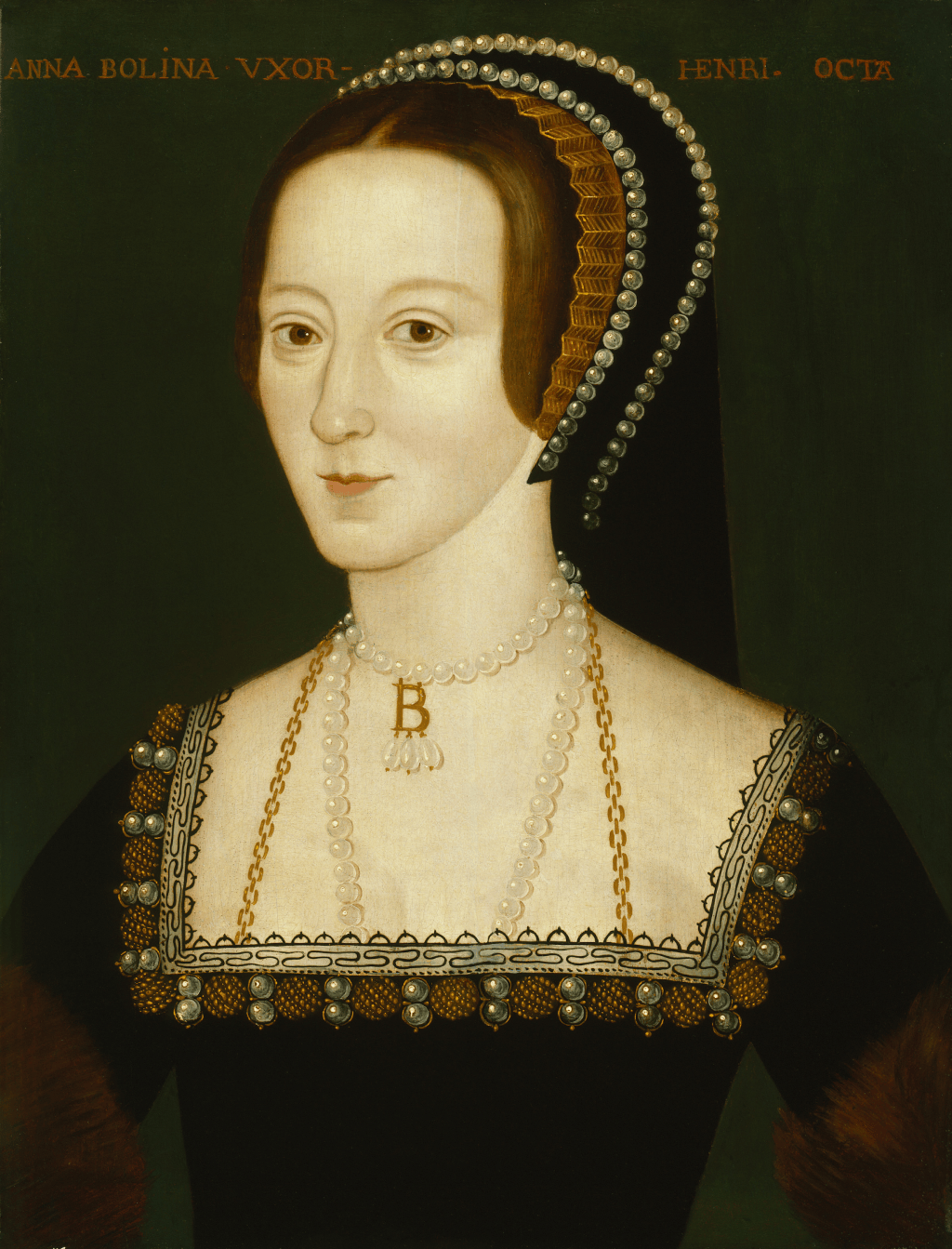
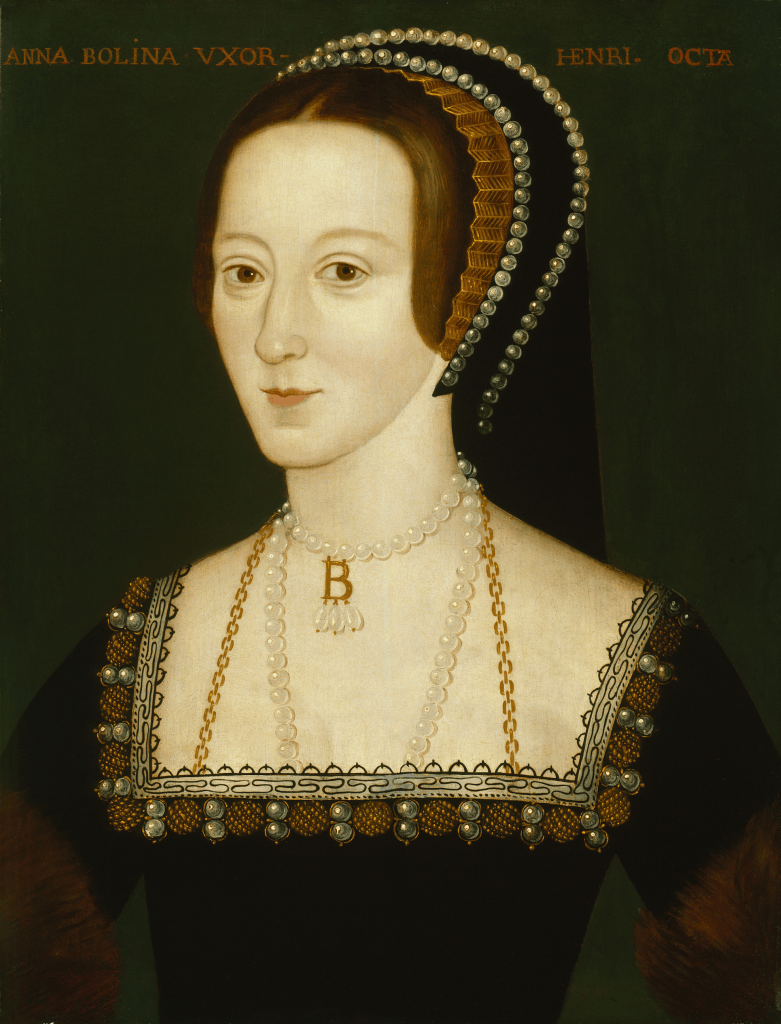
Portrait of Anne Boleyn (c. 1584–1603), anonymous artist. Courtesy of the National Portrait Gallery, London / Wikimedia Commons.

