

Written by Oscar Virdee
“Look I didn’t want to be a half-blood”.
Nineteen years ago, readers across the world were exposed to those eight words.
With them, a riptide started that became Rick Riordan’s Percy Jackson universe. Spanning seventeen novels, two failed films and one dazzling Disney + series the world has been exposed the Riordan’s version of Graeco-Roman myth.
But what makes Riordan so successful? It could be the readability of the books, that the character was created for his son or that Riordan’s protagonists shoot arrows through our hearts with their dialogue. I’d argue that it’s a mixture of all three and Riordan’s radical adaptions of wider-known myths. With that in mind, let’s take a closer at the classical myths and Riordan’s adaptions of them.
To start off with let’s tackle Riordan’s adaption of the Furies. Notably, the Roman version of the name is used rather than the Greek, Erinyes even though this novel sets up Percy’s interactions with the Greek pantheon.
In classical Greek myths, Hesiod tells us in Theogony the Erinyes are born of the same blood as the Titans. Whilst we are given a physical description from Aeschylus’s Libations: “Like Gorgons, stoled in sable garb, entwined with swarming snakes”. Classical art also shows that the Furies had wings.
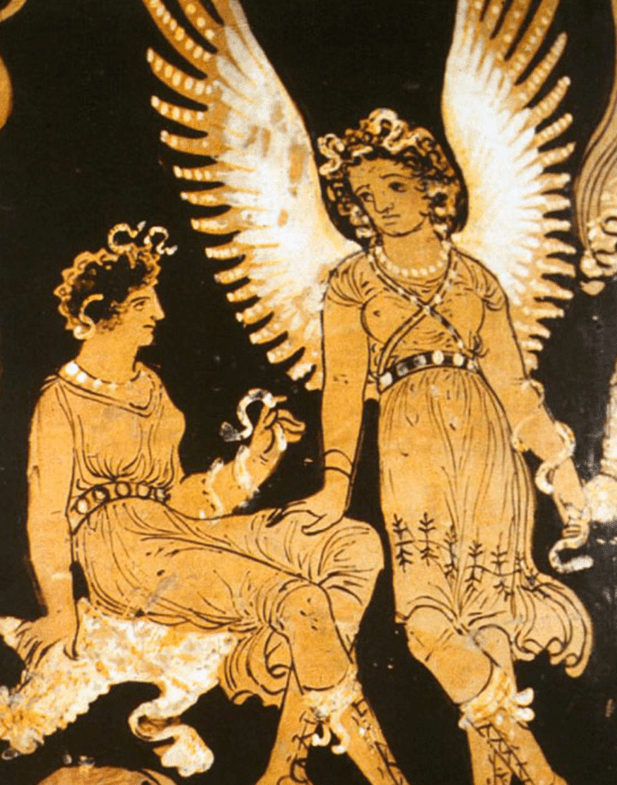
Fig. 1. Third century depiction of the Erinyes (https://www.theoi.com/Gallery/T40.1.html)
In the pottery, we can see that the Erinyes look closer to traditional angels rather than monsters, albeit with some snaky hairdos. So how does Riordan alter the perception of the Furies to make them fearsome? Simple – add “bat wings and claws and a mouth full of yellow fangs.”
A 2021 paper stated, “various studies show the social perception of bats tends to be negative”, so if Riordan wanted the Furies to frighten his readers, the best way to do so would be to distort their classical appearance so that a modern audience would have a more negative reaction to the Furies.
Later on in The Lighting Thief we are introduced to the Minotaur. In his catalogue of women, Hesiod describes the Minotaur as a monstrous creature that “Resembled [a man its feet up above [grew a bull’s] head”. In terms of the slaying of the Minotaur, the sixth century writer Pherekydes implies that Theseus slew the Minotaur with a sword whilst Apollodorus states the beast was slaughtered only by Theseus with only his fists. Both Apollodorus and Pherekydes agree that Theseus is only able to escape the labyrinth as a direct result of the affectionate Ariadne’s love. Gantz goes on to note that whichever version of the myth is to be believed there are always three integral parts “Ariadne’s love, the thread, and the minotaur slain”.
In the retelling of the myth, Riordan faced a few key issues: How to adapt a partner’s love for a younger audience? How to place the thread into a modern context? How to address the different versions of the murder of the beast and finally how could he make the Minotaur less monstrous for his less mature readers?
Riordan deftly diverges a partner’s love into a more relatable experience for his younger audience, a mother’s ever-giving love for her child. Only through Sally’s (Percy’s mother) maternal guidance that the “Minotaur can’t change direction very well” can Percy evade the beast. To solidify the sense of motherly love, Riordan has his protagonist use a “red rain jacket”, most likely a gift from his mother, as a makeshift matador’s flag in order to distract the beast. This literary decision also allows the key theme from the classical myth, thread, to be applied to a modern audience.
To ensure that his novel would not overly frighten his younger audience, Riordan employs an unexpected augmentation, undergarments. In this case, the pants in question are “bright white Fruit of the Looms”, in brief – by ensuring the Minotaur is somewhat clothed Riordan ensures that the novel remains child-friendly whilst also employing some aspect of comic relief, as can be evidenced through Percy’s inner monologue of the beast, the “bright white” underwear “would’ve looked funny, except for the top half of his body”.
Finally, in order to address both versions Apollodorus and Pherkydes version of the myth (which Riordan is sure to be aware of given his tenure as a classical studies teacher) Riordan combines the two, with his bare hands, Percy is able to channel the Apollodorian version of the myth by ripping off the Minotaur’s horn creating a “ragged bone weapon the size of a knife” which he uses to slay the Minotaur as Pherekydes describes.
As we close out, it’s clear to see that whatever mythological matrix Riordan is employing, it is certainly working for all ages. With the Percy Jackson Disney+ series being renewed for a second season; Riordan is going from strength to strength and enchanting the current and future generations of Classics scholars.
Bibliography
Aeschylus, Libation Bearers, trans by. A.H Sommerstein (2008) London
Apollodrous, Library, trans. by Sir J.G Frazer (1921) London.
Hesiod, The Shield. Catalogue of Women. Other Fragments, trans. by G.W. Most (2007), Harvard.
Hesiod, Theogony, trans. G. W. Most (2006) London.
Fig. 1 The Erinyes on a vase painting. (https://www.theoi.com/Gallery/T40.1.html)
Boso, A. et all (2021) ‘Understanding human attitudes towards bats and the role of information and aesthetics to boost a positive response as a conservation tool’ Animal Conservation 24 (https://zslpublications.onlinelibrary.wiley.com/doi/full/10.1111/acv.12692)
Riordan, R. (2005) Percy Jackson and the Lightning Thief London: Puffin March, J.R.
T. Gantz: (1993) Early Greek Myth. A Guide to Literary and Artistic Sources Baltimore, London: The Johns Hopkins University Press.
Featured Image Credit: Larry D. Moore, English: Author Rick Riordan at the 2007 Texas Book Festival in Austin, Texas, United States., November 3, 2007, November 3, 2007, Own work, https://commons.wikimedia.org/wiki/File:Rick_riordan_2007.jpg.


