
Written by Arianna North Castell
Jane Boleyn is commonly known as the woman who betrayed her own husband and sister-in-law, sending both George and Anne Boleyn to their deaths. This is a perception that has prevailed throughout history, and the intrigue of this viewpoint is inarguable. However, in recent years, historians have begun to peel back the layer of misogyny that Tudor history is covered with and inspect the actual evidence – which unfortunately makes for a far less salacious story. Though the work of these revisionists is vital, it is important to know when to put down the magnifying glass and take a step back. Is it possible that Jane Boleyn was far less involved in the death of George and Anne Boleyn? Yes. But does this make her an unsung Tudor feminist icon? It’s unlikely. Jane Boleyn seems to fall into a category along with most Tudor women – with little contemporary evidence that truly details her life or motivations.
There have been many theories as to why Jane Boleyn would or would not have chosen to levy claims of incest and adultery against Anne and her husband. The defendants of Jane Boleyn have cited that she would not have testified due to love for her husband, or the financial ramifications of Boleyn’s downfall, as well as the impact for her political career. Those who argue Jane is the source cite her jealousy over George and Anne’s relationship, her spite over George’s rumoured homosexuality, or even a secret deal between her and Anne’s detractors. All examinations of her motivations dive into the hypothetical, which although is necessary for a historian building a narrative, is somewhat superfluous to one who chooses to simply inspect the primary evidence and draw a conclusion – are the claims against Jane reliable?
The notion that Jane is responsible for the charges comes from a small pool of contemporary evidence that has been extrapolated and built upon by subsequent historians. The trial notes mention Jane by name once – when George was asked if Anne had relayed claims of Henry VIII’s impotency to his wife. Though this evidence could have been supplied by Jane herself, after all it details a conversation between her and Anne, Jane is not mentioned once when the accusers of Anne are listed. In the contemporary sources, Anne’s ladies such as Elizabeth Somerset, Nan Cobham and Lady Wingfield are all named as those who gave primary evidence in the charges of adultery and incest against Anne. Among those, ‘maybe one more’ is listed by John Husee, who wrote to Lady Lisle of the trial just a few days after Anne’s execution. This ‘one more’ has been taken to be Jane Boleyn, though this interpretation is merely guess work. A similar moment has also been cited as evidence for Jane’s involvement in the trial. George states that the jury are willing to condemn him on the evidence of ‘only one woman’. Historians have again suggested that this ‘one woman’ could be Jane – but this is speculation, coloured by future assessments of her character. It cannot be said that evidence of Jane’s involvement in the trials of both Anne and George that dates after her death would not be motivated by Jane’s downfall.
The jealous, vindictive character built around Jane comes much later. In 1542, Jane was executed alongside Katherine Howard, convicted of aiding Queen Katherine in her adultery and was even declared insane before her death. This dramatic downfall, embroiled in a scandal so similar to Anne’s, is sure to cloud any contemporary evidence surrounding the trial of Anne and George that was written after Jane’s death. One of the first chronological sources to discuss Jane’s involvement would be Anthony, who cites Jane as a ‘particular instrument’ in the fall of George and Anne Boleyn, due to jealousy. Anthony is a contemporary source, however his original journals do not survive, and historians who cite him as evidence are actually citing Burnet’s notes on him, who lived 150 years after Jane’s death. This offers a completely different perspective, especially as he writes after Jane’s character assassination. The next account we have regarding Jane is from George Wyatt, who wrote his biography of Anne Boleyn during the reign of Elizabeth I, where he refers to Jane as ‘wicked wife, accuser of her own husband, even to the seeking of his own blood’. This comes with its own host of biases, Wyatt pleasing the reigning queen with his account exonerating her mother, and the prejudice surrounding Jane due to her own death. Jane’s crimes and subsequent execution would arguably make her the perfect scapegoat – she was already embroiled in the fall of one Queen, why not another? As compelling a story as it makes, when contemporary evidence is examined (evidence from the actual trial and not any that can be coloured by the nature of Jane’s downfall) it seems highly unlikely.
The study of Jane’s involvement in the death of George and Anne Boleyn is one that is contaminated with speculation and hypotheticals surrounding her inner motivations and not focused on the surviving evidence. There is no way that we will ever know Jane’s true feelings surrounding her religion, her marriage with George or her relationship with Anne. Any theories surrounding these are just that, theories, based on small pieces of evidence that are melded into a historian’s narrative. What can be definitively said is that accounts of Jane’s character have been tainted by misogyny. It is all too easy to villainise a fallen and executed woman and paint her as vindictive, as a ‘peccant sister-in-law’ (Henlyn’s description of Jane), but as Hilary Mantel states, this perception of Jane ‘comes from the same deep drawer as Anne’s deformity’. The revisionism of Jane’s involvement is therefore a necessary one; her status as a woman who has been treated unfairly by history is undoubtable.
Bibliography
Fox, J. (2019). Jane Boleyn: The Infamous Lady Rochford. United Kingdom: Orion.
Loades, P. D. (2011). The Boleyns: The Rise & Fall of a Tudor Family. United Kingdom: Amberley Publishing.
Norton, E. (2013). The Boleyn Women: The Tudor Femmes Fatales Who Changed English History. United Kingdom: Amberley Publishing.
Mantel, H. (2008) ‘Frocks and Shocks’, London Review of Books 8.30.
Weir, A. (2011). The Lady In The Tower: The Fall of Anne Boleyn (Queen of England Series). United Kingdom: Random House.
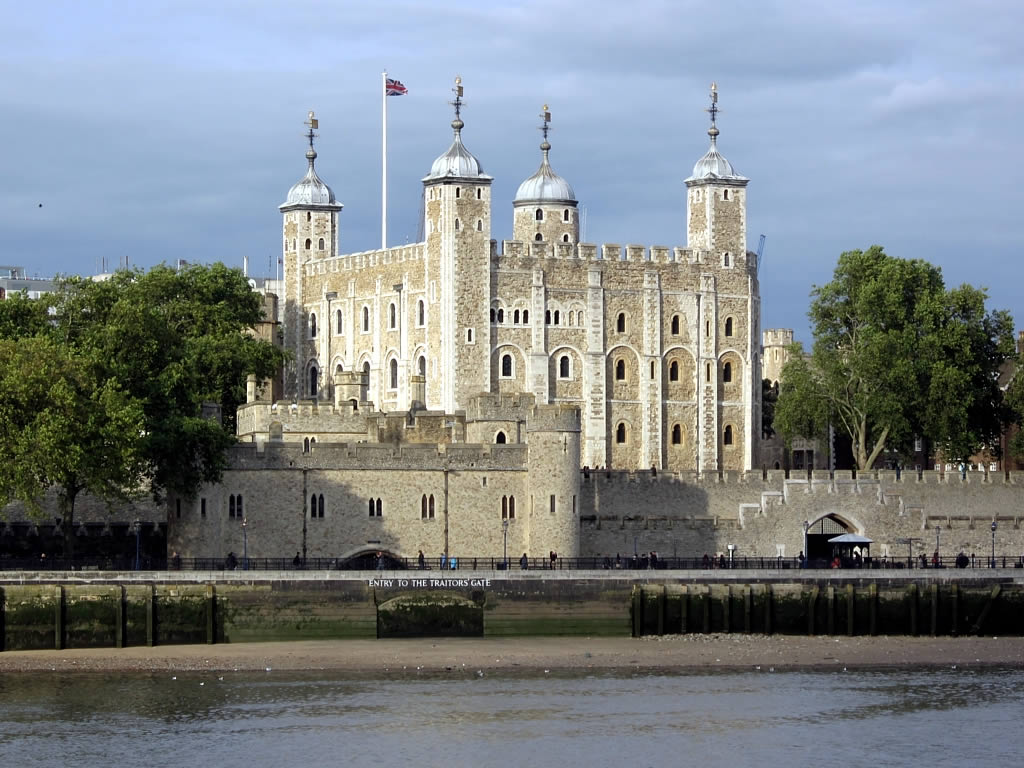
Featured image credit: “Tower of London” by D-Stanley is licensed under CC BY 2.0.

