
Written by Emma Clinton
23/11/2026
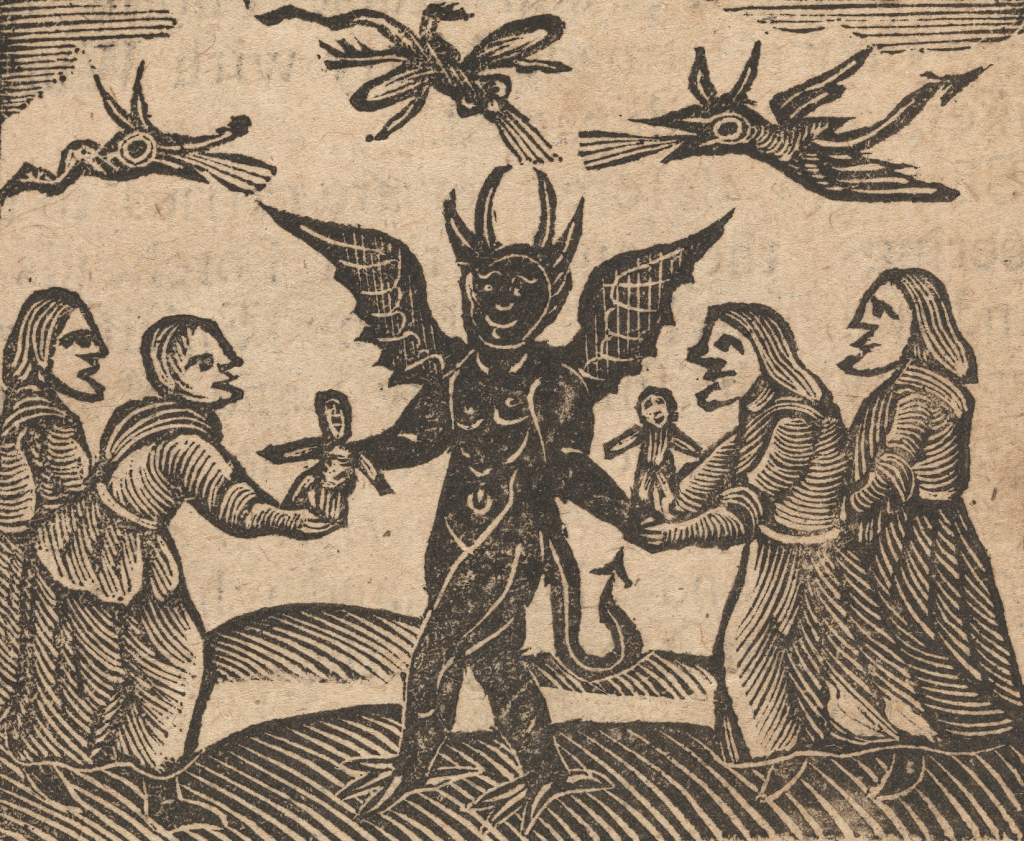
Hidden within Edinburgh’s Castle Esplanade, tucked in the corner of a gift shop wall, sits the Witches’ Well—Edinburgh’s monument to the witch hunts of the 1500–1600s. What once was a functioning well designed by Celtic revival artist John Duncan in 1894, is now an easily missed relic of Scotland’s witch-hunting past. When I visited the well on a November evening, I was hard-pressed to find it. Unlike so many tourist must-sees in Edinburgh, there was no line of people waiting to get their picture of the well. In fact, it seemed I was the only person who was aware of its existence. How has Edinburgh, a city that loves to capitalise on its macabre witchy history, from Harry Potter gift shops to Ghost Bus tours, so easily forgotten its historical past? Underneath the commodification of commercial witchcraft and spectral ghost tourism lies the truly ghoulish reality of Edinburgh’s participation in witch hunts.
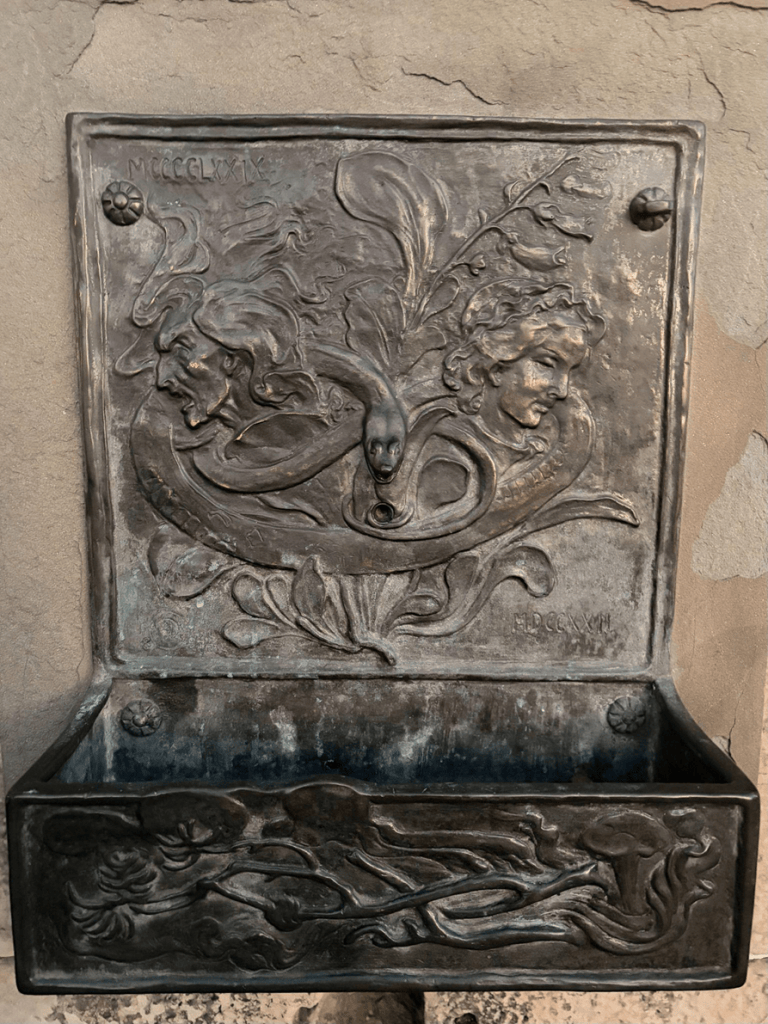
The site of the Witches’ Well is anything but accidental. Attached to the side of the Castlehill Reservoir in 1912, the well marks the beginning of the Esplanade, the open area between the street and the castle. Known in the 16th and 17th centuries as ‘Castlehill’, the Esplanade served as the grisly site of execution for countless accused witches, estimating in an upwards of three hundred. Accused witches came from all different backgrounds, though a majority were women, lower-class, and often widowed or single. Chiefly, the executions on the Castle Esplanade took place during the North Berwick Trials of 1590–92, a period of dogged witch hunts headed by King James VI out of fear and paranoia about his royal misfortunes. However, the Edinburgh Castle bulletin omits an even greater trial, one where the witch hunts reached an unparalleled level of fervour and violence, beginning in 1661.
The great Scottish witch-hunt of 1661–2, an often-forgotten historical moment that marked an unprecedented height of witchcraft-related persecution, with two hundred and six individuals being accused between April and December of 1661. Staggeringly, this metric represents four times the number of persons accused in Salem, Massachusetts, which is arguably the most famous episode of witch-hunts. Beginning to the east of Edinburgh in the small villages of Midlothian and East Lothian, the persecutions spread throughout Scotland within the year.
Nearly a year after Charles II’s restoration and Cromwell’s deposition, both England and Scotland experienced political unrest and monarchical instability. Furthermore, 1660 marked the end of English rule in Scotland, as Cromwell’s Protectorate was officially dissolved and Scotland was left to run its kingdom independently once more. Given the transition of power, Scotland was left lawless for a period, as English law no longer applied and Scottish Law was not yet codified. While Scottish officials scrambled to solidify the judicial system, proceedings, trials, and persecutions froze. This can partially explain the large jump in prosecution numbers in 1661, as the judicial system launched again, though it cannot singularly explain the fervour in witchcraft-related prosecutions. Indeed, with the move from English to Scottish rule came the trade-off of English commissioners for Scottish prosecutors in accusations of witchcraft. While their English counterparts were known to be more lenient and refused to apply judicial torture to gain witch confessions (as it was against English law), Scottish prosecutors operated through blackmail, coercion, and torture to force guilty confessions out of the accused. Furthermore, Scotland’s newfound independence unfortunately plunged the country into an economic crisis, with dead trade, doubled taxes, and unlivable wages laying the foundations for unrest and scapegoating.
The momentum of witch-hunting in 1661 was headed chiefly by laypeople as opposed to clerical or religious officials. Indeed, most prosecutions came from lay judicial authorities—local gentry and bailies, in the localities in and around Edinburgh. The Bailies, civic officers responsible for a burgh in Scotland, and local gentry, well-off upper-class citizens without official civic titles but with community authority, spearheaded campaigns, and petitions to the parliament to create a commission for the discovery of witches. In April 1661, the Scottish Parliament established a commission expressly for the discovery of witches, a choice that would plunge that year into a series of inhumane, zealous witch-hunts.
Suspected witches were legally prosecuted through criminal charges of maleficia, or acts of harmful magic. Indeed, witches were accused of inflicting injury or death upon their neighbours, preventing crops from growing, burning down barns and houses, and causing general misfortunes to their enemies. In reality, eighty-four per cent of the accused in 1661 were women, singled out and reported by their neighbours for one of four reasons: magical practices, moral deviance, personal temperament, and economic circumstances. Markedly, the most vulnerable members of the community were singled out and aroused the most suspicion among their neighbours. Poor and/or widowed women aroused suspicion for their ability to subsist and survive on their own, while non-celibate women were accused of sexual immorality, a sign of copulation with Satan. Whatever the case, these seemingly innocent, banal traits were taken as markers of heretical pacts with Satan, and the women were sent off to be tried and proven guilty for their kinship with the devil.
Guilty convictions were achieved through the pseudo-scientific practice of ‘witch-pricking’, carried out en masse in Scotland by specialised ‘witch-prickers’, the most prolific being John Kincaid. The methodology of these ‘witch-prickers’ was to identify the devil’s mark— an area of a witch’s body, often a mole, birthmark, or scar, that was invulnerable to pain, torture, and bleeding. Finding the devil’s mark meant the witch had made a pact with the devil, an indictment even worse than a simple act of maleficia. Kincaid and other prickers worked tirelessly throughout 1661, tagging and indicting witches with proof of the ‘devil’s mark’ in every burgh and locality of the country. With this undeniable proof, the accused were tried in court and indubitably sent for execution, publicly displayed on Edinburgh’s Castlehill and beyond.
The year 1661 marked the apex of suspicion, paranoia, and persecution towards witchcraft in Scotland. Through a host of intertwining factors, such as political instability, economic crisis, and religious, fear-mongering rhetoric, laypeople and gentry were led to incite the most violent hunt in Scottish history. Ultimately, the intensity of the witch-hunts puts a mirror up to Scottish society, reflecting its fears of heterodoxy, the empowerment of the lower classes, women amid social tension, and economic instability. When unexplainable misfortune hit the towns and burghs of Scotland, the most comforting explanation was the heresy of a few corrupt souls, which could be neutralised through systematic execution.
So, next time you’re walking down Edinburgh’s Royal Mile or the Castle Esplanade, consider stopping at the Witches’ Well for a taste of Edinburgh’s true witch history. And remember the accused witches who lost their lives on the very streets now strewn with witchy paraphernalia.
Bibliography
Historic Environment Scotland (2021), “Statement of Significance: Edinburgh Castle – Esplanade”. Webpage: https://www.historicenvironment.scot/archives-and-research/publications/publication/?publicationId=9fbc23c6-dce4-4dec-921e-a57000cf8ff7 (accessed 15.11.26)
Levack, B.P. (2008) “The great Scottish witch-hunt of 1661-2,” Witch-Hunting in Scotland. 1st ed. United Kingdom: Routledge, pp. 81–97. Available at: https://doi.org/10.4324/9780203089507-5.
The University of Edinburgh, ‘Witches – Survey of Scottish Witchcraft’ Webpage: https://witches.is.ed.ac.uk/ (accessed 15.11.26)
Image Credits
W.P. (Unknown), Public domain, via Wikimedia Commons

