
Written by Sarah Ryan
26/10/2026
Introduction
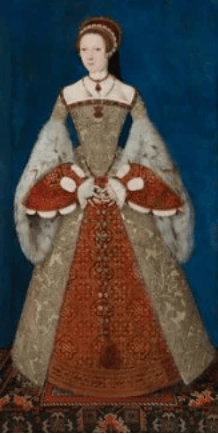
Divorced, Beheaded, Died, Divorced, Beheaded, Survived. Those six words are used to summarise six queens of England, reducing the women to their relationships with the notorious king. Even now, when media expands our impressions of these women – the musical Six, the television show The Tudors, books by Phillipa Gregory, and countless other period pieces – one queen is still either ignored or worse, demonised as a predator. Catherine Parr was neither a reformist saint nor a jealous abuser. Instead, she was a woman whose faults and achievements deserve to be properly discussed.
Writings
Some scholars call Catherine Parr the first woman in England to publish her own work in English under her own name. Her first original book was published while Henry VIII was alive and was called Prayers or Meditations. Later, when Henry VIII died, she published Lamentations of a Sinner. These books are a remarkable breakthrough in the literary history of this nation as they are published in her own name. Previously, female writers’ works were merely distributed as manuscripts. For this feat alone, Catherine Parr deserves a place in history. She previously published translations and had even encouraged her stepdaughter, Princess Mary, to do the same. Princess Mary did indeed undertake translations that were widely circulated and participated in the translation of Erasmus’ version of the New Testament alongside the profound Protestant Nicholas Udal and possibly Parr herself. This text was placed in every church in England in 1547. Subtly, Udal gave Parr greater credit with expanding the Reformation than Henry VIII. The prayer at the beginning of the translation continued to be used by the Anglican church until the time of Elizabeth II. Hence, the writings of Catherine Parr are an integral part of her story and legacy.
Thomas Seymour
Parr may have had a brilliant mind, but her heart led her astray. Having survived marriage to Henry VIII by the skin of her teeth, Parr then chose to remarry to Thomas Seymour, the younger brother of the deceased queen Jane Seymour and uncle to the new king. However, the marriage started as a scandal because Parr had not completed her mourning for Henry and had not sought permission to remarry. To make matters worse, Thomas Seymour started to groom Parr’s stepdaughter, Elizabeth Tudor, who was staying with Parr after her father’s death. During this time Elizabeth was between thirteen and fifteen, and Seymour would enter her rooms early in the morning before she had properly dressed. Parr once helped Seymour in a game that involved cutting Elizabeth’s dress. Language such as child molestation, age of consent, or sexual abuse may not have existed in their current form in the 1540s but concerns were certainly raised about the situation. Parr’s critics point to this as evidence for the complicity of Parr in Elizabeth’s abuse. Eventually, Parr sent Elizabeth away when she was expecting her first and only child; too late, her critics would argue. Indeed, Parr fundamentally failed to protect Elizabeth, who was legally her daughter, from a predator. However, this was a time where women lacked legal means of protecting themselves from their husbands. According to the law, Parr belonged to Thomas Seymour. Parr’s behaviour in her last marriage is a reminder that all women have faults and are capable of making great mistakes.
Education
One of Catherine’s Parr more famous traits is her love of education and scholarship. A better epithet for her would be the scholarly queen. Indeed, one example of her patronage of education was her advocacy for the protection of the universities of Oxford and Cambridge. After the monasteries were stripped, there was a great risk of the same fate befalling the universities of Oxford and Cambridge. However, Catherine Parr intervened against this and influenced Henry VIII to spare the universities. How considerable her role was in this decision, we don’t know for certain, but she was certainly a powerful advocate for the universities. Her influence on women’s education was also powerful as she, with her ladies in waiting, pushed for greater female education. Many of her ladies in waiting believed, as she did, in the humanist tradition that encouraged women’s education in contrast with views that believed it served no purpose. Her court became a centre of female learning and an example to the nation. Thus, Parr’s patronage of education and female scholarship was a profound part of her legacy.
Catherine Parr’s role in the royal family
Parr’s role as stepmother to the royal children deserves mention. The inclusion of Mary and Elizabeth in the Third Succession Act in 1543 is frequently credited to Catherine Parr. Thus, she is responsible for both women becoming queens. Her time as Regent of England in 1544 served as an inspiration for both women as neither had seen Catherine of Aragon act as Regent. She and Prince Edward wrote to each other frequently and appear to have been affectionate with each other. Although, her influence over Edward was limited because his position as Prince of Wales and their lack of biological relationship decreased her control over his household and education. She and Mary appear to have been close despite their differences in religious beliefs and attitudes. As mentioned earlier, she encouraged Mary to participate in the humanist tradition with their translation of Erasmus’s work, which Mary would later suppress in her own reign. Over Elizabeth, her influence is clearest. She was responsible for the selection of Elizabeth’s tutors and the choice to bring up the princess in the Protestant faith and ensured she had an education worthy of a prince. Parr’s moderation and ability to maintain friendships with Catholics and Reformers may have influenced Elizabeth’s initial religious approach. Through Elizabeth I, Parr’s religious beliefs became part of the Church of England. Parr’s ability to form close relationships with all of Henry’s children is a testament to her warmth, and in return these children helped to carry her legacy into the modern day.
Lack of religious conviction
However, the conviction of Parr’s religious beliefs has been challenged. She was certainly raised Catholic and her second husband, Lord Latimer, was sympathetic to the Catholics as he attempted to act as a go-between for the Pilgrims of Grace and Henry VIII. Her writings under Henry VIII always stuck to the letter of the law. A close friend of hers, Catherine Suffolk, certainly was a more extreme reformer than her. Anne Askew, a preacher who probably preached before Parr, was tortured and executed by the Catholic faction of the court for her refusal to give evidence against the Queen. Parr did not intervene to try and save Askew’s life despite how much Askew had suffered for her sake. Thus, the extent of Parr’s loyalty and beliefs is questionable. Also, her friendship with the Princess Mary, a profound Catholic, implies her beliefs were not that fervent. Her household followed the more conservative practices of Henry VIII’s later life. Her books are non-controversial. She herself declared that she only debated religion with the King to divert him from the pain of his injury. However, this declaration was made during a time where a warrant had been drawn up for her arrest on charges of heresy, proving that even the wife who survived nearly did not. Catherine Parr may have been a believer, but she was no martyr. Her beliefs and loyalties were subservient to her desire to survive in Henry VIII’s court. This does not make her a monster but rather demonstrates how difficult life was in Henry VIII’s court.
Conclusion
Catherine Parr’s achievements and sins demonstrate both the intelligence and humanity of one of England’s most fascinating queens. Frequently, she is stuck in the shadows of the other enigmatic and vibrant characters of her time. School children will be taught one word about her, yet her legacy reflects the complicated woman who once ruled England.
Bibliography
Haugaard, William P. “Katherine Parr: The Religious Convictions of a Renaissance Queen.” Renaissance Quarterly 22, no. 4 (1969): 346–59.
Hoffman, C. Fenno. “Catherine Parr as a Woman of Letters.” Huntington Library Quarterly 23, no. 4 (1960): 349–67.
Kujawa-Holbrook, Sheryl A., and Sheryl A. Kujama-Holbrook. “Katherine Parr and Reformed Religion.” Anglican and Episcopal History 72, no. 1 (2003): 55–78.
White, Micheline. “KATHERINE PARR (1512–1548): Protestant Queen, Author, and Influencer.” In Women Reformers of Early Modern Europe: Profiles, Texts, and Contexts, edited by Kirsi I. Stjerna. Augsburg Fortress, 2022.
Image Credits
Unknown artist, Katherine Parr, circa 1543, oil on panel, 71 in. x 37 in National Portrait Gallery, NPG 4451

