
Written by Emily Borg
16/02/25
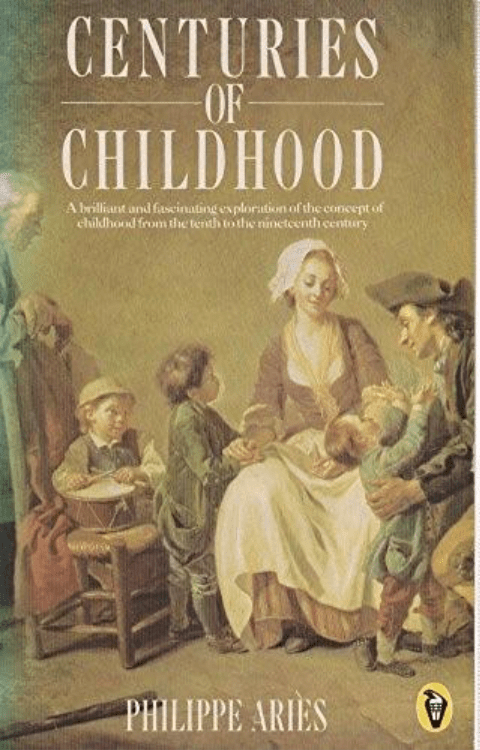
Philippe Aries’ polemical history claims that there was no distinct period of childhood in the Middle Ages, and that there were not strong emotional bonds between parents and children. Historians have primarily challenged Aries’ theory by demonstrating the faults of his methodology, and his neglect of gender and class. Classen argues that his limited selection of evidence in turn creates a limited view of the Middle Ages, and his failure to use interdisciplinary sources misrepresents the diversity of the Middle Age. It has been correctly claimed that his neglect of class and gender creates an oversimplistic narrative of the past. Crucially, historians have criticised Aries’ argument not only for his narrow choice of sources, but for the inherent reductionism of his argument which imposes Western assumptions about childhood onto Medieval society. This reductionism, they argue, shows that Aries’ model is not only inaccurate, but fundamentally shaped by a desire to create a narrative of linear progress. Through challenging Aries’ theory of childhood, historians have demonstrated that the Middle Ages possessed a distinct concept of childhood, one that differs from modern standards, but not inherently inferior, presenting a compelling criticism to the progression narrative.
A common challenge to Aries’ theory of history is his methodology, primarily his limited choice of primary sources. It has been convincingly argued by Hanawalt and Classen that Aries’ evidence is not reflective of the whole of Medieval society, as it focuses on the elite. The elitist focus, they argue, permits Aries to overlook the inherent societal distinctions and to oversimplify and generalise the history of childhood. Hanawalt correctly posits that Aries centres his sources on 16th and 17th century writers, such as Montaigne and Moliere, and ignores medieval texts. She further asserts that through his limited evidence from the two aforementioned writers alone, he was able to cherry pick literary and artistic evidence to support his thesis. This allowed Aries to marginalise experiences based on social class and gender.
Classen similarly highlights that Aries’ sources were drawn from too narrow a time frame. Classen argues that Aries chooses his evidence with the express desire to create a clear divide between the medieval past and our present, or to present the modern day as morally superior. He directly criticises Aries’ methodology, and claims that his sources should be more interdisciplinary in order to reflect the diversity of the Middle Ages. He emphasises the need for literary, documentary, and scientific analysis to gain a fuller understanding of the history of childhood. For both Classen and Hanawalt, such methodological reductionism simplifies the Middle Ages and supports a misleading “march of progress” narrative. Ultimately, they argue against selecting evidence with the purpose of supporting a preconceived thesis.
Historians have claimed that it is not only Aries’ primary sources that are limited, but also the way in which he analyses and draws conclusions from them. Aries argues, for example, that there was no word to define the period of adolescence in the French language, and presupposes that there was also no medieval concept for the period of adolescence as we know it today. However, Lett argues that miracle narratives written in both Latin and French use specific terms for ages of young children. Lett articulates that for boys aged 0-2 the word infant was used in Latin, while in French the word enfant was used for boys aged 0-12. For the period of adolescence, aged 13-16, the word in French used was vallet. Following on from this, Crawford also demonstrates that there were distinct words in Anglo-Saxon vocabulary that related to childhood, with cidhad translating to childhood, and gugoðhad translating to youth. Thus, Lett and Crawford undermine Aries’ theory and demonstrates how Aries’ draws conclusions about Medieval society from insubstantial evidence.
Aries’ theory of childhood has been criticised for its focus on Western Europe and its assumption that childhood is a fixed, universal category. Crawford and Pollock challenge this theory by undermining Aries’ reification of childhood and critiquing the imposition of Western morals onto it. Pollock primarily argues that to view childhood as Aries did, rooted in modern and western sensibilities and assuming it had the same structures, usages, and expressions, would be to exclude many children from this history. Crawford, similarly, asserts that viewing childhood as a tangible concept would be to ignore the societal values in which it was manifested. Crawford furthers her challenge to Aries’ theory by claiming that his failure to see childhood as a social construct limits the applicability of his historical narrative, rendering it relevant to a small area of Western Europe. Therefore, they both champion a more diverse explanation for the history of childhood that is heavily dependent on the society in which it was born.
Pollock furthers her challenge by centring her research on global understandings of childhood, asserting that Aries’ understanding of childhood is inherently linked to his socially Western upbringing. She highlights some of the key differences between Western and non-Western families, including the structure, and how affection was openly expressed. Pollock stresses that in Japan, Iran and the Middle East, it was common for wider family members to be the primary caretakers of children; a direct contrast to the Western nuclear family. Likewise, Pollock claims that affection was not primarily expressed through acts of kindness rather than through words of affirmation, a contrast to Western families, referencing the level of care that the Aztecs gave to their children. By emphasising these inherent cultural differences, Pollock conforms to Crawford’s argument that family and childhood are social constructs. Therefore, criticising Aries’ tendency to reify the concept of childhood and his moralising stance.
Historians have also levied criticisms against Aries’ failure to investigate gendered differences within the history of childhood. They contend that through his failure to research these distinctions, he disregards the opportunity to utilise childhood as a microcosm to research wider societal values. Hanawalt shows how gender differences can shed light on broader societal attitudes. She references the different books that were used to bring up children of middle-class families, where girls were expected to marry into another wealthy household. These books preach obedience and patience, reflecting the larger societal values that were expected of women at the time. Hanawalt links this critique to Aries’ overall theory, and claims that his lacking attention to detail causes his generalisation of the past to be seen as the “dark ages” for children.
In a similar vein, Pollock demonstrates that gender differences in rearing children can be reflective of the values within that specific culture, highlighting how Aries’ model not only lacks nuance but also fails to provide wider context. For example, she highlights the differences in how boys were brought up in China, England and Iran. Pollock claims that in China boys were brought up to take control of the household with an emphasis on education, in England boys were raised to be independent and autonomous, and in Iran they were raised to be God-fearing and honest. Therefore, Pollock demonstrates that gender differences were dependent on the societal values.
Historians have rightfully claimed that Aries’ history is too focused on the upper classes, making no room for varied experiences based on class. Aries’ disinterest in class differences, historians have argued, marginalises key social concepts such as work in favour of education. This creates a limited historical narrative which centres not only on the elite but also the upper-class conception of childhood. Aries himself claims that childhood “lasted for a long time in the lower classes” and supports this by arguing that there was a lack of schooling for working class children, and as such they did not grow up as quickly as otherwise. Pollock asserts that Aries fails to see that despite challenges, lower class families had incredibly strong bonds. Through perceiving education solely as the way to adulthood, Aries ignores the shared experiences of the working class, marginalising their experiences. Pollock furthers this view by referencing lower class families who made efforts to make sure their children were fit for employment to keep them out of abject poverty. Through shifting her focus to the working world, rather than education, Pollock’s history includes a wider variety of sources and experiences.
Ultimately, historians have levied challenges against Aries’ theory of childhood due to his use of sources and ignorance of varied experiences based on gender, location and class. Aries’ theory, they argue, supports the historical-change hypothesis, and presupposes a linear history. In critiquing Aries’ theory of childhood, they are not just dismantling his methodology and lens of focus, they are also in a wider sense demonstrating that there was more continuity than change to the past, undermining the Western conception of linear history. Therefore, their critiques serve as a step towards understanding childhood as a distinctive concept, one that is deeply rooted in the social values of the period, challenging the marginalisation of women, members of the working class, and non-Western families.
Bibliography
Albrecht Classen. 2005. Childhood in the Middle Ages and the Renaissance the Results of a Paradigm Shift in the History of Mentality. Berlin, Boston De Gruyter.
Crawford, Sally. 1999. Childhood in Anglo-Saxon England. Sutton Publishing.
Hanawalt, Barbara A. 2002. “Medievalists and the Study of Childhood.” Speculum 77 (2): 440. https://doi.org/10.2307/3301328.
Lett, Didier. 1997. L’enfant Des Miracles. Editions Aubier.
Philippe Ariès. (1960) 1962. Centuries of Childhood : A Social History of Family Life. London: J. Cape.
Pollock, Linda. 2017. “Childhood, Parents and the Family: 1500–1900.” The Routledge Handbook of Global Child Welfare, February, 3–18. https://doi.org/10.4324/9781315672960-2.
Featured Images Credit: Book Title Cover
 Retrospect Journal