
Written By Liam Schwentke
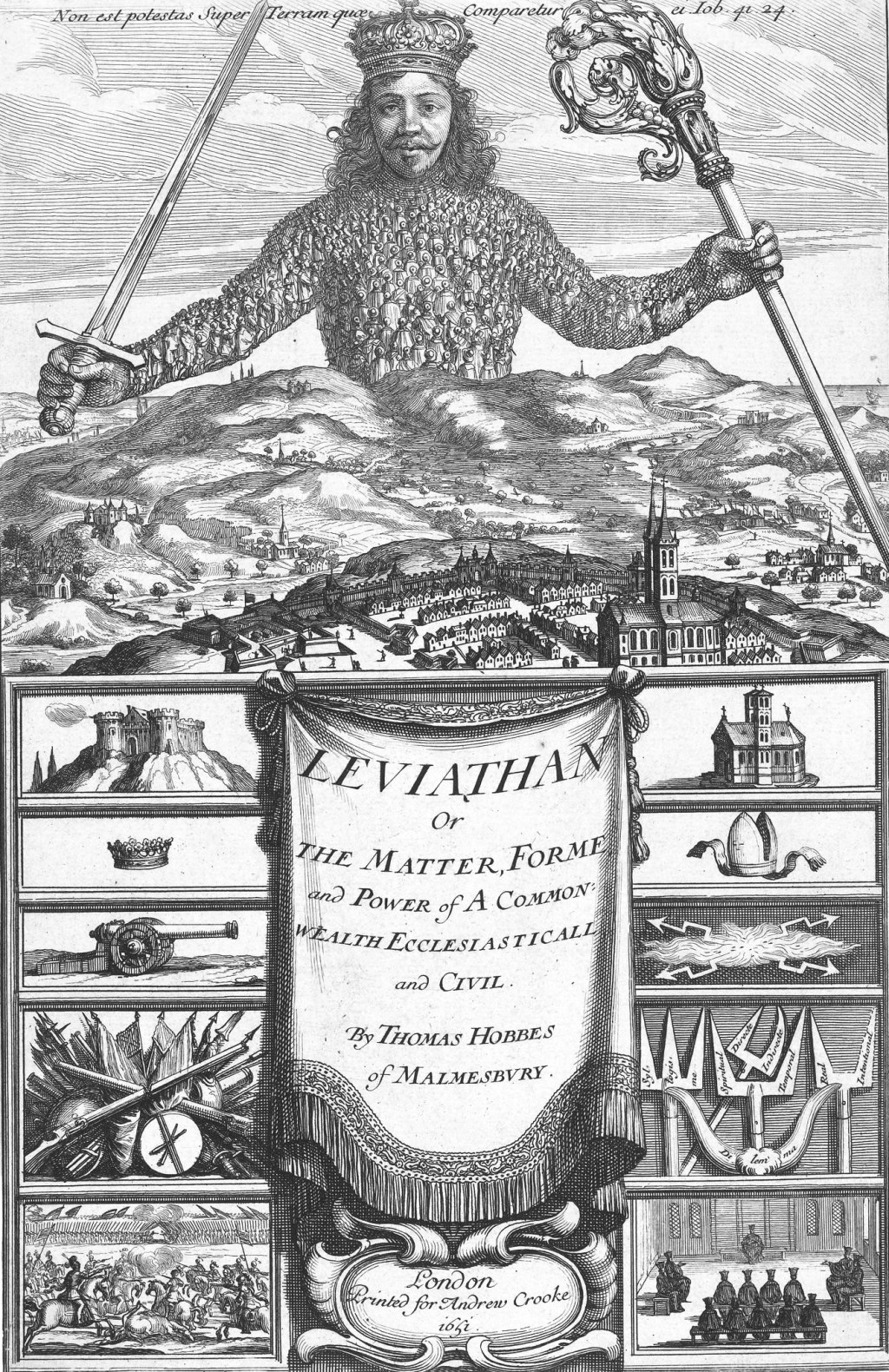
The fulcrum of our conception of history is, by default, by definition, and by schemata, the state. The earliest limit of our profession is facilitated by the advent of writing; a creation that is inherently tied to the foundation of city-states. Our primary sources are overwhelmingly produced by and intended for elites; they are stored in state archives, and in our authority over our discipline, without ever acknowledging our disciplines’ reliance of the state, we unknowingly act as enforcers of it. Hence, the development of the state is seen as largely uncontested as a universal stepping stone in the social progression of the human race. It is perhaps among the largest things we take for granted, solidifying itself concretely within our ‘common sense’. What does it take then, using the Hobbesian term, to slay this leviathan? It must extend further than being state-critical, it takes breaking the aforementioned ‘common sense’ that influences our study. This article provides a survey on contemporary developments in anti-state historiography in an attempt to advocate for more within our discipline to adopt what James C. Scott calls an ‘Anarchist Squint’ in their historical study.
To better articulate the point of breaking ‘common sense’, I will give the example of what Dr. Nik Matheou has titled ‘Methodological Imperialism’; that is, our tendency to adopt the perspective of the state and it’s ruling class in our historical study. When we talk about the ‘Five Good Emperors’ of the Roman Empire, precisely what we determine as ‘good’ is the prolonging and increased efficiency of exploitation within the machination of ‘Empire’. We consider it an era of peace and prosperity due to the fact that the interests of every apparatus of the state, from emperor to army to senate, achieved a hegemonic salience in their desire for power. This perception of internal stability would never have come about if not for the external conquest of wealthy societies such as the Dacians. Even if you were to point toward newly introduced social welfare programs such as the alimenta, these too were funded by Dacian plunder and the increase of taxes on landowners. We inherit the analytical common sense of those like Gibbon when we gaze upon the ruins of the Roman Empire, and what informs our inquiry is that of a cautionary tale of the states’ collapse. As Matheou states, methodological imperialism put simply is “what is taken to be given and unquestioned in the process of analysis”. We must think more self-critically when we argue toward certain unambiguous notions, such as was Justinian ‘successful’ in his (re)conquest of the Italian peninsula, was Theodosius’ bifurcation of the empire a ‘bad’ decision as it led to the fall of the West? When we make such judgements, we are putting the marker for success on the successful reproduction of the state system, or worse, the reproduction of the ruling class. Without these considerations, we as historians act as morticians, diagnosing the cause of death for particular historical states. We divorce ourselves from history, that is, from historical people; their existence is our object of study, and we are the conscious observer, the subject. In this epistemological process, we objectify humans as they once lived, which once acknowledged sounds just as bad as it truly is. Among the most groundbreaking approaches is the ‘new paradigm’ developed by the philosopher Abdullah Öcalan. As already discussed, our typical conception of ‘history’ is fundamentally reliant on the state, therefore we may characterise state-based history as the mythology of state-civilisation. What is proposed is an entirely new framework in conceptualising history. Quoting the newly established Academy for Social Science, history is “the result of the constant flow of two rivers: state civilization, a five-thousand-year unity of systemic domination and exploitation, and democratic civilization, the historical stream of ‘moral and political society’, the basis for all human sociality.”
The framework draws upon all sorts of intellectual backgrounds, particularly Marxism, Poststructuralism, and Feminism, and is not so much a mutually exclusive ‘lens’ but a framework in which one could ask critical questions regarding the dialectic between these two rivers. What is of particular focus is power and freedom, the two main domains of each respective river; it proposes that ‘natural’ society seeks freedom and cooperation and Öcalan uses neolithic society as an example of this. We may critique the notion that ‘human nature’ is characterised by the ‘survival of the fittest’ and it is the machination of state that allows us to cooperate by way of laws and security; if this were the case, then structural formations before the existence of the state would have not been possible. It was in Ancient Sumer where the state was first conceived, predicated upon the domination of women and the centralisation of power and capital. Though as dialectics dictates, natural society was not wiped out by the state, but it, and state-civilizations’ existences were enriched. Think of moral and political society as a field and state-civilization as the farm placed atop it. The farm and its produce, its environment, and its characteristics are entirely shaped by the field. The impending global food crisis is caused by monocropping and prioritising the field as a means to produce commodities rather than sustenance, and in doing so, is sapping the nutrients the field requires. This cycle of firstly underappreciating the needs of the field, then secondly producing less and less nutrients, and then thirdly exploiting the field even further to produce the same amount as before, will continue until the death of the field. This analogy is not perfect, as we as humans, members of ‘democratic society’, are the most biologically complex beings and have the privilege to determine the relation of the field and farm. In order to live in accordance with the needs of the field, it requires the revolution of mentality, it requires us to ask the right questions of the field rather than the farm. What this means is that as historians, it should be our task to uncover the history of ‘democratic society’, we should not be deprived of purpose and meaning in our enquiry. The expressed reason for a ‘new paradigm’ is the emancipation of society from these systems we inherited and continue to reproduce, as we have been intellectually unable to question the fundamental assumptions of human life.
The previous paragraph is rather heavy, and a likely incomplete distillation of what Öcalan and the Academy of Social Science stands for, but the purpose of this article is to inspire within the reader, likely fellow students, to research further this cutting-edge field. A field that does not authoritatively have a name, perhaps using a name in itself will provide unnecessary boundaries for this thought, though various names have been used: ‘new paradigm’, ‘Sociology of Freedom’, ‘Apoism’, ‘Öcalanism’, etc. By adopting a stern and unflinching critical eye on the boundaries and assumptions of our discipline, we are able to make exciting and revolutionary developments in our understanding of humanity, of ourselves, of our institutions, and our ways of life.
Antonio Gramsci, in a letter to his son provides clarity on the true purpose of our discipline in a way that perhaps one can only achieve when imparting knowledge on the curious and free mind of the young:
“I think you must like history, as I liked it when I was your age, because it deals with living people and everything that concerns people, as many people as possible, all people in the world, in so far as they unite together in society and work and struggle and make a bid for a better life. All that can’t fail to please you more than anything else, isn’t that right?”
It would be wise to remember that as historians we are not dealing with the object of ‘history’; we are dealing with everything that concerns people as we have always existed; as we have always tried to make a better life for all.
Bibliography
Gramsci, Antonio. Letters from Prison. Vol. 1. Edited by Frank Rosengarten. Translated by Raymond Rosenthal. New York: Columbia University Press, 1994.
Matheou, Nicholas S. M. ‘Methodological Imperialism’. In Is Byzantine Studies a Colonialist Discipline?: Toward a Critical Historiography. Pennsylvania State University Press, 2023.
Öcalan, Abdullah. Beyond State, Power, and Violence. Cologne: International Initiative Edition, 2011.
Öcalan, Abdullah. Manifesto for a Democratic Civilization. Vol. 1. Cologne: International Initiative Edition, 2015.
Scott, James C. Seeing Like a State: How Certain Schemes to Improve the Human Condition Have Failed. Yale University Press, 2020.
Scott, James C. Two Cheers for Anarchism: Six Easy Pieces on Autonomy, Dignity, and Meaningful Work and Play. Princeton University Press, 2012.
Featured Image Credit: Bosse, Abraham. Frontispiece to Thomas Hobbes’ ‘Leviathan’. 1651.

