
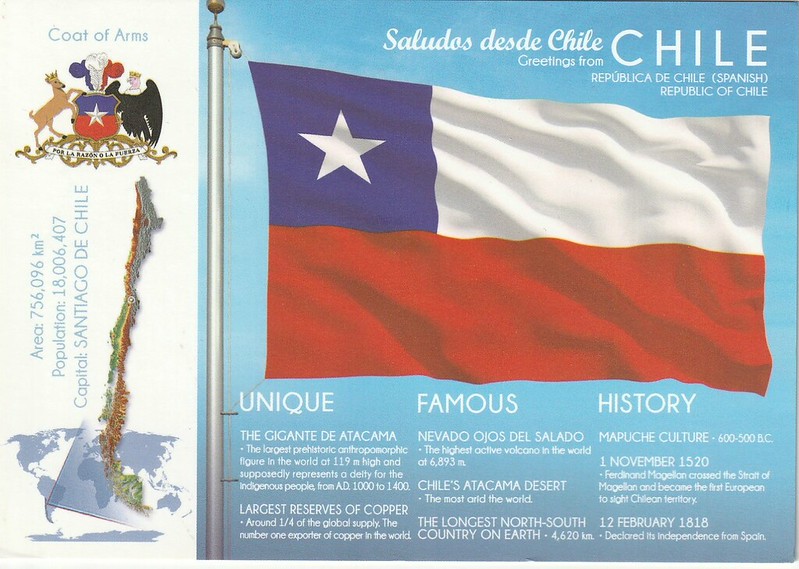
Written by Alexander Stroem
In the months prior to his election in December 2021, Gabriel Boric, then a candidate for the left-wing Apruebo Dignidad coalition, remarked that “if Chile was the birthplace of Neoliberalism in Latin America, it shall also be its tomb”. As the current electoral period reaches an end (16 November and 14 December, largely between the conservative José Antonio Kast and oficialista Jeannette Jara), Neoliberalism still very much remains a focal point of debate. Chile has always had a complex relationship with neoliberalism, an ideology whose legacy in Chile remains enveloped in the controversial legacy of the Augusto Pinochet and the Chicago Boys (1973-1990) dictatorial regime. Neoliberalism has had its fair share of opposition in Chile. With the poverty, unemployment and economic concentration left behind by the Pinochet regime (alongside many human rights abuses), it might therefore seem surprising that upon the return to democracy, Chile continued implementing neoliberal policies. Indeed, the ensuing Centre-Left executives, headed largely by Christian Democrats, continued these policies, even consolidating them by various privatization schemes. To contemporaries, including the controversial Alfredo Jocelyn-Holt, the Concertación seemed “a mere machination to perpetuate the military legacy”. By October 2019, during Sebastían Piñera’s mandate (2010-2014/2018-2022), decades of discontent over neoliberal policies culminated in mass protests (El Estallido Social) throughout Chile, followed by a 2022 attempt to rewrite a new constitution under the now exiting Boric. The attempt failed, rendering neoliberalism’s legacy even more complex and its continuity and persistence even more necessary to understand.
Any understanding of Chilean neoliberalism and its structural consolidation begins with the coup of September 1973 against Salvador Allende and the subsequent rise of the Chicago Boys. Since the 1938 reforms of the Popular Front (1937-1941), Chile’s national development model was largely state directed, particularly through governmental organizations such as the Production Development Corporation, created in 1939. By the fall of the socialist Salvador Allende (1970-1973) via a military coup led by Pinochet’s Junta, the state was a key agent in all economic development, owning 488 business and nineteen banks, controlling over three thousand prices, and levying import tariffs on over five thousand goods. Pinochet and the Chicago Boys (a group of neoliberal-oriented economists educated at the University of Chicago) radically restructured the Chilean economy through “The Brick” (El Ladrillo), a variant of Milton Friedman’s “Shock Therapy” against inflation (Friedman met with Pinochet in 1975 and 1980). This included widespread privatization (by 1978, the state owned twenty-three businesses, eleven of which were in the process of privatization), decreasing the role of the state (Friedman had called centralized economic planning “consistent with its own brand of chaos and disorganization” and ironically “likely to endanger individual freedom and liberty”), the liberalization of prices, and promoting foreign investment and trade. Quantitatively speaking, neoliberalism under Pinochet had mixed results, although contemporaries, including Friedman and Friedrich Hayek (who visited Chile in 1977 and 1981 but rejected the label “Neoliberal”), remarked Chile’s economic growth to be “miraculous”, citing inflations decline from 605.9% in 1973, to 21.4% in 1989. Nonetheless, the debt crisis of the early 1980s severely compressed the Chilean economy, with trade falling by almost 30% in 1980-1982, alongside the accumulation of a substantial foreign debt (around fifteen billion USD, namely 60% of its GDP). By 1990, it stood at eleven billion USD). Poverty grew rapidly, being at around 38.6% in 1990, while unemployment was steady at around 7.8% (having been as high as 28.9% in 1983). Mario Benedetti, an exiled Uruguayan, noted in 1984 that throughout the Southern Cone, neoliberalism was “a total disaster”, and had left “each respective economy on the border of the abyss”. He earlier remarked that the Chicago Boys and Friedman, seemed “ready to ruin, by alphabetical order, the economies of the South American countries”. With such a legacy, it seems bizarre that the democratic transition, in contrast to other post-dictatorial transitions, did not rid itself of its neoliberal past.
The transition’s first difficulty in shifting neoliberalism’s dominance in Chile originates in its institutionalization within a constitutional-legal framework. Following the initial implementation of neoliberal reforms, such changes were subsequently consolidated with the 1980 Constitution, drafted by the Comisión Ortúza, which included the Pinochetista Jaime Guzmán, and Carlos Cáceres, later minister of Finance (1983-1984) and a close follower of Hayek. The “markedly authoritarian” constitution, while not explicitly labelling itself “Neoliberal”, fundamentally emphasized the right to private property, free enterprise, and the considerably lessened role of the state, which gave precedence to the private sector. While the state would fund economic and social activities, such as the provision of social services, the private sector would deliver them. Pinochet remarked that it was a text based on “libertarian inspiration” which oriented it towards “the bases of a free economic system, founded upon private property in the means of productions, and particular economic initiative, within a subsidiary state”. It was an act against “socialist statism”. Hayek’s legal theory of a “Constitution of Liberty” (although his influence on the drafting is debated) was seemingly represented throughout (albeit a disputed influence), particularly viewing state intervention in the economy as a distortion of liberty. Article 1 stipulated that “the State recognises and protects the intermediate groups through which society is organised and structured and guarantees them sufficient autonomy to fulfil their own specific purposes”. As later emphasized throughout, this largely meant the private sector rather than an almost non-existent state/public sector. Regardless of Hayek’s influence, the institutionalization of neoliberalism within a constitutional framework provided the first hurdle to later attempts to reform the constitution during the transition. Indeed, the reforms of the Chicago boys were in large protected by certain regulations, including the requirement of a supermajority (above 60-66%) to change certain “laws with constitutional ranks”, into which many of the reforms were written. Even outside the sphere of economics, only after “long and arduous political negotiations” were political reforms implemented under Ricardo Lagos (2000-2006) in 2005, by which some change was possible. Lagos himself complained in his 2019 autobiography that the constitution was full of “locks” preventing reform, particularly for universal social services.
Paradoxically, the greatest reason was perhaps that, as argued by Edwards (2023), “Pinochet lost the electoral battle [election of 1989], but the Chicago Boys won the ‘war of ideas’”, persuading their former rivals to maintain the neoliberal model. Despite Patricio Aylwin’s (1990-1994) opposition to Pinochet’s regime, little reform to the neoliberal system ensued after 1990. His chosen minister of finance, the more moderate Alejandro Foxley, had been a staunch critic of the regime and the Chicago Boys throughout the 1980s, leading all to expect a fundamental dismantling of the dictatorship’s policies. Rather instead, little change was implemented beyond the reform of the Junta’s labour law and a new tax package for the funding of new social programs. Many policies were kept and even furthered, resulting in the effective “legitimization” of the Chilean neoliberal model, a practice that has continued well beyond 2005 onwards. Why was this the case? Aylwin noted in 1990 that this was simply a continuity of a “global tendency”, noting that “For my government, the primary engine of development lies in private enterprise. The role of the State has undergone a redefinition… To persevere on the path of development, Chileans must work hard, be entrepreneurial, and be disciplined. It would be unfortunate if, under the pretext that democracy has arrived, the country were to fall into the easy habit of expecting everything from the State”. Agreements were made regionally with the Andean Community (1993-1998), Mercosur (1996), Mexico (1991), Asia-Pacific (1994) and Canada (1997). He later remarked in 1992 that the State’s role was “to help, stimulate, facilitate”, and that to purely rely on the state had “limitations that restricted the maximum enjoyment of riches”. This was particularly to combat poverty, with Aylwin stating in 1992 that “… in countries like ours, on the path of development, the need for political economies that generate growth on the bases of stability, are fundamental to defeat poverty”. Lagos had a similar philosophy. Despite his formerly anti-Pinochet socialist loyalties, Lagos sought to maintain Chile’s rapid expansion globally, enacting a tariff agreement of 3% with the United States in 2004, alongside similar treaties with a myriad of countries (notably the EU in 2003), making Chile one of the most commercially open countries in the world, resulting in great export-led growth (growing 9.9% between 1990-1998 and 6.1% between 1999 and 2008). Chile’s income per capital tripled between 1985 and 2019, while its GDP grew from 9,592 USD to 15,118 USD by 2000. Since then, Chile has consistently ranked among the more developed and successful Latin American countries, alongside Uruguay. Nonetheless, student debt to private banks rose substantially, while unemployment grew from 7.8% in 1990 to 9.7% in 2000, resulting in much discontent against the neoliberal mode, culminating in 2019.
Various factors stand out for the continuity of the Chilean neoliberal model, ranging from institutional constraints to its apparent successes. Nonetheless, regardless of its paradoxical adoption and its later successes, neoliberalism remains a controversial topic in Chile, likely remaining so well beyond this electoral cycle.
Bibliography
Primary Sources:
Benedetti, Mario. “Chile y su Moraleja» in El Desexilio, y Otras Conjeturas. (Madrid. Ediciones El País. 1984). pp.75-78.
—-. Benedetti, Mario. “Chicago no nos Representa” in El Desexilio, y Otras Conjeturas. (Madrid. Ediciones El País. 1984). pp.23-26.
Comisión Ortúzar. Textos comparados de la Constitución Política de la República de Chile sometida a Plebiscito por la H. Junta de Gobierno por D.L. no. 3.464 de fecha 11 de agosto de 1980 y de la Constitución Política de la República de Chile de 1925 : con las modificaciones introducidas a su texto el 11 de septiembre de 1973. (Santiago de Chile. Instituto de Estudios Generales. 1980).
Friedman, Milton. “Neo-Liberalism and its Prospects”. (Farmhand. 1951.02.17). pp.89-93.
Jocelyn-Holt, Alfredo. “So Conservative and Yet So Modern? The Politics of Concertación” in The Chile Reader: History, Culture, Politics. Ed. Elizabeth Quay Hutchison; Thomas Miller; Klubock; Nara B. Milanich; Peter Winn. (Durham. Duke University Press. 2013). pp.581-584.
Pinochet Urgate, Augusto. “Discurso de Augusto Pinochet dando a conocer publicación de la Nueva Constitución”. 1980.08.10. Santiago de Chile. Archivo Jaime Guzmán E. CONS.80.01.04.
Rosett, Claudia. “The Free Market and Chile: An Aborted Economic Test”. (New York Times. 1983.07.03). p.3.
Street, James H. “Friedman’s Chile”. (New York Times. 1977.01.04). p.26.
Secondary Sources:
Alemparte, Benjamin. “Towards a theory of neoliberal constitutionalism: Addressing Chile’s first constitution-making laboratory”. (Global Constitutionalism. Vol.11. No.1. 2022). pp.83-109.
Amar, Mauricio D. “La Deuda Externa en el Contexto de la Crisis Financiera Internacional”. (Biblioteca del Congreso Nacional de Chile/BCN Informe. 2009).
Caldwell, Bruce; Montes, Leonidas. “Friedrich Hayek and his visits to Chile”. (The Review of Austrian Economics. Vol.28. No.3. 2015). pp. 261-309.
Díaz, Camila; Rovira Kaltwasser; Zanotti, Lisa. “The arrival of the populist radical right in Chile José Antonio Kast and the “Partido Republicano’”. (Journal of Language and Politics. Vol. 22. No.3. 2023). pp.342-359.
Edwards, Sebastian. The Chile Project: The Story of the Chicago Boys and the Downfall of Neoliberalism. (Princeton. Princeton University Press. 2023).
Ffrench-Davis, Ricardo. « L’économie Chilienne depuis la Crise Globale ». (Cahiers des Amériques Latines. Vol.68. 2011). pp.51-68.
Fuentes, Alberto Ignacio Donoso. “El Neoliberalismo en la Nueva Democracia: Legitimación del Modelo Económico Neoliberal en Chile (1990-1994)”. (Revista Notas Históricas y Geográficas. No.22. 2019). pp.175-194.
Hecht Oppenheim, Lois. Politics in Chile: Democracy, Authoritarianism, and the Search for Development. (Boulder. Westview Press. 1993).
Mur, María M. “Boric, el exlíder estudiantil que busca acabar con el neoliberalismo en Chile”. (Swissinfo. 2021.09.18). Boric, el exlíder estudiantil que busca acabar con el neoliberalismo en Chile – SWI swissinfo.ch.
Sater, William F; Collier, Simon. A History of Chile 1808–2018. (Cambridge. Cambridge University Press. 2022).
Schkolnik, Mariana; Teitelboim, Berta. Pobreza y Desempleo en Poblaciones: La Otra Cara del Modelo Neoliberal. (Santiago de Chile. PET. 1988).
Featured Image Credit: OpenVerse https://openverse.org/image/531c63a2-57ef-4293-9e1a-be8bf649e264?q=chile+flag&p=17

