
By Lauren Hood
28/09/2025
The rapid growth of consumerism and the solidification of a distinctive youth culture in Britain led some scholars to argue that class no longer constrained people’s lives in the 1960s. Graham Murdock and Robin McCron argue that the presence of pop music and a unique youth culture led by working-class band The Beatles symbolised the “imminent arrival of a capitalist society without classes”. A similar sentiment was seen in 1964 when Mark Abrams argued that the incomes and lifestyles of working-class and middle-class British families were overlapping, weakening the constraints of class in Britain. However, such arguments which suggest a classlessness of Britain in the 1960s dismiss the clear role which class played in influencing cultural movements and outputs of the period, including the creation of new sub-cultures, such as Skinheads, in Britain.

Figure 1: David Myers’s comic, appeared in Evening News in July 1968
When examining cultural outputs, it is clear that certain characteristics were associated with different social classes. Figure 1 appeared in newspapers in July 1968, responding to the Newsom Report and the suggestion that places at private schools, such as Eton, should be reserved for working-class children. The depicted family, displaying traditional gender roles of the mother preparing food for her son and husband, discuss how they would change their behaviour to better fit in with wealthier families who could afford a private education. The topic of “working class children for public schools” being deemed newsworthy highlights how uncommon private education was amongst the working-class and suggests that private education was predominantly undertaken by wealthier children. While this highlights clear distinctions between social classes, more importantly this comic highlights that conversations surrounding social class took place in magazines and newspapers, using caricatures to portray the social class of the family. BBC Man Alive’s 1967 documentary Top Class People, which followed Twiggy and her family, defined Twiggy by her working-class background. The influence of Twiggy’s social class on her public perception was evident as, despite her successful career, she remained labelled and perceived as working-class. Examining contemporary attitudes to class highlights that certain characteristics were associated with certain social classes, leading to successful people like Twiggy continuously being defined by their working-class background. Furthermore, different behaviours being expected of different social classes created spheres of society in which certain classes were excluded from and therefore constraining peoples’ lives, displayed through Myers’ comic discussing private education.
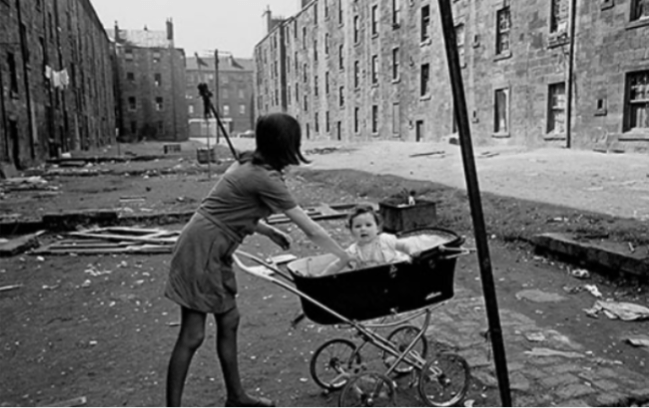
Figure 2: Nick Hedges’ Mother and Her Baby Boy in a Gorbals Tenement Yard, 1970
Nick Hedges’ photography was motivated by capturing the social issues which the working-class of Britain were enduring. Through commissioned work by housing charity Shelter, social issues such as slum housing and poverty were explored through Hedges’ photography. Figure 2 captures a mother and child walking amongst slum tenement housing in Glasgow. It is likely that this housing would be home to members of the working-class, with the broken windows and rubbish on the street likely making this housing affordable. Figure 3 captures squalor living conditions in a Birmingham home, with many people in Britain living in similar poor conditions. These images emphasise the role of class in motivating cultural outputs, as Hedges images captured social issues, such as slum housing, which working-class Brits were more predisposed to. Hedges’ photography challenges notions of the declining influence of class, argued by scholars such as Mark Abrams, by highlighting that poverty and slum housing were still widespread in many parts of Britain during 1970.
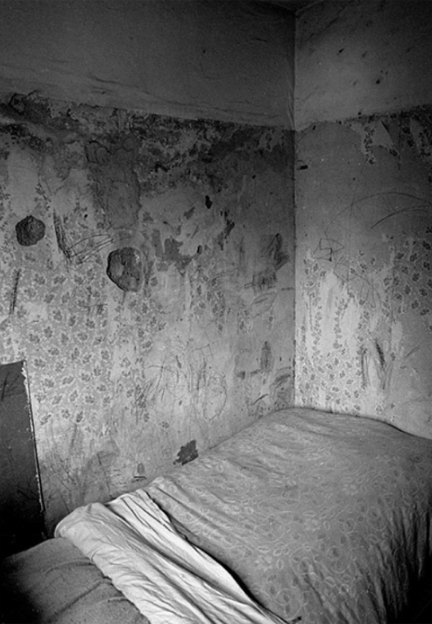
Figure 3: Nick Hedges‘ Balsall Heath Condemned Property, 1971
Class constrained people’s involvement in counterculture movements, with different causes and movements appealing to different social classes. John Griffiths argues that elitism existed within the hippie movement which did not resonate with the working-classes of industrial northern areas but did amongst university students. Griffiths also highlights that working-class youth were unlikely to participate in the movement due to the anti-materialism which it encouraged in opposition to capitalism. This implies that consumer goods appealed to many working-class youths as a symbol of status related to new affluence which was not as relevant to their middle-class peers. The importance of exploring class through youth groups was argued by Geoff Mungham and Geoff Pearson: “it is as if when youth are discussed that social class goes on holiday”. Similarly, Donnelly highlights the influence of class in counterculture, describing it as a “parallel universe for the disaffected young middle-class”. The presence of middle-class university graduates with financial support within ‘Beatnik’ travel culture in countries such as Nepal was highlighted through Sharif Gemie’s scholarship. ‘Beatnik’ travel culture is important for showcasing that access to cultural developments which occurred throughout the 1960s were constrained by money and therefore largely excluded the working-class. Class constrained people’s involvement in counterculture by appealing to different social classes, with countercultures which have become synonymous with the image of the ‘swinging sixties’ limited to wealthier people.
Working-class experiences and identities are evident in music created in the 1960s and are greatly responsible for shaping the people who produced them. Leigh Michael Harrison argues that the working-class industrial backgrounds of members of band Black Sabbath were crucial to the sound of their music which they began releasing in 1970, and its influence on the emerging heavy metal genre. Similarly, Keith Gildart argues that The Kinks’ music was influenced by Davies’ working-class background, offering critiques of government policy perceived to have bettered the lives of the working-class, such as slum clearances. These musicians highlight that when working-class individuals’ careers flourished, they retained their identity and anger at the limitations of the social positions which they were raised in. This emphasises how integral class was to personal identity in the late 1960s, as argued by Selina Todd. The working-class influence of The Kinks’ music is evident in their 1966 song Dead End Streets, with lyrics such as “out of work and got no money” conveying experiences of poverty which very few people outside of the working-class were likely to relate to. Likewise, lyrics “we are strictly second class” suggest an acknowledgement of differences between social classes and the identities which they informed, while stressing the class hierarchy which negatively impacted working-class lives.
A BBC documentary interview with sixteen-year-old Steve, released in 1969, highlights the role his working-class background and area played in his involvement in the ‘Skinhead’ counterculture. Steve detailed how his working-class background and accent hindered his journey to becoming a journalist as he was easily dismissed, leading him to believe that “there’s nothing else” for him, fueling his belief that his class and area were inescapable. The appeal of ‘Skinhead’ culture was the opportunity to create community with youth from other working-class backgrounds, with this appealing to disadvantaged youth, like Steve, who felt they had no opportunities due to their class. Class played a crucial role in the formation of new cultural movements like ‘Skinhead’ culture by offering community to youth who felt they had little to no other opportunities in Britain.
To conclude, class remained extremely important in Britain throughout the 1960s, influencing cultural outputs and movements. While celebrities from working-class backgrounds such as Twiggy managed to build careers in industries previously closed off to the working-class, class was continuously used to define Twiggy’s identity in the media. Class-specific experiences, such as slum housing, informed cultural outputs created by working-class people, with this influence clear in the lyrics of bands Black Sabbath and The Kinks. This extended to cultural outputs such as comics and documentaries, which offered commentary on social classes in Britain. Furthermore, exploration of counterculture highlights the way in which class identities led to class homogeneity within countercultural movements, such as ‘Beatnik’ travelers being predominantly middle-class, with financial barriers excluding the working-class.
Bibliography
Abel-Smith, Brian and Peter Townsend. The Poor and the Poorest: A New Analysis of the Ministry of Labour’s Family Expenditure Surveys of 1953-54 and 1960. London: G. Bell, 1965.
Abrams, Mark, The Newspaper Reading Public of Tomorrow.1964.
Brown, J.C. Understanding Post-War British History. London: Routledge, 1994.
Donnelly, Mark. Sixties Britain: Culture, Society, and Politics. London: Routledge, 2013.
Garland, John et al. “Youth Culture, Popular Music and the End of ‘Consensus’ in Post-War Britian”. Contemporary British History 3, 2012.
Gemie, Sharif. “The Consul and the Beatnik: The Establishment, Youth Culture and the Beginnings of the Hippy Trail (1966-8)”. Twentieth Century British History 28 no.3, 2017.
Gildart, Keith. “From ‘Dead End Streets’ to ‘Shangri Las’: Negotiating Social Class and Post-War Politics with Ray Davies and the Kinks”. Contemporary British History 3, 2012.
Goldthorpe, John. “Historians’ Uses of Archived Material from Sociological Research: Some Observations with Reference to the Affluent Worker Study”. Twentieth Century British History 33 no. 3, 2022.
Goldthorpe, John H. The Affluent Worker: Industrial Attitudes and Behaviour. Cambridge: Cambridge University Press, 1968.
Goldthorpe John H. and David Lockwood. “Affluence and the British Class Structure”. The Sociological Review 11 no. 2, 1963.
Griffiths, John. “‘Rivalling the Metropolis’: Cultural Conflict Between London and the Regions c. 1967-1973”. Contemporary History Studies, 2018.
Harrison, Leigh Michael. “Factory Music: How the Industrial Geography and Working-Class Environment of Post-War Birmingham Fostered the Birth of Heavy Metal”. Journal of Social History 44 no. 1, 2010.
Hedges, Nick. A Bed Crammed into the Corner of a Balsall Heath Condemned Property. 1971: http://www.nickhedgesphotography.co.uk/photo-gallery/slum-housing-and-poverty/families-and-the-interiors-of-slum-housing Accessed 20th March 2025.
Hedges, Nick. Mother and Her Baby Boy in a Gorbals Tenement Yard. 1970: http://www.nickhedgesphotography.co.uk/photo-gallery/slum-housing-and-poverty/slum-clearance Accessed 20th March 2025.
Lawrence, Jon. “On Historians’ Re-Use of Social Science Archives”. Twentieth Century British History 33 no.3, 2022.
Man Alive. BBC. Not in Our Class, Dear. 1966. BBC Archive: https://www.bbc.co.uk/webarchive/https%3A%2F%2Fwww.bbc.co.uk%2Farchive%2Fman-alive–not-in-our-class-dear%2Fz6mm47h Accessed 20th March 2025.
Man Alive. BBC. Top Class People. 1967. BBC Archive: https://www.bbc.co.uk/iplayer/episode/p0141jdn/man-alive-top-class-people?seriesId=unsliced Accessed 20th March 2025.
Man Alive. BBC. What’s the Truth about Hells Angels and Skinheads?. 1969. BBC iPlayer: https://www.bbc.co.uk/iplayer/episode/p04c0lw5/man-alive-whats-the-truth-about-hells-angels-and-skinheads?seriesId=unsliced Accessed 20th March 2025.
Mungham, Geoff and Geoff Pearson. Working Class Youth Culture. London: Routledge, 1976.
Murdock, Graham and Robin McCron. “Youth and Class: The Career of a Confusion”. Resistance Through Rituals. Edited by Hall and Jefferson, 1976.
Myers, David. “Burp Like That up at Eton and Pater Will Land you a Bunch of Fives”. 24th July 1968. Evening News. The British Cartoon Archive: https://archive.cartoons.ac.uk/GetMultimedia.ashx?db=Catalog&type=default&fname=13776.jpg Accessed 20th March 2025.
Pegrum, Mark. “Pop Goes the Spiritual: Or Remixing Religion in Western Pop Music”. M/C Journal 4 no.2, 2001.
Ramsden, Stefan. “Remaking Working-Class Community: Socialibility, Belonging and ‘Affluence’ in a Small Town, 1930-80”. Contemporary British History no. 2, 2015.
Savage, Mike. “Working-Class Identities in the 1960s: Revisiting the Affluent Worker Study” Sociology no. 5, 2005.
Schaffer, Gavin. “”Till Death Us Do Part” and the BBC: Racial Politics and the British Working Classes 1965-75″. Journal of Contemporary History 2, 2010.
The Kinks. Dead End Streets. 1966.
Todd, Selina. “Class, Experience and Britain’s Twentieth Century”. Social History no.4, 2014.
Featured Image Credit: David Myers’s comic, appeared in Evening News in July 1968.

