
Written By: Daisy Gillam
In her book In Defence of Witches, Mona Chollet writes, ‘witchcraft is a fashion inspiration; the big brands are adopting and adapting it…and there’s nothing surprising about it: after all, capitalism is always engaged in selling back to in product form all its destroyed’.
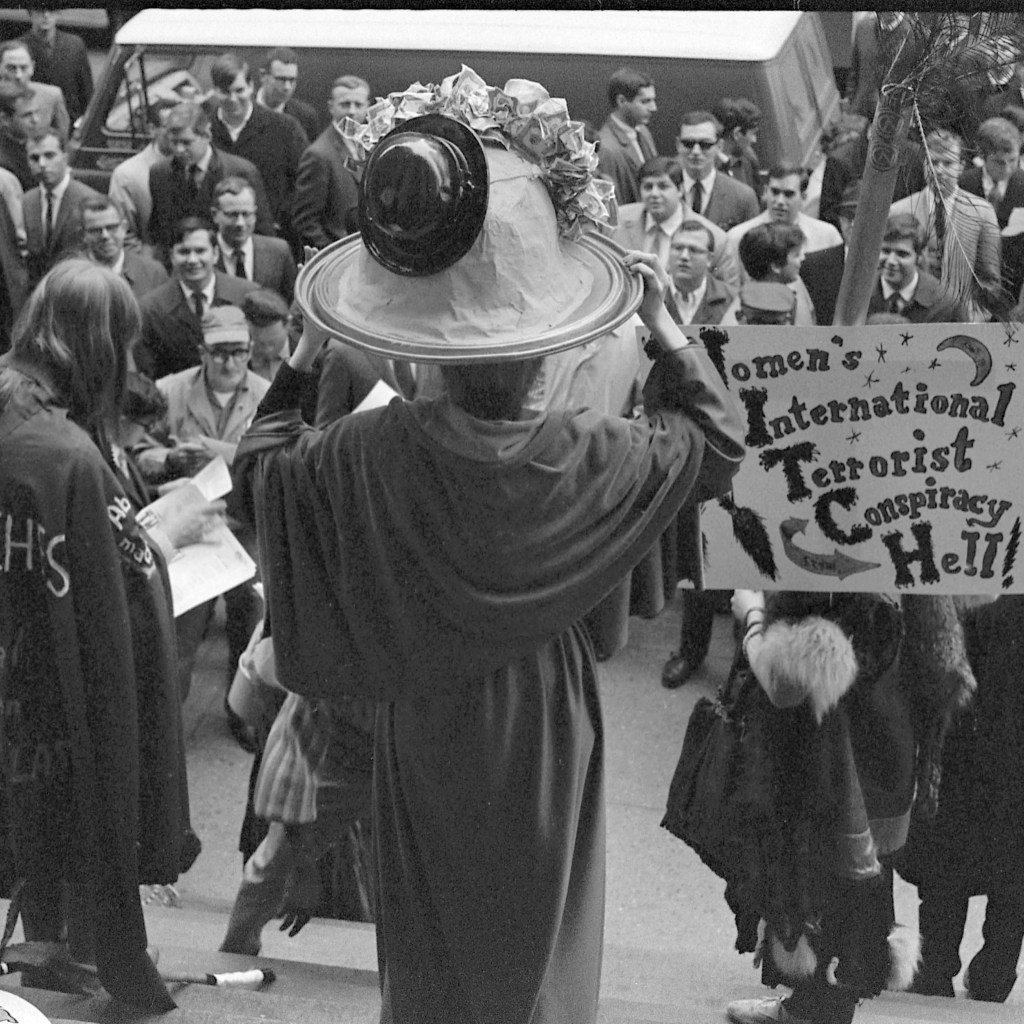
The concept of ‘selling back all its destroyed’ is a particularly potent one considering the history of the witch. The definition of such is one that has been reshaped and redefined over the course of time, but in the study of the witch trials, and Chollet’s book specifically, the definition of ‘the witch’ has been recognised as one created in opposition with the society they lived in; the category of the ‘witch’ was not defined but rather created around the kind of person that said society wanted to exterminate. The term has been reclaimed since a historical recognition of the witch trials as a mass culling of women (as historian Anna L. Barstow remarks it is ‘extraordinary as the facts themselves’ that historians seem to deny the witch-hunts as more than a result of an outburst of misogyny), and the book opens with a slogan from the Women’s International Terrorist Conspiracy from Hell (W.I.T.C.H); ‘there is no joining WITCH. If you are a woman and dare to look within yourself you are a Witch’. Regardless, the culture of modern paganism, Western culture, and the contemporary witch as it exists online and in the present day confuses the element of the witch as socially constructed by those in power; in summary, the confusion of the modern witch comes from a difficulty in distinguishing between the independently self-defined witch and the socially imposed witch.
The category of the ‘witch’ over time as one that has been created and defined by those in a place of power is seen further in the way that the language of witchcraft has become politically motivated; the idea of the ‘witch’ has been utilised as both a misogynist tool associated with the woman they want to attack and a reactionary tactic. W.I.T.C.H groups have emerged across the States; one in Louisiana was involved in protesting the shutting down of abortion clinics. ‘Feminism encourages children to leave their husbands, kill their children, practice witchcraft, destroy capitalism and become lesbians’ the American televangelist Pat Robertson railed in 1992; the song ‘Ding Dong The Witch is Dead’ was broken out after Margaret Thatcher’s death; as a reactionary tactic, Democrat voters started wearing badges referring to themselves as ‘Witches for Hillary’ and ‘Hags for Hillary’.
In her book Caliban and the Witch, one of the first accounts to account for the witch hunts and trials as a genuine form of misogyny, Federici describes the way that the rise in witch trials in Europe coincided with the fall of Feudalism and the rise of capitalism; and with that came the hyper-control of women’s bodies within a reproductive setting for the purpose of contributing towards a labour force. She argues that the control of women and bodies was at the time and still is a key part of capitalist accumulation. Historically, over the major period of time as the with-hunts in Europe, there was a coinciding rise in the criminalisation of contraception and abortion; those accused of witchcraft were commonly involved in midwifery and healing. For the system of control that relied on the subjugation of the marginalised body, it is no surprise that the women socially involved with the control of birth and reproductivity central to the capitalist agenda were far more prosecuted — again, placed in a category created deliberately for their prosecution. It is interesting, then, that the way that the modern witch has been entirely co-opted within a capitalist framework: tarot cards being bought on Shein, crystals being sold at Urban Outfitters, wider brands taking the idea of the witch as something that the individual should aspire to.
The image of the modern/contemporary witch varies in its definition, and it is worth noting that ‘witchcraft’ and paganism have existed since Indigenous communities, but it is undeniable that witchcraft has suffered and now has become aestheticised. The language and loose ideology surrounding magic have been utilised for a form of profit based on the idea of its desirability; cosmetic industries sell products in labelled ‘pots and vials’, with titles such as ‘Bewitching Oil with Super Powers’, ‘Magic Spritz’, ‘Eau de Sourcellerie’, and the rebranding of the idea of the ‘ritual’. The co-opting, rebranding, and selling back of something that is popular has always been a product of capitalism, but what’s more, is that the contemporary witch in Western culture has been shaped around the idea of individual self-care; the idea of tarot cards and crystals being shaped around the idea of personal self-optimisation. The modern western ‘witch’ having a cultural identity centred around self-care is made far more difficult when capitalism has equally co-opted the image of feminism and rebranded it as a form of individual self-care- when, in reality, active, intersectional feminism is far removed from an act of self-care.
The appeal of witchcraft, first and foremost, is the ability to work outside of a capitalist system and obtain things that capitalism cannot give you — the free mobility that comes with the image of broomsticks, the idea of working at night outside of labour hours, the ability to conjure up objects outside of labour. The aesthetic signifier of the modern witch is particularly strange when there are still women outside of Western countries suffering prosecution for the charge of being a witch (for example, one thousand women in Ghana live in witch camps, and more than twenty-five thousand women in India have been killed since the year 2000). Like most capitalist endeavours, the modern witch involves a kind of deliberate misunderstanding of history, picking and choosing from various cultural practices with the vision in mind of a mythologised, often white, European history. In Salem around Halloween, Airbnb prices skyrocket; ironic firstly because the bulk of the witch trials did not occur in Salem, but in Europe, where around forty thousand to sixty thousand women were massacred, pointing to a far wider trend of capitalising off of the historic suffering of women; who in fact were not witches in the first place.
The reclamation of term as a form of power is valuable, especially used by right-wing politicians (with Trump being only one of many who has referred to the anti-misogyny campaign against him as ‘witch-hunts’). The fundamental paradox of the contemporary witch, however, comes down to the fact that the cultural fear of the witch that resulted in the witch trials in the first place came from a desire to prevent the woman they believed to be the witch from existing outside a capitalist system of control. To be a self-identified witch in the modern day, at least within a Western framework, means unavoidably or not assimilating into capitalism, and with that, the contemporary witch occupies an unavoidable paradox; as Federici writes, ‘magic seemed refusal of work, disenchanted in order to be dominated’.
Bibliography
Chollet, Mona, et al. In Defense of Witches: The Legacy of the Witch Hunts and Why Women Are Still On Trial. First edition. St. Martin’s Press, 2022.
Federici, Silvia. Caliban and the Witch. Autonomedia, 2004.

