
Written by Leila Hajek
In a paper written in 2000 on Nasta Rojc, Croatian art historian Ljiljana Kolešnik describes the peripheral position of Croatia in twentieth-century Europe’s art scene. Certainly, the Balkans have traditionally been treated as an afterthought by Western Europe; to quote the infamous words of Otto von Bismarck, the Balkans are “not worth the bones of a single Pomeranian grenadier”. They are Europe’s ‘other within’ – characterised by Western stereotypes of post-communist poverty, drunken hooliganism, and unfriendly neighbours who can’t seem to get along. I can comfortably say that Croatia occupies a privileged position in this regard – unlike some of the other Balkan countries, we are not plagued by significant internal conflict; we are members of the EU, and British tourists love the sunny shores of Dalmatia. All things considered; we have developed prosperously since our initial declaration of independence in 1991. Still, Croatia continues to fall into the Balkan trend of having its history sidelined; we aren’t invisible, simply irrelevant, sandwiched between East and West. There are other explanations for this – the Balkan countries are comparatively small, after all, and were historically subordinate to larger, more important world powers. These claims may be true, but the narrative of Southeastern Europe operating within a different realm of cultural development is getting old. If anyone speaks for the shared cultural realm of Western and Southeastern Europe, it is Nasta Rojc. An artist, lesbian, staunch feminist and antifascist; Rojc was nothing if not prolific. Still, she fell into obscurity after her death in 1964, and it was only in the 1990s that she was brought back into the Croatian cultural memory, having become the subject of numerous exhibitions since. Her life merits her a place within the New Women of the West – a life I intend to trace.

Figure 1: Autoportret u lovačkom odijelu [Self-portrait in a hunting outfit], 1912, Nasta Rojc © National Museum of Modern Art, Zagreb.
As far as motifs go, hunting is central to understanding Nasta Rojc as an artist and individual. Her 1918–19 autobiography, titled Light, Shadows, and Darkness, reflects so regularly on the subject that Leonida Kovač coined it the ‘leitmotif’ of her writing. Hunting had been an essential factor of Rojc’s life since her childhood in Bjelovar, where it offered temporary relief from her sickly nature and surrounding social pressure. In one of her diary entries, Rojc describes an experience in which she was riding her horse near her family estate, carrying her rifle, and the villagers watched and spoke of her as if she were a witch. How much this fazed the young Rojc is unclear by her retrospective tone, but this would certainly come to inform a theme in her life as the ‘outsider’, not for her inability to socialise, but for her blatant rejection of gender conventions. That being said, Rojc did not adopt hunting due to its explicitly masculine connotations – on the contrary, her inclination towards the sport was likely the result of a desire to break off from patriarchal spheres. Rojc’s relationship with her father, Milan Rojc, was particularly troublesome – he was a domineering character and held a privileged position in the country as Minister of Religious Affairs and Education. As a father, he took care to see that all his children were educated, regardless of gender. He did, however, expect Rojc to conform to particular standards of femininity, standards which she refused to align herself with. Instead, to his even greater disappointment, she declared herself an atheist at a young age, prompting outrage. Such was a recurring theme in the dynamic of the two – push and pull, neither ever quite acquiescing. Throughout this turbulence, hunting continued to offer Rojc an anchor to fix herself to, from her traumatic education at a convent to her eventual time abroad in Vienna, where she studied art. Her father had insisted on her religious education, to no avail; his failure is evident in another one of Rojc’s diary entries, where she describes arriving at her dormitory in Vienna and promptly replacing an icon of the Blessed Virgin Mary, hanging above the bed, with her rifle from home.
Rojc married Branko Šenoa in 1910, a close friend and fellow painter who had first inspired her to take up art. The marriage was necessitated by her father, partially due to financial difficulties. Rojc and Šenoa agreed that the marriage would be in-name only, and the former was sure to put forth her own conditions to her father, writing, “I want to remain my own person, to find fulfilment in my profession, and earn my own living.” Earn her own living she did, until the outbreak of the First World War, which Kolešnik describes as a “caesura” in Rojc’s life. Her artistic production never stalled, but the war disrupted her mental and physical health so significantly that a year after the war’s end she took a trip to England with the hope of curing her ailment. Unwittingly, it was this decision that would introduce her to her lifelong lover, Alexandrina M. Onslow.
Onslow was a British army officer who had been medalled for her service on the front. She was also active in transporting the wounded at the Scottish Women’s Hospitals and, after the war, played a critical role in providing humanitarian aid to the Serbian town of Bajina Bašta. Rojc was present for the latter, documenting photographic evidence and becoming acquainted with other members of the Scottish Women’s Hospitals, many of whom were also lesbians. Rojc’s relationship with these women, Onslow in particular, provided her with a mental strength that had been weakened by the war. The established community of like-minded women in which she now co-existed, as well as her impactful war in providing service to others, inadvertently set the fountains for what would become Rojc’s most prolific period in the 1920s.
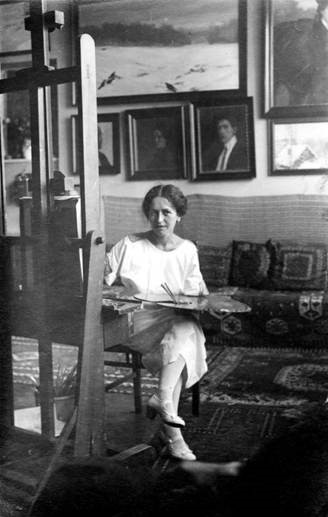
Figure 2: Nasta Rojc in her studio, 1923, Alexandrina M. Onslow © Museum of Arts and Crafts, Zagreb (MUO- 058646).
Onslow moved in with Rojc and Šenoa into a house which Rojc had designed herself, in Zagreb’s Rokov Perivoj. The two women lived openly as lovers, while Šenoa and Rojc remained friends and legally married until the former’s death in 1939. In the meantime, Rojc was active in women artists’ circles, collaborating with Lina Crnčić Virant to found Zagreb’s first Women’s Art Club, where she served as secretary and organised exhibitions across Croatia and even in Ljubljana, Slovenia. She was equally concerned with supporting South Slavic women artists more internationally, helping organise the 1938 Exhibition of Bulgarian Women Artists in Zagreb. Rojc was also active abroad, spending two years travelling across England and Scotland with Onslow and having her art exhibited at the Gieves Art Gallery and Women’s International Club in London. In a letter to her parents, Rojc expressed enthusiasm for the freedoms British women enjoyed, and was inspired by them in turn; she cut her hair, learned to drive, and continued to get involved in women’s circles, all the while committing herself to her craft, which increasingly took on the forms of not only painting, but too photography and sculpture.
The Second World War marked a devastating turning point for Rojc’s success. Her and Onslow had their property and studio confiscated by the Croatian Ustaše in the early 1940s. In 1942, the Women’s Art Club had disbanded, and a year later Rojc and Onslow were arrested for suspected Partisan collusion. They were eventually released on account of insufficient evidence, but the arrest had shaken the couple’s health, the elderly Onslow’s in particular. They continued to support the Partisans until the end of the war, throughout which Rojc continued to write and produce art. Onslow never made a full recovery, and in 1950, only a few years after the establishment of the Socialist Federal Republic of Yugoslavia, she died. Devastated by her death, it would be another sixteen years before Rojc would die and be buried with her beloved at Mirogoj Cemetery in Zagreb.
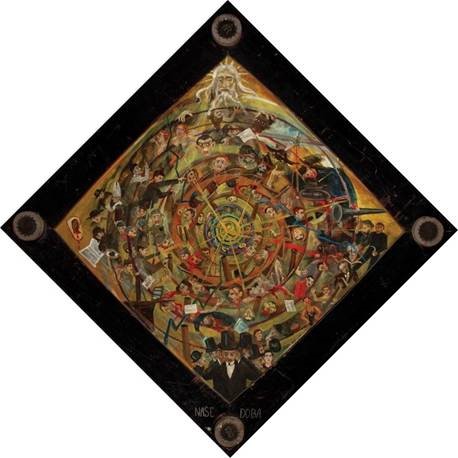
Figure 3. Naše doba [Our age], 1928, Nasta Rojc © Josip Kovačić Collection, Zagreb.
After her death, Nasta Rojc faded into a shadowy obscurity. It wasn’t until 1997, when Đurđe Petravić Klaić organised the first retrospective exhibition of Rojc that her works were returned to the Croatian historical canon. Since then, a number of exhibitions have popped up featuring Rojc as the central figure; most recently Ana Mušćet had reinterpreted her life story through collages, featuring original photography by Rojc herself. Still, Rojc remains on the fringes of women’s art history more larlgey, as have many of the brave Balkan women artists of the twentieth century. Rojc may always remain a niche individual, known mostly in Croatian art-historical circles – but please visit the Zagreb Museum of Arts and Crafts digital repository and view this woman’s life with your own eyes with arthur.io also providing a useful catalogue of her work. Either way, it’s about time the Balkans are taken out of the peripheries of European art history – don’t you think?
Bibliography
Alujević, Darija and Dunja Nekić. “Women’s Art Club and Women’s Group Exhibitions in Zagreb from 1928 until 1940.” Artl@s Bulletin 8, no. 1 (2019): 167—82.
AWARE: Archives of Women Artists, Research and Exhibitions. “Nasta Rojc.” Accessed March 20th, 2025. https://awarewomenartists.com/en/artiste/nasta-rojc/.
Centar za kulturnu dekontaminaciju. “Otvaranje izložbe Ane Mušćet “Nasta Rojc: Ja borac — kolaži” i razgovor o grafičkom romanu “Nasta Rojc: Ja borac”, autorki Leonide Kovač i Ane Mušćet.” Accessed March 20th, 2025. https://www.czkd.org/2024/01/otvaranje-izlozbe-ane-muscet-nasta-rojc-ja-borac-kolazi-i-razgovor-o-grafickom-romanu-nasta-rojc-ja-borac-autorki-leonide-kovac-i-ane-muscet/.
Global Love Museum. “Nasta Rojc and Alexandrine Onslow.” Accessed March 23rd, 2025. https://globallovemuseum.net/portfolio-items/nasta-rojc-and-alexandrine-onslow/.
Kolešnik, Ljiljana. “Autoportreti Naste Rojc: stvaranje predodžbe naglašenog rodnog identiteta u hrvatskoj umjetnosti ranog modernizma.” Ravodi Instituta za povijest umjetnosti, no. 24 (2000): 187—204.
Roban, Sandra Križić. “Leaning Images: Reading Nasta Rojc and Ana Mušćet.” In W.G. Sebald’s Artistic Legacies, edited by Leonida Kovač, Christa-Maria Lerm Hayes, Ilse Rijn and Ihab Saloul. Amsterdam University Press, 2023.
Todorova, Maria Nikolaeva. Imagining the Balkans. Oxford University Press, 2009.
Tumbas, Jasmina. “Jugoslovenka: The Unique Position of Yugoslav Women During and After Socialism.” In “I Am Jugoslovenka!”: Feminist Performance Politics During and After Yugoslav Socialism. Manchester University Press, 2022.
Tunić, Srđan. “Žena sa puškom: Autoportret u lovačkom odijelu Naste Rojc u svetlu studija vizuelne kulture.” Život umjetnosti: časopis o modernoj i suvremenoj umjetnosti i arhitekturi 110, no. 1 (2022): 66—85.
Umjetnički paviljon u Zagrebu. “NASTA ROJC — kritička retrospektiva.” Accessed March 21st, 2025. https://umjetnicki-paviljon.hr/izlozba/nasta-rojc-kriticka-retrospektiva/.

