
Written by Harry Fry
The particularly striking intellectual study of emotional and sensory cultures has recently developed into the inquiry about scents as a politico-cultural markers through which to study history. Smells are both natural and created, signalling social hierarchies and displaying one’s status, from cuisines to perfumes. From the perspective of historical persecution, scents are understood as normative instruments of power, used to mirror and reinforce hegemony over marginalised classes, cultures, and ethnicities. More potently, the latter ties the history of smell to the turn of the colonial to the post-colonial period, where the idea of smell moves beyond a standard exemplar of racism to a mode of artifice. Sensorial affects were invented to stimulate a distinct image of the colonised, which politicised and reaffirmed the spatial order of Western hegemony. Beyond what was visual, the relevant source material of white and non-white discourse on smell is dynamic. I argue for an intentional colonial utilisation of smell as a tool for the production of olfactory racism.
Last year, Dr. Amelia Louks posted her doctoral thesis on olfactory politics in literature online, provoking severe backlash. Such an ordeal exemplifies how scents remain a contentious intellectual and social idea, always reminiscent of historical colonisation. While prominent, the formal application of smell to racial history is unfulfilled. To environmental historians, what was smelt is of equal importance to what was seen, namely in the responses and reactions of smell when noticing dangers and pursuing safety. This approach prioritises an introspective response to smells felt by humans to nature, not humans to humans. For Joy Parr, “the historically specific sensing body is [a] policy and technology”, noticing that our sense of smell is dependent on one’s environmental and historical context, but more specifically, that it is mechanised and learned. By extending this sentiment towards a practising of the capacity to smell, it justifies an explicit interplay of emotional history frameworks to consider the lived and theatrical modelling of olfactory systems as a tool for racism. This affective turn to the history of olfactory racism necessitates the inclusion of active and practised theories in the history of emotions pioneered by Pierre Bourdieu and, subsequently, Monique Scheer.
In Andrew Kettler’s study on “Olfactory Racism” in the shaping of Africa, he claimed that “[t]hrough exhibiting a diversity of smells and ideas about smelling that were individual, ethnic, and often idiosyncratic, Africans throughout the Atlantic littoral asserted themselves as subjects against Western attempts to make the African into a commodified, miasmic, and pungent object”. At first, the colonial project sought to manufacture an image of Africa with odour. The presence of smell itself, contradicting the pure, almost scentless self-perception of Western individuals, implicated those enslaved into a form of primitivity. This racist invention was forcefully constructed and maintained by slave owners who refused adequate clothing and cleaning to those enslaved, “producing the sensory domains of hell”. Their “commodification” by Europe’s slave trade, which treated Africa and its people as objects with a smell, complicates the reality of imperial projects through this inclusion of scents. It implies that the slave trade occurred through proclaimed hardship, forcing traders to enter communities with foul smells and was subsequently commercialised under the pretence of their sold people being damaged: poorly scented goods. This olfactory device was reflected upon in postcolonial scholarship, notably in Albert Memmi’s The Colonizer and the Colonized (1965), which argued imperialism harnessed rhetorical skills to build African land as sensorily and psychologically anarchic to enter.
The colonial manufacturing of Africa’s image as olfactorily tainted resultantly allowed smell to become a valuable site of resistance. Reasserting the inadequacies of enslaved labour life, freed slaves such as John Andrew Jackson, who had in 1846 escaped to Southern Caroline, conveyed how “they are robbed of comfort and cleanliness by the cruelty and avarice of their masters”. Being regularly confined to a single pair of clothing and insufficient cleaning materials, many freedmen reported on their previous inability to uphold a European standard of hygiene when this impeded a universal right to hygiene. For those who migrated to European environments, as in the case of Olaudah Equiano, his Interesting Narrative of 1789 asserted that African immigrants “always wash our hands: indeed, our cleanliness on all occasions is extreme; but on this it is an indispensable ceremony”. Given that Equiano gained freedom and moved to London, his supposed need to clarify such table manners redeployed hygiene as a distinct and fabricated Westernised ideal. This alludes to the reality of personal hygiene itself being impertinent, but rather that the practice of deploying sanitation and scent became a means for its politicisation, activating social hegemony.
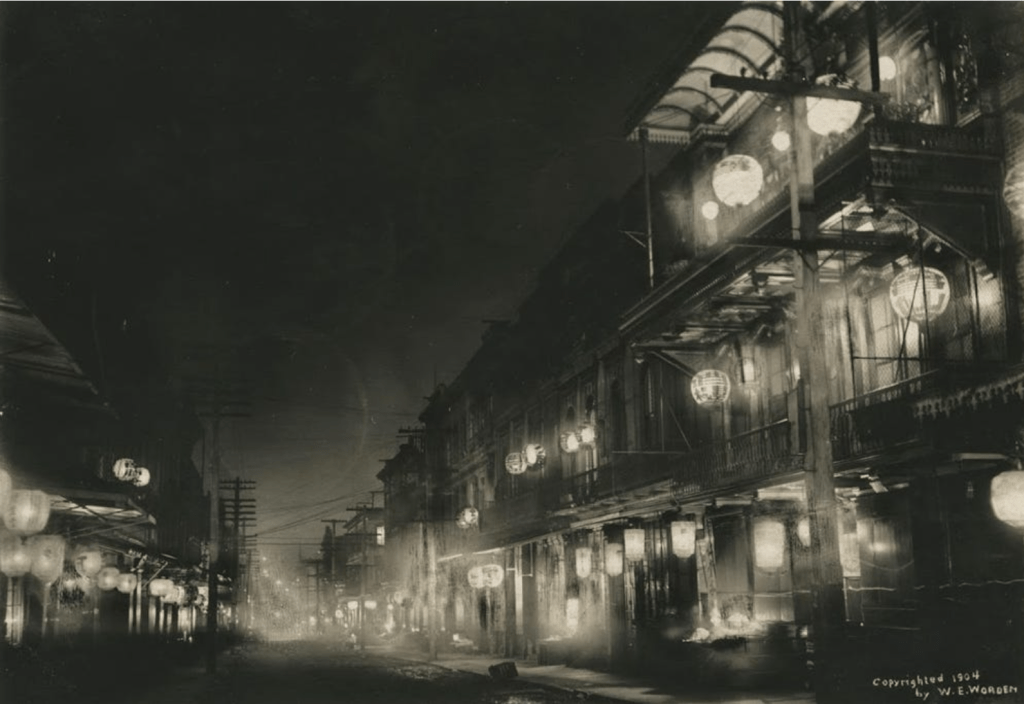
Amid the United States’ segregation era, the capacity for biracial individuals to frequently pass as entirely white augmented the division of races by Western voices. Those who were pro-segregation began to remark on unnatural and unacceptable smells that concentrated in black neighbourhoods and pervaded segregated lands. This diminishing emphasis on what was visible recalibrated Western authority through smell, transferring senses into forced affects, which took on the symbolic power of being true sensory responses. In the subsequent foundation of Chinatown in San Francisco, parallel devices were used as a route to manipulate ill feelings towards marginalised, non-white communities. The fear of an expanding East Asian diaspora, known commonly as Yellow Peril, progressed a deep affect towards the “Other” as dangerous and thus repelled by a foreboding sensory response. In Los Angeles, the Chief Official for Health in 1887 claimed to find Chinatown “that rotten spot [that pollutes] the air we breathe and poisons the water we drink”. Such conceptions of a miasmic entity assembled an olfactorily-based iconography of Chinese individuals as a mysterious yet somehow known issue. The stigma centred around these marginalised groups was not a response to a problem concerning smell, but the West’s forging of other cultures through a presentation of scents. The reality of diasporic communities may have involved varying cuisines producing differing smells to the white populace, yet this was harnessed as a tool to proclaim Western predominance and dismiss other cultures’ scents as not merely unfamiliar but backward.
This active site of socially-constructed olfactory discrimination and othering was propelled further in the twentieth-century and, indeed, remains in our present. While Western animosity towards migration prevailed, it was occasionally ended by a contrasting desire for non-Western cuisines, and even multiculturalism. After serving in the British Indian Army and returning to England in 1923, Frances Smyth felt nostalgia for “the most gorgeous smell in the world”, this being the scents of Indian cuisine. Many people, such as Smyth, attempted to recreate such dishes in their Western homes or, more recently, incorporate takeaway culture from Indian restaurants as a habitual family activity. This embrace of scents from non-Western food transports another culture into the home, symbolising and moulding our olfactory sensitivities towards inclusive multiculturalism. While this inclination to consume Indian food may portray the boundaries of Western minds — revealing a tolerance, not a wholly celebratory reality of multiculturalism — this limit is, in one sense, an olfactory decision. It reminisces a romanticised desire for eroticised cultures, commonly as a form of nostalgia, which can be used to reimagine a response to novel scents.
The historical (re)production of olfactory emotions conveys the relentless potential for smell to be manufactured into a unique social economy: cultured, olfactory politics can invent original, scented concepts of racism or begin a progressive social liberation, so to speak, of scents. Through precisely noticing how scents were and continue to be weaponised for trained affective responses, emotional history frameworks are rewired. At once, the notion of our bodies as initially and repeatedly adjusting within new climates becomes a capacity for them to be purposefully arranged.
Bibliography
Buettner, E. “‘Going for an Indian’: South Asian Restaurants and the Limits of Multiculturalism in Britain”, The Journal of Modern History 80 (4), 2008, 865-901.
Chiang, C. “The Nose Knows: The Sense of Smell in American History”, Journal of American History 95 (2), 2008, 405–416.
Kettler, A. The Smell of Slavery: Olfactory Racism and the Atlantic World (Cambridge University Press, 2020).
Louks, A. My research on the politics of smell divided the internet – here’s what it’s actually about (The Conversation, 2024), https://theconversation.com/my-research-on-the-politics-of-smell-divided-the-internet-heres-what-its-actually-about-245899.
Rotter, A. “Empires of the Senses: How Seeing, Hearing, Smelling, Tasting, and Touching Shaped Imperial Encounters”, Diplomatic History 35 (1), 2011, 3–19.
Scheer, M. “Are emotions a kind of practice (and is that what makes them have a history)? A Bourdieuian approach to understanding emotion”, History and Theory 51 (2), 2012, 193-220.
Feature Image Credit: Willard Worden, Midnight in Chinatown, San Fransisco, 1903. https://commons.wikimedia.org/wiki/File:Willard_Worden,_Midnight_in_Chinatown,_San_Francisco,_1903.jpg


