
Written by Louisa Steijger
Lourenço da Silva Mendonça, a member of the royal family of Ndongo in West-Central Africa, is a crucial figure in the history of resistance to the Atlantic slave trade. The role of Mendonça has largely been overlooked, obscured by more well-known British and European abolitionists such as William Wilberforce, Thomas Clarkson, and Granville Sharp. However, recent abolitionist scholarship has begun to move away from our Eurocentric understanding of abolitionism, instead considering how African individuals contributed to the abolishment of the Atlantic slave trade. Mendonça’s activism was one of the earliest African abolitionists to challenge this inhumane system on legal and moral grounds. His efforts culminated in the presentation of a criminal court case to Pope Innocent XI in 1684, where he sought to dismantle the ideological and institutional frameworks that justified the institution of slavery.
Ndongo, located in what is now Angola, had long resisted Portuguese incursions fuelled by the growing demand for enslaved labour in Brazil and other colonies. Born into the Ndongo royal family, Mendonça witnessed firsthand the destruction created by the Atlantic slave trade, as his homeland became a primary source of enslaved Africans for Portuguese merchants. The Mbundu people, over whom the Ndongo royals traditionally governed, faced displacement and violence due to Portugal’s demands for the baculamento. The baculamento was a tax created by the Portuguese colonial authorities to replace encrombros, a reciprocal system of tax paid in produce. Under the Portuguese, this tax was misunderstood and weaponised, transformed into a tax that demanded people as payment. This shift, resisted by Dom João Hari II, resulted in the exile of Ndongo’s royal heirs, including Mendonça, to Brazil. This move was intended to neutralise their ability to mobilise mass resistance against Portuguese rule. While the exact date of Mendonça’s birth remains unknown, he is believed to be around twenty-two or twenty-three years old when he was exiled from Angola in 1671.
Mendonça’s political imprisonment, however, became a catalyst for his activism against the practice of slavery. Mendonça’s time in Brazil exposed him to the brutal realities of slavery on sugar plantations, and his engagement with Indigenous populations and fugitive communities, such as those in the Palmares (a community of escaped slaves), instilled in Mendonça a commitment to the shared struggle for freedom. Ultimately, Mendonça’s time in Brazil exposed him to the extent of the slave trade, allowing him to fully comprehend the devastating impact of slavery. Furthermore, Mendonça’s commitment to challenging the legality of slavery was underpinned by his family’s royal lineage. As a descendant of the Kings of Kongo, who were among the first African royals to adopt Christianity, Mendonça was aware of the role, albeit a coerced one, his family had played in facilitating the Atlantic slave trade. From Brazil, Mendonça travelled to Braga, Portugal, where he studied theology and law at the Convent of Vilar de Frades, providing him with the legal and religious basis to challenge the legitimacy of the Atlantic slave trade. From Portugal, Mendonça travelled to Toledo, Spain, where he became a procurator – a treasury officer of the Roman Empire. While working in Spain, he was appointed Attorney General for Brazil, Portugal, and Castille by the Confraternity of the Rosary of our Lady of Star for the Black Man.
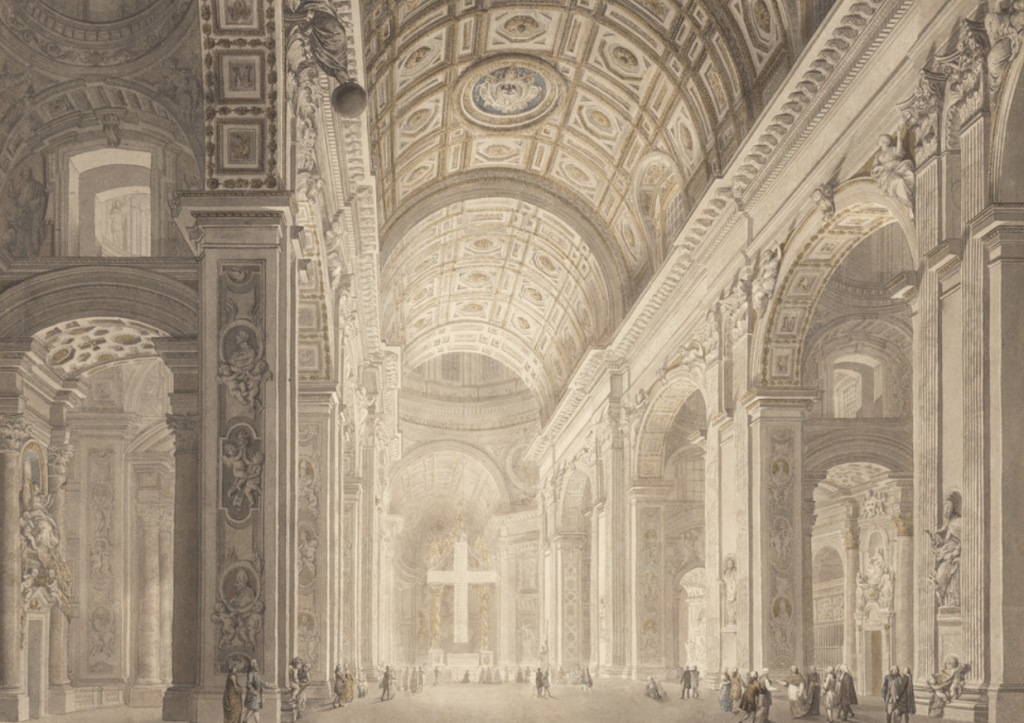
On 6th March 1684, Mendonça presented his groundbreaking legal case to Pope Innocent XI and the Vatican’s Congregation for the Propagation of the Faith. Mendonça sought to expose the inhumanity of the Atlantic slave trade, highlighting its incompatibility with Christian teachings, natural law, and human rights. He argued that slavery contravened four key principles: human law, natural law, divine law, and civil law. First, he emphasised that slavery violated human law by treating Africans and Indigenous Americans as mere objects rather than as human beings with inherent dignity and rights. Second, he asserted that it violated natural law, which held that all humans are created equal and should avoid causing harm to one another. Third, he challenged slavery as a transgression against divine law, arguing that it undermined the moral imperative to preserve the dignity of others, as mandated by God. Finally, Mendonça contended that slavery was incompatible with civil law, accusing merchants, colonial officials, and lawmakers of failing in their duty of care towards enslaved individuals despite their awareness of African legal and social systems. Mendonça’s legal and moral arguments were unprecedented in their scope. His petition included vivid descriptions of the violence endured by enslaved Africans, from their capture in Africa to their exploitation on plantations. By detailing these horrors, Mendonça sought to shock the Vatican into action and force the Catholic Church to confront its complicity in the slave trade. Papal decrees, such as Dum Diversas and Romanus Pontifex, had long sanctioned the enslavement of non-Christians, providing theological justification for the transatlantic trade. Therefore, Mendonça’s appeal to the Vatican aimed to challenge the Church, forcing the Pope to reconcile its teachings on human dignity with its role in perpetuating a global system of oppression.
Mendonça’s activism framed the fights against slavery as a supranational issue, acknowledging how it went beyond simply African concerns. Mendonça recognised the similarities between New Christians’ struggles and those of enslaved Africans and Indigenous peoples. New Christians, who were descended from Jewish converts, had faced persecution and confiscation of their wealth by European authorities. Their suffering held many commonalities, such as the struggles against unjust wars, forced taxation, and systemic dehumanisation. Consequently, Mendonça aligned himself with New Christians, and in doing so, he transformed his message into a supra-Atlantic discourse which advocated for liberation across continents and populations.
In total, Mendonça’s activism, shaped by his own personal experience and his legal and religious education in Portugal, directly confronted the complicity of European powers and institutions in sustaining the Atlantic slave trade. Mendonça’s efforts serve as an early example of African agency in the fight against slavery, challenging Eurocentric narratives that portray abolition as a predominantly European endeavour. Notably, Mendonça launched his petition for abolition over a century before the more widely acknowledged efforts of Eurocentric abolitionists such as William Wilberforce. Acknowledging Mendonça’s legacy underscores the vital role of African agency in the fight against slavery, challenging Eurocentric narratives and reframing abolition as a broader, more complex struggle for justice.
Bibliography
Drescher, Seymour. Abolition: A History of Slavery and Antislavery. Cambridge: Cambridge University Press. 2009.
Lovejoy, Paul E. Transformations in Slavery: A History of Slavery in Africa. Cambridge: Cambridge University Press. 2011.
Nafafé, José Lingna. Lourenço Da Silva Mendonça and the Black Atlantic Abolitionist Movement in the 17th Century. Cambridge: Cambridge University Press. 2022.
Rossi, Benedetta. ‘Global Abolitionist Movements’, Oxford Research Encyclopedia of African History. Oxford University Press. (2023): 1-36.
Rossi, Benedetta. ‘The Abolition of Slavery in Africa’s Legal Histories’, Law and History Review 42, no. 1 (2024): 1–29.

