
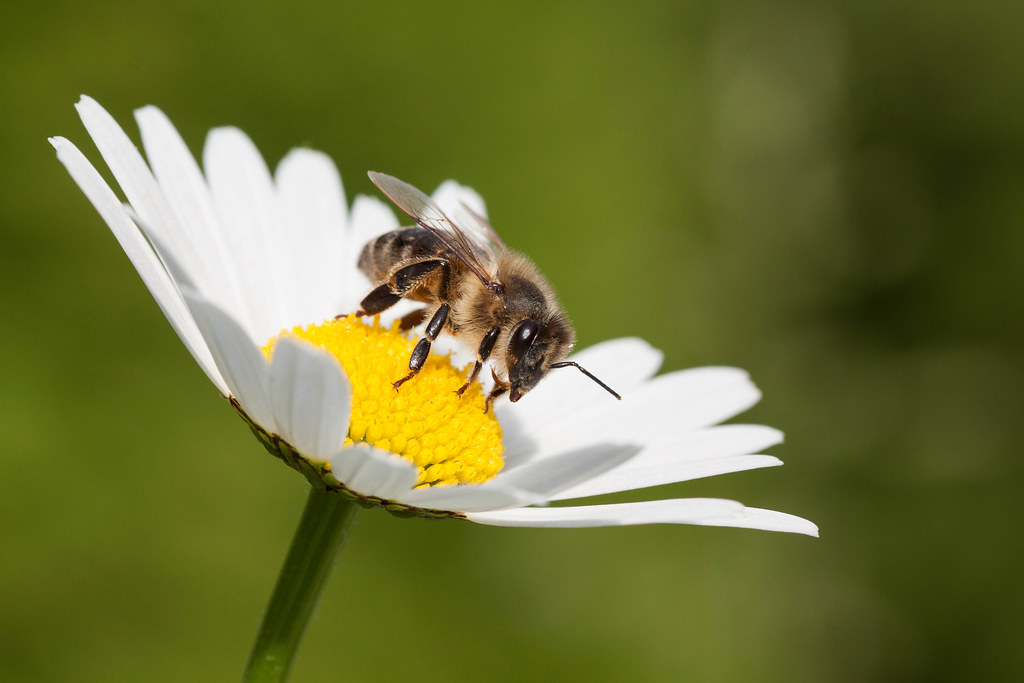
Written by Ailsa Fraser
Part III of V of Natural Contracts: Historical Partnerships Between Humans and Other Animals
“Man is,” wrote Aristotle, “a political animal.” Many modern scholars interpret this to mean that man is the only political animal—that the ability to conduct politics is something that sets us apart from other species. But as we have seen previously in this series, anthrozoology and the study of human-animal relations implies by its existence that animals can form social relationships just as humans can. Wild animals often form their own polities, their own societies, and their own politics without humans ever interfering. While much of this springs from the relatively recent field of animal studies, even Aristotle recognised animals other than humans as “political animals.” What other political animals did he write about? Hive insects, like ants. Like bees.
Una apis, nulla apis is a beekeeper’s proverb meaning “one bee is no bee”; bees are inherently social creatures. While this isn’t strictly true—there are many species of solitary bees—these are less noticeable, and the main species of bee we as humans interact with is the honeybee, specifically the European honeybee Apis mellifera. They are recognised as one of the most social animals in the world. Bees evolved from wasps approximately 130 million years ago, according to DNA evidence, although the oldest specimen we’ve found preserved in amber is only eighty million years old. There are over twenty-five thousand known species of bee, of which 253 are in the UK, always with potential for new species to be discovered. Hives are built around a queen, who mates with drones and lays eggs to produce new bees, and bees produce honey and build honeycombs to feed young, immature bees, known as their brood. These hives can be anywhere, from a fissure in a rock in arid environments to a hole in a tree in forested ones—or a convenient structure left out by humans.
It’s likely we humans have been consuming bees’ honey for longer than we’ve been human: other apes like chimpanzees are known to eat honeycomb out of wild bees’ nests, along with animals like bears, the honey badger, and the honey buzzard. Even more animals will eat the bees’ brood, which is an excellent source of protein, and some, like the aptly named bird the bee-eater, will eat the bees themselves. Having been hunter gatherers for ninety-nine per cent of our existence, humans sought out beehives to collect and retrieve honeycombs and even built partnerships with other animals to do so. Honeyguide birds, native to much of Africa and Asia, will communicate with humans to show them beehives they’ve found, so humans can help open them. The human can then take the honey, while the honeyguide eats the beeswax and the brood. This is still a staple of life in modern hunter gatherer societies, such as the Yao in northern Mozambique.
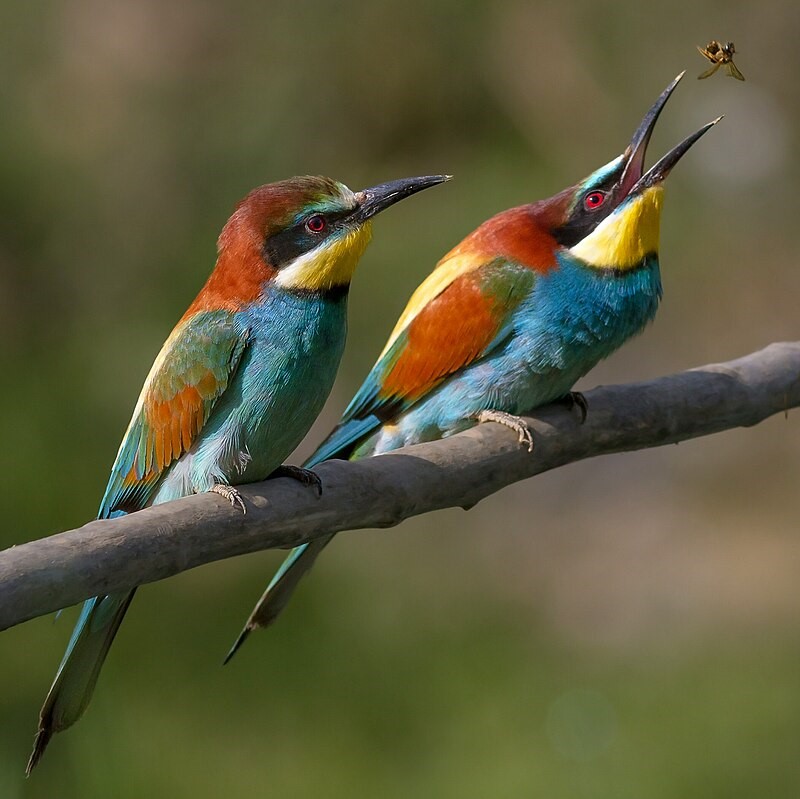
Figure 1: European bee-eater catching a bee for his mate.
Honey hunting has therefore been common across the world wherever honeybees are native. It happened in ancient Sumer, Ur, Judea, and Egypt, and bees appear prominently in the cave art of caves like those at Lascaux in France and Altamira in Spain, painted between 15,000 and 13,500 BCE. Even in areas where honeybees themselves aren’t native, such as the Americas, people like the Mayans gathered honey from stingless bees instead. Honey hunting persisted long after beekeeping was introduced: in England, the 1086 Domesday Book recorded both mellitarii, who likely collected wild honey, and a custos apium, a guardian of bees. But as beekeeping established itself, honey hunting did become less common. And beekeeping is ancient in its own right.
The earliest record of beekeeping comes from ancient Egypt, where it may have originated. It was also recorded in ancient Greece, and though there’s little archaeological evidence for it from Rome, it was likely also common there. Even before the Roman conquest it was established in Britain, probably by Celts who migrated from mainland Europe. In Poland, it is recorded from the tenth century onward, while it reached Russia in the twelfth to thirteenth centuries. But above sixty degrees north the winters grow too long and cold for honeybees to survive, so there are some areas of northern Europe where it never took root. And although I’ve focused on Europe here, where the tradition stemmed from the Egyptian, beekeeping seems to have been invented separately with distinct traditions all over the world, including in China and India, and spread from there.
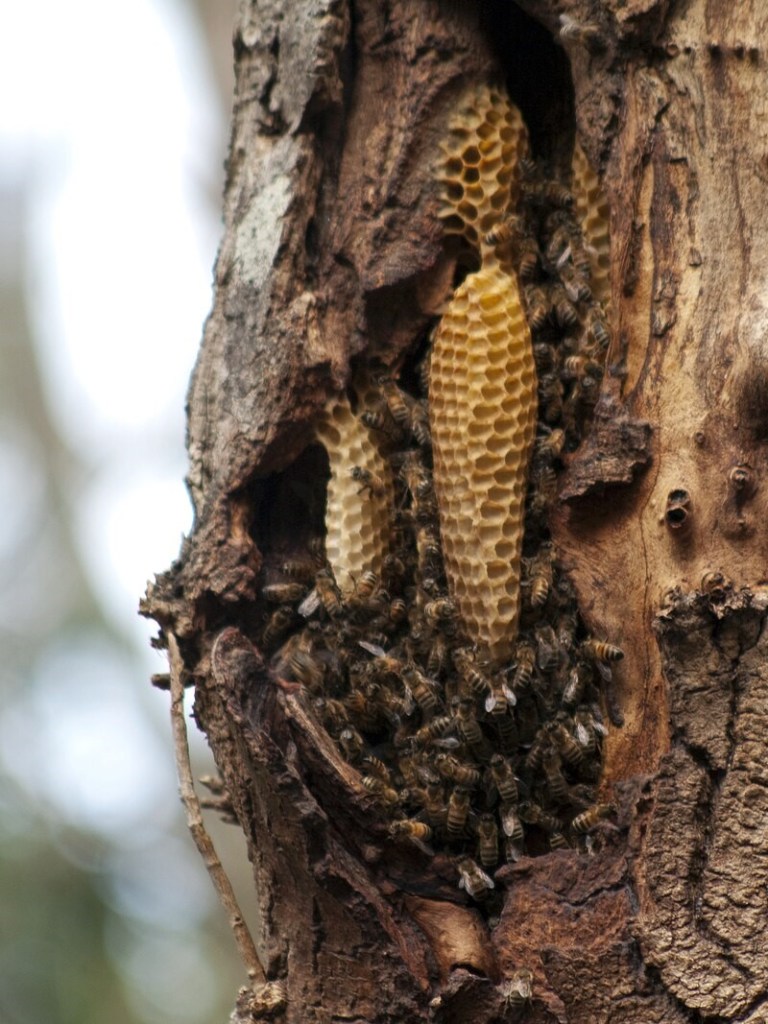
Figure 2: A wild bees’ nest in the hollow of a tree
Beekeeping takes many forms, as do human-made hives. Often, it began with a human defending a wild hive from other predators or thieves. Bears in particular were much maligned in European beekeeping literature, and traps laid out for them. From there, humans began to build hives themselves. In forests, they would carve holes in trees for bees to find and inhabit, an act that sometimes got beekeepers in trouble with foresters. Early modern Germany saw the use of Klotzbeute, hollowed logs hung in the woods. When bees swarmed—that is, when they moved en masse to find a new home, either because their old was too small or the hive had split—they would choose their favourites and settle in. Western European beekeepers also used skeps, or baskets, made of wicker or hay. Swarm beekeeping with skeps was most popular, where beekeepers intentionally built skeps too small, so the bees would reliably swarm and they could establish more colonies than they started the year with. When the winter came, beekeepers would kill the bees in the largest hive (with the most honey) and the smallest (the least likely to survive the winter) to harvest the honey and leave the medium ones to survive into the next year. (Beekeeping today no longer involves the killing of bees.) Other tactics involved using smoke to drive bees off the outer honeycombs so they could be harvested, without touching the ones used to feed the brood.
Most evidence of beekeeping in ancient and medieval times comes from archaeological finds and the many laws that regulated beekeeping. But by the early modern period, there was extensive literature on it, especially in manuals on husbandry and rural life. Movable frame hives were invented in the nineteenth century, which allowed beekeepers easier access to the honey, and other technological advancements improved the efficiency of beekeeping but also raised its costs, making it less accessible. The number of beekeepers’ associations similarly increased to discuss and comment on these developments. But while many beekeepers today use this modern technology, many more—particularly in non-Western cultures—use beehives that look identical to the beehives invented four thousand years ago. Most things about the human-bee relationship have not changed at all.
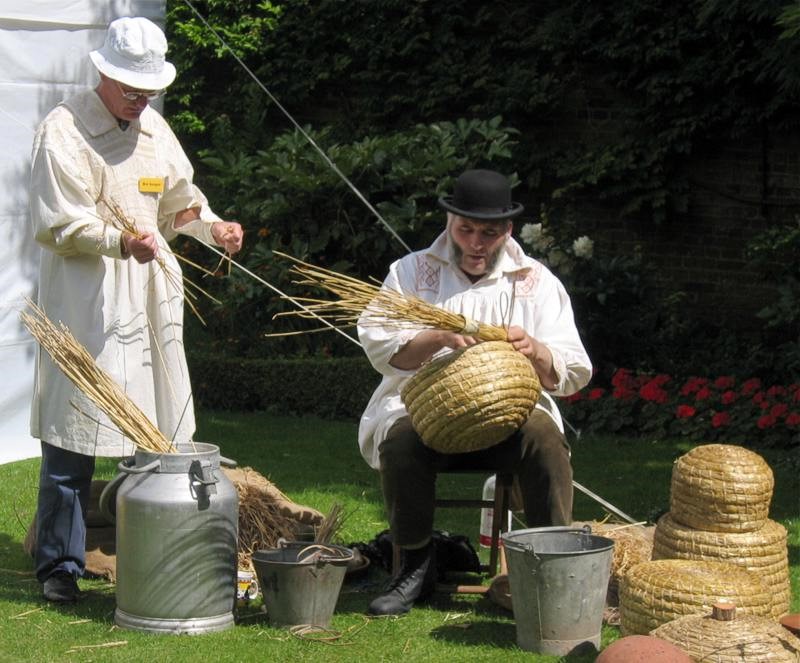
Figure 3: Making traditional skeps from straw in England
Humans have lived closely with bees, close and caring, for millennia. They are alien beings, in an alien society, but we co-exist with them, nonetheless. Humans defend their hives from threats; bees allow humans to siphon off some of their honey, and do not fly to find a hive where this won’t happen. And historically, we recognised them as a society in themselves. Observing how a hive functions makes this difficult to ignore, and it came to be a model for society. Before the late sixteenth century, observers believed the queen was a king who ruled over a productive city; the realisation that she was a queen threatened this view. Eventually, she came instead to be viewed as an Amazonian queen: different and exotic, yet powerful. As late eighteenth century gender roles became stricter, however, she was increasingly presented as a caring mother figure instead. The social lives of bees provided endless fodder for early modern scientists to theorise and shape their ideas of an ideal society.
In today’s democracy, how we interpret hive politics has once again changed. When you began reading this, you may have doubted they could actually be called political animals. Human politics is so complex, it’s difficult to imagine a similar phenomenon evolving in nonhumans. But bees participate in direct democracy. In the 1940s, Austrian ethologist Karl von Frisch discovered the ‘waggle dance’. When looking for new food sources or a location for a new hive, the hive will send out scouts, who then return to communicate what they’ve found through waggling their bodies in a figure-of-eight pattern that indicates by its length and orientation the distance and location of the find. It begins with one scout, or multiple scouts arguing for different locations, until the rest of the hive joins in by dancing the location they agree with, aiming to change other bees’ minds. Only when the whole hive dances one location do they swarm to head toward it. It’s a fascinating example of democracy performed by a nonhuman species. And I’m not suggesting we introduce dancing to the Houses of Parliament, but you can’t it would liven things up a bit.
The key thing to note among all of this is that bees are wild animals. Unlike dogs and cows, they were never domesticated, and countless hives still live alone in the wild. And yet honey products have contributed enormously to human economies over the years, and bees feature in mythologies from cultures around the globe. The ongoing success of beekeeping comes from understanding a wild species and fulfilling its unmet needs to gain something in return. We didn’t shape bees to our preferences, nor did bees shape us. We negotiate as we are—and have been doing so for longer than we have been Homo sapiens. Bees are of course threatened, along with millions of other species, in today’s mass extinction event. But they are poster animals for calls to reduce pesticide usage and to maintain wildflower meadows for a reason. We love them.
And they are evidence that we can have a mutually beneficial relationship with our environment. We don’t understand them—studies on bee sociology are ongoing, and always fascinating. But we haven’t needed to understand them so far. They are weird, wonderful, and fundamentally alien creatures to us, with a democracy unlike our own, and still we collaborate.
Isn’t that fantastic?
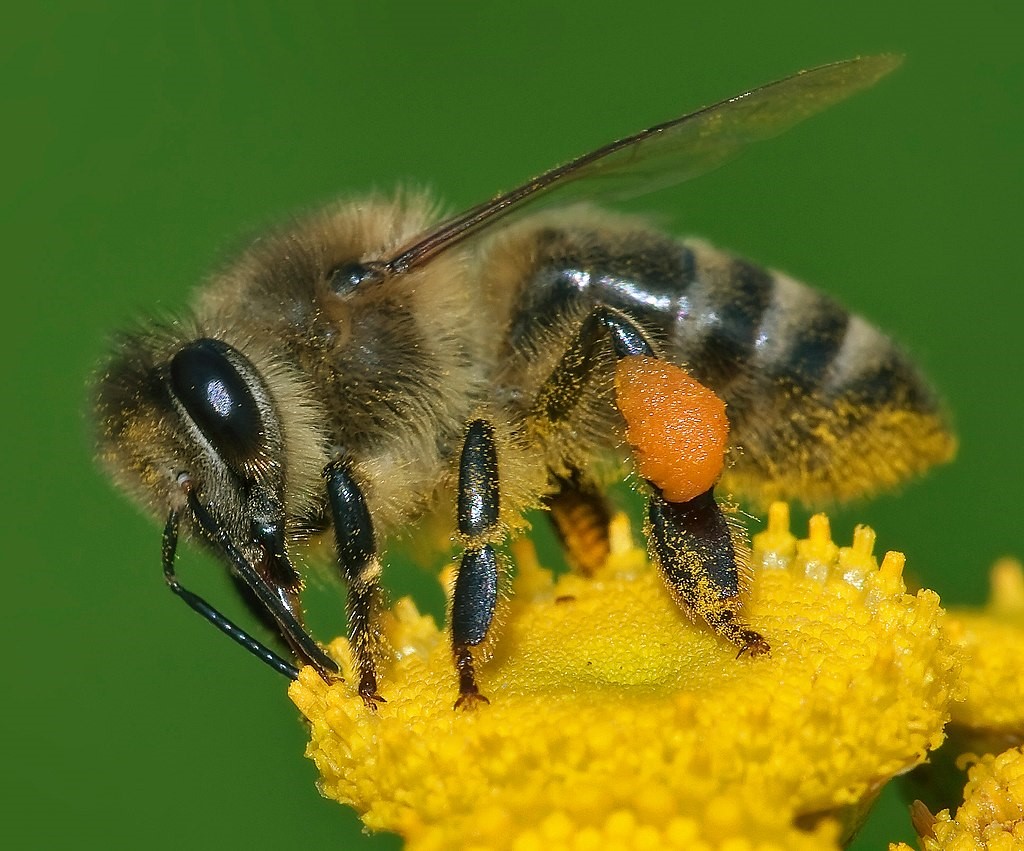
Figure 4: Apis mellifera, or the European honeybee, the most common honeybee in beekeeping.
Bibliography
Bridle, James. Ways of Being: Animals, Plants, Machines: The Search for a Planetary Intelligence. London: Penguin Books, 2023.
Crane, Eva. The Archaeology of Beekeeping. London: Gerald Duckworth and Co., 1983.
Crane, Eva. The World History of Beekeeping and Honey Hunting. London: Gerald Duckworth & Co., 1999.
Donaldson, Sue and Will Kymlicka. Zoopolis: A Political Theory of Animals. Oxford: Oxford University Press, 2011.
Goulson, Dave. A Sting in the Tale. London: Vintage Classics, 2013.
Kritsky, Gene, and M. R. Berenbaum. “Beekeeping from Antiquity Through the Middle Ages.” Annual Review of Entomology. Vol. 62 (1) (January 2017): 249-264 https://doi-org.ezproxy.st-andrews.ac.uk/10.1146/annurev-ento-031616-035115.
Podberscek, Anthony L. Elizabeth S. Paul, and James A. Serpell. “Introduction.” In Companion Animals and Us: Exploring the Relationship Between People and Pets, edited by Anthony L. Podberscek, Elizabeth S. Paul, and James A. Serpell, 1-4. Cambridge: Cambridge University Press, 2000.
Image credits
Featured image credit: “bee” by mathias-erhart is licensed under CC BY-SA 2.0.
Figure 1: By Chiswick Chap – Own work, CC BY-SA 4.0, https://commons.wikimedia.org/w/index.php?curid=40982770.
Figure 2: By Bilby – Own work, CC BY 3.0, https://commons.wikimedia.org/w/index.php?curid=11444778.
Figure 3: By Michael Reeve; User:MykReeve – http://en.wikipedia.org/wiki/Image:Making-skep-beehive.jpg, CC BY-SA 3.0, https://commons.wikimedia.org/w/index.php?curid=3287579.
Figure 4: By Andreas Trepte – Own work, CC BY-SA 2.5, https://commons.wikimedia.org/w/index.php?curid=10979574.


