
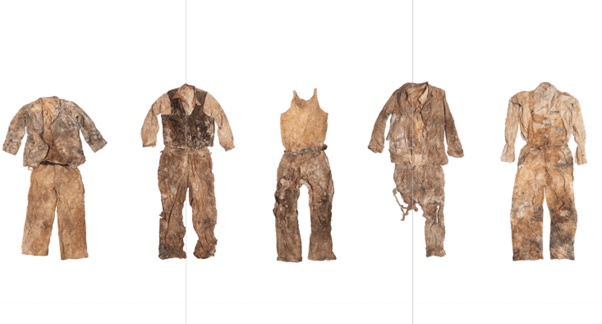
Written by Arianna North Castell
“If they kill me, it will be because I didn’t think like them and because I served my legally elected government. I’m not afraid of dying, just of leaving you on your own. Forgive me, Rosa, for the sadness my death will cause you. I send a last hug to you, my dear wife, and to you, my children. I want you to know that if there really is an afterlife, I’ll be waiting for you there. Goodbye forever from your husband and father, Germán Sanz.”
These are the last words written from a Spanish Republican to his wife before he was executed by a Francoist firing squad. His body was then hastily tossed aside, buried in a mass grave like thousands of others murdered by the Fascist regime. Mass graves like this span across Spain, nameless bodies, taken from their loved ones, lying beneath the ground for almost nine decades. The graves consist of not only Republican soldiers, but of anyone associated with the Republican cause – workers, women, even the bodies of children, malnourished from war, were tossed inside and buried. The bodies were piled together, sometimes crammed into large bags with other bodies, in such invasive ways that modern excavations have resorted to colouring the bones using computer technology to differentiate between the victims. They have been called medieval in their barbarity, with some bodies exhibiting evidence of torture. In 2022, bodies from Pit 111 in the Paterna graves were finally exhumed, identified, and given proper burial with their family members. During the ceremony of re-burial, Germán Sanz’s letter was read once again, as a reminder that real people, with hopes, dreams and loved ones, lay behind the skeletons. Now, they were no longer hastily discarded bones, but people again, with loved ones to restore their dignity and autonomy.
Memory of these victims has been marred by the Spanish pacto del olvido (pact of forgetting), where suffering under the Civil War and fascist regime was not only unspoken in public, but within homes and families too. Many know very little about the family members they fight to exhume from these mass graves – they are merely faces known from black and white photos tucked away in heavy albums. The return of these bodies to their families is still deeply emotional. They have all waited many decades to find out the fates of their loved ones, and now finally have the solace of answers and an opportunity to reunite and bury them with their families. Some are even found with personal effects – shattered glasses, the soles of shoes, pencils used to write letters home. These are returned to family members, who clutch the shoelaces and belts of their parents and grandparents and catch a glimpse of them once again. The sites of exhumation and reburial are thick with emotion, as people feel the presence of family members whose lives and memories were forcibly erased.
It has not been an easy journey to award justice to these deceased – nor does it continue to be one. Years of cover-ups and silence shroud the true stories and figures buried in these mass graves. Historians believe that there are around 2,000 mass graves from the Spanish Civil War, with around 100,000–150,000 victims buried in unmarked graves. Franco’s victory and subsequent dictatorship enforced an institutional silence that systematically erased traces of Republican victims, suppressing records and intimidating families into silence. Despite Franco’s death in 1975, recognition of the suffering under his regime was slow. In 1977, the Amnesty Law was passed, officially absolving crimes under Franco’s regime and further impeding the process of not only exhumation of the bodies, but mere recognition that the victims existed. Many saw the latter as coming in direct conflict with the Amnesty Law – political parties such as P.P. and Vox urging the public not to ‘reopen old wounds’. However, these wounds had never been closed in the first place. The pain and grief for loved ones lost during the Civil War and the subsequent regime is still sharp and persists through generations. Many graves were opened clandestinely after this law was passed by relatives, with their own hands, in an attempt to identify their loved ones. Efforts to work professionally on the graves made slow progress – without government funding, many were paid for by family members of the deceased by their own means.
Recognition of the victims from the Civil War and dictatorship were finally awarded in 2007, when the Historical Memory Law was passed. This allowed government funding for the grave sites, and a renewed effort to restore the bodies to their families. This, however, was short-lived as the funding was swiftly removed in 2011 by the new right-wing government, and many excavations came to a halt. Hope was renewed in 2022 with the passing of the Democratic Memory Law, which once again provided funding and resources for the graves to be opened and even opened the use of DNA testing to identify relatives. The law aimed for Spain to ‘settle a historic debt with its past’, almost ninety years after the Civil War first began. This has meant that unprecedented strides have been made in unearthing the lost voices and stories from the Spanish Civil War. The battle to award the excavation the funding and focus merited persists, as local governments continue to attempt to defund the efforts.
This raises the question: what place does politics have in grief? Many have called the political polarisation that controls the identification and return of these bodies completely unacceptable. To those who long to honour loved ones lost beneath the ground, politics has no place. Love, grief, and human dignity are the main focuses of this work – leaders of the excavations are urging politicians to attend exhumations and be reminded of this. At its core, these projects remain deeply personal. The archaeology done in these projects is not one of communities that are long-lost, but of recovering the parents and grandparents of people that live today. The restoration of their bodies to their loved ones restores their humanity and dignity and allows for their remains to be buried with love and affection instead of hatred and cruelty. Though the wounds from the Spanish Civil War are far from healed, each exhumation is a step toward acceptance of the past – not through politics, but through the fundamental act of recognizing and honouring the dead, of allowing their bodies to finally come home to the families who have mourned them for generations.
Bibliography
Euronews. “Inside a Real-Life Chamber of Horrors: How Mass Graves Like Pico Reja Haunt Present-Day Spain.” Euronews, 7 Feb. 2023, https://www.euronews.com/my-europe/2023/02/07/inside-a-real-life-chamber-of-horrors-how-mass-graves-like-pico-reja-haunt-present-day-spa.
Jones, Sam. “‘He’s Coming Home’: Mass Grave in Valencia Gives Up Franco’s Victims.” The Guardian, 15 May 2022, https://www.theguardian.com/world/2022/may/15/hes-coming-home-mass-grave-in-valencia-gives-up-francos-victims.
Progressive International. “Paterna as the Epicenter of the Fight for Memory.” Progressive International, 20 Aug. 2024, https://progressive.international/wire/2024-08-20-paterna-as-the-epicenter-of-the-fight-for-memory/en.
Tremlett, Giles. “Spain to Dig Up Bodies of Franco Victims from Mass Graves.” The Guardian, 9 Oct. 2021, https://www.theguardian.com/world/2021/oct/09/spain-bodies-franco-victims-dictator-mass-graves.
The Local. “New Law Aims to Boost Hunt for Spain’s Mass Graves of Franco Era.” The Local, 21 July 2021, https://www.thelocal.es/20210721/new-law-aims-to-boost-hunt-for-spains-mass-graves-of-franco-era.
Equal Times. “Eight Decades After the Spanish Civil War, Families Still Search for the Missing.” Equal Times, [Access date if required], https://www.equaltimes.org/eight-decades-after-the-spanish?lang=en.
Featured image credit: Image of clothing found in Paterna Mass Grave: https://mupreva.org/web_mupreva_dedalo/gallery/?q=en&t=ephemera&m=ephemera_record&id=2781&gallery_title=

