
Written by Ailsa Fraser
Part II of V of Natural Contracts: Historical Partnerships Between Humans and Other Animals
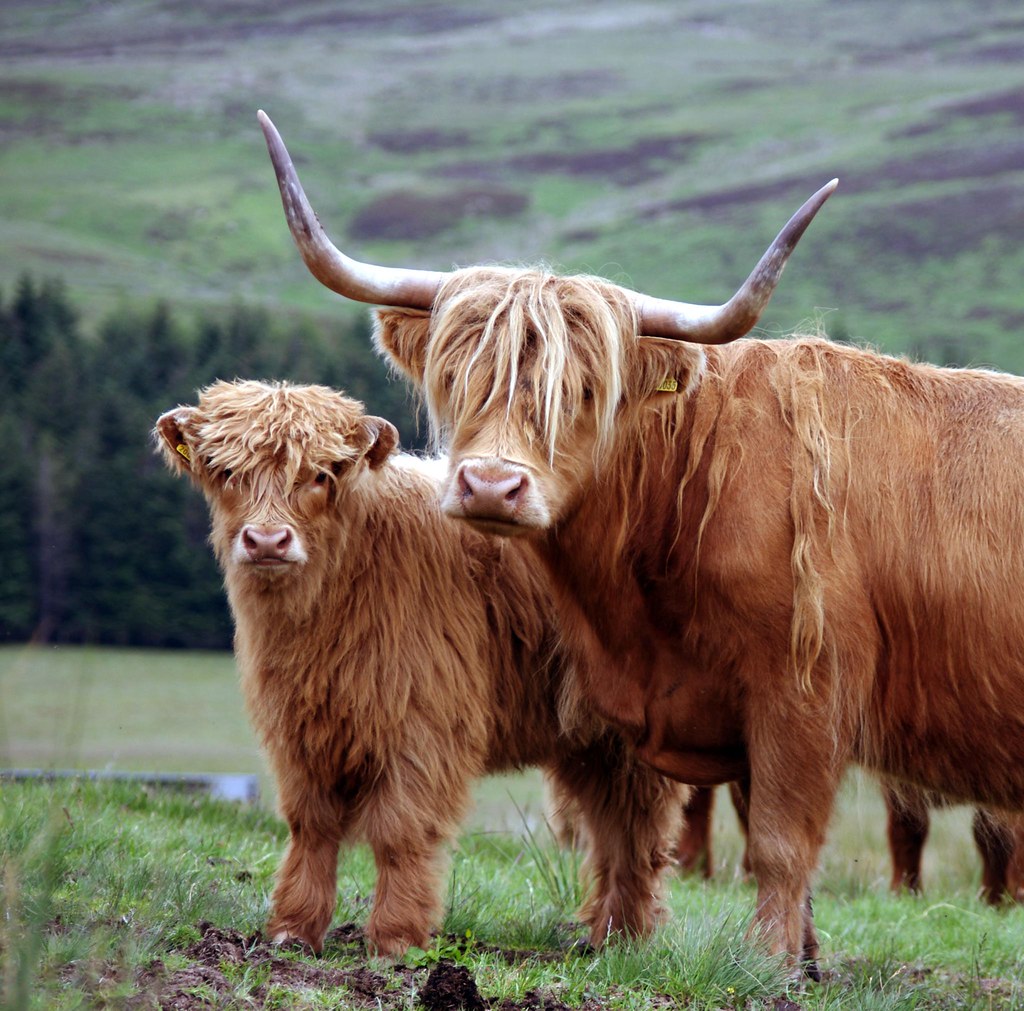
Kinkell Byre is a one-hundred-acre farm on the east coast of Fife, Scotland. Once a part of the larger Kinkell Farm, it is now an event venue. But Kinkell Byre also boasts a herd of seven Highland cows—not for farming, but for rewilding through conservation grazing. Rewilding is a recent conservation approach that aims to restore ecosystems until they function without human intervention and a major facet of it is species reintroduction or substitution, where species that play an important role in the ecosystem can serve that role in maintaining it. In the case of Kinkell’s Highlands cows, through grazing on former farmland, they prevent some plants from outcompeting others, pull up tufts of grasses with their tongues to expose the earth to new seeds, and trample areas of ground to create a less uniform field for other species, like ground-nesting birds, to thrive in. However, this role was not originally served by Highland cows. Historically, the animals disturbing the ground like this would have been the ancestors of all cows: the aurochs.

Figure 1: A Highland cow at Kinkell Byre.
Cows might not at first seem like an animal humans have a partnership with, in the same way that dogs did in the previous article in this series. But their history, genetic and cultural, is bound to ours—and it is worth taking a closer look at. The last aurochs died, and the species went extinct, in Poland in 1627. Most of them had been driven out of the rest of Eurasia by the thirteenth century, but in Poland they were protected by royal decree. They were enormous creatures, weighing up to 1500kg, and the disruption they brought to the ecosystem would have been immense, making it easier for diverse species to compete within one system. How exactly they were domesticated to create cows remains a mystery. It seems to have happened in the Near East 11,000 years ago and spread across Eurasia from there. As domesticated cattle spread, they interbred with local wild aurochs, leading to a split between the zebu cattle descended from aurochs in India and farther east, and the taurine cattle from Iran and farther west.
Why did we domesticate cattle in the first place? Humans would have likely drunk the milk of other species prior to the Neolithic Revolution, and cow milk in particular has far more protein than human milk. Hunter-gatherer societies still present today, such as the Bushmen in the Kalahari Desert, will gather milk from wild animals during hunting. But the first evidence we have for historical milk consumption comes from pots from the seventh and sixth millenniums BCE, which have residue of fatty lipids within them. However, with the exception of a site in Poland from 5200 BCE where bones show the livestock present were 80 per cent aurochs, we cannot be sure what animals this milk came from. Considering that this is the earliest evidence we have of milk drinking, and that cattle were domesticated several thousand years before this, it therefore seems likely there were originally domesticated for beef rather than milk, though this is difficult to be certain of.
This is supported by cows’ size. The size of cows rapidly reduced once they were domesticated, losing 33 per cent of their body mass by the end of the Neolithic and continuing to shrink until the Middle Ages—an effect likely caused by the fact they would be slaughtered for beef as soon as they reached full size, so the cows bearing calves would be younger than in the wild. In the last century, however, they have grown bigger and meatier. They were first introduced to the Americas by the Spanish and the Portuguese, and originally, they co-existed with the North American bovine, the bison, as cowboys drove them across the plains to feed and fatten them, then toward major cities to be slaughtered for meat. Across the nineteenth century, however, bison numbers plummeted from 65 million to less than a thousand by the end of the century, due to intentional hunting and genocide against the Native Americans who relied on bison for their way of life. And as white farmers increasingly settled the American plains and used barbed wire to keep roaming cattle off their land, the ‘Wild West’ as it exists in the popular imagination came to an end.
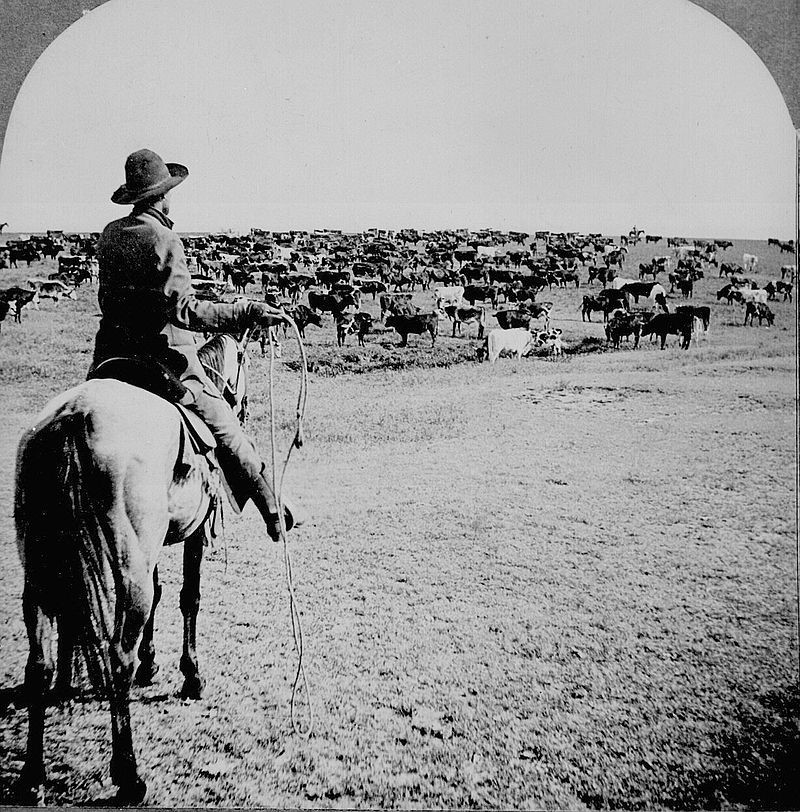
Figure 2: Cattle herd and cowboy at the turn of the twentieth century.
Into the twentieth century, cattle farming grew far more technical, intensive, and large-scale. Breeders used artificial insemination to produce the best cows for both milk and beef, and Holstein Friesians, the iconic black and white cows most of us imagine, became the most popular breed for this reason. The genetic diversity within a breed is now minimal, while breeds are increasingly divorced from one another genetically. Without wild aurochs to introduce genetic diversity, if one breed is wiped out by disease, its genetic history would be lost forever. Post-war agriculture intensified further, encouraged by government subsidies in Britain, which saw a decline in ‘organic farming’, with cows kept in stalls and fed grain instead of left to graze on pasture. Rosamund Young, an advocate for organic farming wherein cattle are pasture-fed and free to roam, points to studies that show that meat from organically farmed cows is healthier. There are higher levels of conjugated linoleic acid, an effective anticarcinogen; of vitamins A and E; of the antioxidant selenium; and of unsaturated fatty acids like the long-chain omega-3. On the other hand, the meat from intensive farming is harder to digest, and has been linked to risks of diabetes, obesity, cardiovascular disease, asthma, and even depression and Alzheimers. Despite this, organic farming remains the exception, not the norm.
Intensive farming is a large reason that cattle farming is so environmentally damaging today. The sheer number of cows that graze and produce methane means they are famously detrimental to attempts to reduce greenhouse gases, and stall-fed cows are also incredibly inefficient from a food waste perspective. They tend to be fed agricultural products like soya and consume a massive proportion of global agricultural produce annually, rather than grazing on grasses in environments that, as we have seen at Kinkell, would benefit from their intervention. These products then are often grown with artificial fertilisers, rather than the natural fertiliser produced by the manure of grazing animals, which require fossil fuels to produce. Cattle, and the way we farm them, are a major part of the environmental crises we face today—but they do not have to be.

Figure 3: A Holstein Friesian heifer with the iconic black and white patterning.
The partnership between humans and cows is one that at first glance seems far less equal than the partnership between humans and dogs. Dogs are not slaughtered for meat, and cows do not usually work alongside humans for a specific task as closely as dogs do. But they are bound to us; each keeps the other fed. While this relationship is not as close as it would have been when most of the population was involved in agriculture, it remains close for those who are—particularly organic farmers like Young. But the irony of human-cow relations is that often, the relationship dominates others. Forests and landscapes are dominated by humans to provide a place for cows to live. We focus on them to the exclusion of much of the natural world. And in treating them this way, we forget the partnerships cows can form with other species, too. Studies show that when bovines graze alongside equines, the bovines gain 60 per cent more body mass, as equines can eat tougher grasses and allow bovines to access the softer ones beneath them. And, of course, the role that the aurochs once played in maintaining diverse ecosystems is one that is especially important to pay attention to in an age of such biodiversity loss.
People are paying attention to it. Conservation grazing as practiced at Kinkell Byre is a widely spread practice. Many rewilding sites, including trailblazers like Oostvaardersplassen in the Netherlands and Knepp in Sussex, use grazing cows to allow ecosystems to recover and flourish. And while they may not command the same affection as dogs, lots of people are fond of cows, particularly Highland cows. Kinkell Byre runs sessions for people to meet theirs, which have proven popular. While the aurochs may be extinct, their genes remain in the animal that humans have a close, dependent relationship with. Cows may be a major part of the environmental crisis, in partnership with humans. But we all have a role to play in solving it. Perhaps a first step would be recognising the extraordinary relationship we have with this species, in all its sometimes-unpleasant nuance. Only when we fully appreciate these animals for what they are to us can we truly see cows—see them as they were, as they are, and as they still could be.
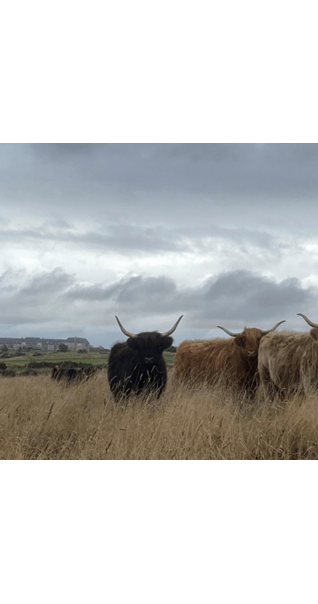
Figure 4: Highland cows at Kinkell Byre with the Fairmont Hotel in the background.
Bibliography
99 Per Cent Invisible. “Devil’s Rope.” Accessed January 30, 2025. https://99percentinvisible.org/episode/devils-rope/
Bohannon, Cat. Eve: How the Female Body Drove 200 Million Years of Evolution. London: Hutchinson Heinemann, 2023.
Kinkell Byre. “Highland Cow Experience.” Accessed January 30, 2025. https://kinkellbyre.com/experiences/
Kinkell Byre. “Home.” Accessed January 30, 2025. https://kinkellbyre.com/
Kinkell Byre. “Rewilding.” Accessed January 30, 2025. https://kinkellbyre.com/rewilding/
Roberts, Alice. Tamed: Ten Species That Changed Our World. London: Windmill Books, 2017.
Tree, Isabella. Wilding: The Return of Nature to a British Farm. London: Picador, 2018.
Young, Rosamund. The Secret Life of Cows. London: Faber & Faber Limited, 2017.
Image credits
Featured: “Highland cows, near Baddingshill” by jsutcℓiffe is licensed under CC BY-SA 2.0.
Figure 1: Photo by author.
Figure 2: By Unknown author – scan of photo, Public Domain, https://commons.wikimedia.org/w/index.php?curid=5194905.
Figure 3: By Tractorboy60 – Transferred from en.wikipedia.org [1]: 2007-09-14 09:23 . . Tractorboy60 . . 640×480 (148 KB) . One of my heifers, Public Domain, https://commons.wikimedia.org/w/index.php?curid=10483004.
Figure 4: Photo by author.

