
Written by Louisa Steijger
Content warning: This article contains discussions of war, violence, and death.
The complexities of Sri Lanka’s socio-political landscape have been deeply influenced by the ideology of Sinhala nationalism, which espouses belief in the ethnic and religious superiority of the Sinhalese majority, claiming that Sri Lanka is the primordial homeland of Buddhism and by extension, the Sinhalese. Forming 74.9% of Sri Lanka’s population, the Sinhalese majority employed this ideology of belongingness to legitimise the subjugation of minority groups such as the Tamils and Muslims, who primarily live in the northeast provinces and each form 11.2% of the population.
The history of Sri Lanka is complex and underlined by nearly 450 years of Portuguese, Dutch and British colonial regimes. The historical roots of Sinhala nationalism can be traced back to colonial legacies, wherein British colonial policies accentuated ethnic and religious distinctions, privileging certain minority groups, in particular Tamils, over the Sinhalese majority. The Tamil minority benefitted most from colonial rule, in which they were favoured by existing government legislation on language and religion. This resulted in the domination of Tamils in the military, universities, and bureaucracy. The politicisation of ethnic identities during colonial rule laid the groundwork for the emergence of Sinhala nationalism, fuelled by a desire for representation and reclaiming perceived lost privileges.
Following the end of colonial rule, Sri Lanka underwent a significant restructuring of its public life, leading to a notable shift in power dynamics, particularly with the political empowerment of the Sinhalese majority. The institutionalisation of Sinhala nationalism through discriminatory government legislation exacerbated tensions and marginalised minority communities. These policies aimed to reverse Tamil dominance in public life underscoring the systematic exclusion of minority groups from economic and social opportunities. One key discriminatory legislation that reflects the infiltration of Sinhala nationalism into the Sri Lankan political system was the implementation of the Sinhala Only Act in 1956. This bill made the majority community Sinhala language the island’s only official language and in doing so promoted a form of linguistic discrimination that prevented the employment of Tamil-speaking people in the public sector. Other discriminatory policies compounded the marginalisation of minority groups within Sri Lanka’s public life, such as the standardisation of education, which both reduced the number of Tamil students who could enter university and required these students to attain higher grades to attend.
These legislations did not only target the Tamil minority but also attempted to erode the constitutional protection of other religious minority groups, such as Muslims and Christians, whose religion was presented as conflicting with Sri Lanka’s way of life. The abolition of Article 29 of the 1947 Constitution removed the protection of religious minority rights, instead giving primacy to Buddhism. The removal of constitutional safeguarding mechanisms for religious minorities entrenched the hegemony of Sinhala nationalism, perpetuating a cycle of marginalisation and discontent. The rights of minority groups were further diminished by the government’s sponsorship of Sinhalese colonisation and settlement in the North-eastern regions of Sri Lanka, which Tamils and Muslims predominantly inhabited. This form of ethnic flooding, ensured the weakened voting strength of non-Sinhalese groups, facilitating the continued domination of the Sinhalese in the government.
Ultimately, this marginalisation fostered a feeling of disillusionment towards the government and, by extension, the Sinhalese. The disenfranchisement of minority groups fuelled the rise of separatist movements, most notably the Liberation Tigers of Tamil Eelam (LTTE) in 1976, which sought to establish an independent Tamil state. The separatism movement marked the end of Tamil’s acceptance of ethnic alienation and political polarisation as they became willing to employ methods of violence, to end the preferential treatment of the Sinhalese. Despite similar feelings of discontent and injustice, the Muslim minority believed that violence would only work to worsen their social standing in Sri Lanka. These differing responses reveal how feelings of discontent manifested differently amongst varying ethnic minorities. In the case of the Tamils, the culmination of Sinhalese supremacy in both legislation and everyday life inflamed tensions and left them to some extent powerless, which can account for why some Tamils resorted to a campaign of violence in the act of self-preservation.
Prior to the Sri Lankan Civil War, there were many instances of sustained violence against Tamils by the Sinhalese. For example, in 1958, communal violence against Tamils by the Sinhalese over six days led to the death of hundreds and the displacement of over twenty-five thousand refugees. These isolated occurrences persisted into the 1960s and 1970s. However, due to the emergence of the separatism movement for Tamil Eelam, Sinhalese violence escalated, resulting in a culture of violence utilised by both the Sinhalese and LTTE. The LTTE transformed Tamil’s Gandhian-style peaceful response to Sinhalese discrimination into one of intense violence, in tandem with the pioneering use of suicide bombing to ensure that maximum effects of violence were felt in Sri Lanka. This is exemplified in the 1983 Black July Riots in which Tamil militants, as part of the LTTE, attacked an army convoy and killed thirteen Sinhalese soldiers. This event consequently justified the continual Sinhalese perpetuation of state violence motivated by Sinhala nationalism against Tamils, and thus, this triggered Sri Lanka’s Civil War, which lasted over twenty-five years. Following the LTTE 1983 attack, a series of anti-Tamil attacks occurred, often supported or orchestrated by the government. For instance, Sinhalese mobs were transported in official government buses and were able to utilise voter registrations to identify Tamil targets.
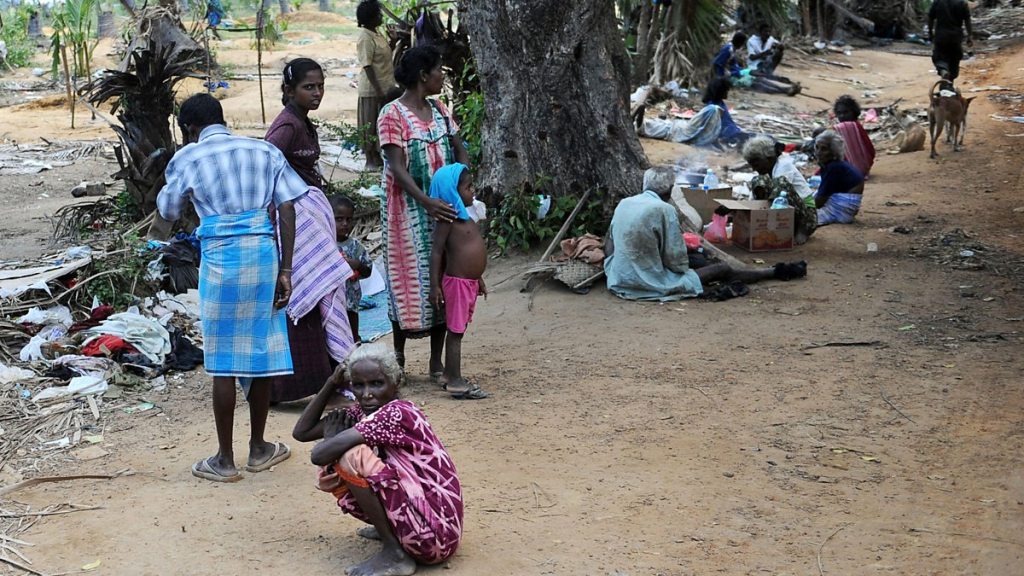
Throughout the Civil War, Sinhala Nationalism continued to promote anti-Tamil rhetoric to vindicate the murder of thousands of Tamils and the displacement of even more. It is estimated that up to forty thousand Sri Lankan civilians died. It is crucial to note that violence was not one-sided and only a product of the Sinhalese but rather the LTTE, who claimed to represent all Tamils, used excessive violence and heavily contributed to this casualty count. However, to some extent, Sinhala nationalism underpins both the violence used by the Sinhalese and the LTTE, given that the LTTE only formed due to the marginalisation of Tamils by the Sinhalese-dominated administration.
Despite the end of the Civil War in 2009, Sinhala nationalism persisted in shaping post-war dynamics, leading to continued marginalisation and oppression of minority communities. The end of the Civil War, which substantially weakened the Tamils with the defeat of the LTTE, brought a new concentration in terms of political violence towards the Muslim minority, who were perceived as a religious threat to Buddhism and, by extension, the Sinhalese. The legitimisation and normalcy of Islamophobia seen in everyday violent acts led to an escalation of anti-Muslim riots, which since 2011, has resulted in over 650 attacks on Islamic homes, businesses, and mosques. These attacks have only increased in intensity since the 2019 Easter Sunday bombings in which eight Islamic extremist suicide bombers killed over 250 Sri Lankans in an organised attack. Consequently, the use of state-sanctioned Sinhalese political violence and the removal of all safeguarding mechanisms underscores the enduring legacy of Sinhala nationalism in prolonging conflict in Sri Lanka.
Sinhala nationalism has played a pivotal role in perpetuating violence in Sri Lanka, driven by its assertion of ethnic and religious superiority and the inferiority of the minority groups Tamils and Muslims. Through various governmental policies and nationalist acts of violence, this marginalisation has left Tamils and Muslims with no other method to protect themselves than violence. Thus, the Sinhalese created an environment of reciprocated political violence that could legitimise ethnically purifying Sri Lanka.
Bibliography
Bullion, A. (1995) India, Sri Lanka and the Tamil Crisis, 1976-1994: an international perspective, London; New York: Pinter, 1-33
Department of Census and Statistics (2011), “Sri Lanka Census of Population and Housing 2011.” www.statistics.gov.lk/PopHouSat/CPH2011/index.php?fileName=pop43&gp=Activities&tpl=3. (Online) [accessed 1/02/2023]
DeVotta, N. (2021) ‘The Genesis, Consolidation, and Consequences of Sinhalese Buddhist Nationalism, in Rouhana, Nadim N; Shalhoub-Kevorkian, N. When Politics Are Sacralized: Comparative Perspective on Religious Claims and Nationalism, New York: Cambridge University Press, 187-208
Imtiyaz, A.R.M & Stavis, Ben. (2008), ‘Ethno-political conflict in Sri Lanka’, Journal of Third World Studies, Fall 2008, Vol 25, no.2, Florida: University Press of Florida: 135-152
Kingsbury, Damien. (2012) Sri Lanka and the Responsibility to Protect: Politics, Ethnicity and Genocide, Asian Security Studies, Abingdon: Routledge, 82-93
Navaranta-Bandara, A. (2000) ‘Ethnic Relations and State Crafting in Post-Independence Sri Lanka’, in Lakshman and Tisdell (eds.), Sri Lanka’s Development Since Independence: Socio-Economic Perspectives and Analyses, New York: Nova Science Publishers Inc. 113-127
 Retrospect Journal