
Written by Bethan Williamson
When we think of the words ‘nineteenth century’ and ‘mental health’, it is unlikely that a particularly positive image comes to mind. However, an examination of Britain’s social context during this period of psychiatric revolution reveals how the architecture of public health evolved from prisonlike ‘madhouses’ to asylums and eventually hospitals, and how mental health care shifted from confining paupers and criminals to medical, patient-centred approaches focused on treatment and support that we now recognise in our modern NHS. This article will focus on the social understanding of ‘madness’ and ‘lunacy’. Given that mental health is a complex subject, it is important to clarify that the representations of mental health addressed here concern forms of mental distress historically understood as disruptive, rather than attempting to encompass the universality of individual experiences of mental health. This exploration focuses on a single psychiatric hospital in Edinburgh, whose historical development sheds light on wider changes in the field, while also drawing attention to Scotland’s often overlooked role in the historiography of the development of modern British attitudes and approaches to mental health disorders.
The name Bedlam has become synonymous with total chaos or madness in our language today, which says a great deal about the legacy of the oldest psychiatric institution in the world that inspired this usage of the term. Bethlem Royal hospital—or Bedlam—was originally founded in London in 1247 as a monastery and began to be known as a hospital for the insane by 1403. The hospital is now infamous for its intermittent scandals of abuse and the shocking living conditions of its patients. Manacles, chains, and even stocks have been found in the hospital’s inventory from the early fifteenth century. Solitary confinement and physical restraints were used to ‘treat’ these patients, who were predominantly paupers or the socially marginalised, as they were often considered dangerous. Before the psychiatric revolution of the late nineteenth century, ‘madness’ was generally considered in Britain as situated in the body and overwhelmingly relied on the Hellenic medical tradition of treating the four humours. Social care for ‘lunatics’ was the responsibility of at best, clergymen, and at worst, jailors.
Edinburgh’s own Bedlam, also known as Darrien house, was situated on the corner of what is now Bristo place, and became the namesake of Edinburgh University’s theatre today. Not a great deal is known about this makeshift ‘hospital’ other than that it was designed to support the nearby workhouse and that the celebrated poet Robert Fergusson died here at age 24 from a gradually deteriorating head injruy. This in turn prompted prominent physician, and friend of Fergusson, Andrew Duncan to campaign for a new institution to be erected, which was eventually successful with funds granted from the British parliament in 1806. This was realised in the Edinburgh Lunatic Asylum in 1813, also known as the East House, located in Morningside. This institution has developed into the Royal Edinburgh Hospital today, in the same location, and continues to care for those suffering from mental health conditions.
At first the East House provided care solely for the wealthy, until the introduction of the West House in 1842, specifically designed to care for the city’s poor. The initial prioritisation of helping the wealthy who suffered from ‘madness’ was in fact an essential step in understanding these illnesses as treatable, replacing the prevailing notion of the asylum as a last resort for urban cities’ paupers. This is the moment in which we can observe the shift from punitive approaches of so-called ‘lunatics’ towards a sense of genuine civil responsibility in Scotland and a focus on improving the quality of life of patients, rather than simply confining them. In fact, the rapid emergence of asylums in the latter half of the nineteenth century signals a radical shift towards state apparatus purpose-built to address the welfare and control of those deemed ‘lunatics’, and thus the beginning of a revolution in the governmental approach to mental health disorders in Britain. In 1845 the Lunacy Act was passed through Parliament, which officially required every county and borough in England and Wales to provide asylum accommodation for their mentally ill pauper population, with the aim of reducing the strain on workhouses and transforming the treatment of the insane towards more humane practices. This Act, alongside our example of the Edinburgh West House, demonstrates the shift towards treating mental health disorders as medical rather than moral or legal issues in society. This is why some historians have recognised the evolution of psychiatry as a discipline as more closely connected to and contingent on the development of the modern welfare state than any other modern field of medicine.
Scotland, however, occupied a distanced position from the British parliament’s expansion of care for the mentally unwell, which may strike us as surprising given the evidence for its pre-eminence in developments in the field. In fact, the creator of the 1845 Lunacy Act, the Earl of Shaftesbury, believed that he could not extend the bills to Ireland and Scotland, stating that: “not in any country in Europe, nor in any part of America, is there any place in which pauper lunatics are in such suffering and degraded state as those in Her Majesty’s Kingdom of Scotland.” We need only turn to one historical figure in particular to refute this image of Scotland as behind the rest of the West: Sir Thomas Smith Clouston.
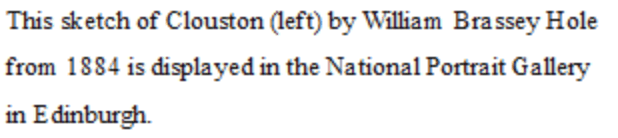
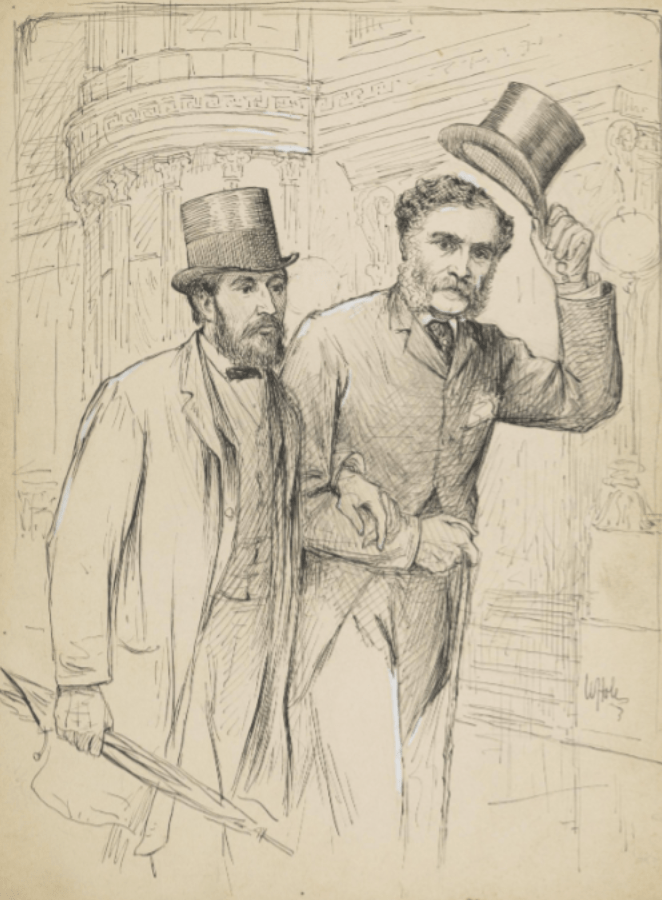
Clouston was appointed as Superintendent of the Morningside Royal Edinburgh Asylum in 1873, as well as the first ever Lecturer on Mental Diseases at the University of Edinburgh in 1879. It is also pertinent to note that the University of Edinburgh appointed a ‘psychiatric chair’ before any English institution had done so. Clouston was known as an extremely prominent expert among British alienists and known to be sensitive to the public’s perception of asylums, with their history of abuses and negligence, and thus encouraged enriching activities for his asylum patients, such as sports and gardening. A fascinating collection of 1151 patients’ letters and diary entries from this hospital reveals that the treatment of patients suffering from ‘delusions’—which are mostly consistent with our modern diagnosis of schizophrenia—has more in common with our present day understanding of psychopathology than might be expected. Under Clouston’s supervision, Edinburgh’s mental health provision had certainly come a long way from chaining patients to walls with straw for beds. Yet, as we can observe in Lord Shaftesbury’s defeatist and ignorant attitude, the contributions of Scotland in this field have been much ignored and scholars have had to face the task of dispelling images of the country’s history as pre-modern or superstitious. On the other hand, some histories connect Enlightenment-era discussions of personal liberty in Scotland with approaches to psychiatric care that placed greater emphasis on community-based provision than in England, though practices varied widely. The development of the Morningside Royal Edinburgh Asylum is surely a testament to the forward-thinking attitudes of practitioners and scholars in Scotland, such as Clouston. In fact, the asylum was renamed the Royal Edinburgh Hospital for Mental and Nervous Disorders in 1922—now the Royal Edinburgh Hospital—and to this day continues to care for patients and improve our understanding of mental health conditions.
It is clear that Scottish figures in psychiatry and psychopathology should not be dismissed in their contributions to modern British medical approaches to mental health. Furthermore, when exploring how changing social attitudes towards the poor, evolutions in medical research, and the emergence of the modern welfare state all contributed towards progress in the field of mental health, the infamous image of the nineteenth century asylum can become a historical site of medical and social transformation.
Bibliography
Beveridge, Allan. “Voices of the Mad: Patients’ Letters from the Royal Edinburgh Asylum, 1873–1908.” Psychological Medicine (NEW YORK) 27, no. 4 (1997): 899–908.
German E. Berrios and Ivana S. Marková ‘The epistemology and classification of ‘madness’ since the eighteenth century’ Eghigian, Greg, ed. The Routledge History of Madness and Mental Health. Milton Park, Abingdon, Oxon ; Routledge, 2017.
Morgan, David. “Explaining Mental Illness.” European Journal of Sociology 16, no. 2 (1975): 262–80.
Philo C, Andrews J. Introduction: histories of asylums, insanity and psychiatry in Scotland. History of Psychiatry: Madness, Science, Culture. 2016;28(1):3-14.
Scull, Andrew, ed. Madhouses, Mad-Doctors, and Madmen : The Social History of Psychiatry in the Victorian Era. Philadelphia: University of Pennsylvania Press, 1981.
http://studymore.org.uk/mhhtim.htm
Featured Image Credit: https://www.nationalgalleries.org/art-and-artists/91871/sir-thomas-smith-clouston-1840-1915-lecturer-mental-diseases-edinburgh-university-and-dr-douglas
 Retrospect Journal