
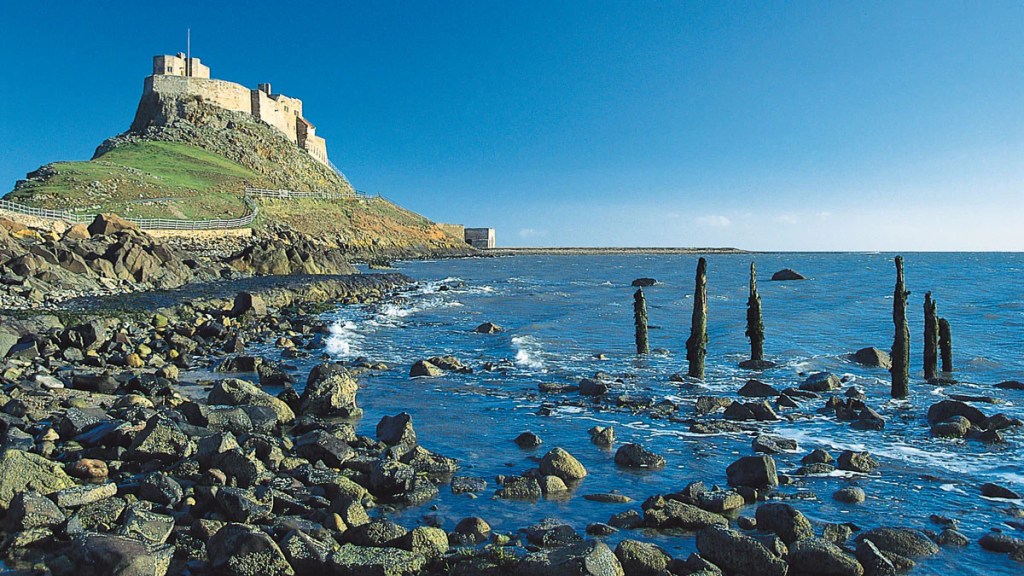
Written By Helene Chaligne
Lindisfarne, or Holy Island, welcomes over half a million tourists every year. This is an impressive feat for an island with a current population of 180 and unconventional access. However, it is not only the rising and falling tide timetables that attract these numbers every year. The island earned its nickname from its highly significant religious history, involving the English, Irish, Scottish, and Scandinavians. It is also important to note that, while being the most famous, Holy Island is one of four “holy islands” across the United Kingdom and Ireland, the others being Ynys Gybi in Wales, Eilean MoLaise in Scotland, and Inis Cealtra in Ireland.
Holy Island’s holy history begins in AD 635 with the founding of the Lindisfarne monastery by the Irish monk St Aidan. The Anglo-Scottish Irish link is present from the very start, as St Aidan travelled from Iona, the centre of Christianity in Scotland, where the Irish saint Columba’s arrived in 563, bringing the faith with him. Forty years later, in 685, Saint Cuthbert is attributed a series of miracles on Lindisfarne; his cult began to develop in the following decades. Saint Cuthbert’s remains were said to not have decayed in the eleven years following his burial. His remains were raised to a ground-level shrine, and he was declared a saint. Thus, the reputation of Lindisfarne grew, and more miracles were reported at the shrine. Holy Island officially became a place of pilgrimage whilst accruing wealth and power. The Lindisfarne Gospels, currently kept at the British Library, were also completed around this time. The work is considered to be one of the finest in the unique style of Hiberno-Saxon art, combining Mediterranean, Anglo-Saxon and Celtic elements. It is regarded similarly to the Book of Kells, currently kept at Trinity College Dublin, which is suspected to have been completed on Iona.
After two hundred years of holy history, a Viking raid in 793 changed the tides for monastic life on the island. As they advanced from the River Tyne, monks on the island worked to save relics, such as the bones of saints and other precious ornaments, officially leaving in 875. Their dedication is highlighted by the fact that they moved continuously over the next seven years in order to protect those relics. After their move, St Cuthbert’s remains were then relocated to Durham Cathedral.
Following the Norman conquests of the eleventh and thirteenth centuries, monastic life returned to the island and established the priory of which the ruins still stand today. The turbulent nature of religious life on the island persisted as the monks moved to fortify the priory after Edward I invaded Scotland in 1296. The latter also meant the loss of Scottish kings as major benefactors of the Benedictine monks on the island. The number of monks was low, with only around ten there in the thirteenth century. All were from Durham and typically stayed two or three years before returning. The sixteenth century ushered in more change with the dissolution of monasteries under Henry VIII. Lindisfarne’s buildings were supposedly not destroyed during the Reformation, however, due to their use to the Crown’s defence strategies in the north.
Lindisfarne lay at the heart of conflict again when the Stuarts attempted to regain the throne. In 1715, their followers, the Jacobites, moved to seize the castle on the island. The main insurgent, Lancelot Errington, visited the master gunner, also a skilled barber, to ask for a shave. He found the island to be relatively unguarded, lacking most of its garrison. Errington returned that same day, claiming he had lost the key to his watch; they were allowed in and overpowered the three defenders of the castle. Loyalist soldiers were sent soon after to reclaim the castle, and the insurgents were imprisoned in Berwick. Security being lax once more, they funnelled their way out of the prison, but the Jacobites, small in numbers, achieved little success. A similar island episode occurred earlier further north off the coast of North Berwick, with Bass Rock’s castle being one of the last places in Scotland to surrender to William III in 1690.
Holy Island’s history endured calmer times after the eighteenth century. The ruinous remains became a tourist attraction and attracted artists of the likes of JMW Turner and Thomas Girtin.
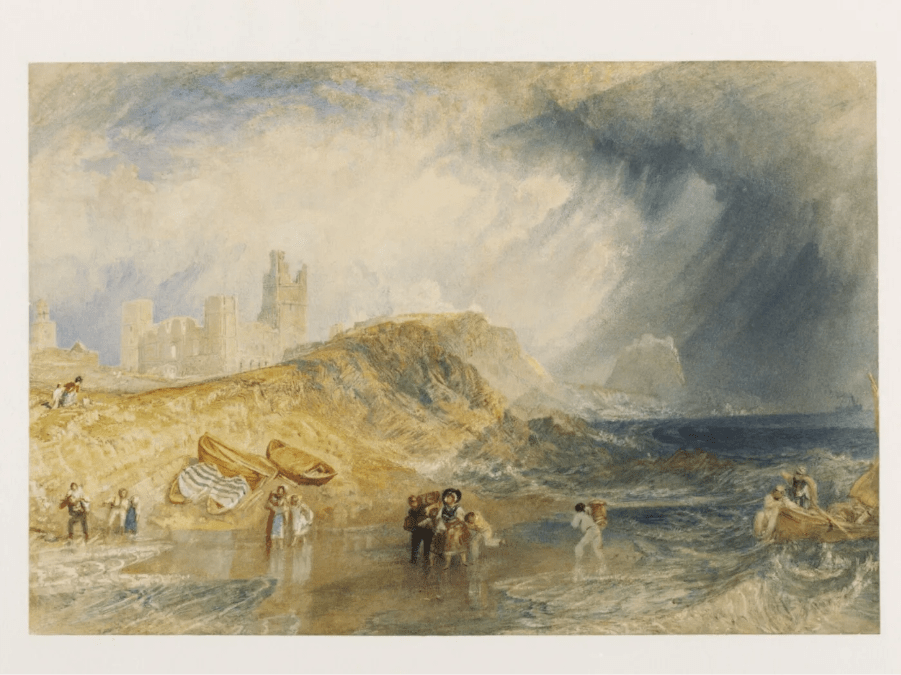
Fig I: Holy Island, Northumberland, Turner, 1829.
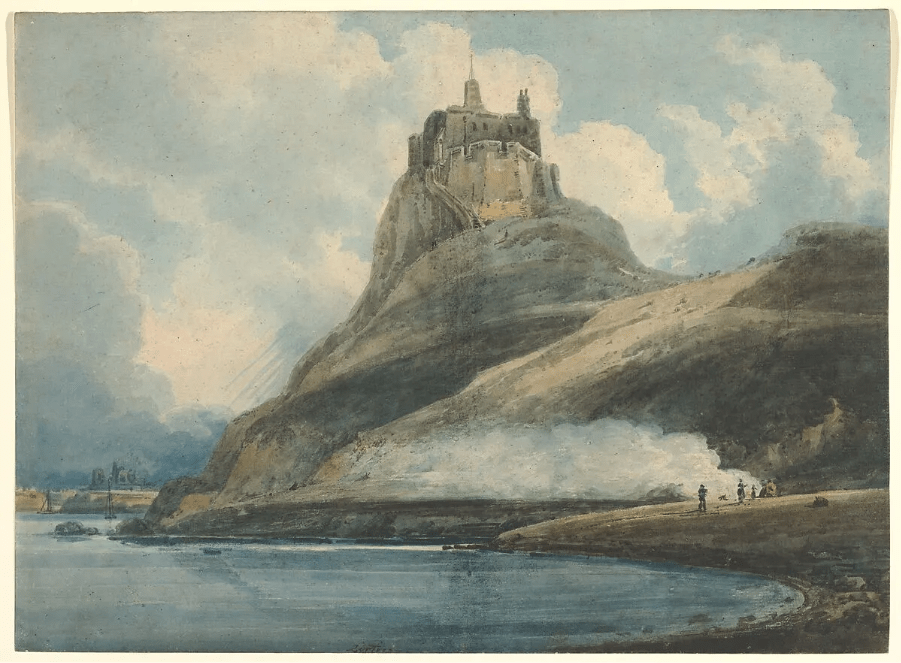
Fig II: Lindisfarne Castle, Holy Island, Northumberland, Girtin, 1796-7.
After being made part of Northumberland in 1844, the island saw a brief boom in the industrial age as Dundonian businessman William Nicholl built lime kilns at Castle Point in 1860. This only lasted about a decade before operations were cut. The connections to Ireland and Scotland persisted, as most of those working this dangerous job were ex-navies from the two places. The kilns are amongst the largest and best preserved in Northumberland.
The castle was bought by Edward Hudson in 1901; he remodelled it with the architect Edwin ‘Ned’ Lutyens. It was used as a holiday home, and Hudson and his successors regularly had guests to stay. It was then gifted to the National Trust in 1944.
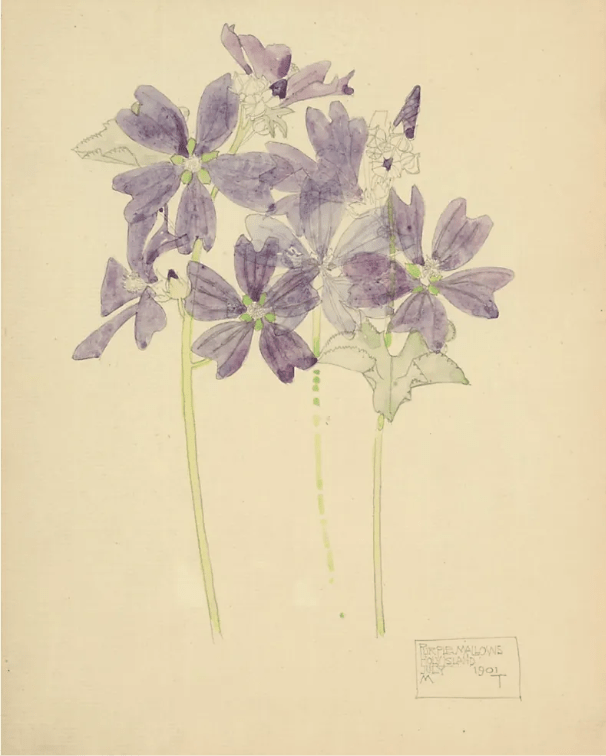
Fig III: Purple Mallows, Holy Island, Charles Rennie Mackintosh, 1900.
Another Scottish connection is found in the artworks made by the famous Glaswegian architect, Charles Rennie Mackintosh, who spent his honeymoon with his wife, Margret, on Holy Island. Thus, it can be observed Holy Island holds many connections between Scotland, England, and Ireland and, despite its size, inscribed itself at the heart of many conflicts starting with the Viking Invasion all the way to the eighteenth-century Jacobite Risings.
Bibliography
“Lindisfarne Castle History | Northumberland.” 2026. National Trust. 2026. https://www.nationaltrust.org.uk/visit/north-east/lindisfarne-castle/history-of-lindisfarne-castle.
“The Holy Island of Lindisfarne.” 2023. Historic UK. November 26, 2023. https://www.historic-uk.com/HistoryMagazine/DestinationsUK/Lindisfarne/.
“History of Holy Island | Co-Curate.” 2026. Ncl.ac.uk. 2026. https://co-curate.ncl.ac.uk/holy-island/history/.
“Charles Rennie Mackintosh (1868-1926) , Purple Mallows, Holy Island | Christie’s.” 2020. Christies.com. Christie’s. 2020. https://www.christies.com/en/lot/lot-5123863.
“Thomas Girtin – Lindisfarne Castle, Holy Island, Northumberland – the Metropolitan Museum of Art.” 2026. Metmuseum.org. 2026. https://www.metmuseum.org/art/collection/search/341793.
“The Parish Church of Saint Mary the Virgin – Holy Island.” 2025. Archive.org. 2025. https://web.archive.org/web/20130723170234/http://stmarysholyisland.org.uk/tour.htm.
Walsh, Kevin. “’Medieval Landuse, Agriculture and Environmental Change on Holy Island, Northumbria.” Ecological Relations in Historical Times, Transactions of the Institute of British Geographers Conference 1993, 1995.
“Holy Island’s Fishing Heritage.” 2018. Islandshire Archives. 2018. https://www.islandshirearchives.org.uk/content/areas/holy-island/fishing/holy-islands-fishing-heritage.
“History of Tudhoe Village.” History of Tudhoe Village: Dissent and Rebellion in County Durham. March 25, 2025. https://tudhoe.webspace.durham.ac.uk/.
Fig I: Holy Island, Northumberland Watercolour ca. 1829 (made) , 1830 (engraved) V&A South Kensington https://collections.vam.ac.uk/item/O1028632/holy-island-northumberland-watercolour-turner-joseph-mallord/
Fig II: Lindisfarne Castle, Holy Island, Northumberland, Thomas Girtin, 1796-97, The Met https://www.metmuseum.org/art/collection/search/341793
Fig III: Charles Rennie Mackintosh, 1900, Purple Mallows, Holy Island, Christie’s https://www.christies.com/en/lot/lot-5123863
Featured Image Credit: “The Holy Island of Lindisfarne.” Image on Cardtoons – The Great Stuff Blog, published 10 February 2023 by Rachel Wilson. Cardtoons Publications Ltd.
 Retrospect Journal