
Written by Emily Borg
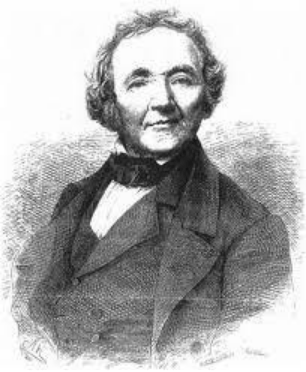
Leopold von Ranke has long been viewed as a figurehead in empirical history, credited for centring history on factual sources, and praised for his apolitical and non-theoretical methodology. However, we must clarify that Ranke’s stance on history has been oversimplified and misunderstood, as his theory is deeply rooted in his political views and draws heavy influence from philosophical discourse, creating long-term controversy within the discipline. Thus, by examining Ranke’s methodology, his mis-conceptualisation, and his philosophical links, it is undeniable that the generalisation of his philosophical theories is the root cause of the polemic surrounding Ranke within the discipline.
While Ranke’s methodology centres on the pivotal role of primary sources, it is imperative to note that his commitment to sources has been overstated. For example, Beiser clarifies that Ranke places importance on reliable sources to sort the truth from embellishments, and not solely as a means to an end. Therefore, this highlights that Ranke was in fact not solely an empirical historian, but centred on a more scientific approach to move away from historical narratives clouded with inaccuracies, which Ranke found in Guicciardini’s Historia d’Italia. Similarly, historians maintain that Ranke’s work was largely theoretical, and the importance of primary sources is reflective of his largely overlooked philosophical theories, surrounding the importance of using sources to gain an understanding of a metaphysical reality. Ranke would see inherent value in an individual, or primary source, and through understanding the individual, one could perceive larger connections and an underlying divine or spiritual meaning in history, which Ranke saw as ordained by God. Therefore, it is incorrect to view Ranke as an empirical historian, while not accounting for his wider metaphysical and philosophical theories.
Within Ranke’s methodology, he places great importance on the separation of the historian from the past, and abstaining from moral judgement, which was a large break from previous methodological studies of history. Ranke argued that by allowing the narrative of the past to form naturally, one’s personal ethics would not be superimposed on the past, ultimately blurring the truth. Ranke’s focus on impartiality has been incorrectly equated to uncovering the objective truth, an absurd belief especially as Ranke himself was perfectly aware of the limits of historical objectivity. His crucial thesis with this methodological perspective was to limit prejudice from the historian, and to create the most factionally correct narrative. More recently, however, there has been criticism of this, coming from a presentist lens. Presentism involves acknowledging the historian’s context and taking that into account upon writing, and this historiographical lens of analysis has led to the proliferation of feminist and Marxist historians. Some argue that Ranke’s methodology allows for historians to avoid confronting their partiality, and bypasses critical self-reflection that is necessary. Thus, Ranke’s methodology, whilst being misunderstood, has also created important scholarly debate within the discipline.
Ranke’s mis-conceptualisation epitomises the oversimplification of his ideals, and the effect of his historiographical theory within the discipline. Ranke’s stance radically changed history in nineteenth-century America, with American historians only implementing institutional changes that Ranke proposed and sidelining his wider philosophical ideals. By viewing Ranke as a figurehead for empirical history, American historians in the nineteenth century were able to undermine his conflation of philosophical ideas with that of historical ideas. For example, in 1908, George Adams, then-president of the American Historical Association, quotes Ranke in his presidential speech. Additionally, Charles Beard, an American historian, stated in his 1935 essay that there was “an objective factual past” and that historians should separate themselves from their prejudices. Therefore, Ranke had been incorrectly made into a figurehead for empirical and scientific history within America.
Another common misconception is that Ranke and Hegel clashed on many theoretical arguments, which ultimately served to deepen the rift between history and philosophy. Ironically, Ranke and Hegel only differentiated on two points: the limits of epistemology, and the ontological status of the individual. Apart from this, they agreed on many methodological methods, despite Ranke absurdly claiming otherwise. Ranke himself attacked Hegel, claiming that his method was deductive and a priori. However, it appears that Ranke’s understanding of Hegel was incorrect, and he, like many others, misunderstood the reality of what Hegel was saying. In reality, they both disapproved of cherry-picking evidence to prove a hypothesis, and of the importance of primary sources to sort fact from fiction. Nonetheless, their polemics against one another, created a deep rift within the historical and philosophical thought. Therefore, philosophical thought was marginalised within history.
Despite general historical consensus, Ranke’s theory was not based on apolitical notions. In fact, many believe that Ranke’s methodology of impartiality reflected only a criticism of the enlightenment, when in reality, Ranke’s desire for a separation of the historian from the past reflected his conservative politics. Ranke’s refusal to pass judgement for fear of imposing contemporary views on the past is in and of itself hypocritical. He viewed history as a divinely ordained narrative, justifying the unification of the countries as a process that God permitted and supported. Thus, by refusing to pass moral judgement, he presupposes that states are “ideas of God”, allowing him to undermine more radical principles not as ideals in of their own, but as a stepping stone to creating states that were “perfect once more”. Therefore, he defends his conservative ideals through a façade of neutrality. Importantly, his political associations have been largely overlooked, which detracts from the broader understanding of Ranke’s methodology within the current discipline. Contrastingly, some historians argue that this ideal of impartiality created a long term impact within the discipline, and arguing that his theory foreshadows recent debates about presentism. Thus, demonstrating the importance of Ranke’s politics on his theory that continues to create debate within the discipline.
Ultimately, the authors in the bibliography clarify and qualify that Ranke’s stance on history has been misunderstood and oversimplified to his core principles without a wider understanding of his philosophical and political views, creating a controversial impact within the discipline itself.
Bibliography
Clark, Elizabeth A. 2004. History, Theory, Text. Harvard University Press.
Iggers, Georg G. 2012. The German Conception of History. Wesleyan University Press.
Novick, Peter. 1988. That Noble Dream. Cambridge University Press.
Beiser, C Frederick, “Hegel and Ranke: A Re-examination”, in Hegel: A Companion edited by Stephen Houlgate and Michael Baur (Wiley & Sons, 2011).
 Retrospect Journal