
Written by Finley Farrell
The wildcat strike, strike action taken without union approval, has seen a minor resurgence in Britain over the last five years. In 2022, hundreds of Amazon workers walked out across the UK. In 2024, thousands of Deliveroo drivers set up pickets and refused to deliver food in protest of poor working conditions. Internationally, the 2025 Italian general strike for Palestine contained partial wildcat action across the country. These examples are extraordinary because of the almost total death of this form of industrial action in Britain since the early 1990s, and rarity since the general British trade union downturn under Thatcher. The throttling of wildcat action came about due to new restrictive laws, a waning culture of direct and industrial action, and series of heavy defeats. Historical examples, such as solidarity wildcats for the 1984–5 miners’ strike, show the form’s effectiveness in subverting draconian laws, stimulating unions into action, and organising non-unionised workplaces. More modern examples show how adaptive autonomous rank and file action, by ordinary members of a union, can be to new situations and laws. However, they have also contributed to failures in labour organising and can fragment workplace action, often due to the precarity and unsustainability of unofficial actions over long periods. I will explore several case studies over the past forty years, from the 1984–5 miners’ strike to the 2022 Amazon wildcat walkouts and slowdowns.
Solidarity action, or secondary action, where workers take industrial action in support of other disputes, was heavily restricted by the Employment Act of 1980. The act narrowed the definition of a legal picket strictly to those involved in a specific dispute, among other restrictive measure to industrial protest. A contemporary account commented on the restrictive nature of limiting “association” to having specific contracts with the disputed company. To strike in solidarity now opened a union up to a plethora of liability. This act was one piece in the wider Thatcherite plan to force unions to relinquish their class power and militancy. In this context, during the second front of the miners’ strike of 1984–5, other workers showing class solidarity through action was effectively outlawed. Without support of their unions, significant wildcat action took place in Lucas Aerospace in Bristol, as well as docks and power stations throughout the country, with railway workers refusing to move coal from striking pits. These strikes, generally seen as a failure, are often regarded as the last attempt at nation-wide class solidarity through industrial action in the twentieth century. The wildcat actions, while effective for a short time, could not sustain themselves through the long duration of the dispute, further isolating the miners in 1985 as they slowly called actions off. In this case the dynamism of autonomous rank and file movements was not suited. A drawn out dispute on a national scale left wildcat actions vulnerable to losing momentum, though they were useful in skirting the laws on secondary strikes.
In 1990, unofficial action was effectively banned as participating workers were stripped of legal striking protections. Without a balloted union decision, workers could be dismissed if taking part in any form of industrial action. Now, agitated vanguards of union rank and file members couldn’t drag unwieldy bureaucratic unions into militancy, as had happed throughout the 1960s and 1970s. Trade unionism slipped into a steady downturn and there was an adoption of passive class collaboration, in which the lack of wildcat strikes was a major factor. Members of wildcat actions being dismissible did, with exceptions such as the 1990s Liverpool dockers strike, successfully suppress unofficial action into the twenty-first century. However, this new form of the wildcat has begun to slowly find its feet.
In 2009, workers at the Lindsey Oil Refinery, though for a chauvinistic cause, unofficially walked out. This was followed by similar walkouts at around a dozen other energy plants, notably around seven hundred workers at the Scottish Grangemouth Refinery. The Lindsey strikes showed how the divorcing of official union representation and rank and file organising could be effective. The union (GMB) was still heavily involved in negotiation but was not liable for the illegal and autonomous actions of the strikers. In this case, the lack of clear leaders in the wildcat made it awkward to target specific organising members to discipline, as was the union-busting norm. Instead, the workers, consolidated their collective power outside of official union structures. In June of 2009, almost seven hundred construction workers were sacked in response to another dispute, escalating the issue and instantly prompting around three thousand workers walking out in solidarity at other energy plants. GMB representatives engaged in negotiations with the owners of the Refinery, and eventually all workers were reinstated or offered alternative jobs. The implications of this strike cannot be discussed without speaking of the wider economic landscape, but it shows some evolutions in wildcat action. Here, in contrast to the miners’ strike action, the union’s role was in support of the autonomous workers’ movement, not vice versa. The GMB was reactive to the dynamic walkouts, pushing them into quicker and more effective negotiation with the employer. The importance of horizontal organisation was also shown in post-1990 wildcat strikes, as the firing of every single striker triggered a significant escalation. By triggering their collective dismissal, the Lindsey workers played into the speed and momentum of unofficial walkouts, as can be seen in the other solidarity walkouts. The wildcat used the power of dismissal against management, in this case successfully, and demonstrated the potential effectiveness of unofficial rank and file action in the twenty-first century.
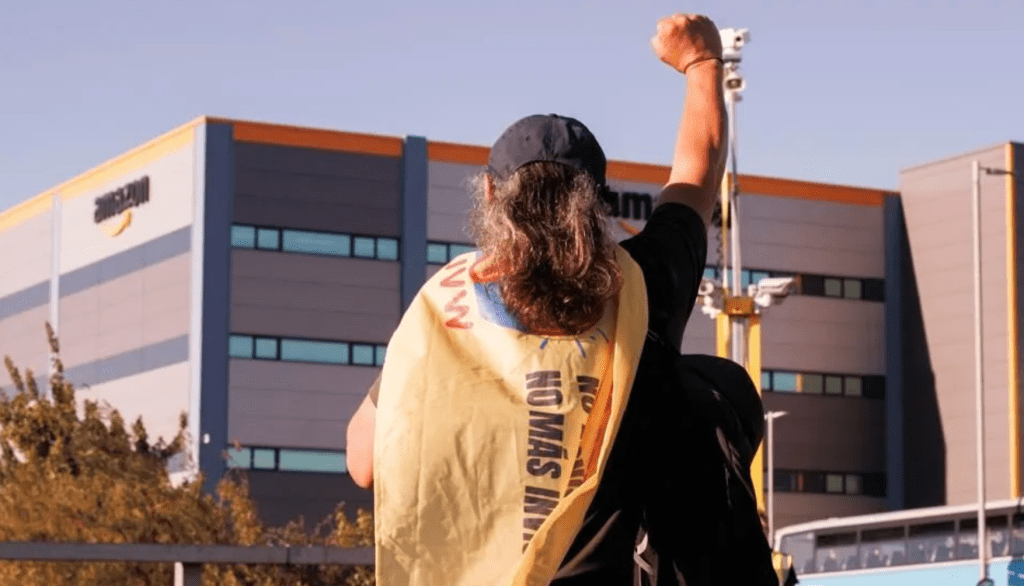
Finally, the 2022 Amazon wildcat strikes show another evolution of the action: fighting in non-unionised workplaces and using spontaneous actions to help spread protest. Extraordinarily, at least twenty two different actions, either strikes or slowdowns, took place over eight days in August of that year. This scale was unprecedented for Amazon, a multi-national famous for its anti-union success, especially in the UK. The speed and spread of the actions were due to its horizontal and collective character, but the actions were prone to sparking out because of the same traits. However, in this case, the actions were effective at fostering union membership at Amazon, an impressive feat. The Amazon strikes, generally similar to the Deliveroo wildcat actions two years later, show how autonomous worker action can grow the organising capacity of a workplace. Wildcat strikes having the capacity to respond almost instantly to worker anger, in this case against an insulting 35p per hour pay rise instead of the promised £1, makes them suited to convert collective grievance into organisation.
Through the past forty years, largely an era of neoliberalism and union defeats, there have been many uses of wildcat action in Britain. Most of the key examples have been to circumvent suppressive laws related to union-busting, removing an action from official union purview so laws and methods used to combat unions are left on the back foot. However, a common feature of these actions is their tendency to fizzle out if not supported legally and financially. The dynamism of autonomous workers’ action has often been used to try and spark unions into action, and while this is possible after 1990, it is very rare. Wildcat actions are so vulnerable that larger bureaucratic unions struggle to justify the risk. This developed unofficial strikes to consciously act outside of unions, or act as separate bargaining power for an official union to use without liability. The non-hierarchical organisation of a spontaneous walkout, often advantageously on common worker discontent, has proven to be an effective way of organising a previously non-organised workplace. Wildcat strikes remain relatively rare in Britain, and outside workplace organising culture; however, they have proved to be adaptive to new laws, situations, and workplaces. This kind of strike has also proven to be vulnerable if not supported by external forces such as a union. In a world where the character of work is constantly changing, unofficial action continues to mould itself to the challenges of resisting oppression in the workplace.
Bibliography
Eldridge, J. E. T., and G. C. Cameron. “Unofficial Strikes: Some Objections Considered.” The British Journal of Sociology 15, no. 1 (1964): 19–37.
Rummage, Steven. “Union Officers and Wildcat Strikes: Freedom From Discriminatory Discipline.” Industrial Relations Law Journal 4, no. 2 (1981): 258–86.
Todd, Paul. “The Employment Act 1980: Anti-Union Law Today, or Merely a Gateway to Harsher Measures Tomorrow?” British Journal of Law and Society 7, no. 2 (1980): 275–86.
Woodock, Jamie. “Platform Worker Organising at Deliveroo in the UK: From Wildcat Strikes to Building Power.” Journal of Labour and Society 25 (2022): 220-37.
Wise, Dave, 2008. “Long lost wildcat strikes in the UK 1960s – 1990s.” Libcom, Accessed 08/11/2025. https://libcom.org/article/long-lost-wildcat-strikes-uk-1960s-1990s.
Cant, Callum. 2022. “Mapping the Amazon Strikes.” Notes from Below, Accessed 07/11/2025. https://notesfrombelow.org/article/mapping-amazon-strikes.
Featured Image Credit: https://www.bigissue.com/news/employment/amazon-unofficial-wildcat-strikes-enter-second-week-as-uk-workers-protest-over-pay/
 Retrospect Journal