
Written by Alexander Stroem
Last Sunday, 19 October 2025, Bolivia ended its long-anticipated second electoral round. The conservative Christian Democrat (PDC) candidate, Senator Rodrigo Paz Pereira, was declared victorious (54.53 per cent) over his right-wing opponent and the ex-president, Jorge Quiroga (Alianza Libre, 45.5 per cent). The election, beyond its already abnormal use of two electoral rounds, represents a stark shift in Bolivian politics, ending just under twenty years of left-wing governments under the divided Movimiento al Socialismo (MAS) party, most notably represented by Evo Morales Ayma (2006–2019) and Luis Arce (2020–2025). Morales Ayma recently criticized the electoral candidates as “neoliberals and corrupt”, later noting that “both candidates are subjected to the North American Empire”. To Morales, this would have explicit connotations to natural resources, which he himself had sought to nationalize under his mandate, including hydrocarbons (notably natural gas), lithium, and mining. All this represented a stark change from the previous neoliberal regimes between 1985 and 2005, whereby Bolivia’s economic focus shifted from its previously nationalist-protectionist economic reforms of Import Substitution Industrialization (ISI) under the Movimiento Nacionalista Revolucionario, (MNR, 1952–1964) and the military regime (1964–1982), to one based on export, particularly natural resources. The period, spanning from the return of democracy in 1982 to Morales’ election in 2005, saw the advent of a new Bolivia, one whose legacy remains entrenched in Bolivian collective memory and anti-imperial discourse.
Marxist sociologist René Zavaleta Mercado served as Minister of Mines and Petroleum in 1964, prior to the coup of that same year. In 1964, he noted that natural resources were a fundamental part of the Bolivian national ethos and the “greatness and the spirit of the nation”. Eduardo Galeano, a Uruguayan scholar known for his seminal work The Open Veins of Latin America, similarly contended this: he highlighted the importance of Bolivian mines, particularly Potosí, during the colonial period, which made it one of the wealthiest “countries” at the time. Despite Bolivia’s position as one of the poorest countries in Latin America during the second half of the twentieth century, this importance remained unchanged, notably in the provinces of Santa Cruz, Oruro, Cochabamba, and Tarija, which hold the country’s hydrocarbon and mining reserves.
Following the 1952 Bolivian Revolution until the 1982 fall of the dictatorship, Bolivian governments often took various measures to protect these resources, while also opening Bolivia to the world market for foreign companies. For instance, in the months that followed the April 1952 revolution, the regime of President Víctor Paz Estenssoro declared a state monopoly on the export and sale of all minerals. Full-scale nationalization ensued in October with the creation of the Corporacióon Minera de Bolivia (COMIBOL) to run the newly acquired state-owned mines. This was supported by the new national labor federation, the Bolivian Workers Central (Central Obrera Boliviana, COB), whose legality varied in the ensuing years. By 31 October 1952, the mining companies of Patiño, Hochschild, and Aramayo were nationalized, subsequently rendering two-thirds of the tin mining industry to COMIBOL and thereby the state. In such a short period of time, 80 per cent of the country’s mining industry was nationalized. Meanwhile, the Bolivian State Petroleum Corporation (Yacimientos Petrolíferos Fiscales Bolivianos, YPFB) controlled much of the country’s petroleum resources, albeit alongside various private companies such as the Bolivian Gulf Oil Company, which by 1968 produced some forty thousand barrels per day and held reserves tenfold the size of the YPFB. Under military rule, further nationalization followed, including the aforementioned “superstate” Gulf Oil Company of Bolivia in 1969, an American subsidiary under General Alfedo Ovando Candía. Nonetheless, by 1982, much remained in private (and foreign) hands. Notably, following the new Hydrocarbon Law in the 1970s, thirteen foreign companies were granted access to operate in areas previously declared Patrimonio Fiscal, or state taxable wealth, and controlled by the YPFB.
The nature of this importance would somewhat change with the advent of a neoliberal regime in 1985. Neoliberalism, as a complex ideology and political economic practice in 1980s and 1990s Latin America, is characterized by a strong emphasis on entrepreneurial freedom, state deregulation, and privatization, often within a greater institutional framework of private property rights. Such policies were heavily supported by the United States, notably by Reagan but also by Great Britain’s Thatcher, becoming conventionally known as the “Washington consensus” or “Washington agenda”. Bolivian natural resources became central to Bolivia’s adoption of such policies. When Paz Estenssoro returned to the presidency in 1985 through a coalition of the ADN-MIR (Acción Democrática Nacionalista–Movimiento de Izquierda Revolucionaria), a new rigidly orthodox macroeconomic stabilization plan was announced. The so-called Nueva Política Económica (NPE) was announced through Supreme Decree 21060, particularly hoping to deal with hyperinflation, which had reached twenty thousand per cent in 1985, alongside a deficit of fifteen to twenty per cent of the GDP. This was later extended via Supreme Decree 21377, which opened previously state-owned natural resources to privatization by medium-small mining companies by decentralizing COMIBOL.
While the International Monetary Fund (IMF), World Bank and foreign banks took great advantage of the situation by restoring previously cut credit flows (note that inflation dropped to around 66 per cent by 1986, reaching a mean of 9.6 per cent in the 1990s), the domestic response was different. In October 1986, the Trade Union Federation of Bolivian Mineworkers members (Federación Sindical de Trabajadores Mineros de Bolivia, FSTMB) met at the Siglo XX mine in Potosí and rejected
“the neoliberal policies which subject the nation to the dictates of imperialism, to international organizations like the IMF, which allow our resources to be pillaged in favor of foreign debt at the cost of the pitiless exploitation of the working people, infinitely postponing development and facilitating the direct intervention of imperialism in the internal affairs of the country.”
Siglo XX was but one such case, and by 1986, many state-owned mines were closed and privatized, and over twenty thousand miners were fired. In successive governments, the controversy of natural resources and privatization only grew further. Gonzálo Sánchez de Lozada (MNR, 1993–1997 and 2002–2003) furthered these measures with increased privatization through capitalization schemes. Such schemes meant that rather than fully privatizing companies to the highest bidder, foreign companies were required to invest in them for a 50 per cent ownership stake. The remainder supposedly went to the Bolivian people. In 1996 (Ley 1 689), this included the YPFB, then in charge of oil and gas, which laid off four thousand workers. Simultaneously, various deals were signed with foreign companies, private and government, notably the Brazilian company Petrobras, as well as other American and European companies. It was later revealed that the president had even signed secret contracts with transnational companies with lower royalty percentages than required by law (which was set at 18 per cent for existing hydrocarbons and 50 per cent for new ones).
During his second term (2002-2003), Sánchez de Lozada further drew controversy by continuing the construction of the gas pipeline proposed under Jorge Quiroga’s government. The pipeline was to run from the Tarija region lowlands to the Chilean port of Mejillones, and onwards to the United States and Mexico. Construction relied on companies such as British Petroleum, Repsol, and Total Energy. The plans were poorly received, sparking the “Gas War” and mass protests in La Paz and El Alto in October 2003, all met with military force which killed eighty people and left hundreds injured. Similar protests during the “water war” occurred in 2000 in Cochabamba after attempts to privatize the local water supply, notably to some foreign companies. To Galeano, Sánchez de Lozada “thought and spoke in English, but not the English of Shakespeare: that of Bush.” This was an implicit reference to American companies such as Panamerican Gas and other international groups such as Repsol and British Gas.
The neoliberal measures above had little quantitative effect on Bolivia as a whole beyond drastic lowering of inflation. Despite the liberalization of commerce and increased foreign exports and participation between 1985 and 2005, Bolivia’s GDP grew very little: it reached a 4 per cent median in those years, save in 1991 when it grew 5.3 per cent. In 1999, its GDP grew a mere 0.4 per cent, owing to the decrease of mineral prices (notably wolfram, lead, zinc, gold, and antimony), the collapse of the tin market, and the 1998–2002 financial crisis. Gas deals with Argentina also largely stagnated Bolivia’s production and global exports. Indeed, poverty generally remained high, and the benefits primarily went to the “transnational capitalist class”, namely, domestic commercial and financial elites. Sánchez de Lozada once more features prominently here as the owner of the Compañía Minera del Sur (COMSUR), which, in the process of privatization, acquired the rights to several state-owned mines, including Bolívar, Colquiri, and Proco, becoming Bolivia’s foremost mining company. In 2005, the company was acquired by the Anglo-Swiss company Glencore. Clearly, neoliberalism did not have the expected impact. In the 2005 elections, Evo Morales and the left-wing MAS won 54 per cent of the vote, ushering in an era of nationalization and national change.
Bolivian natural resources remained a key component of the state economy during the neoliberal period, acting as a means of enticing investors and businesses, foreign and domestic alike. Nonetheless, as with other neoliberal states in the period, the benefits, while seen at the national level in some cases (i.e. inflation), were largely restricted to certain economic and political groups, particularly the transnational commercial elite and foreigners, who welcomed liberalization. In the view of Galeanos and others, during the 1980s and 1990s, the veins of Latin America were very much still open and bleeding.
Bibliography
Primary Sources:
Procès-verbal du Conseil fédéral (PVCF), No 1167. Aide financière de Frs. 15 millions à la Bolivie pour appuyer le Fonds Social d’Urgence, en cofinancement avec l’IDA (deuxième phase). Schweizerisches Bundesarchiv/DODIS, Berne. Beschlussprotokolle des Bundesrates Juni 1988 (7 Bände) (1988–1988). 4.10prov. dodis.ch/57071.
Ovando Candia, Alfredo. ”The Blood of the Nation [1969.10.17]” in The Bolivia Reader: History, Culture, Politics. Ed. Sinclair Thomson; Rossana Barragán; Xavier Albó; Seemin Qayum; Mark Goodale. (Durham. Duke University Press. 2018). pp.318-321.
Trade Union Federation of Bolivian Mineworkers. “In the Name of the Nation”. Ed. Sinclair Thomson; Rossana Barragán; Xavier Albó; Seemin Qayum; Mark Goodale. (Durham. Duke University Press. 2018). pp.514-516.
Zavaleta Mercado, René. “La Revolución Boliviana y la Cuestión del Poder, [1964]” in René Zavaleta Mercado Obra Completa: Vol.1, Ensayos 1957-1974. Ed. Mauricio Souza Crespo. (La Paz. Plural. 2011). pp.98-120.
Secondary Sources:
Angulo, Salvador; Correa, Loreto. “La Política exterior Norteamericana en América Latina: Los casos de Chile y Bolivia: 1960-1980” in Visiones de Fin de Siglo: Bolivia y América Latina en el siglo XX. Ed. Dora Cajías; Magdalena Cajías; Carmen Johnson; Iris Villegas. (Lima: Institut Français d’Études Andines. 2001). pp.407-445.
Chávez, Gonzalo A.; Muriel, Beatriz. Textos para discussão: Bolivia: evolución de perfil económico internacional 1985-2007. (Rio de Janeiro. FUNCEX, Fundação Centro de Estudos do Comércio Exterior. 2007).
Díaz-Cuellar, Vladimir. “The political economy of mining in Bolivia during the government of the Movement Towards Socialism (2006–2015)”. (The Extractive Industries and Society. Vol.4. No.1. 2017). pp.120-130.
Dunkerley, James. Bolivia: Revolution and the Power of History in the Present. (London. Institute for the Study of the Americas. 2007).
France24. “Evo Morales: ‘Ambos candidatos están sometidos al imperio norteamericano’”. (France24. 2025.10.18). Evo Morales: “Ambos candidatos están sometidos al imperio norteamericano” – La Entrevista.
Galeano, Eduardo. “El país que quiere existir”. (La Jornada. 2003.10.24). https://www.jornada.com.mx/2003/10/24/052n1con.php?printver=1&fly=.
—-. As Veias Abertas Da América Latina. (Porto Alegre. RS/L&PM. 2025).
Goodale, Mark; Postero, Nancy. “Revolution and Retrenchment: Illuminating the Present in Latin America” in Neoliberalism Interrupted: Social Change and Contested Governance in Contemporary Latin America. Ed. Mark Goodale; Nancy Postero. Stanford. Stanford University Press. 2013). pp.1-22.
Klein, Herbert S. A Concise History of Bolivia. (Cambridge. Cambridge University Press. 2003/2021).
Mendieta Ossio, Pablo; Martin Alarcón, Dennise. Documento de Trabajo para Presentación en el Encuentro de Economistas de Bolivia: En Busca de los Determinantes del Crecimiento Económico Boliviano. (La Paz. Banco Central de Bolivia. 2008).
Mignolo, Walter. The Idea of Latin America. (Malden. Wiley Blackwell. 2005).
Morales, Juan Antonio. Working Paper 01/92: Política económica en Bolivia Después de la Transición a la Democracia. (La Paz. Universidad Católica Boliviana, Instituto de Investigaciones Socio-Económicas (IISEC). 1992).
Oliva, Ayelén. “Elecciones en Bolivia: 3 factores que explican por qué el país podría ir por primera vez a segunda vuelta en las presidenciales”. (BBC Mundo. 2025/08/17). https://www.bbc.com/mundo/articles/cvgvpj2z3kyo.
Postero, Nancy. “Bolivia’s Challenge to ‘Colonial Neoliberalism’” in Neoliberalism Interrupted: Social Change and Contested Governance in Contemporary Latin America. Ed. Mark Goodale; Nancy Postero. Stanford. Stanford University Press. 2013). pp.25-52.
Willianson, John. “Introduction” in Latin American Adjustment: How Much has Happened?. (Washington D.C. Institute for International Economics. 1990).
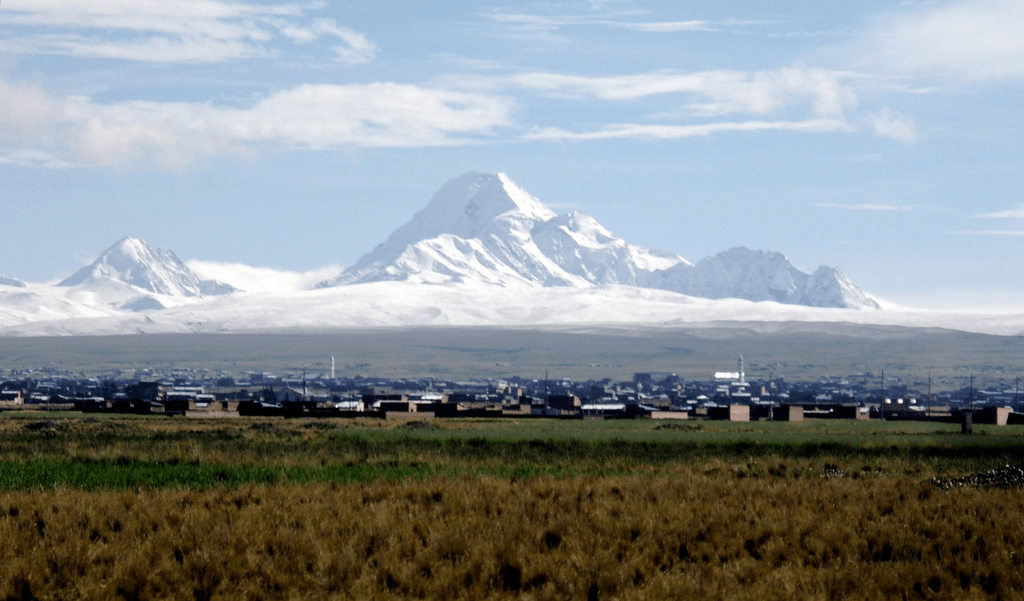
Featured image credit: “Altiplano de La Paz Bolivia” by Skykid 123ve is licensed under CC BY 3.0.
 Retrospect Journal