
written by Seanryan Lai
26/10/2025
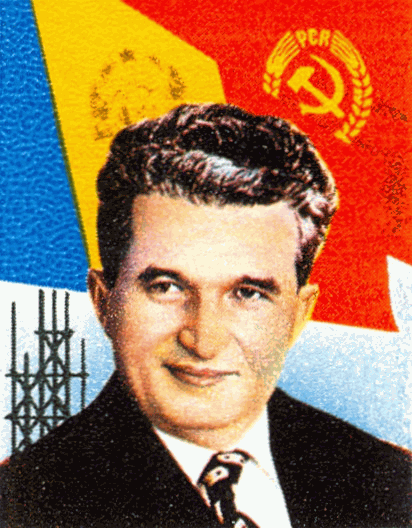
The regime of Nicolae Ceauşescu (1965–1989) in the Socialist Republic of Romania was one of Eastern Europe’s most eccentric dictatorships. On the one hand, like most communist regimes in Eastern Europe at the time, it was a satellite state of the Soviet Union, established following the Red Army’s occupation of Romania in the final stages of the Second World War. On the other hand, it was unique, as unlike other states in the Eastern Bloc, it managed to pursue an independent policy that moved Romania away from Soviet control, and it created a unique form of communism that fused Marxist-Leninist orthodoxy with Romanian nationalism under a strong cult of personality centred around Ceauşescu himself and his family.
Ceauşescu’s personalist communist dictatorship can be explained through his early career in the Romanian Communist Party (PCR) in the 1950s which led to his rise to power. From 1947 to 1965, Romania was ruled by Gheorghe Gheorghiu-Dej, an ethnic Romanian and hardline Stalinist who had purged the party of its ‘internationalist’ and ‘reformist’ elements and had consolidated his power by 1953. The consolidation of power by Gheorghiu-Dej’s Stalinist faction benefitted Ceauşescu who closely identified with the Stalinist wing of the party and who rose quickly within the hierarchy as Gheorghiu-Dej’s protégé. As a result, by the time of Gheorghiu-Dej’s death in 1965, Ceauşescu became Romania’s unchallenged leader. One of Ceauşescu’s first acts as General Secretary was to address the PCR’s Ninth Congress, in which he declared that Romania’s transition to socialism was complete and that he changed the country’s official name from the Romanian People’s Republic to the Socialist Republic of Romania to reflect its new status. It was at this congress that Ceauşescu decided to reassert Romanian nationalism by emphasising the country’s Latin heritage and began a de-Russification campaign by removing signs of Soviet influence, such as removing Russian street names, renaming them with Romanian alternatives, upgrading the teaching of the Romanian language in schools and the phasing out of various cultural activities. Moreover, Ceauşescu started to pursue an independent foreign policy by exploiting the Sino-Soviet split to pursue closer relations with China, the diversification of external trade relations by increasing ties with Yugoslavia, West Germany and the United States, and in 1968 he emphasised the principle of ‘non-interference’ by condemning the Warsaw Pact invasion of Czechoslovakia. All of these initiatives led to the creation of a new ideology, national communism, that blended Marxism-Leninism with Romanian nationalism and emphasised Romania’s ‘exceptionalism’ in the Eastern Bloc.
The inauguration of national communism led to a series of bold moves made by Ceauşescu to move Romania away from Soviet influence. This was especially seen in economic policies such as rapid industrialisation despite Soviet preference for the country to focus on its agricultural potential instead and, and economic self-sufficiency by encouraging the development of local industries to reduce the country’s dependency on the Soviet economy. In the realm of culture, Romania pursued a nationalist policy promoting Romanian identity to mobilise the masses. In subsequent speeches, Ceauşescu identified the PCR with the entire nation and not just the proletariat, ‘’our people have a single history, and the activity of the Romanian Communist Party, along with other parties in different periods, constitutes an inseparable part of the history of the homeland’’. In defining national communism, Ceauşescu adopted communist philosopher Atanase Joja’s The Spiritual Profile of the Romanian People which emphasised the PCR’s rationalist origins and that the national essence of both the party and the nation was Romania’s Dacian-Latin heritage. By placing special emphasis on Daco-Latinity, Ceauşescu’s 1965 constitution led minorities such as Hungarians, Jews and Transylvanian Saxons to lose the right to their own culture and were forced to assimilate into Romanian culture, language, and values. In order to mobilise the masses in 1971, Ceauşescu published the July Theses in which he officially took up the title Conducător, the Romanian word for ‘leader’ (ironically also used by Romania’s wartime fascist dictator Ion Antonescu) as he took up the position of President and tightened ideological control through the creation of a cult of personality by transferring power from the party to himself and his family. In 1974, in propaganda, Ceauşescu was described as the reincarnation of the ancestral bravery and wisdom from the ancient Dacian kings to Romania’s feudal rulers and modern independence fighters. In 1980, he announced the 2050th anniversary of ‘the first centralised and independent Dacian State’. In 1988, the commemoration of the seventieth anniversary of Romania’s unification was seen as an ‘embodiment of historical law’ and Vlad the Impaler was praised as a progressive prince who followed a similar policy to the PCR. This appropriation of history reached its climax in 1986 when the magazine Contemporanul depicted Ceauşescu as being the successor of the greatest figures in Romanian history: Horea (leader of the 1784 Transylvanian peasant uprising), Stephen the Great (Prince of Moldavia 1457-1504), Nicolae Balescu (leader of the 1848 Wallachian revolution), Prince Dimitrie Cantemir of Moldavia (1710-1711), Mihai Eminescu (Romania’s national poet 1850-1889) and Prince Michael the Brave (1593-1601 who briefly united the principalities of Moldavia, Wallachia and Transylvania under his rule). All of this was done to stress the organic link between the Romanian people and Ceauşescu.
The construction of Ceauşescu’s cult of personality reached its peak in the 1980s and was seen in the media, education and public ceremonies such as the ‘Cîntarea României’ (Song to Romania) festival in which actors dressed as figures in Romanian history offered Ceauşescu bread and salt and anointed him as their successor. Moreover, the regime became more personal as key positions within the state and party apparatus were filled with members of his own family in order to create a nepotistic dynasty. Ceauşescu’s wife, Elena, became deputy prime minister and held important positions in the Central Committee with extensive influence over cabinet selections, while their son, Nicolae was secretary of the Romanian parliament and was groomed to be his father’s successor. This led to the centralisation of all decision-making under the Ceauşescu family. Repression also intensified with the creation of the Securitate, a brutal secret police force that was responsible for all arrests, tortures and thousands of deaths. In addition, the state also started to interfere in the private lives of the people and in 1986, Ceauşescu proclaimed that the foetus is the socialist property of the whole society, ‘’Giving birth is a patriotic duty, those who refuse to have children are deserters, escaping the law of natural continuity’’. As a result, abortions were prevented while the use of contraception was banned. Corruption was also rampant in the state bureaucracy, as US$1.75 billion was used to construct the Palace of Parliament in 1984, the world’s third largest and most expensive administrative building, despite the economy being in crippling debt.
The economic crisis and austerity in the 1980s led to social unrest and popular opposition against Ceauşescu. As living standards fell, unemployment rose, repression and the cult of personality intensified. In 1989, with Romania being increasingly isolated due to its refusal to reform and its economic and cultural decline, mass demonstrations broke out in Timişoara and Bucharest as well as across the country as people took to the streets to protest against the regime and jeered Ceauşescu as he was making a speech on the balcony of the Central Committee Building. These demonstrations soon turned into a violent revolution as crowds forced their way into government buildings, and street battles began between protestors and Ceauşescu military loyalists. Ceauşescu was soon forced to flee by helicopter as the state was collapsing. After learning of the suspicious death of the Defence Minister Vasile Milea, the military defected to the revolution en masse and joined the protestors. On 22 December, both Ceauşescu and his wife Elena were arrested, and on 24 December, a National Salvation Front (FSN) was formed under Ion Iliescu which established an Extraordinary Military Tribunal to try the couple. The trial commenced on 25 December 1989, in which the couple were found guilty of all charges, such as genocide, the illegal subversion of state power, the destruction of public property, undermining the national economy and attempting to flee. Immediately after the trial, both Ceauşescu and his wife, Elena, were taken into the courtyard and executed by firing squad.
Bibliography
Gallagher, Tom. Romania After Ceauşescu: The Politics of Intolerance. Edinburgh: Edinburgh University Press; 1995.
Graham, Lawrence S. Romania: A Developing Socialist State. Boulder, Colorado: Westview Press; 1982.
Kligman, Gail. The Politics of Duplicity: Controlling Reproduction in Ceauşescu’s Romania. Berkeley; London: University of California Press; 1998.
Tismaneanu, Vladimir. Stalinism for All Seasons: A Political History of Romanian Communism. Berkeley; London: University of California Press; 2003.
Verdery, Katherine. National Ideology Under Socialism: Identity and Cultural Politics in Ceauşescu’s Romania. Berkeley; Oxford: University of California Press; 1991.
 Retrospect Journal