
Written By: Emily Martin
Cowboys and westerns are something that one might normally associate with your dad or grandad or as simply a black and white early Hollywood endeavour. This is not necessarily wrong. But recently, I have found these films to be rather enticing. They contain a whole host of narrative and ideological values that underpin the romanticisation of the cowboy: masculinity, superiority, and freedom.
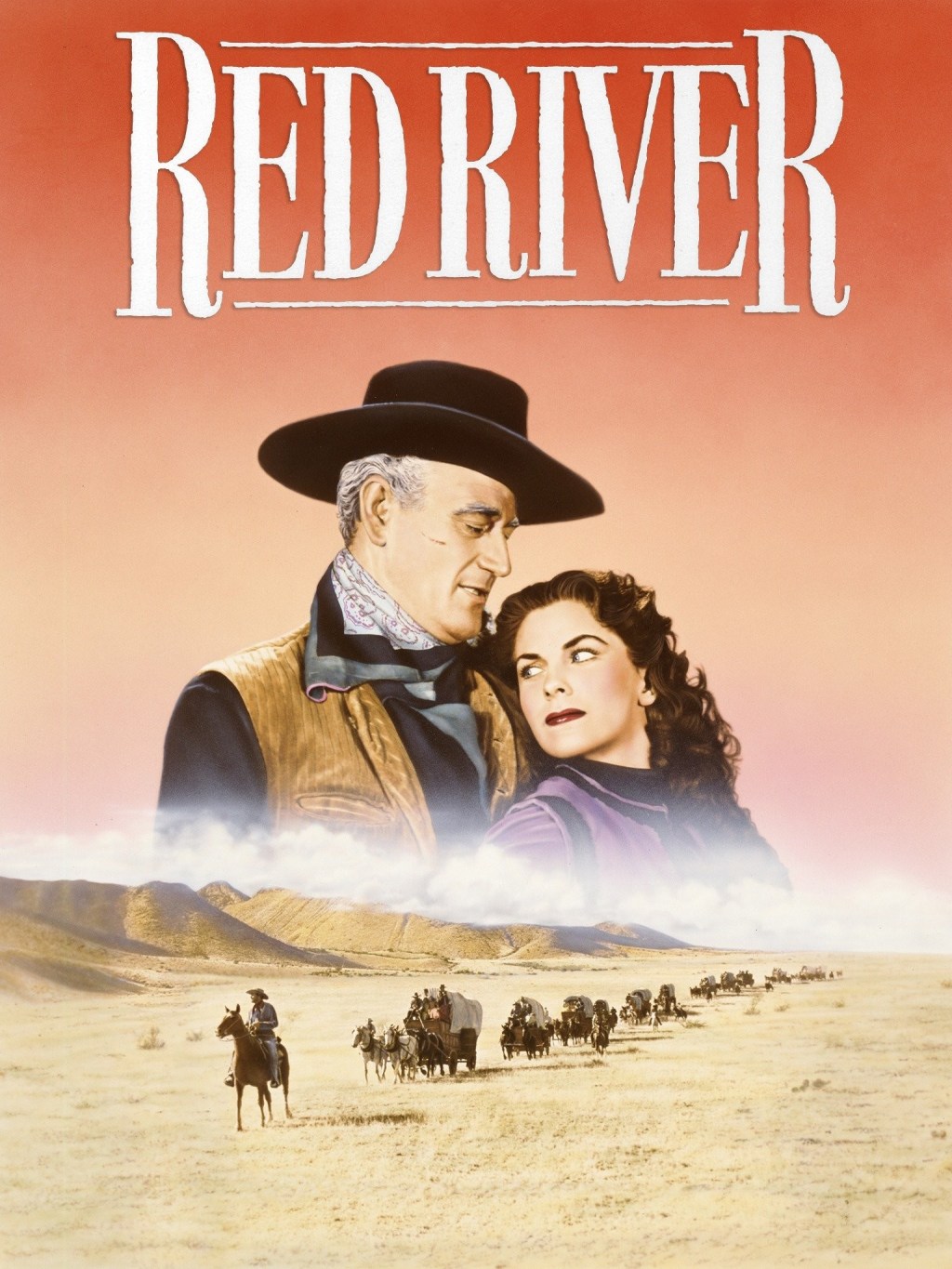
To discuss this fully, I am going to introduce you to a 1948 classic western: Red River, directed by Howard Hawks and starring the famous John Wayne and Montgomery Cliff. It is a tale of the Cattle Drive, the relationship between the love of father and son and the fight to prove oneself a man within the concept of anarchic living.
Firstly, some historical background: The Cattle Drive was a phenomenon of the mid-nineteenth century and was driven (excuse the pun) by the fall in prices of beef in the South after the American Civil War. To achieve an income, ranchers and, yes, cowboys, would drive their cattle herd to states such as Missouri or California to fetch a higher price per head of cattle. The peak of this was in 1871 with the largest cattle drive ever, topping the drive in 1866, in which two hundred thousand cattle crossed the river. There were certain trails, for example the Goodnight-Loving or the Chisholm trail, that these cowboys would take in order to avoid conflict with the Native American groups living in these states. These drives were seen as an icon of the American dream and an example of the freedom celebrated by these men. The pinnacle of liberty!
However, cowboys presented in films (specifically a classic western) have problematic elements that do not show cowboys as simply adventurous vigilantes.
Red River is the western of all western films: the fighting, the masculine ego, and the freedom of the cowboy lifestyle. It focuses on the idea of the cattle drive and the treacherous odyssey that follows. Ted Dunson (John Wayne) has an economic incentive to drive his cattle over the river to fetch higher prices, and so he does. This comes with aid from his adopted son Matthew Garth (Montgomery Cliff), and his band of other cowboys. It all goes awry when Dunson becomes overbearing and threatens to hang some deserters. Garth then steps in and decides to leave Dunson in the middle of the trail and take his cattle and men to Alberene himself. This role switch from son and follower to the main male figure in the film reflects the wider concept of the relationship of the male ego with other male figures.
Garth challenges Dunson’s authority and in doing so is challenging Dunson’s masculinity. This breaks their bond of father and son leading to a threat of Dunson killing Garth. The film culminates in a rather ridiculous fist fight between the two and followed by their reconciliation. Garth has finally earned his own mark on the cattle too; it only took a few near-death experiences. This being an absurd display of the male ego, highlights how there can be only one patriarch in this zero-sum game of masculinity.
This game is furthered in the rest of the film with the violence revolving mainly through whoever can draw their pistol the quickest being the winner. It is a clear use of phallic imagery showing the western as a male-centred picture but also providing a level of humour.
When discussing the idea of the cowboys as free and liberated from the shackles of normal American society, one does not often think of the constraints of the economic market. These cowboys in the film have founded their own way of life on land that was previously “empty” and built a cattle empire, but they are forced to take a perilous and long journey to make money to eat. Ironically, they are still but slaves to the economic workings of American nineteenth-century capitalism. Oh my!
Another key characterisation of the cowboys in this film is when Garth saves a wagon of travellers from a group of Native American’s trying to harm them. This points to the historical conflict between the two groups during this period, with the result being the Native American population driven onto reservations in the 1880s. The depiction in Red River of the Native Americans is nothing short of exceedingly racist. From Garth pointing out that all they do is “hooting and hollering” and showing them as attacking innocent people to shooting them point-blank dead as if they are a rampaging herd. They are dehumanised and used as a plot device to show the cowboys as saviours and to accentuate their masculinity. Garth has finally saved them from the foreign aliens!
These legendary cowboys thus are inherently fragile, performative, and not as liberated as one might think. Garth and Dunson are seen as heroic and valiant knights of the wild west American era but, in reality, have to fight to be heard and place their lives on the line during the slightest disagreement.
All this being said, the western is still a gripping piece of film that covers an important part of American history, and I would recommend spending some time watching them.
Featured Image Credit: “Poster for Red River (1948), © Rotten Tomatoes. Retrieved from https://www.rottentomatoes.com/m/red_river
 Retrospect Journal