
Written by Kayla Greer
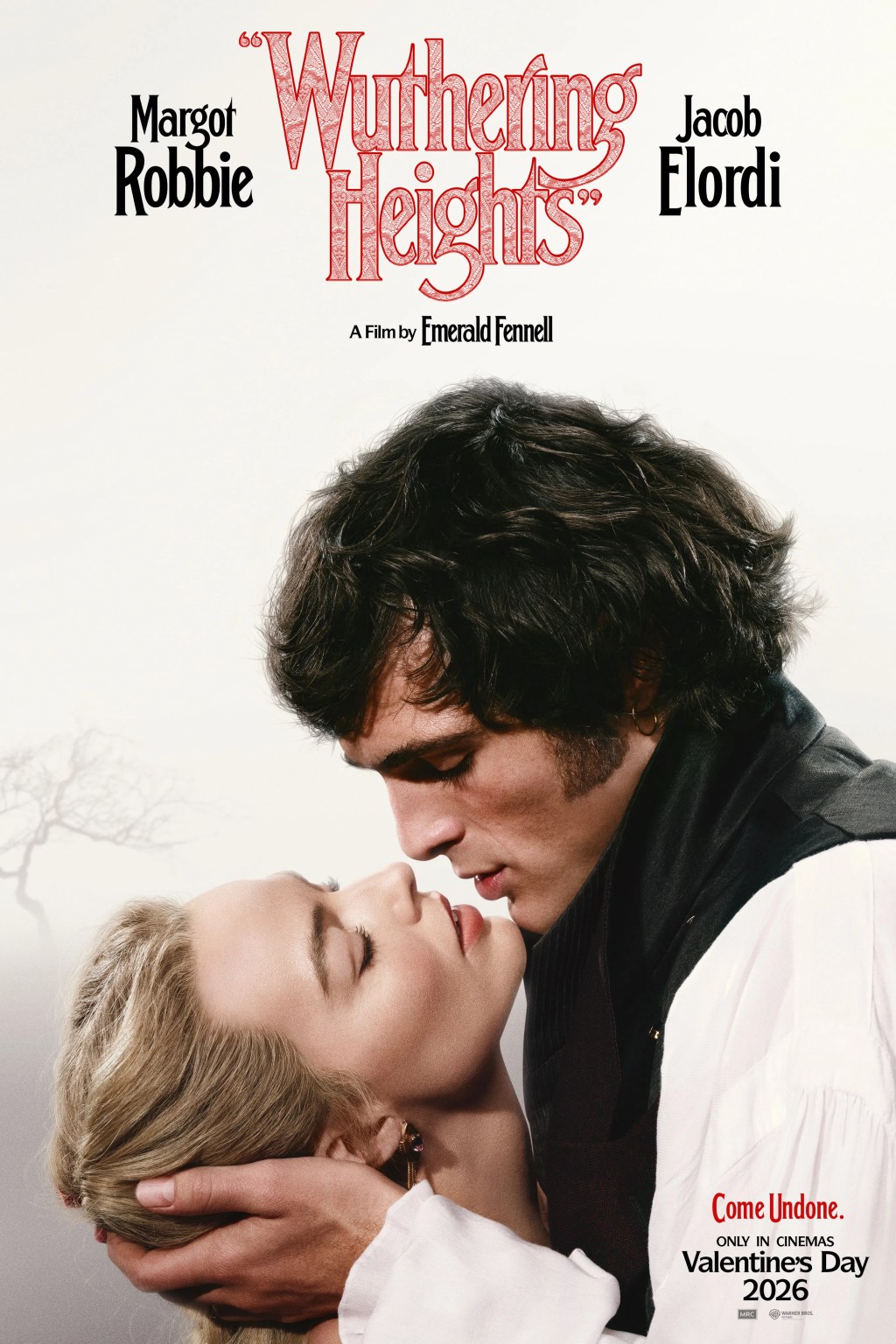
When Emily Brontë described her enigmatic foundling in 1847, she left little room for ambiguity about his “otherness”. Heathcliff appears in Wuthering Heights as a “dark-skinned gipsy,” a child found “starving, and houseless, and as good as dumb, in the streets of Liverpool”—a city that by the 1770s setting of the novel was Britain’s premier slave-trading port. Mr. Linton speculates he might be “a little Lascar, or an American or Spanish castaway,” while other characters repeatedly emphasize his foreign appearance and social exclusion. Yet when Emerald Fennell announced her 2026 adaptation starring Jacob Elordi—a conventionally handsome white Australian actor known for playing privileged teenagers—as the tormented protagonist, the casting choice sparked immediate controversy that cut to the heart of how we read, interpret, and preserve literary meaning.
“Not to be that one friend who is too woke,” wrote one social media user in a post that garnered over 89,000 likes, “but bleaching the class and racial otherness out of wuthering heights to sell a horny whitewashed romance genuinely pisses me off.” The backlash reveals more than mere fan disappointment with a beloved adaptation; it exposes the fundamental tension between commercial imperatives and textual fidelity, between what audiences expect to see and what authors actually wrote. When Fennell’s casting director Kharmel Cochrane dismissed concerns by declaring that “you really don’t need to be accurate. It’s just a book. That is not based on real life. It’s all art,” she inadvertently crystallized a broader cultural problem: Hollywood’s systematic erasure of racial ambiguity in literary characters, transforming complex explorations of otherness into palatable romantic fantasies for mainstream consumption.
The descriptions of her anti-hero are neither accidental nor metaphorical; they form a deliberate pattern that establishes his racial and social otherness as central to the novel’s themes. From his first appearance, Heathcliff is consistently marked as foreign and threatening. Lockwood describes him as “a dark-skinned gipsy, in aspect,” while multiple characters throughout the novel reinforce this perception: Mrs. Earnshaw calls him a “gipsy,” as do other characters such as Hindley, Mrs. Linton, Joseph, and Edgar Linton. The repetition is striking—Brontë ensures that virtually every major character comments on Heathcliff’s apparent foreignness.
More telling still is the location of his discovery. Mr. Earnshaw finds Heathcliff “in the streets of Liverpool,” where he had gone on business. This geographical detail carries profound historical weight. By the 1770s, when the novel’s events unfold, Liverpool had become Britain’s dominant slave-trading port, handling over 80 per cent of the British transatlantic slave trade. The city’s merchants transported approximately 1.5 million enslaved Africans, making it the hub of Britain’s involvement in the Atlantic slave economy. For contemporary readers, Liverpool was synonymous with the slave trade—a connection that would have been impossible to ignore.
The novel’s language reinforces this reading. Heathcliff is repeatedly referred to as “it” rather than “he,” a dehumanizing linguistic choice that mirrors how enslaved people were categorized as property rather than persons. Nelly Dean’s comment that he is “not a regular black” becomes particularly significant in this context—not a denial of blackness, but a qualification of it, suggesting that while Heathcliff may not fit conventional expectations of what “black” looks like, his racial otherness remains undeniable. Scholar Susan Meyer argues that this ambiguity is precisely the point: Brontë created a character whose racial identity resists easy categorization, forcing readers to confront their own assumptions about race, class, and belonging.
The Liverpool connection also provides a plausible backstory that later generations of adaptors have consistently ignored. What business took Mr. Earnshaw to Britain’s premier slave port? The novel’s deliberate vagueness invites speculation about whether Heathcliff might be the mixed-race child of a business associate, an escaped enslaved person, or the product of colonial exploitation—possibilities that add layers of meaning to his later treatment and his obsessive pursuit of property and status.
From the moment the novel reached the screen, filmmakers have consistently chosen to ignore Brontë’s textual evidence in favour of conventional romantic casting, transforming a story about otherness and social exclusion into a vehicle for traditional leading men. The 1939 adaptation starring Laurence Olivier established the template that would dominate for decades. Olivier’s Heathcliff—dark-haired and brooding but unmistakably white and aristocratic—became the definitive screen interpretation, winning critical acclaim and an Academy Award nomination. This version crystallized the “Byronic hero” reading of the character, emphasizing romantic passion while completely erasing the racial otherness that drives much of the novel’s social critique. Olivier’s casting was particularly significant because it occurred during Hollywood’s Golden Age, when the film industry routinely cast white actors in roles explicitly written for people of colour—a practice so normalized that few questioned the decision to ignore Brontë’s “dark-skinned gipsy” entirely.
Subsequent adaptations followed this whitewashing precedent without question. Timothy Dalton’s 1970 interpretation continued the tradition of casting conventionally handsome white actors, while Ralph Fiennes’s 1992 performance—perhaps the most critically acclaimed Heathcliff—further romanticized the character. Fiennes’s version was particularly influential in establishing the modern romantic interpretation, focusing on passionate obsession while completely divorcing the character from any racial or class-based social critique.
This pattern continued for over seventy years until Andrea Arnold’s 2011 adaptation finally broke the mold. Arnold cast James Howson, a Black actor from Leeds, as the first non-white Heathcliff in film history. The casting decision was deliberate and researched: Arnold initially searched within the UK’s Romani community, then expanded to seek “Yorkshire actors aged 16 to 21 of mixed race, Indian, Pakistani, Bangladeshi or Middle Eastern descent.” Howson’s casting wasn’t tokenism—it was an attempt to align the adaptation with Brontë’s actual text and the historical realities of eighteenth-century Liverpool.
The critical reception of Arnold’s choice reveals the extent to which decades of whitewashing had normalized racial erasure. While some praised the decision as historically accurate and textually faithful, others dismissed it as unnecessarily political or “woke.” The fact that casting a character according to the author’s description could be seen as radical demonstrates how thoroughly previous adaptations had rewritten the novel’s racial dynamics. Arnold’s film received a 69 per cent rating on Rotten Tomatoes, with critics praising its authenticity and faithfulness to the book’s spirit—yet it remains the only major adaptation to take Brontë’s racial coding seriously.
The contrast between Arnold’s 2011 interpretation and Fennell’s 2026 casting of Jacob Elordi represents a step backward—a return to the whitewashing tradition that dominated before Arnold’s intervention Where Arnold sought to restore the novel’s original racial complexity, Fennell’s decision to cast a white Australian actor known primarily for playing privileged teenagers suggests a deliberate choice to prioritize marketability over textual fidelity, erasing nearly fifteen years of progress toward more authentic adaptation.
Emerald Fennell’s decision to cast Jacob Elordi as Heathcliff cannot be understood in isolation—it reflects broader industry calculations that prioritize star power and commercial appeal over textual fidelity. Fennell, whose previous films Promising Young Woman and Saltburn established her as a provocative auteur interested in exploring power dynamics and sexual manipulation, appeared to be an ideal choice for adapting Brontë’s psychologically complex novel. Yet her casting decision reveals how even directors with progressive credentials can default to conventional industry thinking when major studio money is involved.
The choice of Elordi is particularly telling given his recent career trajectory. Following his breakout role in HBO’s Euphoria as the abusive jock Nate Jacobs, Elordi became a heartthrob for Gen Z audiences, cementing his status with his performance in Fennell’s own Saltburn as the wealthy, manipulative Felix Catton. His casting in Wuthering Heights represents a clear attempt to capitalize on his current popularity, banking on his ability to draw young audiences to a period adaptation. Industry insiders reported that the project sparked a bidding war, with Netflix offering $150 million before Warner Bros. ultimately secured the rights for $80 million—a testament to the perceived commercial value of the Fennell-Elordi combination.
Fennell’s approach appears to prioritize contemporary relevance over historical accuracy, transforming Heathcliff from a racially ambiguous foundling into what early marketing materials suggest will be a sexualized romantic fantasy. The film’s Valentine’s Day 2026 release date and its marketing campaign featuring Charli XCX’s “Everything Is Romantic” signal an interpretation focused on passionate romance rather than social critique. This represents a fundamental misreading of the source material—Wuthering Heights is perhaps the least romantic novel ever written, a study in obsession, abuse, and the destructive nature of unchecked desire.
The dismissive attitude of casting director Kharmel Cochrane toward textual accuracy reveals the industry mindset behind such decisions. Her comment that “you really don’t need to be accurate. It’s just a book. That is not based on real life. It’s all art” demonstrates a troubling disregard for the relationship between adaptation and source material. This perspective treats literature as raw material to be shaped according to commercial imperatives rather than as artistic works with their own internal logic and cultural significance.
Fennell’s decision also reflects broader industry assumptions about what audiences want to see. Despite evidence from films like Black Panther, Crazy Rich Asians, and even Arnold’s own Wuthering Heights that diverse casting can be both critically and commercially successful, Hollywood continues to default to white actors for major roles. The choice suggests a failure of imagination—an inability to envision Elordi’s considerable star power being matched by an actor who actually fits Brontë’s description.
Bibliography
Brontë, Emily. Wuthering Heights. 1847. London: Thomas Cautley Newby, 1847.
Cochrane, Kharmel. Interview. Deadline, April 2024. Accessed via https://deadline.com
“Wuthering Heights trailer sparks criticism from fans.” Yahoo Entertainment, September 5, 2025. https://www.yahoo.com/entertainment/movies/article/wuthering-heights-trailer-sparks-criticism-from-fans-what-the-movies-about-why-theres-controversy-and-when-it-premieres-193511140.html
Meyer, Susan. Imperialism at Home: Race and Victorian Women’s Fiction. Ithaca, NY: Cornell University Press, 1996.
O’Callaghan, Claire. Editor, Brontë Studies. Quoted in “Wuthering Heights trailer sparks criticism from fans.” The Telegraph, September 2025.
Phillips, Caryl. Quoted in “Wuthering Heights.” Wikipedia, accessed September 2025. https://en.wikipedia.org/wiki/Wuthering_Heights
von Sneidern, Maja-Lisa. “Race Discourse in Wuthering Heights.” Academic source referenced in multiple scholarly articles.
Watson, Nicola J. “Wuthering Heights and The Lost Child.” Undisciplining the Victorian Classroom, https://undiscipliningvc.org/html/lesson_plans/contemporary_bronte_phillips.html
Arnold, Andrea, director. Wuthering Heights. Film4 Productions, 2011.
“Wuthering Heights (2011 film).” Wikipedia, https://en.wikipedia.org/wiki/Wuthering_Heights_(2011_film)
“Wuthering Heights (2026 film).” Wikipedia, https://en.wikipedia.org/wiki/Wuthering_Heights_(2026_film)
Wyler, William, director. Wuthering Heights. Samuel Goldwyn Productions, 1939.
Lunt, Chantelle. “Liverpool’s Historical Links to Slavery Is Something Everyone Should Learn about.” The Black Curriculum, 2021.
“Liverpool and the Slave Trade.” Black History Month, February 23, 2021. https://www.blackhistorymonth.org.uk/article/section/history-of-slavery/liverpool-and-the-slave-trade/
“Read the Signs: Street Names in Liverpool Connected to the Trade in Enslaved Africans.” Historic England, https://historicengland.org.uk/research/inclusive-heritage/the-slave-trade-and-abolition/read-the-signs/
“Slave Trade Records from Liverpool, 1754–1792.” British Online Archives, https://britishonlinearchives.com/collections/5/slave-trade-records-from-liverpool-1754-1792
“Emerald Fennell’s Wuthering Heights: What We Know So Far.” Elle, September 3, 2025. https://www.elle.com/culture/movies-tv/a61587838/wuthering-heights-emerald-fennell-date-cast-rumors-news/
“Sorry Emerald Fennell, We Already Have the Absolute Perfect ‘Wuthering Heights’ Adaptation.” Collider, May 19, 2025. https://collider.com/emerald-fennell-wuthering-heights-adaptation-andrea-arnold/
“Wuthering Heights 2026 trailer: Emerald Fennell is opting for eroticism like Saltburn.” National World, September 5, 2025. https://www.nationalworld.com/culture/film/wuthering-heights-2026-trailer-emerald-fennell-wants-to-push-the-boundaries-like-saltburn-5302300
“Wuthering Heights Release Date Set for February 2026 With Margot Robbie.” Variety, December 14, 2024. https://variety.com/2024/film/news/wuthering-heights-release-date-february-2026-margot-robbie-1236249145/
Featured image credit: House & Garden Magazine 2025, https://www.houseandgarden.co.uk/article/wuthering-heights-movie-2026-adaptation-margot-robbie
 Retrospect Journal