
Written by Arianna North Castell
13/04/25
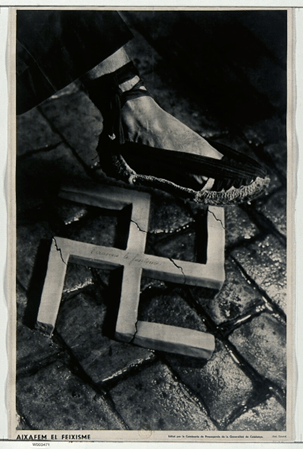
Figure 1 (Featured Image): ‘Aixafem el feixisme’- We crush fascism.
“We stood outside the columned portico, in front of us a poster flapped in the rain-a foot in a Catalan sandal crushing a swastika with negligent, unquestioned strength.”
Mary Low, an Australian poet, remarked this after seeing Pere Catalá i Pic’s poster created during the Spanish Civil War. The sandal is an espardenya, traditional Catalan footwear that was emblematic of the people of Catalunya. It embodied endurance, labour, and belonging- a symbol of the people defending their land step by step. The Spanish Civil War threatened the very right of Catalan existence, with Franco’s fascist ideology steadfast on their erasure. Although Franco prevailed, they did not succeed in erasing Catalunya and its people, making this iconic poster all the more striking.
The Spanish Civil War (1936–1939) was a brutal and ideologically charged conflict, in which the democratically elected Spanish Republic was overthrown by a right-wing military coup led by General Francisco Franco. What followed was not only four decades of dictatorship, but also the systematic erasure of the Republican cause: their hopes, beliefs, and the lives of thousands of people and their stories were buried. The trauma of that period lingers in Spanish society today and for many, the war remains a wound too raw to examine. And yet, through the persistence of archivists, artists, and families of those who resisted, fragments of Republican history are resurfacing. Among the most accessible – and impacting – are the visual records: paintings, propaganda, and photographs that bear witness to the lost Republican cause.
In 2018, the family of the Catalan photographer Antoni Campañà discovered a red box tucked away in his garage. Inside were hundreds of photographs taken during the war, unseen for decades. Campañà had hidden them, likely out of fear from decades of Franco’s harsh dictatorship. What emerged from that box was more than just documentation – it was testimony. His images do not flinch: they capture scenes of everyday life suspended between hope and horror, resilience and ruin. There is no propaganda gloss, no detachment. Instead, we are offered moments of unfiltered humanity, shaped by grief, solidarity, and the quiet resistance of simply continuing to look.
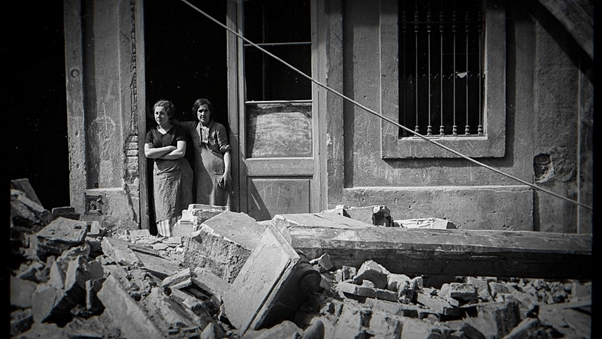
Figure 2: Dos mujeres en la puerta de un edificio con escombros delante, foto de Antoni Campañà.

Figure 3: Antoni Campañà. Església de la Puríssima Concepció. Carrer Girona, Barcelona, 1936-1937. Arxiu Campañà.
Through his lens, we’re able to see the militia women, the refugees arriving from Malaga to Barcelona in January 1937. The rubble after the bombings, the soup kitchens, the burial of Durruti or the exhibition of the mummies of the Salesian nuns on the Passeig de Sant, and and finally, in 1939, the retreat of the Republican army and the Francoist parades.
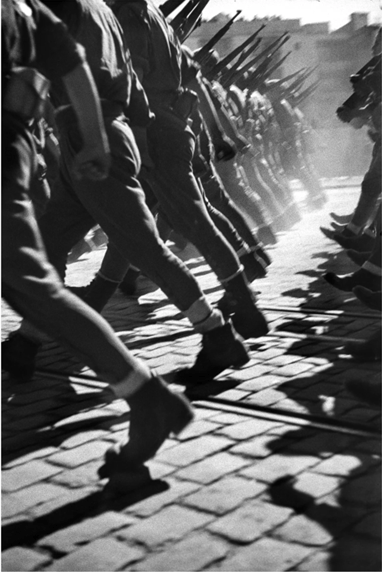
Figure 4: Antoni Campañà. Tropes italianes a la Desfilada de la Victoria franquista (Italian troops in Franco’s Victory Parade), 21 de febrer de 1939. Arxiu Campañà.
The photos depict the sobering reality of the war – there are no edits, no poses, only what Campañà saw was important. Women clearly played a vital role. The Republican cause was deeply personal for many women. During the Spanish Republic (1931-1939) women had equality under the law, the right to vote, the right to divorce, contraception, to hold office. All of these rights were stripped from them under Franco’s dictatorship. Despite this, women defended their rights fiercely, not only making up large parts of the republican militia, but they were the leaders in restoring, rebuilding and repairing in both urban and rural centres. They would painstakingly dig through the rubble left from bombings to find anything of use, even using tires to craft the soles of the iconic espardenya shoes.
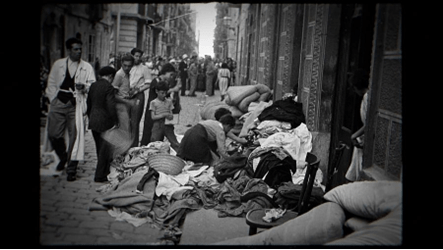
Figure 5: Mujeres rebuscando entre sus pertinencias durante la Guerra Civil, foto de Antoni Campañà.
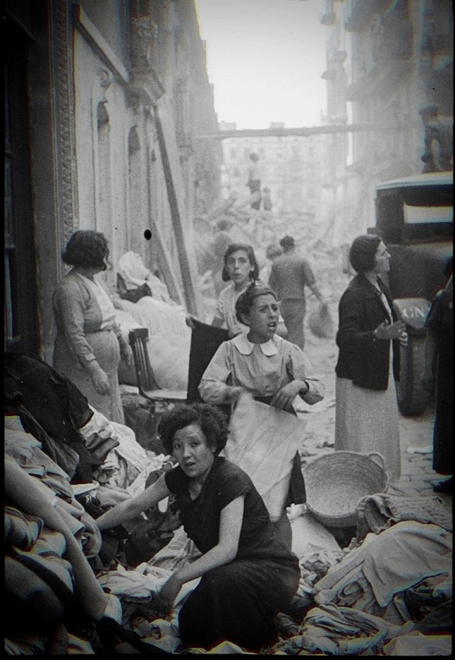
Figure 6: Una mujer mirando a la cámara durante la Guerra Civil, Antoni Campañà.
Marta Gili, curator of the Antoni Campañà 1989 retrospective exhibition, remarked about the above photo on the woman looking at the photographer, as if to say, “What can I use out of this?” or “What can I do?”.
Women also played a key part in Republican propaganda, not only appearing propaganda but shaping it. They featured prominently in posters as workers, soldiers, and symbols of the future, but many were also behind the designs themselves, working as artists, printers and distributors.

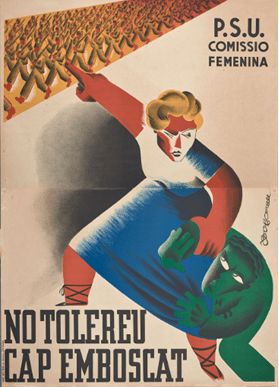
Figure 7: ‘Workers, Farmers, Militias, ‘Treball’, ‘You will not tolerate any ambush’
(Work) is your newspaper’.
The Spanish Republic was often personified as a woman, but far from a woman to be defended. This was not a figure in need of rescue, but a strong, defiant presence. Her liberty was personified: sleeves rolled up, gaze steady, urging people to fight not just for her, but with her:
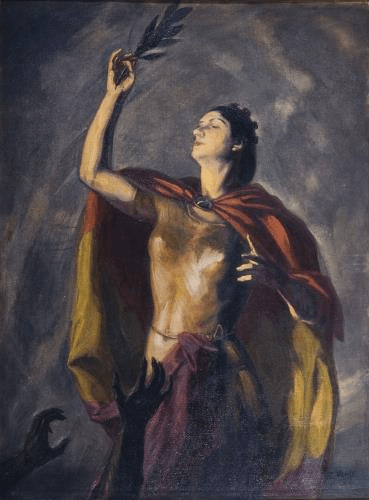
Figure 8: Ricard Verde, España, 1937.
The Spanish Civil War is often seen as a turning point in the history of modern warfare, not only for its ideological fervour, but for the way it brought civilians to the very heart of the conflict. Franco’s forces, bolstered by fascist allies in Nazi Germany and Fascist Italy, unleashed a wave of aerial bombings that devastated not only military targets but also civilian populations. Cities like Madrid and Barcelona became battlegrounds, but so too did small towns and rural villages. The Basque town of Guernika, reduced to rubble in 1937, became a symbol of this new kind of warfare: its destruction immortalised by Picasso and reported around the world as international alarm grew over the rising toll of civilian casualties, particularly children.
Children could no longer be bystanders; they were victims and witnesses to a new type of trauma. War was enmeshed in their childhood; it was familiar and every day. We can see this in surviving drawings from schoolchildren. These children drew what they knew, and what they knew was destruction. These sketches – haunting in their simplicity – offer some of the clearest, most unguarded windows into the psychological landscape of a generation shaped by loss and fear.
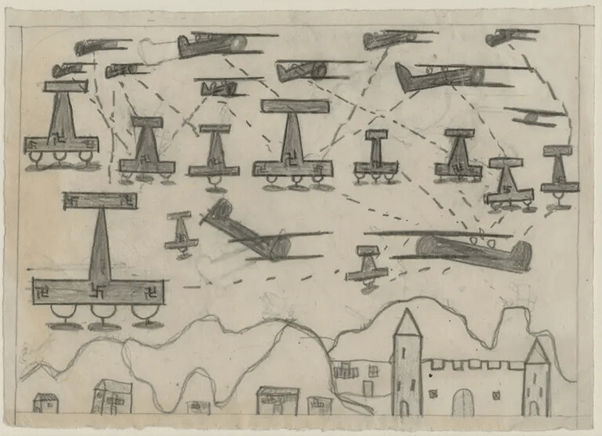
Figure 9: Damián Casas Mares, 9 years old.
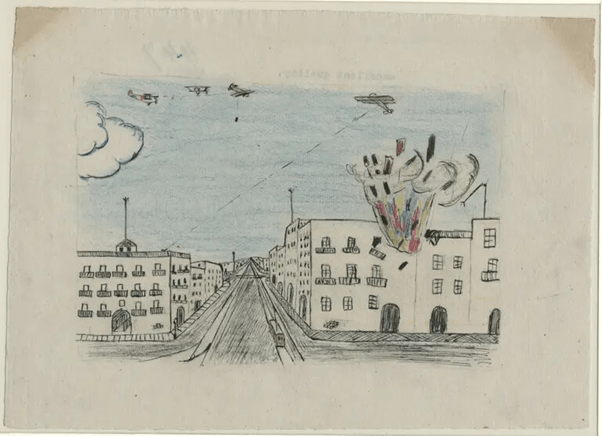
Figure 10: Luis Villar Baladrón, Bellús, 11 years old.
These visual records do not ask for reverence; they ask to be seen. In a history so often silenced, they speak not in grand declarations but in small, sharp details: the swishing feet of Italian soldiers, the tiny swastikas that decorate the drawings of young children. They do not offer explanations, but connection. To look at these images is to step momentarily to a forgotten time, not as distant observers, but as witnesses. They remind us that history is not sealed behind dates and declarations – it lives on in fragments, in faces, in memories that are tangible.
Ana Garbín Alonso looks back at us from one of the most iconic photographs of the war. A teenage militiawoman, her pride and exuberance radiate from the image. She’s hopeful, she’s excited. There is no spectacle in her stance, only presence. Through her, and others like her, the past does not feel distant, it feels near, immediate, and human.
These images do not resurrect the lost but provide us with a thin thread that we can touch and reach back to these stories, and refuse to forget.

Bibliography and Image Credits:
Abella, Anna, “Las Fotos Inéditas de la Guerra Civil de Antoni Campañà se Exponen en el MNAC.” El Periódico, 16 Mar. 2021, https://www.elperiodico.com/es/ocio-y-cultura/20210316/fotografias-antoni-campana-guerra-civil-exposicion-mnac-11581231. Accessed 9 Apr. 2025.
Catalá-Pic, Pere. “Aixafem el Feixisme (Let’s Crush Fascism).” UC San Diego Library, https://library.ucsd.edu/speccoll/visfront/aixafem.html. Accessed 9 Apr. 2025.
“Antoni Campañà. La Guerra Infinita.” Museu Nacional d’Art de Catalunya, https://www.museunacional.cat/ca/antoni-campana-la-guerra-infinita. Accessed 9 Apr. 2025.
“Image of the Republican Woman.” Museo Nacional Centro de Arte Reina Sofía, https://www.museoreinasofia.es/en/collection/research-projects/women-civil-war/image-republican-woman. Accessed 9 Apr. 2025.
Sánchez Alcolea, Marina, “10 Fotos de la ‘Caja Roja’ de Antoni Campañà.” RTVE, 14 Nov. 2021, https://www.rtve.es/television/20211114/10-fotos-caja-roja-antoni-campana-guerra-civil-imprescindibles/2221142.shtml. Accessed 9 Apr. 2025.
Toro, María, “El Horror de la Guerra Civil Española Dibujada por los Niños que la Vivieron.” Cultura Inquieta, https://culturainquieta.com/arte/pintura/el-horror-de-la-guerra-civil-espanola-dibujada-por-los-ninos-que-la-vivieron-2/. Accessed 9 Apr. 2025.
 Retrospect Journal