

Written by Elida Lyons
A staple accessory for any kid who was into dressing up as medieval princesses, like myself, was the tall, cone-shaped princess hat, called the hennin. When we try to visualise this era, this pointed wizard-like hat easily comes to mind. Popular culture has led us to believe that this was an essential component in the medieval princess’s wardrobe, so it came as a surprise not to see copious examples of them when I began my undergraduate studies and looked into Medieval History in more depth. Truthfully, the cone-shaped hennin was only popular from the 1460s to the 1470s, already becoming shortened and truncated, resembling an upside-down plant pot, by the 1480s. Furthermore, hennins were not universally found throughout Europe, but instead were predominantly worn in France and Burgundy, and with some popularity elsewhere such as England. Indeed, the cone-shaped hennin was just one fleeting style in a long line of rapidly evolving vertical headdresses that were popular in fifteenth-century Europe.
So, how did cone-shaped hennin come to be?
While it is unclear how this style of headdress originally came to be, preceding vertical headdresses may indicate how they evolved. By the 1410s, women’s arrangement of hair and headdress began to rapidly increase in size. It became popular to wear one’s hair in a double horned style, and, by the 1420s, double horned bourrelets were on the rise, as seen in Figure I. While these horned bourrelets originally extended diagonally upwards from the temples, by 1455 paintings depict these horns sitting much higher on the head, almost touching. It is a possibility that the cone-shaped hennin gradually evolved from this horned headdress. This style may also have been inspired by the Turks, who are known to have influenced other types of European headdresses as the Ottoman Empire expanded, such as the sugar loaf hat which bears a resemblance to the Turkish kavuk, or the balzo which visually echoes a turban. A miniature painting now found in Topkapı Sarayı Müzesi in Istanbul depicts Ottoman women wearing a similar conical headdress a decade before their popularity in Northern Europe, with the miniature dating to circa 1450.
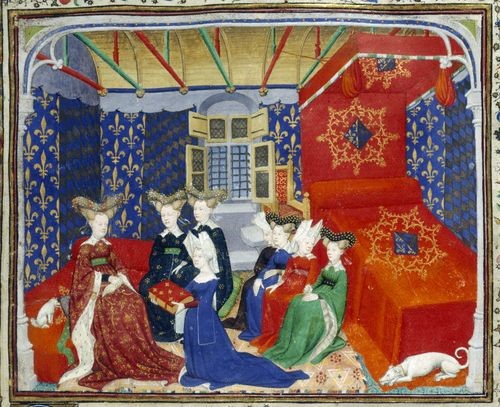
Figure I: Christine de Pizan presenting her manuscript to Queen Isabeau of Bavaria.
What did the conical hennin actually look like?
When I was younger, the dress-up hennin I had was pastel pink with white fabric sprouting from the end, and luckily, I could strap it around my head with the attached elastic. Unsurprisingly, this was quite inauthentic. In terms of height, the hennin was at least the same length as the lady’s head from the chin to the crown, but many extended further than this, with a taller cap usually indicating a wealthier wearer. To help adjust or hold the hennin in place, a small black loop called the frontelle peeked out from under the front edge of the cap and onto the forehead. Transparent silk or muslin veils would be draped over these headdresses in alternating lengths and arrangements, sometimes falling into the ‘butterfly hennin’ style. When worn, the lady’s hair would almost always be inserted into the cone, and any remaining visible hair was removed, corresponding with Renaissance standards which deemed high foreheads as the ideal of beauty. Thus, only the forehead and ears were in view. This can be seen in both Figure II and III.
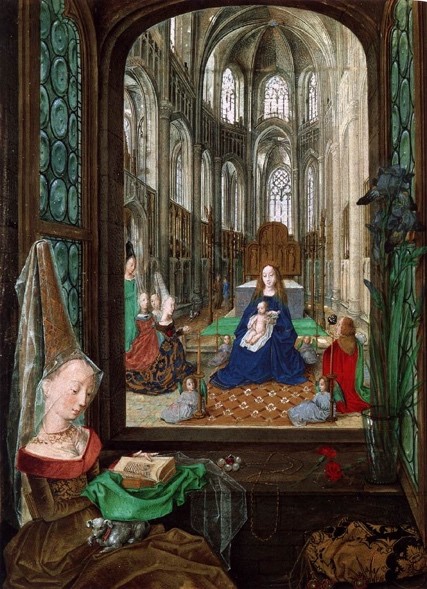
Figure II: Hours of Mary of Burgundy Virgin and Child.
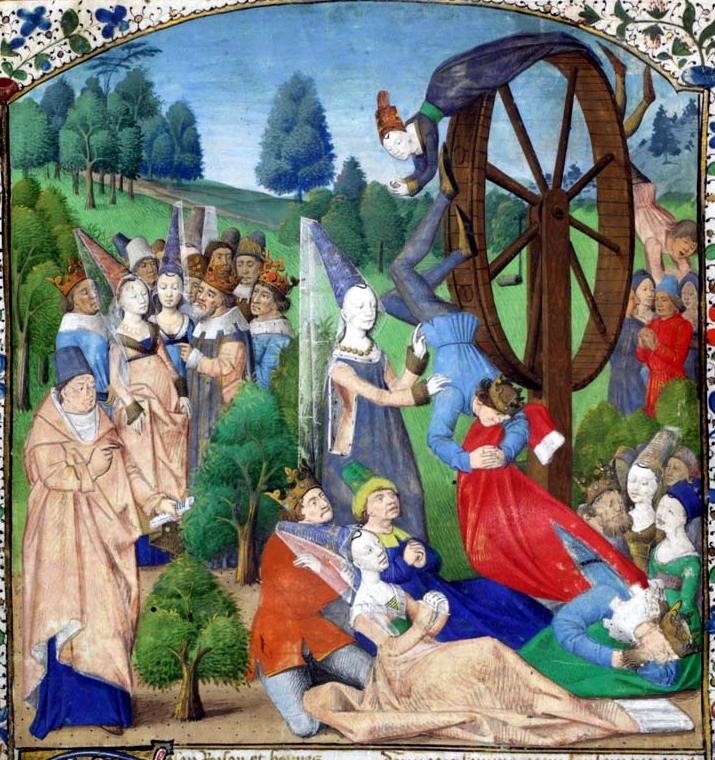
Figure III: Fortune Wheel
What were contemporary opinions on the hennin?
Whilst being the height of fashion for the elite, these conical headdresses, alongside the widely popular horned styles, were also subject to great criticisms in satirical and moral works. In Peter Idley’s Instructions to his Son, composed in the mid-fifteenth century, he recounts the Tale of the Lady burnt for her Pride who was punished by being burnt to ashes after making her head-dresses excessive in design, likely pointing to extreme heights. Another mid-fifteenth century sermon criticises high and horned headdresses, comparing the wearer to ‘senseless beasts’, aligning with John Lydgate’s early-fifteenth century poem, A Dyte of Womenhis Hornys, deeming them as philosophically incompatible with the doctrine of natural beauty.
What does modern popular culture think about fifteenth century headdresses?
It is intriguing that we see a somewhat overexposure of the conical hennin in modern depictions of the medieval period, but a lack of horned headdresses. Despite this, popular depictions are more likely to forego the headdress altogether, portraying long flowing hair even though women typically wore headdresses for the entirety of the period. I believe that this is a direct consequence of Victorian Medievalism and the Romanticism movement. Whilst the Victorians did help attach importance to the study of the Medieval era, their inauthentic ideas projected onto it have also had a long impact on modern views of the period. In response to the rapid industrialisation of Europe, Victorian intellectuals greatly romanticised the past as more ‘innocent’ and in touch with nature. Thus, depictions of Medieval elite present them as more relaxed and ‘natural’ than was the reality, with hair worn flowing down as seen in Figure IV. These ideas have survived mostly unchallenged in popular culture, so it is no surprise that horned headgear appears so infrequently. Even within the Medieval period, vertical headdresses, but especially the double horned type, were deemed unnatural and beast-like as evidenced above. Whilst being more palatable, and so given more attention, the conical hennin still deviates from overarching ideas of natural beauty, giving way to even more depictions of long flowing hair.
Bibliography
Høskuldsson, Karen. “From Hennin to Hood: An Analysis of the Evolution of the English Hood Compared to the Evolution of the French Hood.” In Medieval Clothing and Textiles, 144–82. Rochester: The Boydell Press, 2023.
Matthews, David. Medievalism : A Critical History. 1st ed. Suffolk: Boydell & Brewer, 2015
Jirousek, Charlotte. 1995. “More Than Oriental Splendor: European and Ottoman Headgear, 1380–1580.” Dress 22 (1): 22–33.
Scott, Margaret. A Visual History of Costume: The Fourteenth & Fifteenth Centuries. London: B.T. Batsford, 1986.
Song, Cheunsoon, and Lucy Roy Sibley. 1990. “The Vertical Headdress of Fifteenth Century Northern Europe.” Dress 16 (1): 5–15.
Sylvester, Louise, Mark C. (Mark Campbell) Chambers, and Gale R. Owen-Crocker, eds. Medieval Dress and Textiles in Britain : A Multilingual Sourcebook. Woodbridge: The Boydell Press, 2014.
Illustrations
Opening illustration – intended as header – Coëtivy Master (Henri de Vulcop?), Philosophy Presenting the Seven Liberal Arts to Boethius, Tempera colors, gold leaf, and gold paint, 1460–1470, The J. Paul Getty Museum, Los Angeles, https://www.getty.edu/art/collection/object/108F61#full-artwork-details
Figure I: Master of the Cité des Dames, Christine de Pisan with Queen Isabeau, illumination on parchment, 1410-1414, Wikimedia Commons, https://en.m.wikipedia.org/wiki/File:Christine_de_Pisan_and_Queen_Isabeau_(2).jpg
Figure II: Master of Mary of Burgundy, Hours of Mary of Burgundy Virgin and Child, illumination on parchment, 1477, Wikimedia Commons, https://en.m.wikipedia.org/wiki/File:Hours_of_Mary_of_Burgundy_Virgin_and_Child.jpg
Figure III: French Miniaturist (15th century), Fortune and Her Wheel, illustration, 1467, Wikimedia Commons, https://commons.wikimedia.org/wiki/File:Fortune_wheel_(15c.,_French).jpg
Figure IV: Edmund Leighton, The End of The Song, oil on canvas, 1902, Wikimedia Commons, https://en.m.wikipedia.org/wiki/File:Leighton-Tristan_and_Isolde-1902.jpg
 Retrospect Journal