
Written by Emily Jones
16/03/25
The Tudor court experienced periods of political, social, and cultural complications during their monarchical tenure. The Tudor House was installed on the English throne after Henry VII triumphed over Richard III in the Wars of the Roses. The aftermath of this event was characterised by a turbulent political climate, resulting from the dynastic battle between two rival branches of the same royal house of Plantagenet and the subsequent uncertainty of who was the legitimate ruler. Inheriting this turbulent atmosphere from his father, Henry VIII established an essential representation of a strong and reliable Tudor dynasty to ensure his rule was stable and unchallenged. A dynasty relates to a succession of rulers from the same family and were a critical element in the fabric of the English monarchy as they defined its legitimacy, continuity, diplomatic proceedings, and power. Thus, the representation of dynasty was used as an important tool by the Royal Court. The ancestry and dynasty of a royal family can be manifested in many ways, such as the creation of a family tree, which would accurately show the relation the current monarchical family has to each past ruling family. However, the Tudor dynasty diverged from this norm as their strategy of representation was centred around portraiture which provided a visual depiction of the members of the current royal dynasty. These portraits became a vessel in which the monarch could communicate their ideals and character through symbolism and iconography. Ultimately, portraits can serve as a memory of the dynastic members for future generations, emphasising their longevity.
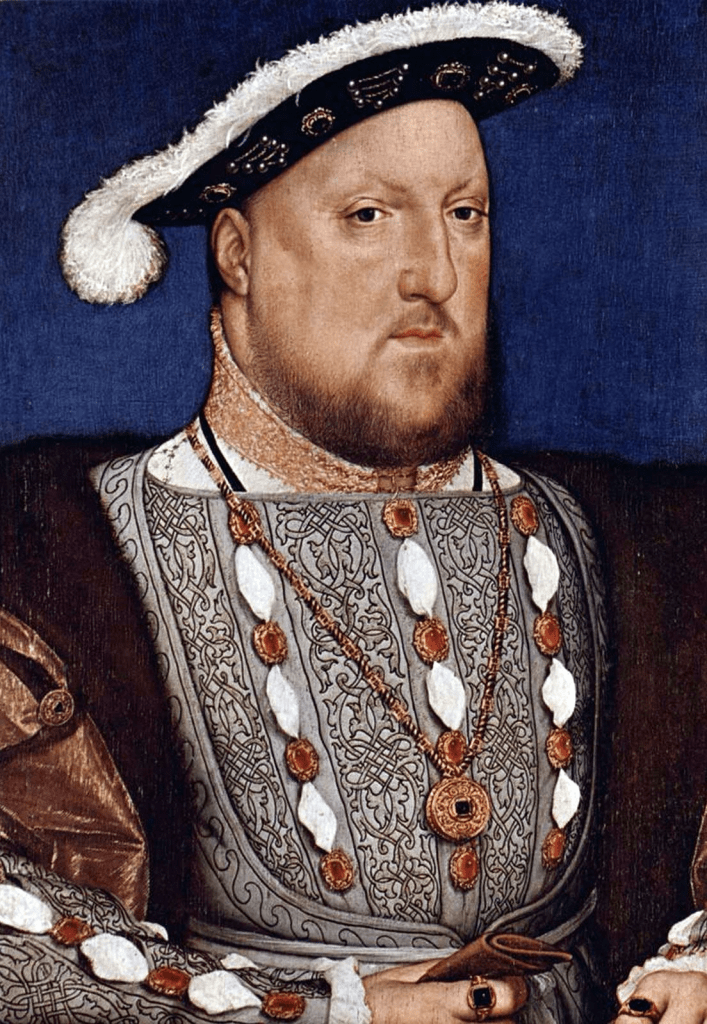
Figure 1 – Hans Holbein the Younger, Portrait of Henry VIII, King of England, c.1536-37. panel, 27.5 x 17.5 cm. Madrid, Museo Thyssen-Bornemisza.
The portraits at the time could be seen as a form of political propaganda to reinforce monarchical authority and legitimacy. The power of the Kingdom was centralised in the monarchy; therefore, portraits were circulated throughout England to remind the population where the authority lay. The artwork contained symbolic messages and iconography that alluded to the wealth and strength of the Tudors to highlight dynastic power. The Portrait of Henry VIII, King of England (c. 1536-15377) by Hans Holbein the Younger (Fig. 1) reflects Tudor dynastic strength. This relatively small sized portrait depicts Henry VIII from the waist up taking up most of the frame with a plain blue background. Holbein effortlessly discloses the theme of wealth throughout the image demonstrated in the presentation of Henry VIII with expensive garments accented with gold and silver that gives them a luxurious appearance. In addition, he bears a cap edged with white feathers, on it we can see an array of peal broaches and other costly jewels. These jewels, paired with the ones attached to his ‘doublet’ and the gold pendant, work together to construct an image of affluence around the king and the Tudor dynasty. Here, his dynasty is a symbol of wealth which can be seen as a manifestation of power. The message of power and strength is conveyed through the size of Henry’s frame and his action in the portrait. His shoulders exceed the limit of the portrait, symbolising his absoluteness and that even the frame of a painting cannot overpower him. He also grips a glove in his hand revealing the strong grip he has over his country. This exaggeration of strength and authority is exemplified by the fact that precisely the central axis of the portrait is held by the king’s right eye. He meets the viewer’s gaze and asserts dominance even though his body is turned toward the right on the composition. Thus, the portrait is a suitable representation of a strong and wealthy royal family as it emphasises the King’s importance and by extension, the importance of the Tudor dynasty.

Figure 2 – The Whitehall Mural – Remigius van Leemput, copy after Hans Holbein the Younger, Group Portrait of Henry VII, Elizabeth of York, Henry VIII and Jane Seymour, 1667. Canvas, 88.9 x 98.7cm. London, The Royal Collection.
To show a dynasty’s legitimacy, one must display its ancestry. The Whitehall Mural (c. 1537) by Holbein (Fig. 2) is a symbol of ancestry and the importance of succession to a dynasty. Holbein was commissioned to paint a portrait in the form of a mural located on a wall in the King’s privy chamber in Whitehall Palace. The result was a life-sized depiction of Henry VIII and Jane Seymour alongside his father, Henry VII, and his wife, Elizabeth of York. Being pictured alongside their ancestors and the founder of the Tudor dynasty sends a message and a visual reminder to everyone in the privy chamber of the king’s lineage and status. The privy chamber was of the utmost importance as it was the closest to the centre of power and where the elite members of the court gathered. They would be able to see and feel the King’s constant presence and intimidation even if he was not in the room. The mural was painted just after the birth of Henry’s heir, Edward VI. Due to the need for legitimacy and stability, there became an even greater pressure for a male heir to secure the line of succession and the continuation of the dynasty. So, here we can see that dynasty is expressed through the realisation and the potential of fruitful union as the portrait confirmed that there was familial and fertile stability within the royal family. This was a vital part of the dynasty to present as Henry’s previous marriages did not produce an heir and resulted in the kingdom’s break from the Catholic church which had created uncertainty within the country.
The birth of a male heir enhanced Henry’s personal prestige and monarchical reputation as he was able to maintain his lineage. This image evokes thoughts of masculinity and fertility which are shown in the mural through Henry’s heroic pose and larger than life presence in the composition. Henry is depicted with a wide stance that dominates his side of the frame as he looks head on at the viewer demanding our attention. Even though Henry is shown to be lower than his father in the image, he overpowers him, as Henry VII is presented to be a lot slimmer and has his arm nonchalantly leaning on the tomb-like structure. Ultimately, the glory of Henry VII had been surpassed by that of his son and successor, Henry VIII. The fertility aspect of the portrait is evident in the presence of Henry VIII’s codpiece as it is a socially constructed image of masculinity that alludes to Henry’s fruitfulness. Additionally, wealth is presented to the onlooker through the architectural magnificence of the space surrounding the four Tudors and the inclusion of the Persian rug that wraps around the stone structure in the centre. This representation of dynasty is important in The Whitehall Mural as it symbolises continuity while simultaneously paying homage to the past and thus, helps shape the collective memory of the Tudor dynasty for future generations.
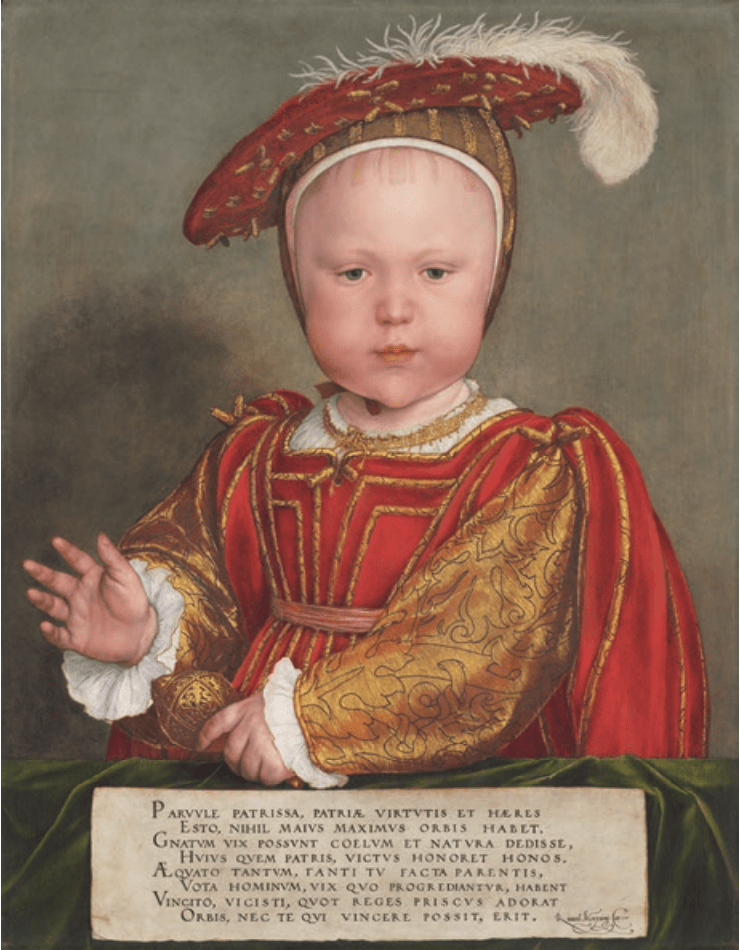
Figure 3 – Hans Holbein the Younger, Portrait of Edward, Prince of Wales, oil on oak, c. 1538, National Gallery of Art, Washington, DC.
A durable dynasty is created through a clear line of succession. Therefore, it was important to represent the Tudor dynasty through its children. The portraiture of Henry VIII’s children shares similar characteristics to his own portrait as exemplified in the portrait of Edward, Prince of Wales (c. 1538) by Holbein (Fig. 3). It is a painting of the son, but about the father, as the portrait is a visual reminder of Edward’s role in the Tudor dynasty and is explicitly presenting him as a king. Firstly, this notion is evident through his courtly attire as even though Edward is meant to be 14 months old, his clothes resemble that of his father, an adult male. They include a feathered cap that mirrors the one Henry wears in previous portraits, as well as red robes with lots of gold accents. Holbein additionally alludes to Edwards’s status as the head of the Church of England, depicting Edward with a raised hand as if he is about to bless someone. Holbein created a sense of timelessness through a plain background as the body of both Henry VIII and Edward appears bound to the surface by renouncing the spatially defined surroundings and removes the subject from the temporal dimension. Therefore, both heads of the Tudor dynasty exude a sense of permeance which ultimately represents the House of Tudor as endless.
The representation of dynasty using iconography and symbolism within portraiture facilitated the preservation of the Tudor court’s monarchical power. Portraiture affirmed their legitimacy and stability securing the continuance of the Tudor Dynasty after an heir was born. Overall, dynastic portraitures created a dynastic legacy that helped shape and transform the collective memory of the Tudor monarchs for their descendants.
Bibliography
Buck, Stephanie and Sander, Jochen. Hans Holbein the Younger: Painter at the Court of Henry VIII. New York: Thames and Hudson, 2004.
Foister, Susan. “Princely Portraits.” In Holbein and England, 175-206. New Haven: Yale University Press, 2004.
Howarth, David. “The Royal Portrait: The Tudors.” In Images of Rule: Art and Politics in the English Renaissance, 1485-1649, 77-119. Basingstoke: Macmillan, 1997.
Klos, Naomi Yavneh. “Mini-Majesty: Dynasty and Succession in the Portraiture of Henry VIII and Edward VI.” In Family Politics in Early Modern Literature, 135–151. London: Palgrave Macmillan, 2017.
Pollard, A. J. “The Aftermath of the Wars” in The Wars of the Roses, 107-118. London: Palgrave Macmillan, 2013.
Featured Image Credit: The Whitehall Mural – Remigius van Leemput, copy after Hans Holbein the Younger, Group Portrait of Henry VII, Elizabeth of York, Henry VIII and Jane Seymour, 1667. Canvas, 88.9 x 98.7cm. London, The Royal Collection.
 Retrospect Journal