
Written by Flora Gilchrist
09/03/25
Repatriation means the return of an artefact to its country of origin from a nation that currently possesses said object. What makes repatriation successful, however, is the continued efforts to create meaningful connections between countries in the wider narrative of decolonising the museum space. The Benin Bronzes are a collection of Nigerian artefacts looted from Benin City by the British in 1897. The notion of a former colonial power returning an artefact that has previously been forcibly taken from the original owner is an extremely contentious topic. In the case of the Benin Bronzes, it is evident that the arguments in favour of repatriation substantiate why the British Museum must give up their collection of the Bronzes and communicate with the current Oba of Benin, Omo N’Oba N’Edo Uku Akpolokpolo Ewuare II.
In order to delve into the recent repatriation dialogues between Benin City and the British Museum, it is important to explain the history behind the Benin Bronzes, the background of collecting in Western Europe, and the history of the British Museum. The Benin Bronzes themselves are a large collection of around 5,000 objects from the sixteenth century. The Bronzes consist of plaques and sculptures made from bronze and brass by the Edo people, a community from Southern Nigeria. The Bronzes had many functions, being used in religious rituals and to decorate the Benin Court. Most importantly, however, the Benin Bronzes are physical manifestations of the spirits of generations of Edo ancestors. Thus, present-day Edo people who still practice the traditional religion are prevented from paying their respects to their ancestors and utilising the Bronzes in their religious practices.
The violent and unethical nature in which British forces seized the Benin Bronzes highlights why the Bronzes should be returned. In 1897, British forces invaded the centre of the Kingdom of Benin, modern day Nigeria, aiming to establish colonial rule and control trading ports in West Africa. British troops stormed the Royal Court and Palace in Benin Kingdom, where shrines, sacred objects, and approximately 3,000-10,000 artworks were forcibly removed from the palace or destroyed, see Figure 1. The Bronzes were brought back to Europe and auctioned off in international and European markets or donated to private art collectors. This ‘civilising mission’ was part of the wider scramble for Africa, whereby European powers carved up countries in Africa during the 1884 Berlin Conference, competing to create spheres of influence. It was not until 1960 that the Federation of Nigeria became fully independent. The ruthless means by which Britain sought to plunder and erase the rich culture, identity, and history of the Benin Kingdom is why repatriating the Bronzes is not forgiveness and should not be used as a tool to forget colonial wrongdoings. Repatriation does not right colonial wrongs; nothing ever will.
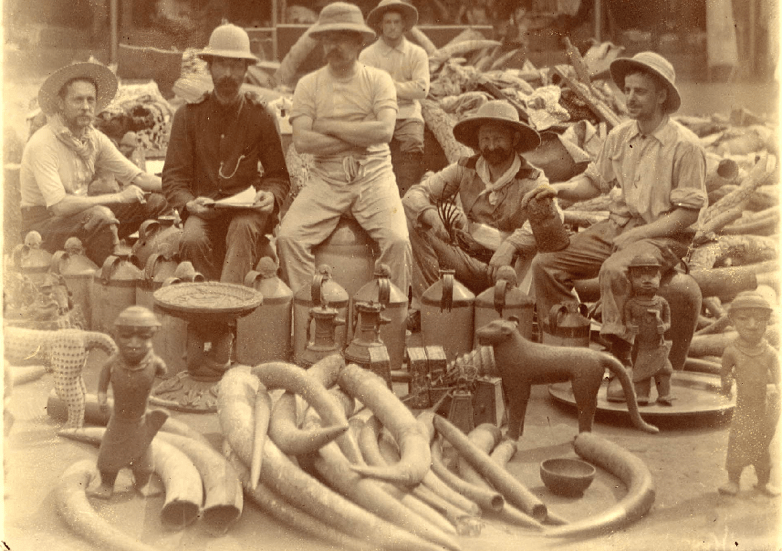
Figure 1, Tim Gihring “‘Benin Punitive Expedition’, 1897, Confronting the Legacy of Looting”, Minneapolis Institute of Art, 2020.
The desire to collect objects for display as a sign of colonial superiority ties into the role of the museum in British society. The British Museum was founded in 1753 and opened to the public in 1759 by Sir Hans Sloane. Hans Sloane was an avid collector, owning over 71,000 items through his expeditions to slave plantations or buying objects from colonial expeditions. Sloane’s items were gifted to and aided the foundation of the British Museum, which was intended to be a site of education for the middle class. It was at this point that museums became agents in the web of colonialism, being transformed into spaces where the British upper and middle class ventured to see the artefacts looted and collected from faraway colonies. Converted into colonial trophies, 900 of the Bronzes are part of the permanent collection at the British Museum.
The main reason for repatriating the Benin Bronzes is revealed when analysing what the Bronzes really are. The fact that the Bronzes are manifestations of Edo ancestors begs the question: why are embodiments of peoples’ ancestors trapped in a white cube institutional space? When framed in such a way, it becomes increasingly obvious that the ‘right’ decision for the British Museum is for the Bronzes to be returned. Another main argument in favour of repatriation is the idea of corrective justice, that when an object has been removed in a violent and immoral way, its return is a means of compensating for that injustice. Although this is a strong repatriation argument in practice, it is important to remember that returning objects looted in colonialism will not simply solve decades of colonialism and cultural erasure.
There are also retention arguments that are against repatriation. In applying these retention arguments to the Benin Bronzes, it becomes clear that the notion of encyclopaedic museums should not stop repatriation. The main retention argument is the assumption that repatriation goes against the promise of encyclopaedic museums, which advocate for a global history where knowledge is accessible to all. The British Museum is known as a leading ‘encyclopaedic museum’, meaning that taking away objects from the collection would erase the notion of cross-cultural exchange and collective human history. However, in the case of looted objects, it is unclear how this is cross-cultural exchange when the Benin Bronzes were stolen. Although encyclopaedic museums can be educational for visitors, they also erase the cultures of ethnic minorities, lumping together many different societies into the broad and generalised notion of global history. Moreover, encyclopaedic museums are, in fact, not very accessible, with most of them being in very specific parts of the world, that is, the West. Therefore, restitution should be seen by the British Museum as the redistribution of cultural wealth where nations and communities excluded from the notion of a global history feel more included and respected.
Despite the definition of repatriation transforming in recent years to include objects looted centuries ago, it is clear from the British Museum’s reluctance to speak on the subject that the museum is unwilling to progress into the new era of post-colonial restitution. Nigeria, on the other hand, have been vocalising the need for the return of their artefacts since their independence. According to Nigeria, ‘the British have consistently refused Nigeria’s restitution demands’, with former Oba Erediauwa describing the looted Benin Bronzes as ‘pages torn off from the book of a people’s life history’. In October 2021, the British Museum received a written request for the return of Nigerian antiquities from the Nigerian Federal Ministry of Information and Culture. This formal request was acknowledged by the museum, as they state it on their website. The website argues they have ‘positive relationships with the royal palace in Benin City and with the Nigerian National Commission for Museums and Monuments (NCMM)’. It seems as if the British Museum are not taking these demands for restitution seriously enough.
The Benin Bronzes are exhibited in the African section in ‘The Sainsbury Gallery’ on the lower floor of the museum. The Bronzes are staged one by one up against a wall, see Figure 2. Despite having 900 brass plaques, only around 50 are on display, with the museum claiming that the others are too damaged. The labels next to the Bronzes do not fully communicate the extent of violence and damage that the British caused to not only Benin Court but also the continuation of Nigerian and Edo culture. The labels instead present the expedition in a very matter-of-fact way, refusing to communicate to visitors that the act of looting is immoral. Furthermore, the museum makes no effort to acknowledge the multiple restitution claims by Nigerian authorities.
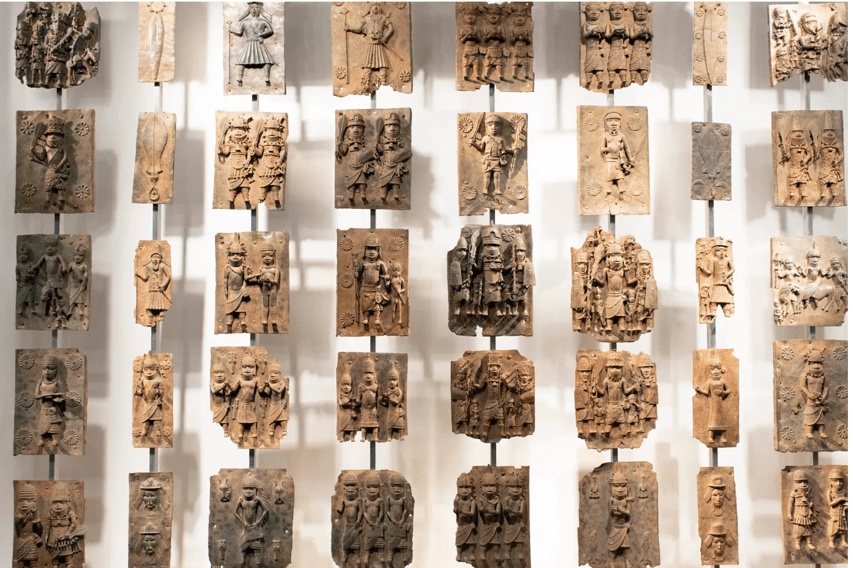
Figure 2, photo by Lauren Fleishman for “‘Benin Bronzes at display at the British Museum,’ Give us Back what our Ancestors Made” written by Victor Ehikamenor, NY Times, 2020.
There are many improvements to be made to transform the museum into a more authentic space. Firstly, the labels should acknowledge the museum’s active role in continuing colonial history. For example, the label next to the Benin Bronzes (as of 2021, when I last visited) describes the colonial expedition in Nigeria as ‘provocative’, and this needs to be rewritten to communicate that the museum acknowledges the ruthless, violent, and unnecessary force through which the British colonised Benin City, see Figure 3. Labels can easily be rewritten so as not to gloss over Britain’s colonial past. If the British Museum is supposedly a public institution that circulates knowledge, then why are visitors being told one singular narrative dictated by colonial victors?
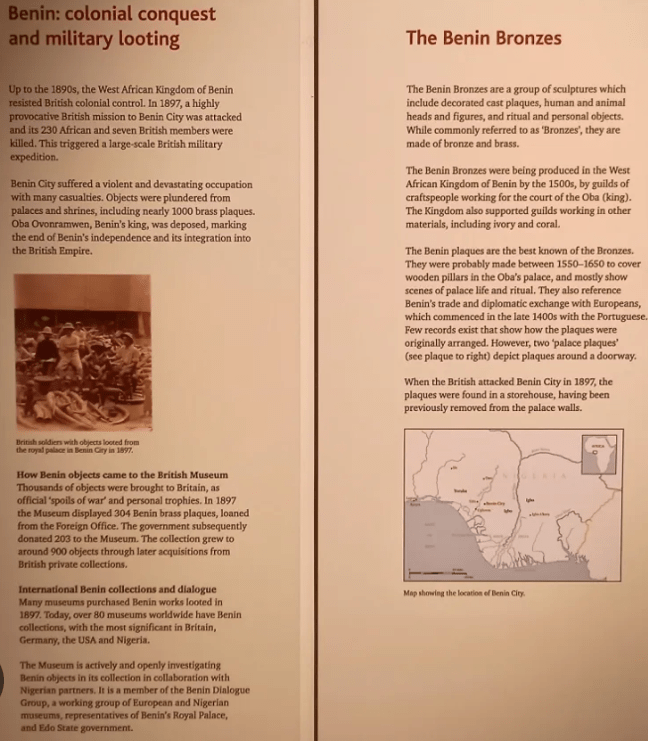
Figure 3, Olivia McEwan, ‘How the Labels in the British Museum’s Africa Galleries Evade Responsibility’ HyperAllergic, June 2021.
Finally, in terms of repatriating the Benin Bronzes, the act of restitution should be seen as a positive event, one that sparks a sense of cultural diplomacy and enlightenment, whereby the British Museum shares their knowledge and cultural resources. A successful transfer of the Benin Bronzes includes careful planning on the terms of the Nigerian authorities (the current Oba, President of Nigeria, Edo Governor and curators at the EMOWAA.) The British Museum should accept the terms of the Nigerian authorities, whether that is handing back the Bronzes through a traditional ceremony or something different. Furthermore, the notion of repatriation should encompass both more practically difficult tasks, such as unveiling the British Museum’s permanent collections, and smaller tasks, such as changing the labels next to looted objects. This process of collaboration and self-reflection on the part of the British Museum would fulfil the definition of repatriation.
To conclude, repatriating the Bronzes is of utmost importance, whereby the British Museum must engage in methods to decolonise the museum space and return cultural heritage that rightfully belongs to Nigeria. Therefore, repatriation involves more than just the return of an object, but rather the inclusion of a thorough internal questioning of provenance histories and the notion of ‘public’ museums. Nigerians are yearning for their culture and identity to be returned, as poet Niyi Osundare states ‘I ask for Ogidigbonyingboyin mask of Benin, The moon says it is in London.’ It is about time the British Museum listened.
Bibliography
Björnberg, Karin Edvardsson. ‘Historic Injustices and the Moral Case for Cultural Repatriation.’ Ethical Theory and Moral Practice 18, no. 3 (2015), 461–74.
Cuno, James. ‘Culture War: The Case Against Repatriating Museum Artifacts.’ Foreign Affairs 93, no. 6 (2014): 119–29.
Forgan, Sophie. ‘Building the Museum: Knowledge, Conflict, and the Power of Place’ Isis 96, no. 4 (2005) 572–85.
Hicks, Dan. The Brutish Museums: The Benin Bronzes, Colonial Violence and Cultural Restitution. Pluto Press: 2020.
Ho, Karen. ‘Nigeria Renews Call for Return of Benin Bronzes Following British Museum Thefts’ ARTnews, (August 2023).
Igbafe, Philip. “BRITISH RULE IN BENIN 1897-1920: DIRECT OR INDIRECT?” Journal of the Historical Society of Nigeria 3, no. 4 (1967): 701–17.
Jérémie, Eyssette. ‘Restitution vs. Retention: Reassessing Discourses on the African Cultural Heritage.’ African Studies Review, Piscataway, vol. 66 Iss. 1 (March 2023), 101-126.
Pugh, Cresa. ‘Depicting migration: what can art do that scholarship cannot? The migration trajectory of the Benin Bronzes’ Migration Studies 10, Number 2, (2022) 274–282.
Sherwood, Harriet. ‘London museum returns looted Benin City artefacts to Nigeria’ The Guardian (November 2022).
Images Credit:
The British Museum 2024, Benin Bronzes Contested Objects from the Collection, April 2024, https://www.britishmuseum.org/about-us/british-museum-story/contested-objects-collection/benin-bronzes.
The British Museum ‘Sir Hans Sloane’ May 27th 2024 https://www.britishmuseum.org/about-us/british-museum-story/sir-hans-sloane
Lauren Fleishman for “‘Benin Bronzes at display at the British Museum,’ Give us Back what our Ancestors Made” written by Victor Ehikamenor, NY Times, 2020. https://www.nytimes.com/2020/01/28/opinion/looted-benin-bronzes.html
 Retrospect Journal