
Written by Connie Greatrix
By the 1970s coffee had become such a high-value commodity within the GDR, both socially and economically, that the product became a crucial component of their international relations. This was in an effort to both appease its citizens, and to serve as a soft power project in the spread and support of socialism. Coffee was a central part of East German life, served at festivities like Christmas and Easter, and to guests all year round. This meant there was an expectation from citizens to have a consistent supply of the commodity, and soon this became the hallmark of economic stability for the country. Although still recognised as a luxury good, few other commodities demanded such constant accessibility in an era of rationing. The Coffee Crisis of 1977, as it is known, caused a seismic shift in how the GDR approached trade relations to access the product, looking further afield for more sustainable options in other socialist countries, having been all but cut out of the traditional international market. They primarily found this in Vietnam, Angola, Ethiopia, and Laos, taking advantage of countries emerging from war and other torrid conditions.
The Coffee Crisis of 1977 began with a harsh frost destroying much of the harvest in Brazil. This led to a significant rise in prices to around five times the previous value. The GDR was struggling to find hard currency to pay these prices (Eastern Bloc currencies were not recognised by many non-socialist countries, so hard currency had to be found, something that was prioritised for oil and other essential resources over coffee) amidst growing domestic pressure in response to the shortage. Needing what would now equate to $1.5 billion to afford the contemporary consumption, Chancellor Walter Ulbricht realised this was near-impossible. Kaffie-mix was created to ease market pressures, made up of only 50 per cent coffee, rye-barley, and sugar beet. There was a clear rejection of this alternative, but people still bought and drank the mix. The crisis demonstrated the reliance of East Germany upon non-socialist companies and a fluctuating market, something they sought to combat through trade relations elsewhere.
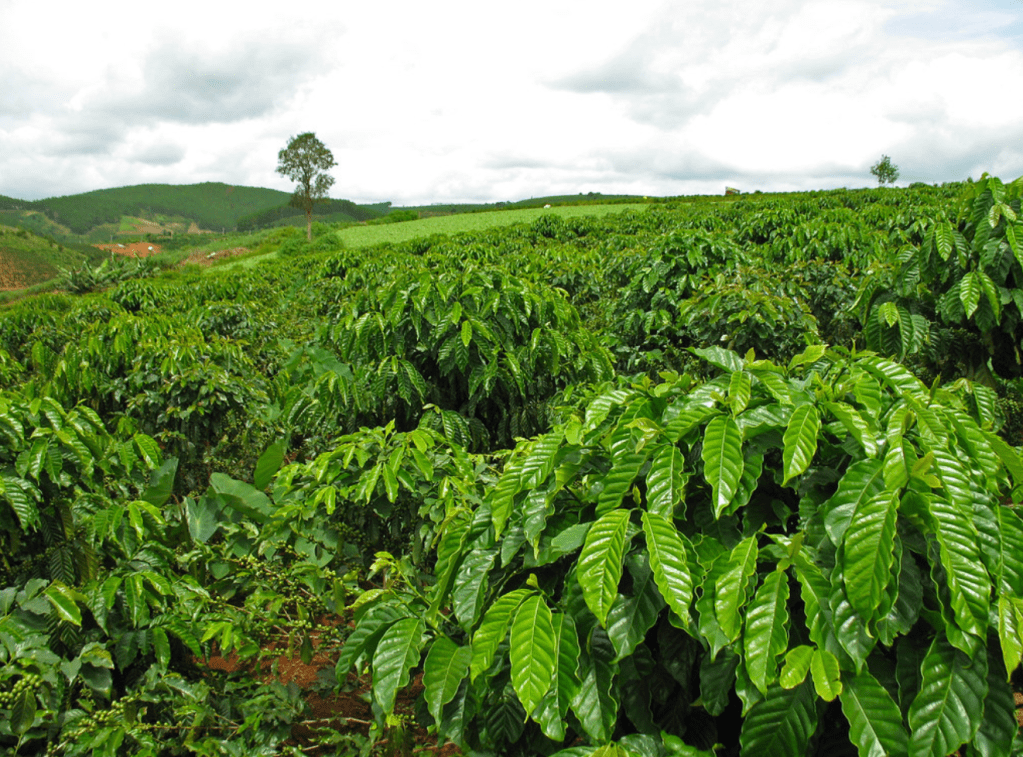
The Vietnamese economy became permanently changed by the East German response to the crisis. As the GDR looked abroad, the country seemed an obvious choice for mass coffee production. Vietnam had been growing coffee since 1926 under French colonial rule, but at nowhere near the scale the GDR would help introduce. Robusta coffee beans were being tested by small farmers, and began to be grown very successfully, and the GDR saw a solution to their own supply problems within this. A delegation was sent to Vietnam in 1978, reaffirming the potential for high quality coffee, and a reliable supply in the long term. Although this was not a solution for their short-term shortage, this was seen as a necessary step for the country that saw a long and close relationship with Vietnam in its future, through the development of these trade relations. Issues quickly arose that stopped the immediate expansion in production, with the Vietnamese invasion of Cambodia which angered China. Vietnam demanded further support from the GDR to combat this animosity. Negotiations were resumed in 1980, and East Germany agreed to provide the necessary equipment and fertilisers to increase and optimise the potential yields. This required extensive expansion of industry, something that proved difficult to achieve. Coffee standards also became a point of contention, with differing expectations from both countries as to what was acceptable. In Vietnam, beans were often left to rot whilst waiting to be sorted through, and efficiency remained nothing close to what the GDR hoped for. Machinery provided by East Germany also became an issue, with its dated technology. However, the tide began to turn with greater investment and reorganisation happening. The project had a large impact on the perception of East Germany within the socialist world, seen as a country willing to help and develop its socialist brother, revolutionising the region. The first proper yield came after German reunification, but the project remained successful, even without its initial investor. Vietnam remains the second largest producer of coffee in the world, exporting 94 per cent of its yields. Although the GDR had ceased to exist by this time, coffee as a source of diplomacy and stability for its own citizens, proved to be successful, outlasting the country itself.
Coffee specialists also looked to African countries that had recently relinquished themselves of their colonial occupiers. This was predominantly focussed upon Angola and Ethiopia. In Ethiopia, the GDR contacted Mengistu Haile Mariam, the head of state in the aftermath of a violent coup. Mengistu saw this as a valuable opportunity to gain resources in order to fight counter-revolutionaries domestically, and to wage a war against neighbouring Somalia. An agreement was reached, with coffee promised in exchange for weapons, which were then used in The Red Terror – a later stage in this revolutionary dialectic that killed tens of thousands of people. This was a short-lived enterprise, one that was more focussed upon the support for the development of a budding socialist cause, as well as the commercial.
The use of coffee as both a commercial and developmental tool by the GDR makes for an interesting dynamic in both negotiations and goals. Although the GDR required coffee as a commodity, it also looked to develop and help sustain fellow socialist countries through this venture. Vietnam and Ethiopia had very different outcomes as a result of this investment in the long term, but for both countries, coffee became synonymous with their fight for socialism. East Germany provided support to the countries both militarily and developmentally, but in Vietnam this developmental impact was more sustained on the level of international exports. Ethiopia remains the fifth largest coffee producer, but this was less because of GDR intervention than in Vietnam. These transformative changes for both countries remain a result of coffee becoming a symbol of economic stability and upturn, an image the party continued to try and project throughout crises. Coffee was important enough to the citizens of East Germany, to impact the economies of Vietnam and Ethiopia to this day.
Bibliography
Bren, Paulina, and Mary Neuburger (eds), Communism Unwrapped: Consumption in Cold War Eastern Europe (New York, 2012; online edn, Oxford Academic, 24 Jan. 2013), https://doi-org.eux.idm.oclc.org/10.1093/acprof:oso/9780199827657.001.0001, accessed 16 Jan. 2025.
Calori, A., Hartmetz, A., Kocsev, B., Mark, J. & Zofka, J. (2019). Between East and South: Spaces of Interaction in the Globalizing Economy of the Cold War. Berlin, Boston: De Gruyter Oldenbourg. https://doi-org.eux.idm.oclc.org/10.1515/9783110646030
Hoyer, K. (2023). Beyond the wall : East Germany, 1949-1990. Allen Lane.
Kloiber, A. (2022). Brewing Socialism: Coffee, East Germans, and Twentieth-Century Globalization. New York, Oxford: Berghahn Books. https://doi-org.eux.idm.oclc.org/10.1515/9781800736702
Schwenkel, C. (2022). Development through dispossession: coffee as mutual aid between Vietnam and East Germany. Cold War History, 1–19. https://doi-org.eux.idm.oclc.org/10.1080/14682745.2022.2100356
Unfried, B. (2016). Friendship and Education, Coffee and Weapons: Exchanges between Socialist Ethiopia and the German Democratic Republic. Northeast African Studies, 16(1), 15–38. https://doi.org/10.14321/nortafristud.16.1.0015
 Retrospect Journal