
Written by Leila Hajek
23/02/25
Content Warning: sexism and misogyny, racism
France’s fin de siècle saw the steady emergence of the “New Woman”, visualized best by her distinctively “masculine” mannerisms and way of dress. The “New Woman” would eventually develop into the famed flapper of the 1920s, whose style and provocative behaviour would define an epoch of relative liberation for women. Western European demands for women’s suffrage – some successful, some not – and a general apathy towards traditional social convention after the First World War facilitated these developments; unconventional behaviour became increasingly normalised, allowing a wider range of women to absorb the trends of masculine fashion, jazz, and smoking. Prior to the twentieth century, smoking was a particularly masculine endeavour, represented most acutely by the separation of the sexes which took place after dinner. Women were expected to retreat to the drawing room, while men were invited to host and engage in their own symposia, cigars and pipes in hand. Where smoking was generally associated with leisure and intellectual debate in a male context, societal conception of the female smoker was one of moral degeneracy. Female smokers were either sex workers, lesbians, or both; their willingness to engage with the hedonistic qualities of tobacco made their criticism and caricature widely acceptable. Prosper Mérimée’s 1845 publication of Carmen tells the story of an eponymous Romani factory worker. Carmen facilitates and enables the male protagonist’s descent into moral depravity, and her death at the end of Part III is portrayed as just. She is described as “very fond of the smell of tobacco”, a description which, if we follow Dolores Mitchell’s theory of the cigar as a phallic symbol, alludes to her sexual habits. Mérimée’s racist and misogynistic depiction of Carmen was certainly extreme, but it was reflective of the society that produced her; the fear was not merely of women adopting an exclusively masculine habit, but that they may weaponize and reclaim their power in the process, subsequently using it to deprive enlightened male society of their moral superiority. Carmen was thus symbolic of a larger fear of female autonomy, along with all its sordid connotations.
French novelist George Sand was one of the more prominent women of the nineteenth century to challenge such notions. Sand procured a controversial reputation for herself through her preference for masculine dress, numerous love affairs, and public smoking habits, the last of which she had a particular penchant for. Her proto-feminist activism made her the source of great contention; while some appreciated her laissez-faire attitude – Frédéric Chopin, Gustave Flaubert, and Prosper Mérimée himself, to name a few – others were hugely critical of her explicit assertion of female masculinity. Charles Baudelaire was particularly scathing, writing “that there are men who could become enamoured of this slut is indeed a proof of the abasement of the men of this generation”. Baudelaire’s abuse towards Sand echoes the treatment of Carmen, who somehow becomes implicated in the moral degradation of male society. More scandalous was Sand’s affair with French actress Marie Dorval, which has led to some theories proposing that Sand’s gender expression was connected to her potential bisexuality. In general, Sand held great influence over other contemporary feminists, and though she certainly represented an outlier at the time, her insistence on expressing herself authentically – cigar always in hand – set a precedent for French women who wished to express their autonomy more assertively in the following decades.
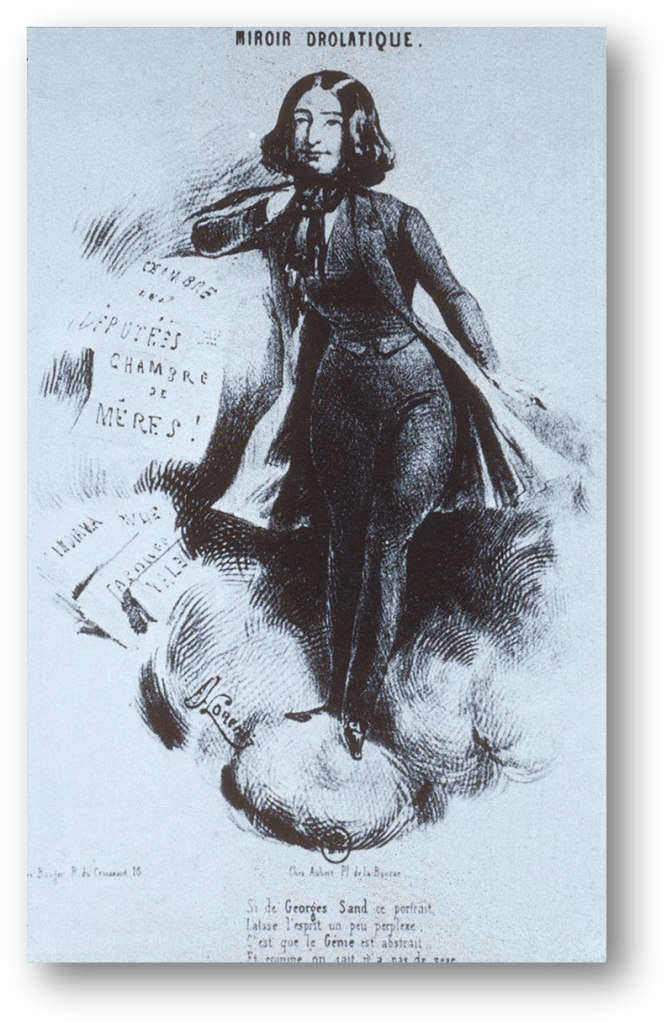
Figure 1. Portrait of George Sand. Drawing by Alcide Lorentz, 1842
During the fin de siècle, women’s smoking became gradually normalised. The tobacco industry’s understanding that women represented an untapped market – and the advertising that followed – helped accelerate the movement. JOB Papier à Cigarette, a French rolling papers manufacturer, was known for its dynamic Art Nouveau posters depicting women with cigarettes. Jane Atché’s 1889 poster for JOB can inform how women understood their own smoking habits; sitting upright, the lady in the illustration keeps her gaze fixed on her cigarette. Her pulled back hair, modest clothing, and bold linework contribute to an impression of self-assurance. Her exertion of control over a traditionally masculine symbol establishes her autonomy and ability to control hedonistic desires. Atché’s illustration can be compared to Alphonse Mucha’s later 1898 poster, which also depicts a smoking woman, albeit rather differently. Mucha’s poster speaks to a more familiar image of the smoking woman; she glances lustily at the viewer, scantily clad and hair coiling into a series of abstract whiplash curves, echoing that of the cigarette smoke. Mucha’s woman, lost in the pleasures of tobacco, stands in stark contrast to the self-possessed woman in Atché’s poster, suggesting that cigarettes occupied different associations in the minds of fin de siècle women. In the meantime, men continued to perpetuate a particular image of the smoking woman.
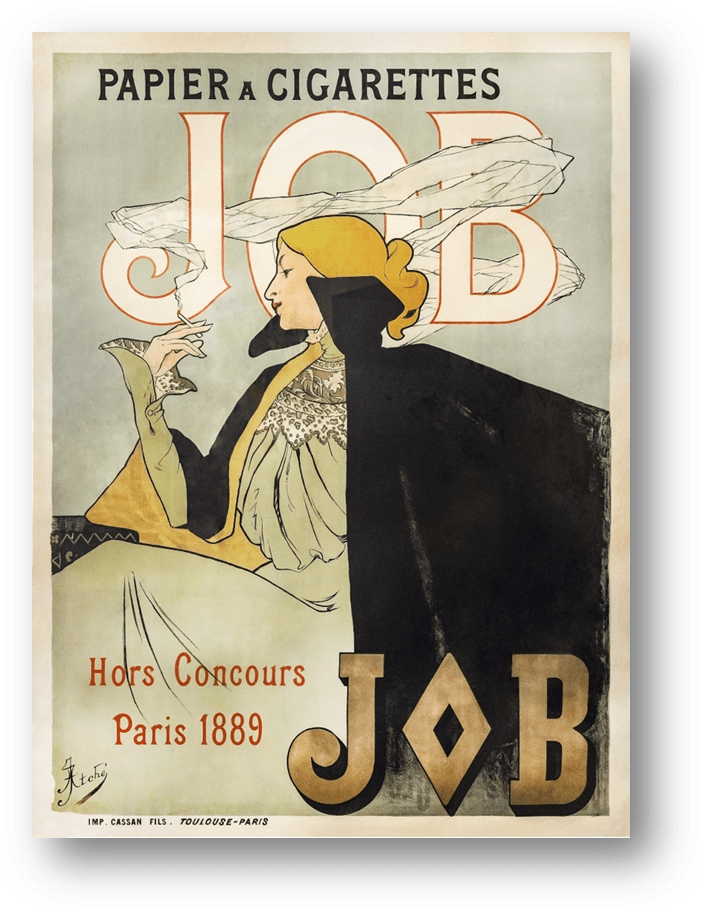
Figure 2. JOB Papier à Cigarette. Jane Atché, 1889
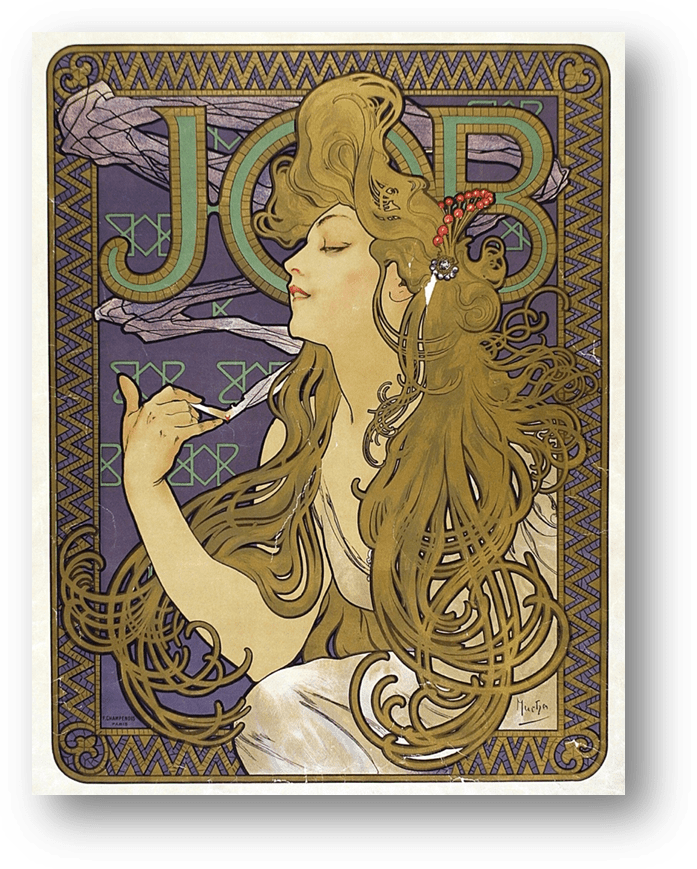
Figure 3. JOB Papier à Cigarette. Alphonse Mucha, 1898
Innovations in women’s fashion in the early twentieth century created an impetus for the cigarette as a woman’s standard accessory. During the First World War, women took to wearing trousers to provide additional ease and comfort in their daily lives, particularly for those tasked with taking responsibility for the absent men’s jobs. This liberty was not so easily forgotten after the war, contributing to an increasingly masculine style. The success of the suffrage movement in the United States and Britain further invigorated French women, in spite of the fact that their own suffrage would not be granted until 1944. Suffrage was the stamp of arrival to keep pushing the boundaries of what was considered acceptable from a woman, culminating in the flapper movement. Women’s liberation did not immediately translate to a liberated society; on the contrary, the post-war society was largely fragmented, with flappers constituting the popular topic of contemporary culture wars. Many could not accept that women were no longer presenting in an appropriately feminine manner; wearing trousers remained illegal for women in Paris, and there were several cases of outrage at the hair-cutting fervour which shook France in the 1920s. Mary Louise Roberts cites one particular case in 1925, where a father in Dijon sought legal action against a hairdresser for cutting his daughter’s hair. The scandalous nature of the movement, however, likely contributed to the excitement surrounding it. Female smoking was absorbed into the larger la garçonne (“boyette”) style; short hair, masculine clothes, androgynous figures, and cigarettes all functioned as symbols of emancipation.
Another traditionally masculine symbol which was popularized by women in the 1920s was the monocle, which became the standard symbol for French lesbians (not least due to the contemporary Parisian lesbian bar Le Monocle, founded by Lulu de Montparnasse). Associations between masculine dress and female sexuality were not immediate; the global popularity of the flapper style meant that women of various social backgrounds and identities could benefit from the elevated sense of freedom it granted. Female masculinity blurred societal conceptions of identity, facilitating an easier existence for those who otherwise struggled to express themselves authentically in a conservative society. As Laura Doan asserts, “lesbians might be mistaken for flappers and flappers might be lesbians”, but as none of this could be assumed prima facie, there was less risk in expressing oneself. A similar argument can be employed for transgender men of the period, whose access to masculine attire meant that they could more easily present in a way that aligned with their gender identity.
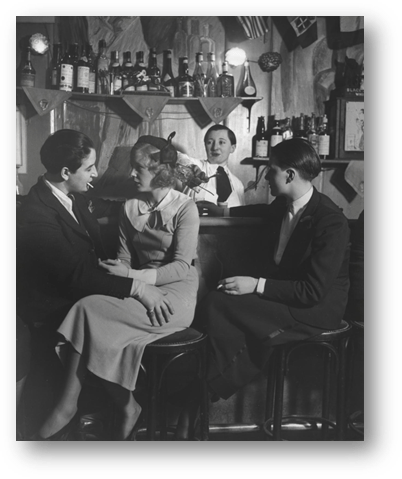
Figure 4. Le Monocle bar, Paris, 1932 © National Gallery of Victoria
The continued importance of cigarettes as cultural symbols would extend beyond the tobacco industry. In 1925, the French perfume house Guerlain released Shalimar. Deemed the Western world’s first “oriental” fragrance, Shalimar’s release was revolutionary in the olfactory world at the time. Its powdery notes of tonka and vanilla, blended with bold notes of citrus and civet, made it unusual and overpowering. In particular, its strong scent was efficient for masking the smell of cigarette smoke, making it popular amongst flappers. It gained a reputation as the “flapper perfume”, an image which Guerlain curated through their own marketing (see Fig. 5). Shalimar’s success indicated that cigarettes continued to operate as key players in contemporary debate about how women should express themselves, not only in France but in the West at large.
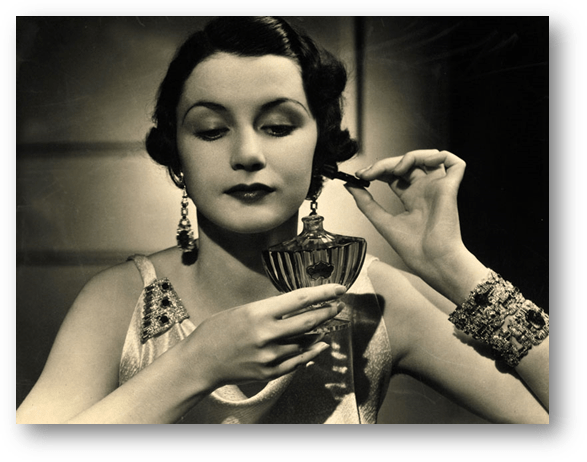
Figure 5. Ad for Shalimar by Guerlain featuring an unknown actress. Photograph by John Paul Pennebaker, c. 1934
The 1930s saw a gradual return to more “feminine” fashions. The rise of fascism in France’s peripheries, climaxing in the Nazi capture of France in 1940, meant that masculine dress and mannerism not only became vulgar and inappropriate, but remarkably dangerous. Joseph Goebbels himself held the “shamelessly eroticized” and “whore-led” French fashion industry in great contempt. Thus, the era in which cigarettes came to represent so-called “torches of freedom” came to a smoulder, though it was never extinguished. Many women would remember the 1920s as a period of freedom, and it would come to inform future feminist movements. In 1944, the provisional French government finally declared that women would gain the right to vote in elections; in the decades that followed, women’s rights would again gain momentum in the “second-wave feminist” movement. Naturally, much can be said for the ways in which female masculinity introduced a new and different dimension of misogyny to popular culture (one example being the increased marketing of weight loss methods to better suit the “flapper physique”). In the case of cigarettes, many criticised the fact that, regardless of the freedom they represented, they were fundamentally harmful to all, regardless of sex or gender. Feminist movements were certainly not without fault or drawback, though none of this detracted from the increased sense of freedom experienced in the early twentieth century.
Bibliography
Amos, Amanda and Margaretha Haglund. “From Social Taboo to “Torch of Freedom”: The Marketing of Cigarettes to Women.” Tobacco Control 9, no. 1 (2000): 3–5. https://doi.org/10.1136/tc.9.1.3.
Doan, Laura. “Passing Fashions: Reading Female Masculinities in the 1920s.” Feminist Studies 24, no. 3 (1998): 663–700. https://doi.org/10.2307/3178585.
Library of Congress. “George Sand.” Accessed February 14th, 2025. https://guides.loc.gov/feminism-french-women-history/famous/george-sand.
Makela, Maria. “The Rise and Fall of the Flapper Dress: Nationalism and Anti-Semitism in Early-Twentieth-Century Discourses on German Fashion.” Journal of Popular Culture 34, no. 3 (2000): 183-208. https://www.proquest.com/scholarly-journals/rise-fall-flapper-dress-nationalism-anti-semitism/docview/195363481/se-2?accountid=10673.
Mitchell, Dolores. “THE ICONOLOGY OF SMOKING IN TURN-OF-THE-CENTURY ART.” Source: Notes in the History of Art 6, no. 3 (1987): 27–33. http://www.jstor.org/stable/23202319.
Mitchell, Dolores. “The ‘New Woman’ as Prometheus: Women Artists Depict Women Smoking.” Woman’s Art Journal 12, no. 1 (1991): 3–9. https://doi.org/10.2307/1358183.
Mitchell, Dolores. “Images of Exotic Women in Turn-of-the-Century Tobacco Art.” Feminist Studies 18, no. 2 (1992): 327–50. https://doi.org/10.2307/3178232.
Novara, Elizabeth and Erika Hope Spencer. “Les femmes Françaises veulent voter! Celebrating 80 Years of French Women’s Suffrage.” Library of Congress Blogs, April 18th, 2024. https://blogs.loc.gov/manuscripts/2024/04/les-femmes-francaises-veulent-voter-celebrating-80-years-of-french-womens-suffrage/#:~:text=Eighty%20years%20ago%2C%20on%20April,was%20leading%20a%20provisional%20government.
Roberts, Mary Louise. “Samson and Delilah Revisited: The Politics of Women’s Fashion in 1920s France.” The American Historical Review 98, no. 3 (1993): 657–84. https://doi.org/10.2307/2167545.
Thompson, Jan. “The Role of Woman in the Iconography of Art Nouveau.” Art Journal 31, no. 2 (1971): 158–67. https://doi.org/10.2307/775570.
Featured Image Credit: JOB Papier à Cigarette. Jane Atché, 1889 .
 Retrospect Journal