
Written By Emily Jones
23/02/25
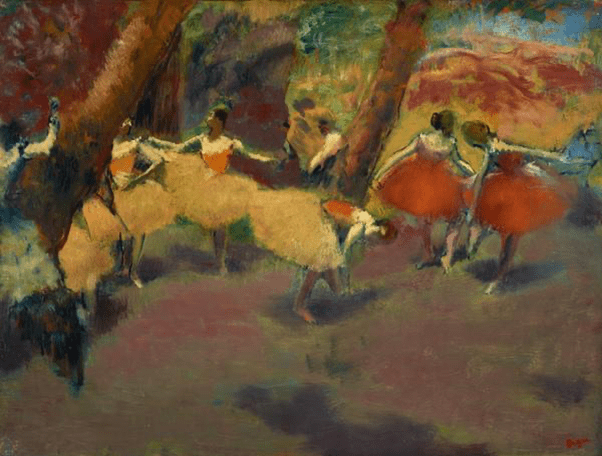
Figure 1 – Edgar Degas, Before the Performance, 1985, Edinburgh, National Galleries of Scotland.
Edgar Degas is heavily associated with the nineteenth-century French Impressionist group. Although Degas rarely created his art ‘en plein air’, he followed the trend of Impressionists depicting everyday life. Taking a modern approach to the subject matter of observing contemporary life, Degas moved away from illustrating traditional domestic scenes and became interested in urban leisure. His compositions of popular resorts of entertainment such as horse racing and café life were a ‘new kind of urban subjectivity’ and represented a shift towards the impressionist movement. Furthermore, Degas’s exploration of the urban milieu commenced his infatuation with the ballet at the Paris Opéra as it was a popular form of entertainment among the developing middle classes in nineteenth-century Paris. Before the Performance (1895) (Fig. 1) is an example of Degas’s ballet theme, depicting the corps de ballet on stage. All the figures appear to be in full costume, so perhaps it is a scene at a dress rehearsal or before an actual performance at the Paris Opéra. Emphasis is placed on colour in Degas’s Before the Performance, indicating to the viewer that the piece was created in the latter part of his oeuvre. Similar to other Impressionists in the last phases of their careers, Degas changed his descriptive and documentative focus to an experimental approach that explored colour and pictorial techniques. A broader handling of colour and line results in the image being undefined and descends the finished product into a haze of oil paint. This is evident in Before the Performance, which possesses a ‘rainbow-hued’ colour palette that incorporates deep orange with green tinted yellow, exemplifying an aspiration to exhibit vibrant colour. Moreover, Degas’s extensive thoughts on the appearance of colour in the piece are exemplified through the shade of orange in the stage scenery that mimics the dancers’ skirts below. Therefore, Degas employs a modern technique that reflects the innovative style that was incorporated in Impressionism. Although currently in storage, Before the Performance used to hang in the National Gallery of Scotland in room 26 on level 4 (Fig. 2). Before the Performance can be seen as a reminder of Scotland’s relationship with Impressionism and the National Gallery of Scotland’s efforts in art collecting.

Figure 2 – Floor plan marking the location of the French Impressionism display in the National Gallery of Scotland, 2024.
The Impressionist movement was introduced in Scotland through a series of Scottish International Exhibitions. Commencing in 1886 with the Edinburgh International Exhibition of Industry, Science and Art, they allowed the Scottish public to experience foreign art first-hand, subsequently inspiring aspiring collectors. Significantly, one of Degas’s dancer compositions Le Foyer de la danse à l’Opéra (1872) (Fig. 3) was the first Impressionist artwork to be exhibited in Scotland at the 1888 Glasgow International Exhibition. Therefore, Degas’s art laid the groundwork for the emergence of Impressionism in Scotland, with his modern approach influencing the aesthetics of developing Scottish art. In contrast to England, Impressionism was readily accepted in Scotland because of two essential elements of its society: education and industry. Due to many Scottish artists studying in Paris from the late 1870s, Scots involved in the art sector were well-travelled and, thus, constantly came into direct contact with some of the most innovative artists of the period and developed a modern art education. Scottish Colourist J.D. Fergusson confirms the nation’s affinity for modern artistic knowledge stating, “to go to Paris was the natural thing for the Scot.” Scotland’s economy blossomed in the nineteenth century through an industrial transformation. Industrialisation in Scotland created prosperous companies dealing in shipbuilding, textiles, and the manufacture of goods. A new breed of Scottish collectors at the end of the nineteenth century was the culmination of this industrial success. Characterised by the newly rich directors of the multinational companies, these collectors had strong commercial links with western Europe and easy access to the cultural and aesthetic ideas that were occurring on the continent.
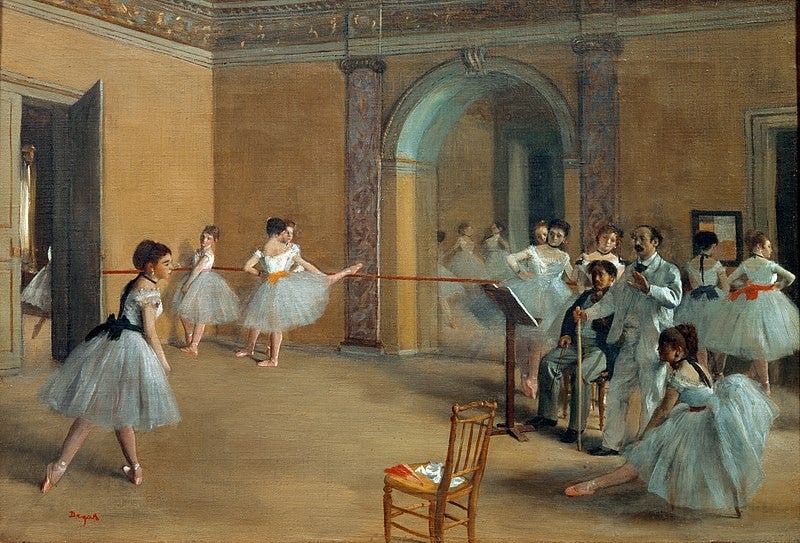
Figure 3 – Edgar Degas, Le Foyer de la danse à l’Opéra, 1872, Paris, Musée d’Orsay.
Before the Performance by Degas was presented to the National Galleries of Scotland in 1960 by Sir Alexander Maitland in memory of his wife, after having purchased it from Arthur Tooth & Sons in 1947. Degas’s painting, along with the other twenty French paintings by artists such as Monet, Cézanne and Gauguin, became known as the Maitland gift. Sir Alexander Maitland and his wife Rosalind were both wealthy individuals’ part of Edinburgh’s cultural elite who developed a passion for collecting. Starting their collection in 1914 with a Courbet landscape, the couple offered an extraordinary example of varied taste and public-spirited generosity. Eventually, they curated an outstanding collection of Impressionist and Post-Impressionist paintings with the intention of presenting them to the Galleries, as Alexander was appointed a trustee of the National Galleries of Scotland in 1947, making the couple more aware of the institution’s lack of funding for new acquisitions. Additionally, the conservatism of the Galleries’ trustees stunted the growth of their collection and slowed progress when it came to its involvement with the impressionist movement. However, improvements were made through the appointment of Stanley Cursiter as director in 1930, who brought a more enlightened attitude towards the purchase of French contemporary art. Therefore, the collaboration of Cursiter’s management with the addition of the Maitland gift and bequest after Alexander passed meant that the National Galleries of Scotland could boast a holding of French Impressionist artwork that had international prowess. Furthermore, the publicity surrounding the Maitland gift and bequest encouraged prospective patrons of the Galleries to donate their own works to their nation and inspired the National Galleries of Scotland themselves to acquire more works of the Impressionist movement.
Bibliography
Pollock, Griselda and Richard Kendall. Dealing with Degas: Representations of Women and the Politics of Vision. London: Pandora, 1992.
Kendall, Richard. Degas: Beyond Impressionism. New Haven: Yale University Press, 1996.
Kendall, Richard. Degas Backstage. London: Thames and Hudson Ltd, 1996.
Fowle, Frances, Vivien Hamilton and Jennifer Melville. Impressionism & Scotland. Edinburgh: National Galleries of Scotland, 2008.
Clarke, Michael, Frances Fowle and Lesley Stevenson. French Paintings 1500-1900. Edinburgh: National Galleries of Scotland, 2023.
Fowle, Frances. The Impressionist Era: The Story of Scotland’s French Masterpieces. Edinburgh: National Galleries of Scotland, 2021.
Thomson, Richard. “A Taste for Impressionism: Modern French Art from Millet to Matisse.” The Burlington Magazine 164, no. 1436 (2022): 1134-1136.
Featured Image Credit: https://www.nationalgalleries.org/art-and-artists/4812
 Retrospect Journal