
Written by Louisa Steijger
Throughout the twentieth century, waves of displacement shaped Rwanda’s internal conflicts and relationships with neighbouring countries. Refugees were not merely passive victims of war; they were also key actors in the cycles of violence that engulfed the Great Lakes region. Whilst the international community, through humanitarian organisations, sought to alleviate the suffering of refugees, they often became unwitting participants in the political dynamics that prolonged conflict and refugee crises.
An analysis of Rwanda’s refugee crises cannot be understood without recognising the deep-seated tensions between its two dominant ethnic groups, the Hutu and the Tutsi. Prior to colonial rule, Rwanda’s social hierarchy was fluid, with Tutsi often associated with cattle-keeping and aristocracy, while Hutu were primarily agriculturalists. These distinctions, though significant, did not amount to rigid ethnic divisions. However, under German and later colonial rule, these identities were formalised and codified. The Belgians, who favoured the Tutsi minority, introduced identity cards in 1932 that classified individuals by ethnicity, institutionalising a hierarchy that privileged Tutsi over Hutu. Tutsi were given access to education and positions of power, while Hutu were largely excluded, fostering resentment that would later erupt into violence. By the late 1950s, as anti-colonial movements swept across Africa, the balance of power in Rwanda began to shift. In 1959, a Hutu-led social revolution erupted, fuelled by decades of perceived oppression under Tutsi rule. Violence spread across the country as Hutu militias attacked Tutsi communities, killing an estimated 20,000 people. As a result, between 120,000 and 150,000 Tutsi fled Rwanda in what would become the first of several waves of mass displacement. Many settled in Uganda, Burundi, Tanzania, and Zaire (now the Democratic Republic of the Congo). These exiled communities, referred to as the Banyarwanda (People of Rwandan origin), often remained politically and socially marginalised in their host countries.
For those who fled, conditions varied. In Uganda, Tutsi refugees were viewed with suspicion, particularly under the rule of Milton Obote and later Idi Amin. While some managed to integrate, many lived in refugee settlements, barred from land ownership or political participation. In Zaire, refugees were often relegated to precarious agricultural work, while in Burundi, where a Tutsi-led government remained in power, Rwandan Tutsi refugees found relative safety. However, it is important to note that life in exile was incredibly unstable, and the legal status of refugees was often tenuous. Host governments were increasingly wary of the political implications of housing large refugee populations and so imposed restrictions that limited their movement, employment opportunities, and access to education. Refugee camps and informal settlements soon became centres of both survival and political mobilisation. Among younger generations born in exile, frustration mounted as they saw their parents’ displacement not as a permanent reality but as a temporary injustice that must be rectified. As a result, armed groups emerged, seeking to reclaim Rwanda. Throughout the 1960s, a series of Tutsi-led insurgencies, known as the Inyenzi attacks, were launched from neighbouring countries, particularly Uganda and Burundi. The Rwandan government responded with brutal repression. In 1963, following an incursion from Burundi, the Rwandan army massacred an estimated 10,000 Tutsi in the southern region of Gikongoro, a clear warning against further resistance.
While the international community provided some assistance to displaced Rwandans, aid remained sporadic and largely inadequate. The newly established UN High Commissioner for Refugees (UNHCR) focused its efforts on refugee integration rather than return, given the Hutu-led Rwandan government’s firm stance against allowing Tutsi exiles back. Assistance was limited to basic shelter and food provision, often supplemented by church-led initiatives, particularly from Catholic charities. However, refugee camps remained underfunded and undersupplied, leading to malnutrition, poor sanitation, and disease outbreaks.
In the 1970s, regional violence further complicated the refugee crises. In Burundi, tensions between Hutu and Tutsi erupted into mass killings in 1972, with an estimated 100,000 to 300,000 Hutu killed by the Tutsi-led government. This massacre not only destabilised Burundi but also raised fears among Rwandan Hutu leaders, who used it as justification to maintain a firm grip on power. When a coup in 1973 brought Juvénal Habyarimana to power in Rwanda, he consolidated a Hutu-dominated regime that further entrenched the exclusion of Tutsi from political and military life. Though the Habyarimana administration saw relative stability within Rwanda, it did not resolve the refugee crisis. The children of exiles remained stateless, growing up with a sense of injustice that would later fuel renewed conflict.
The situation escalated dramatically in 1990 when the Rwandan Patriotic Front (RPF), a rebel group formed primarily by Tutsi refugees in Uganda, launched an invasion of Rwanda. Led by Paul Kagame, the RPF framed their cause as a struggle for the right of return, though their ultimate goal was to overthrow the Hutu-dominated government. With support from France, the Rwandan army resisted the invasion; however, the war dragged on for four years. In August 1993, the Arusha Accords were introduced, promoting a power-sharing agreement between the Government of the Republic of Rwanda and the Rwandan Patriotic Front. However, the Accords failed mainly because both sides distrusted the other’s intention to adhere to the agreement. This distrust was evidenced by the fact that instead of beginning the demobilisation process outlined in the Arusha Accords, the Government and the RPF started providing greater military training and armed civilians.
On 6 April 1994, Rwandan President Juvénal Habyarimana’s plane was shot down over Kigali, triggering a meticulously planned genocide. In the span of a hundred days, an estimated 800,000 Tutsi and moderate Hutu were slaughtered. The RPF, advancing from the north, eventually took control of the country in July 1994. In response, nearly two million Hutu civilians, former government officials, and those directly responsible for the genocide fled to neighbouring countries, creating one of the largest refugee crises in modern history. Around 1.2 million fled to Zaire, 580,000 to Tanzania, 270,000 to Burundi and 10,000 to Uganda. The international community, largely silent during the genocide, mobilised humanitarian aid on an unprecedented scale.
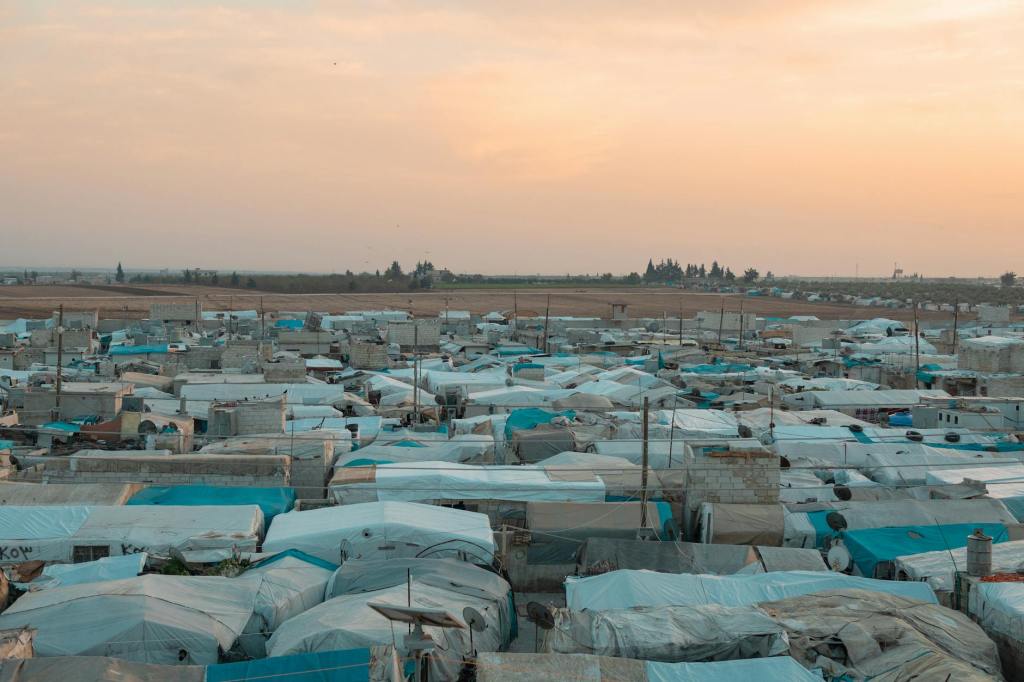
Refugee camps in Zaire, Tanzania, and Burundi became the focal point of international relief efforts. Aid agencies, recognising the desperate conditions of those who had fled, provided food, medical care, and shelter. Donations from Western governments and private organisations poured into the region, and the world’s media urgently covered the plight of the refugees. However, these camps were not merely sites of humanitarian need; they were also highly politicised spaces. A key example is the Goma camps, situated in eastern Zaire. These camps, due to their close proximity to the Rwandan border, had become the site of the largest concentration of Rwandan refugees. However, these camps quickly fell under the control of the former Rwandan government and the remnants of the defeated army, who maintained strict control over food distribution and utilised the camps as a place to plan a return to Rwanda. The presence of armed groups in refugee camps posed a dilemma for humanitarian organisations. Most humanitarian agencies’ core principle is neutrality, which means they aid without distinction. However, neutrality often meant that food and medical supplies went not only to civilians but also to the very people who had orchestrated the genocide months earlier. Some agencies, such as Caritas Internationalis, continued to supply aid to military-controlled areas, refusing to distinguish between genuine refugees and combatants. Attempts to conduct a proper census by the UNHCR, which might have helped separate civilians from militants, were obstructed by camp leaders who feared exposure. The failure to address the militarisation of the camps had severe consequences. Rwanda, along with Ugandan and Congolese allies, launched an invasion of Zaire in 1996, dismantling the camps in a campaign that led to further mass displacement and thousands of deaths. This invasion also triggered the First Congo War, marking the beginning of decades of regional instability.
The Rwandan refugee crisis revealed the limitations of humanitarian aid in politically charged environments. While relief efforts saved lives, they also inadvertently prolonged conflict by sustaining militant groups and allowing genocidal leaders to maintain control over displaced populations. Constrained by their commitment to neutrality, aid agencies struggled to navigate the complexities of a crisis where victims and perpetrators were often indistinguishable. The international community’s failure to address the root causes of displacement meant that the camps became incubators for future conflict rather than solutions to humanitarian needs.
Bibliography
Bradley, Miriam, ’Genocide in Rwanda and Its Aftermath, 1994–1996′, The Politics and Everyday Practice of International Humanitarianism. Oxford, 2023. [online] https://doi.org/10.1093/oso/9780198840695.003.0006, (accessed 3 Feb. 2025)
Cutts, Mark, and Office of the United Nations High Commissioner for Refugees. The State of the World’s Refugees, 2000: Fifty Years of Humanitarian Action. Oxford: UNHCR [in association with] Oxford University Press, 2000.
Kent, R. (2004). International humanitarian crises: Two decades before and two decades beyond. International Affairs. https://doi.org/10.1111/j.1468-2346.2004.00422.x
Lischer, Sarah Kenyon. Dangerous Sanctuaries: Refugee Camps, Civil War, and the Dilemmas of Humanitarian Aid. Cornell University Press, 2015.
Prunier, Gérard. Africa’s World War: Congo, the Rwandan Genocide, and the Making of a Continental Catastrophe. Oxford: Oxford University Press, 2009. Print.
Rutinwa, Bonaventura. ‘Forced Displacement and Refugee Rights in the Great Lakes Region.’ African journal of international affairs 1.2 (1998): 11–43.
Umutesi, Marie Béatrice. Surviving the Slaughter: The Ordeal of a Rwandan Refugee in Zaire. The University of Wisconsin Press, 2004.
Willard, Emily. ‘Rwanda: The Failure of the Arusha Peace Accords’, National Security Archive Electronic Briefing Book No.469. 2014. [online] https://nsarchive2.gwu.edu/NSAEBB/NSAEBB469/ (accessed 3.02.25).
 Retrospect Journal