

Written By: Ailsa Fraser
Part I of V of Natural Contracts: Historical Partnerships Between Humans and Other Animals
Towering above the city of Brighton and Hove is what at first looks like an ordinary hill. It rises from the manicured lawns of a modern golf course, rough and unkempt but peculiarly flat on top. Ringed with a chalk path that offers fantastic views over the city and the sea, its centre is a tangle of gorse bushes and uneven ground. This is Hollingbury Hillfort, and it dates back to the Iron Age, when local tribes lived upon it. Its position allows an excellent view for miles around, even out to sea, so it is an excellent defensive position, though modern visitors might wonder how its ancient occupants tolerated the wind. Archaeological investigations revealed several Bronze Age barrows buried at its heart, in a dip still used by picnickers. It is a place suffused with history and the environment, but it feels cut off from its past by Hollingbury Park Golf Course stretching around it. Today, it is mostly used by dogwalkers.
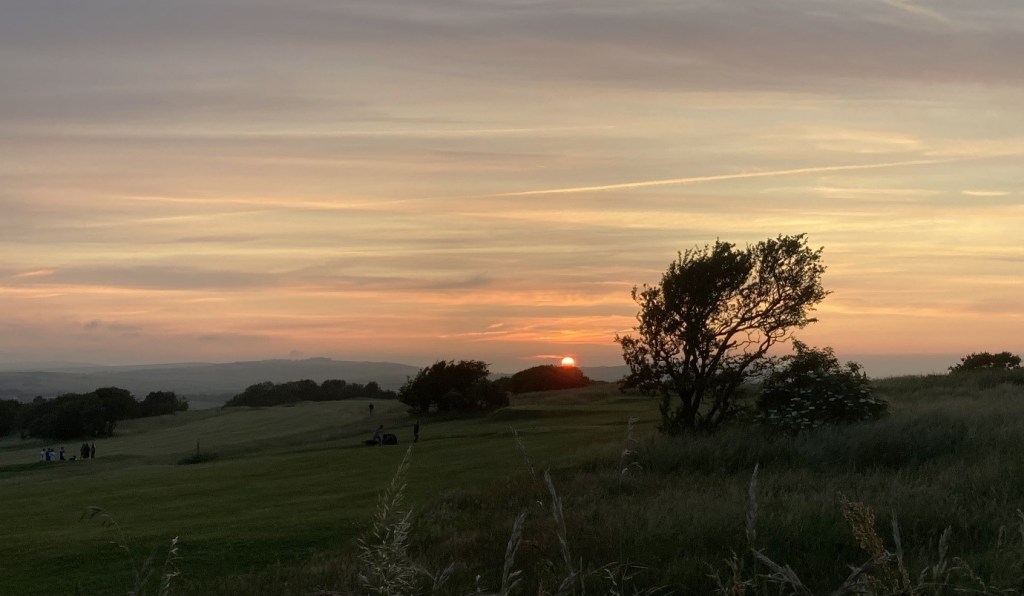
Figure 1: Sunset over Hollingbury Hillfort on the Summer Solstice, 2023.
When, exactly, dogs were domesticated is a matter of fierce debate. Archaeological evidence discovered only puts the domestication at earliest fourteen thousand years ago, but genetic analysis of modern dogs and wolves pushes the date back to between twenty-seven and thirty thousand years ago, or forty thousand at a stretch. And how or why they were domesticated is equally unclear, but we can make some educated guesses. It seems to have first happened somewhere in Eurasia, before a split between east and west lead to the descendants of the first dogs evolving differently. Dogs and wolves have interbred more recently, for example to produce species like the Chinese Shar-Pei, the Finnish spitz, and the Siberian husky, and species boundaries are not as solid as you might expect. But, distinct from other canines, Canis familiaris has worked alongside humans for thousands of years. Paucity of evidence makes it difficult to confirm, but since the last glacial maximum was between twenty-one and seventeen thousand years ago, when the Neanderthals went extinct, Alice Roberts suggests that it was the collaboration between dogs and humans that got both of us through the Ice Age. The Bronze Age inhabitants of Hollingbury Hillfort lived far closer to our times than those. They likely walked with dogs around its ramparts and looked out to sea, just as I do today.
Anthrozoology is a relatively new field of study, arising in the last few decades. It seeks to study human-animal relationships from a social perspective, rather than simply looking at how humans have used and abused the nonhuman world in the past and present. While animals cannot speak human language—at least, not fluently—many of us interact with other species on a daily basis, not only tolerating them, but living with them, working with them, and loving them. We learn to communicate and interact socially with them, despite the species barrier. These multispecies interactions are much older than our modern ideas about the environment and have shaped the human story itself. In this series, I’ll have a look at five different animals humans have historical relationships with to bring to light the brilliance of these partnerships—because they are partnerships. When we work alongside animals, animals work alongside us in an unspoken contract, from which both we and they benefit. Dogs are an excellent species to start for this, although I send my apologies to cats for not paying them the same attention in this series. While perceptions of dogs vary across the world, in Britain they are seen unequivocally as part of the family.
Dogs were likely domesticated as hunting partners, though Ádám Miklósi argues that the sophisticated partnership seen in human-dog hunting parties today took a long time to develop. But “domestication” may be too active or one-sided a word for it, despite previously common views of dogs as “slaves”. Wolves may have voluntarily crept closer to hunter-gatherer camps to scavenge the scraps they left behind, just as humans noticed wolves’ hunting prowess and took advantage of it, following them to track prey just as wolves followed them in return. Which brave soul actually decided to co-habit with them, we’ll never know, but it was a collaboration where both species benefited. Yet domestication enacts physical changes on the body and genome. Dmitri Belyaev, a Russian scientist, for decades attempted to breed tame foxes, and found that when he selected for traits that indicated “tameness”, such as friendliness and lack of aggression, physical changes accompanied them. The foxes’ ears flopped, they grew overall smaller, and females went into heat more often—similar changes observed in the transition from wolves to dogs.
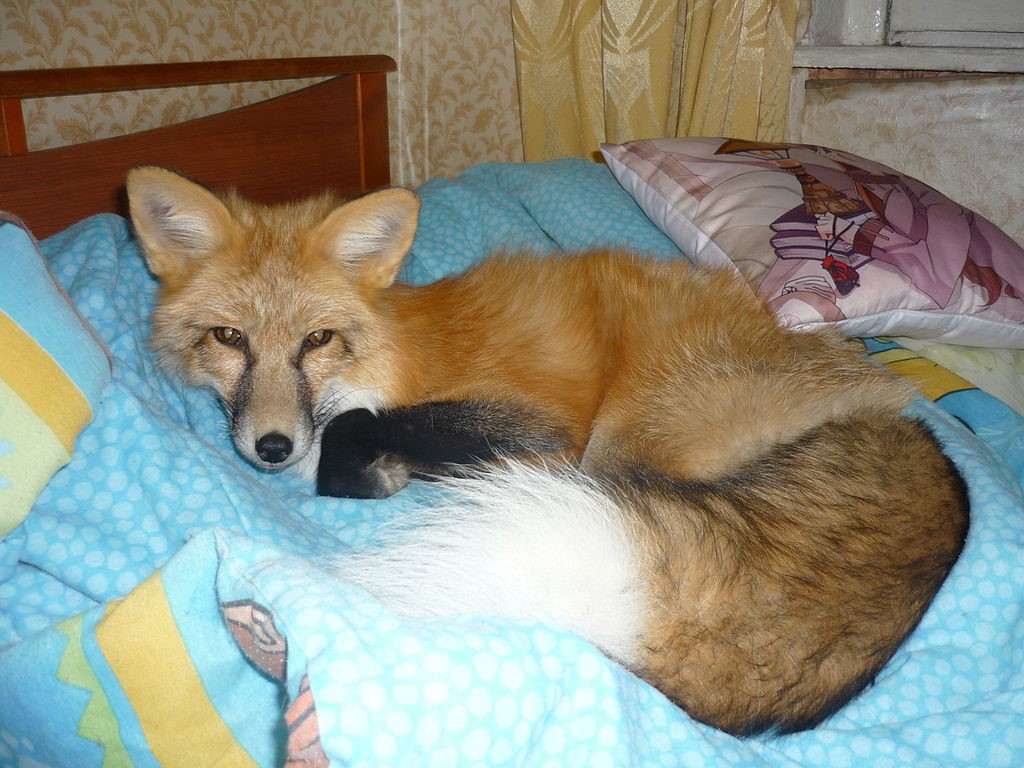
Figure 2: Domesticated male fox in a Russian house
The human-dog relationship has physical impacts on humans as well. Numerous studies show that being around dogs lowers blood pressure and stress; while owning a dog means you are more likely to survive life’s disruptions such as divorce. Outside of the physical realm, we can read each other’s body language and communicate very well. When my family adopted a new puppy, I was surprised by how quickly he came to pick up on subtle cues in my body language that I didn’t even realise I was broadcasting, and I learnt what different behaviours of his meant in return. These are multispecies relationships in action. Donna Haraway argues that we should even consider dogs and humans to have “co-evolved” as companion species, thanks to the physical impacts we have had on each other’s lives from the earliest record.
In tracking archaeological evidence of dogs, their presence follows early agricultural settlements. They are present in cave paintings, in Roman mosaics, in narratives like the Odyssey, to early modern paintings and photographs from as soon as the camera was invented. For much of this time period, they were for hunting, or other roles in permanent settlements, such as herding, guarding, tracking, controlling pests, and pulling sleds. There are accounts that describe them being used in battles, such as in sixth-century Ireland or in Viking raids, but what they did is unclear. Furthermore, toy breeds bred for luxury and status like the Maltese and Pekingese have existed for at least two thousand years. In collaboration with more species than just humans, dogs would be used in falcon hunting, where the dog would flush smaller birds for falcons like the peregrine to catch on behalf of itself, the dog, and the human. In medieval Christendom, there was initial disdain for dogs, but their association with hunting had raised their status by the early modern period to something of the acclaim they enjoy today. And by the nineteenth century, they were often honoured, beloved pets. Queen Elizabeth II was known for her corgis, but each monarch since Queen Victoria has had their personal dogs they adored. Queen Victoria received dogs as diplomatic gifts from within the British Empire and without it, while Prince Albert was the one who popularised the dachshund in Britain. In 1854, the royal family spent £25 19s on photographing their dogs, the equivalent of £1650 today. Edward VII’s beloved terrier Caesar walked behind his casket at his state funeral.
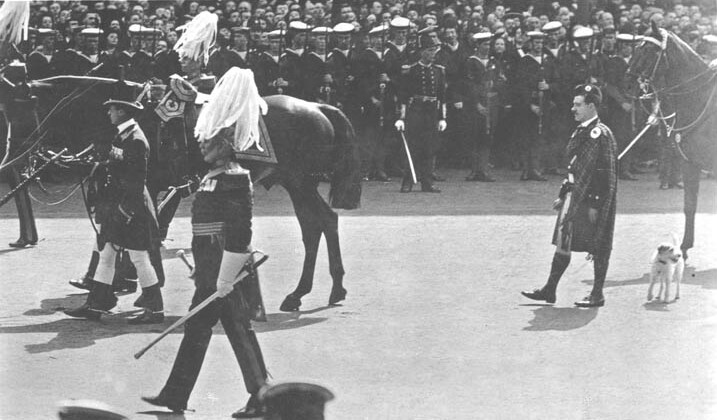
Figure 3: Caesar walking at Edward VII’s funeral
This leaves dogs with a privileged position in the hearts of Britain today—one might call it an obsession—but it’s one that could do with questioning. Dogs are loyal and affectionate, certainly; that was represented as long ago as the Odyssey, in which it is only Odysseus’s dog Argos that recognises him upon his return home. But they aren’t “furry children”, as Haraway points out. They are still a different species, and often problems like attacks come from treating them like babies or like humans, rather than what they are. Respecting them as separate species, but companions nonetheless, is a vital approach to building meaningful relationships with the dogs who rely on you and choose to come back to you when you call their name. Likewise, it’s important to remember our power over them—the powers and responsibilities we received in the domestication contract. The Scottish Parliament recently passed an act calling for stricter laws around dog adoption, to prevent people who don’t know what they’re doing from taking on that responsibility.
That responsibility is not the same as domination. The idea that dogs were the first animal domesticated has been used until dogs were seen as a symbol of human control over the nonhuman world. This was particularly powerful in their use in hunting in the early modern period, and many still treat dogs as inferior. As anthrozoology, animal studies, and other disciplines have gained popularity in recent decades, it is in a climate of humans increasingly looking to nonhuman agents in the world, as we try to change our ideas of human dominance amidst the environmental crises we face today. But the lives of many dogs are still shaped by human dominance, and how we violate the contract of mutual benefit. Of the four hundred dog breeds in existence, most only have genomes that go back to a genetic bottleneck from about two hundred years ago, meaning their genetic diversity is poor. Their appearances have changed markedly over that period, as seen by comparing modern specimens to the photos Queen Victoria’s family spent a fortune on in 1854. Breeds like pugs and dachshunds are known for the pain and suffering their respective skull shapes and backs—features they were bred for—give them. Dogs can be revered in Britain, but that is not necessarily to their benefit.
Their future, however, remains with us. We have a long history together and a responsibility to honour it, alongside the original contract that meant our collaboration came about to begin with. While it is important not to romanticise man’s best friend too much, it’s still a relationship that I know I appreciate enormously (and, I hope, so do my dogs.) We can change our attitudes of dominion and control to better appreciate that relationship and make it a fair one. And at the end of the day, when I’m walking my dogs on Hollingbury Hillfort and looking out to sea, I know I’m not the only one. Hundreds of dogs and their humans flock there every year, and uncountable dogs and their humans have walked that same walk in the last three thousand years, side by side, then and now.
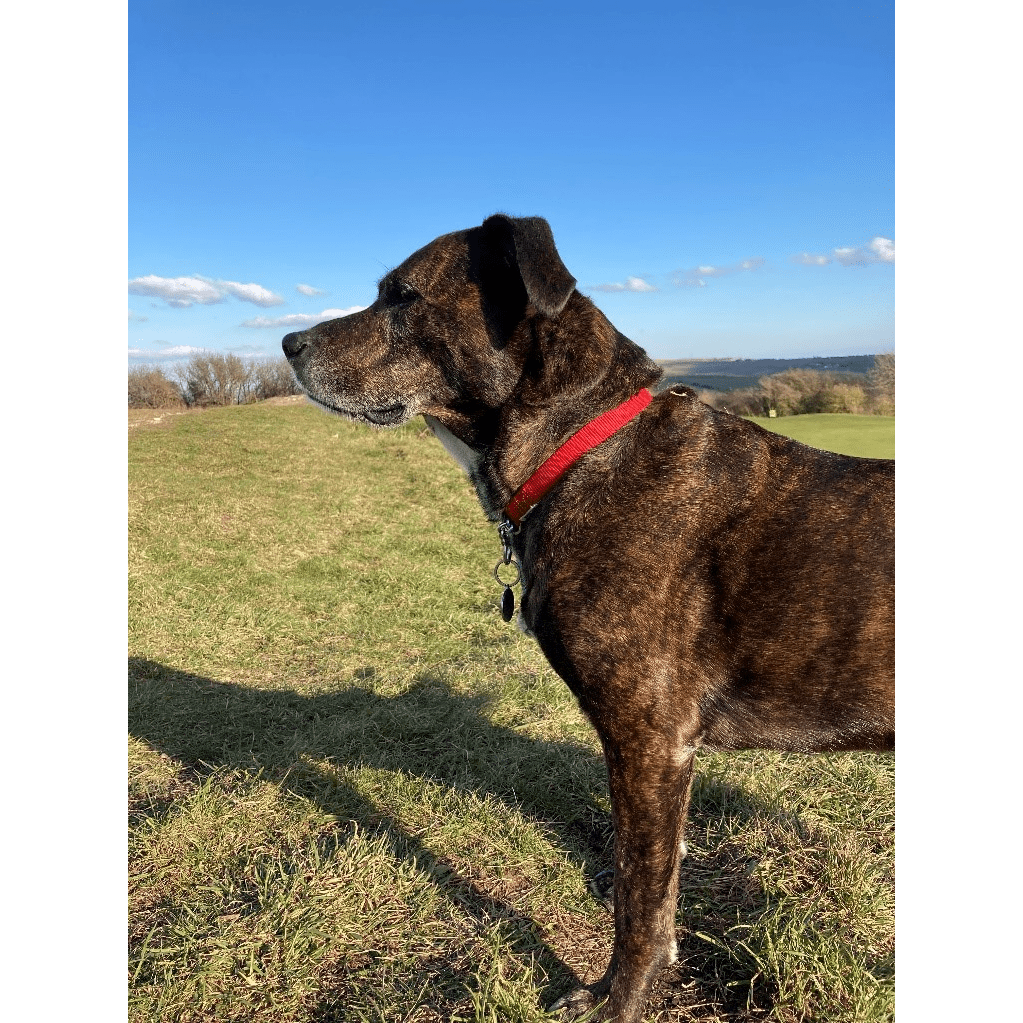
Figure 4: Author’s dog, Tia, on Hollingbury Hillfort
Bibliography
Fiennes, Richard and Alice. The Natural History of the Dog. London: William Clowes and Sons, 1968.
Gordon, Sophie. Noble Hounds and Dear Companions: The Royal Photograph Collection. London: Royal Collection Enterprises, 2007.
Haraway, Donna. The Companion Species Manifesto: Dogs, People, and Significant Otherness. Chicago: Prickly Paradigm Press, 2003.
Menache, Sophia. “Hunting and attachment to dogs in the Pre-Modern Period.” In Companion Animals and Us: Exploring the Relationship Between People and Pets, edited by Anthony L. Podberscek, Elizabeth S. Paul, and James A. Serpell, 42–60. Cambridge: Cambridge University Press, 2000.
Merlen, R. H. A. De Canibus: Dog and Hound in Antiquity. London: J. A. Allen & Co. Ltd, 1971.
Miklósi, Ádám. The Dog: A Natural History. Princeton: Princeton University Press, 2018.
Podberscek, Anthony L. Elizabeth S. Paul, and James A. Serpell. “Introduction.” In Companion Animals and Us: Exploring the Relationship Between People and Pets, edited by Anthony L. Podberscek, Elizabeth S. Paul, and James A. Serpell, 1–4. Cambridge: Cambridge University Press, 2000.
Roberts, Alice. Tamed: Ten Species That Changed Our World. London: Windmill Books, 2017.
Scottish Parliament. “Welfare of Dogs (Scotland) Bill.” Accessed January 24, 2025. https://www.parliament.scot/bills-and-laws/bills/s6/welfare-of-dogs-scotland-bill.
Image credits
Figure 1: Photo by author.
Figure 2: By Infykun – Own work, CC BY-SA 3.0, https://commons.wikimedia.org/w/index.php?curid=25551728
Figure 3: By Specific author unknown. – http://theroyalwindsorforum.yuku.com/topic/1200#.Tysc7sWffZd, Public Domain, https://commons.wikimedia.org/w/index.php?curid=157600200.
Figure 4: Photo by author.
 Retrospect Journal