
Written by Lauren Hood
Across the 1970s and 1980s, many Scottish workers in industrial employment faced uncertain employment futures, as industrial closures and redundancies led to increased unemployment for workers. As international companies decided to leave Scotland for the cheaper labour and expenses offered elsewhere, and as council and government grants given to encourage international companies to relocate to Scotland ran out, industrial communities saw unemployment and poverty soar. Scottish workers made attempts to persuade companies to keep their factories and jobs in Scotland, but resisting workers were rarely successful, except for three resistances to factory closures by female workers between February 1981 and March 1982. Workers from Lee Jeans in Greenock, Lovable Bra in Cumbernauld and Plessey Capacitors in Bathgate occupied their workplaces to protest company announcements of closure. Despite the success of these female workers, and the extensive role that women placed in Scottish industries, the memory of deindustrialisation in Scotland has been dominated by male experiences, with typically male industries of shipbuilding and coalmining coming to the forefront of the mind when discussing declining industries in Scotland.
The masculinisation of deindustrialisation is not just a Scottish issue, evident through commemorations of industrial work where forms of work commonly done by women are ignored. Popular British media portrayals of the impact of deindustrialisation on workers, such as Boys from the Blackstuff and Auf Wiedersehen, Pet, explore how experiences of unemployment and poverty were worsened. Other media productions, such as The Full Monty and Brassed Off, depict how declining male industrial employment impacted communities of men. Even Billy Elliot, perhaps the best well-known depiction of working-class responses to industrial job closures, is centered around the male experience.

Figure 1: The Shotts Giant
A similar focus on the industrial jobs lost by men is seen in Scottish commemorations of deindustrialisation. Figure 1 shows ‘The Shotts Giant’, a commemoration of Shotts’ mining past, which was unveiled in April 2013, with a plaque declaring that the aim of the statue was to “commemorate the industrial heritage of this area”. ‘The Shotts Giant’ was funded by North Lanarkshire Council’s Local Development Programme, alongside consultation from local community group Shape Up Shotts. Figure 2 is another North Lanarkshire commemoration of Scottish industrial history, showing Motherwell’s ‘Steelman’ statue, representing the town’s steel-making history. Unveiled on the land where the Ravenscraig steel factory stood, this statue offers a constant reminder of the area’s historical connections to the steel industry and the lifestyles which revolved around industrial work.

Figure 2: The Steelman in Motherwell
The time, resources and care placed into preserving Scottish male industrial work shows how valued and respected this work was across Scotland, with councils, local artists and community organisations collaborating to commemorate their area’s industrial past. However, the focus on male industrial heritage has left the industrial work carried out by Scottish women largely forgotten. Scottish women have a long and varied history in industrial work, from piecework in the textile industries of Paisley to watch production in Dundee. This work tends to be categorised as casual – just women working to earn some spending money for the family. However, this trivializes women’s industrial work and has played a substantial role in its lack of commemoration. Women workers played crucial roles in Scotland’s experience of deindustrialisation, yet their experiences have continuously been ignored. Andy Clark, a true pioneer of discussing the role of women in Scottish deindustrialisation, has argued that this omission of women from deindustrialisation has created a “gendered memory” of the past, where the experiences of men have become central to Scotland’s recollection of industrial work. The extent of Scotland’s disregard for remembering women’s industrial work becomes clear when looking at the unique resistance Scottish women offered to deindustrialisation and the threat of losing their jobs. Over the course of fourteen months, Scotland saw three separate groups of women workers resist the closure of their workplace by occupying it.
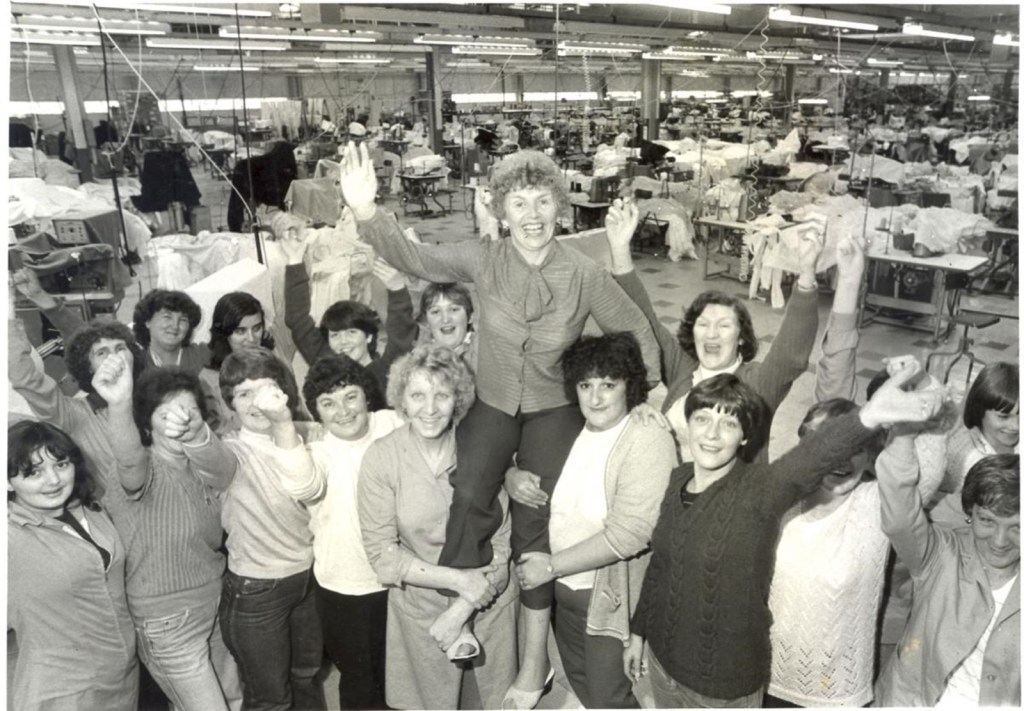
Figure 3: Workers from the Lee Jeans factory celebrating their success, August 1981
The Lee Jean factory occupation began after plans to relocate the factory to Northern Ireland and subsequent job losses were announced. The factory occupation began in February of 1981 after staff proposals to minimize the extent of job losses were unsuccessful, with workers voting to start a sit-in occupation once their shift ended. This occupation involved an around-the-clock worker presence in the factory, which lasted for seven months. The factory occupation became a community effort, with local butchers providing the workers with meals and other groups of workers protesting in support. The extensive community support contrasts with the actions of the workers’ union representatives, who withdrew their support amid the sit-in. The effort of the Lee Jeans factory workers was rewarded seven months into their occupation, as the factory was sold to Inverwear Limited.
Just eleven months after the Lee Jeans factory occupation began in Greenock, workers at the Lovable Bra factory in Cumbernauld were told that after fifteen years of operation, their factory would be put into receivership. Factory occupation began in January of 1982 after rumours of substantial job losses, with workers aiming to ensure that no equipment left the factory and that they could reduce the chance of closure. Workers continued their clothing production during regular working hours and occupied the factory at night, hoping that this would encourage the sale of the factory. The workers received a factory closure announcement in February; subsequently, they began an organised effort to protest and picket at the factory warehouse. The factory was bought by Modewear Limited in March, allowing ninety-two workers to return to work.
Workers of Plessey Capacitors in Bathgate began their occupancy after closure announcements in March 1982. Workers believed the motivation for closure was the company’s desire to relocate for cheaper labour, after job redundancies throughout the 1970s. The workers were supported by other Plessey employees across Britain, with workers refusing to take work transferred from the Bathgate site, sending donations to assist with the occupation in Bathgate and conducting their own strikes. The factory was sold to Arcotonics, saving the jobs of eighty workers.
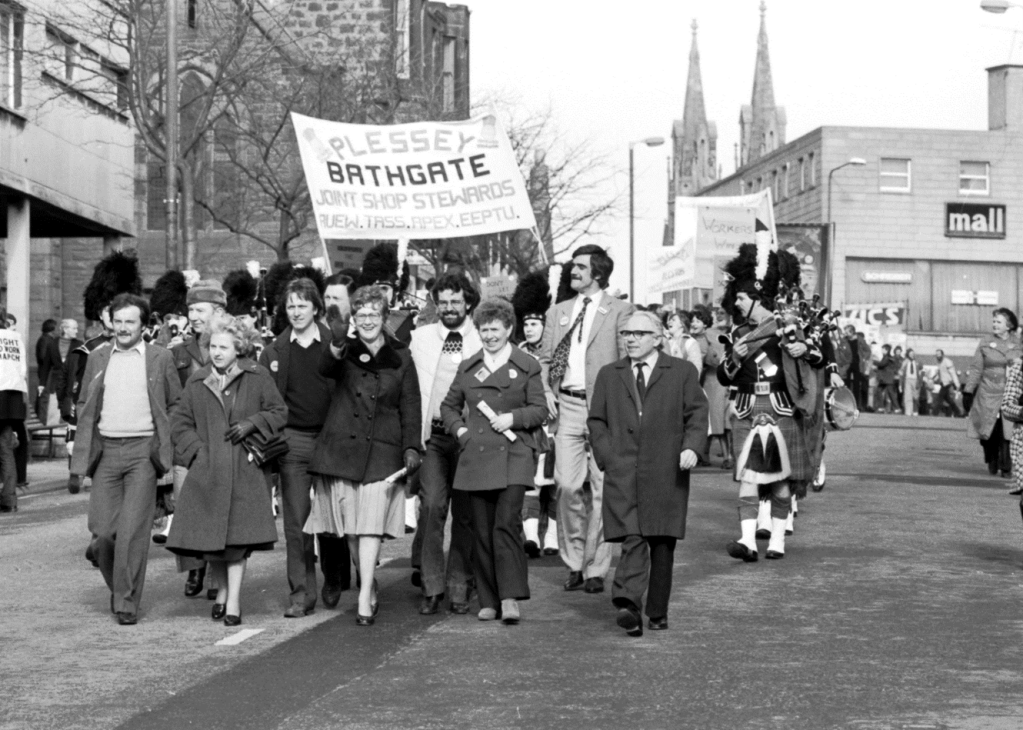
Figure 4: Community support for the Plessey occupation in March 1982
The stories of the occupations in Greenock, Cumbernauld and Bathgate are just a glimpse into the remarkable history of Scottish women in industrial jobs. Women worked in the thread mills of Paisley, with their work causing many health problems. The noise levels in factories led to hearing loss amongst workers, while the operation of machinery caused back problems for others. Most workers were not aware of the implications this work could have on their health when they were carrying it out. The wage system of workers being paid per piece “financially incentivised” workers to put their health at risk, according to William Burns. Scottish women played crucial roles in Scotland’s industries, often receiving less pay and poorer career progression compared to their male peers, alongside the risk of long-term health problems caused by their work. Their stories deserve to be remembered and preserved by their communities in a similar way that male industrial experiences have been. The impact of Scotland’s masculine remembrance of industrial work has overshadowed the stories of thousands of women, leaving our national memory of deindustrialisation and its victims incomplete.
Bibliography
Burns, William. “”We Just Thought We Were Superhuman’: An Oral History of Noise and Piecework in Paisley’s Thread Mills”. Labour History 119.1, 2020.
Clark, Andy. Fighting Deindustrialisation: Scottish Women’s Factory Occupations, 1981-1982. Liverpool: Liverpool University Press, 2023.
Clark, Andy. ““Successful Sit-Ins seem a Particularly Scottish Phenomenon”: Gender, Memory and Deindustrialization”. International Labor and Working-Class History 105, 2024.
Clark, Andy & Robertson, Margaret. “‘We Were the Ones Really Doing Something About It’: Gender and Mobilisation against Factory Closure”. Work, Employment and Society 33:2, 2019.
Clark, Andy & Gibbs, Ewan. “Voices of Social Dislocation, Lost Work and Economic Restructuring: Narratives from Marginalised Localities in the ‘New Scotland’”. Memory Studies 13:1, 2020.
Images:
Figure 1: The Shotts Giant by Jason Paterson. Photographed by Gordon Baird. Accessed via https://www.open.edu/openlearn/society-politics-law/the-plessey-factory-occupation-bathgate-1982
Figure 2: The Steelman by Andy Scott. Photographed by John McKnight. Accessed via https://www.flickr.com/photos/35857319@N05/19159305341/in/photostream/
Figure 3: ‘With victory secured, Lee Jeans workers hold shop steward Helen Monaghan aloft in celebration, August 1981’. Greenock Telegraph. Accessed via the Open University: https://www.open.edu/openlearn/society-politics-law/the-lee-jeans-occupation-greenock-1981
Figure 4: ‘Demonstration in Support of the Plessey Occupation, March 1982’. The Scotsman Publications Ltd. Access via The Open University: https://www.open.edu/openlearn/society-politics-law/the-plessey-factory-occupation-bathgate-1982
 Retrospect Journal