
Written by Olivia Hiskett
Whilst the USSR claimed to be a genderless state, liberated from the oppressions of patriarchy alongside class, the lived experience of this totalitarian system was vastly different. The Gulag, an acronym for the “Main Administration of Camps” in the Russian language, acted as a defining example of the inconsistency between Soviet principles and actual conduct. The Gulag served a dual purpose. It was a tool of political repression as much as it was a source of labour to build a socialist economy. The USSR’s official doctrine was that of gender equality, however, the Gulag is demonstrative of the inaccuracy of Soviet claims of egalitarianism.
The Bolshevik Revolution claimed to usher in a new radical society wherein women would be liberated from their servitude to both the patriarchy and the class system under a Marxist ideology. Discriminatory laws and constitutions were replaced, and Article 22 of the new Soviet constitution provided legal equality for all citizens. The constitution of the USSR solidified these rights in 1936 through Article 122 which was designed to enshrine equal rights and pay into the core of Soviet society. In the 1930s and as labour shortages increased during the Second World War, women began to have an increased role in heavy industries. The female workforce was essential to the upkeep of the Soviet economy. Despite being often improvised and chaotic measures, the 1930s saw policies such as communal childcare and housing to make Soviet women active and equal members of public life. With roles as both workers and mothers, the “New Soviet Woman” was supposedly emancipated from traditionalism. However, whilst industrialisation under Stalin saw women take up a larger role in the work force, the concept of the patriarchal family prevailed. Family legislation was promoted under Stalin to increase women’s reproductive labour and incentivise childbearing to combat the huge demographic impact of WWII. Women under Stalinism and beyond carried a “double burden”. They undertook domestic tasks without any financial compensation as well as external labour.
This role can be seen as an example of “double think”, where two contradicting beliefs are held as true at the same time. Women were equal citizens, but also subject to the whims of the Soviet economy and expected to remain predominantly within the home. The Gulag system can be another example of this contradiction; forced labour prisons in a supposedly egalitarian society. Its division of prisoners into slave labourers acted as paradoxical necessity to maintain growth in living standards in a state that claimed to be founded on classlessness. Although the population of these camps were mostly male, the female proportion of inmates totalled 30 per cent in 1947. It acted both to exploit labour and to socially engineer a population that was ideologically homogenous. It sought to punish and isolate dissenters. Labour was compulsory in these camps. Treatment was particularly harsh for those sentenced under Article 58, or political prisoners, with cruelty resulting in high rates of death and illness with 3.7 million official deaths between 1929 and 1953.
The treatment of women in the Gulag differed from that of men, as memoirs and oral histories suggest that women faced gendered violence. The many accounts feature sexual and physical violence. The perpetrators of sexual violence were not restricted to criminals; it was often camp guards. Camps were particularly unsafe for women who often had to rely on “camp husbands” to protect themselves from such abuse, in exchange for sex. Although some scholars have argued that this barter of sex for food or protection gave women some agency within the camps as it gave women a chance to use their sexuality to reverse power dynamics, this must be situated in the context that there was little alternative and women were often coerced into believing that this was there only option. For example, in one testimony from a camp survivor stated that she was told that “in here a woman just must have a good camp husband if she doesn’t want to starve”. Therefore, it is unclear whether these women retained any meaningful autonomy. This demonstrates that in camps, supposedly government-controlled spaces, women found themselves at the mercy of the men surrounding them. Sexual relations, as in wider society, revealed power relations within the camps and suggested that women commanded or could gain very little opportunities for survival in the camps without a male counterpart or exploitation. Work in the Gulag was also gendered, with women being assigned tasks that was typically feminine such as sewing or lighter agricultural work. Although this can be partly attributed to the physical differences between the sexes, it also suggests that the “emancipation” of women through industrial labour was only a tool of economic growth rather than genuine feminist policy. Therefore, the Gulag serves to represent how women under Stalin were not perceived as equal by their fellow comrades, despite it being enshrined in law.
Pregnancies occurred in the camps, with some even having labour wards, yet the quality was dire and sanitary conditions unsuitable. Infant mortality was high, and children were removed from their mother once breastfeeding had ended. This separation from children is often cited in memoirs as one of the most painful aspects of the Gulag. Women faced a unique position in the Gulag as they also bore the responsibility for finding food and emotionally supporting their children. This gendered identity as a mother did not dissipate within the Gulag, and imprisonment made it even harder to accomplish this socially and culturally engrained model behaviour of a “New Soviet Woman” who was an ideal mother. Therefore, the Gulag acts to represent the impossibility of embodying the exemplary citizen when the one’s circumstances cannot allow it. How could women in the USSR achieve this epitome of motherhood when they were also facing demands of full-time employment? The Gulag can operate as an extreme example of the double burden that women across the USSR faced.
Many women were imprisoned not because of their own actions, but as a way of punishing members of their families. Often wives were arrested alongside their husbands after 1937 and women with husbands or fathers who were convicted of treason were imprisoned for the same crime. This demonstrates firstly that women were seen not to have any political agency from the men in their lives as they were often accused of conspiracy to treason alongside their family. In this way they were not perceived as individuals with distinct identities from their traditional family orientated roles. Secondly, it suggests that the government of the USSR viewed women as no more than pawns in their system of terror as they used women and families as bargaining chips for confessions and punishments. Women were also unjustly imprisoned due to Decree of June 1940 which enforced labour discipline. If a mother or carer was unable to work because of childcare responsibilities, then they could face consequences for being unable to carry this double burden of caring and employment. Women who were forced to leave work to care for sick children were sentenced to the Gulag under this law. Evident here is that although legally women were equal, policies such as childcare had not been put in place to ensure that women were able to meet both the requirements as labourer and mother under Stalinism.
The perception of a woman’s role in the USSR can also be garnered from analysing the reasons and timeframes of Gulag releases. After the war the USSR became increasingly focused on the family and private life as they sought to restore a population. There were releases from prisons or clemency granted to women with children. The state sought to reduce the burden of dependency upon the state and release those from prison who would traditionally take on care giving roles. This is reflected in the proportion of female prisoners in the Gulag which decreased from 30 per cent in 1945 to 17 per cent in 1951. This clearly demonstrates that whilst the USSR sought to use the Gulag to enforce political and social heterodoxy, the attitude towards women was that they were more useful providing free reproductive labour, than they were dangerous as free citizens.
The inconsistencies between the expected role and legal status of women, and the actual opportunities and lived realities of women under the totalitarianism of Stalinism were vast. The USSR rarely supported policies or ideas of gender equality unless it served the goals of the government such as contributing to a labour shortage or providing domestic care. Women’s treatment within the Gulag system demonstrates that claims to gender equality in the USSR was a political weapon, with women detained often to punish men, rather than being treated as independent and equal individuals. The Gulag was not completely isolated from the rest of society, with the gender hierarchies of the outside world asserting themselves onto the camps.
Bibliography
Alexopolous, G. “Exiting the Gulag after War Women, Invalids, and the Family,” Jahrbücher für Geschichte Osteuropas. (2009)
Barenburg, A. The Gulag a Very Short Introduction Oxford University Press, 2024
Bell, W. “Sex, Pregnancy, and Power in the Late Stalinist Gulag” Journal of the History of Sexuality (2015)
Budryte, D. “Deportation and Gulag as Gendered Process” in The Routledge Handbook of Gender in Central Eastern Europe and Eurasia eds. Katalin Fábián, Janet Elise Johnson, and Mara Lazda. Taylor & Francis Group, 2021.
Eremeyeva, K. “Worker, victim, consumer: female images in Soviet satire” Heinrich Boll Stiftung, 2021, Accessed 13/05/2024: https://ua.boell.org/en/2021/10/22/trudivnytsya-zhertva-spozhyvachka-zhinochi-obrazy-v-radyanskiy-satyri
Gregory, P. The Women of the Gulag, Hoover Institution Press, 2013.
Kis, Oksana, Survival as Victory: Ukrainian Women in the Gulag, Harvard University Press 2021.
Lui, C. “Stalin’s New Soviet Woman” Sociology Mind, 9, (2019)
Warshofsky Lapidus, G. “Women in Soviet Society: Equality, Development, and Social Change” in Stalinism: The Essential Reading, ed. David L. Hoffman, University of California Press, 1978.
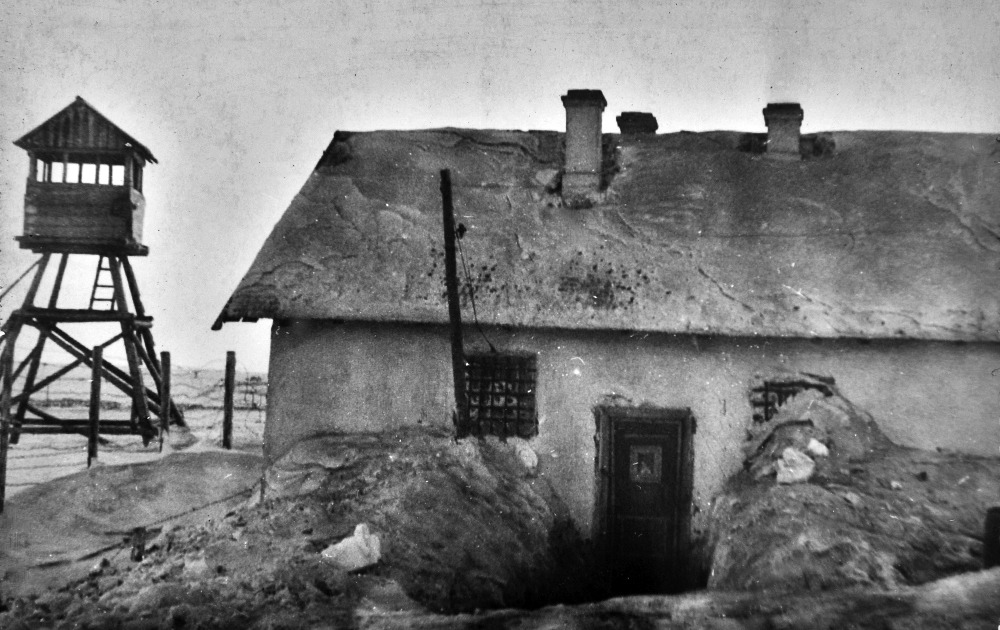
Featured image credit: Detention cell (“penal isolator”) of a camp in the Vorkuta Region, 1945 | Source: Russian Federation State Archive, Moscow. Licensed under the Creative Commons Attribution-Share Alike 3.0 Unported license. Accessed via Wikimedia Commons: https://commons.wikimedia.org/wiki/File:Vorkuta.jpg
 Retrospect Journal
