
Written by Maia Bennett
In 1665, Thomas Jeamson’s Artificiall Embellishments promised to unlock the secrets of beauty for early modern women, offering a series of recipes and practices designed to ‘procure beauty.’ Historians who have engaged with this text so far have done so through the lens of the era’s anti-cosmetic debates, but few have examined how women themselves might have actively engaged with Jeamson’s guide. To fill this gap, recent feminist scholarship from Edith Snook and Anu Korhonen has recognized women as active participants in beauty culture. They used texts like Artificiall Embellishments to assert control over both their appearance and identities. This essay will follow the work of Snook and Korhonen to explore the women who might have engaged with Artificiall Embellishments and their motivations for doing so.
The recipes in Jeamson’s text offer more than just beauty tips—they reveal much about the class status of the women who may have engaged with them. While Snook argues that the reader’s ability to purchase necessary ingredients suggests at least an upper-middle-class position, Francis Dolan opposes this, claiming that instructional texts were marketed to ‘frugal’ women wanting to ‘make their own toiletries rather than purchase costly imports.’ In the case of Artificiall Embellishments, Dolan’s argument holds more weight, given the accessibility of most of the ingredients required. For instance, one recipe to whiten a sun-tanned face calls for:
White Bryony water two drams, rose water one ounce, the white of one egg, tartar two drams, verjuice one ounce; mix them and wash the face with it, then dip a linen cloth in it and lay it to the face all night.
Evidently, most of these ingredients were commonplace and could be harvested at no extra cost to the reader. Eggs would be found in any pantry, Culpeper’s Complete Herbal notes that White Bryony grows ‘on banks or under hedges, throughout this land,’ and roses were ‘common in our gardens.’ Verjuice, a vinegar-like juice made from unripe grapes, was a common contemporary preserving and flavoring agent, as evidenced by its appearance in 78 per cent of the recipes in the AW Book of Cookrye. Similarly, the ‘oil of tartar’ Jeamson refers to is likely potassium bitartrate, known today as cream of tartar, which could be collected as a byproduct of household winemaking. This suggests Jeamson’s target audience was a domesticated housewife. Even if the reader lacked some of these ingredients, Jeamson offers five alternative recipes to whiten a tan’d visage, so the reader could try a different approach rather than purchasing the missing ingredient. This profile aligns with a middle-class woman—one with access to a well-stocked pantry, but without the means to buy high-end cosmetics.
Snook’s assumption of a wealthier reader becomes relevant when considering the time commitment required to prepare these recipes. Such time-intensive practices likely excluded lower-class women engaged in more labor-intensive work. For the housewife who turned to Artificiall Embellishments, the time invested in beautification implied that basic needs, such as food and shelter, were comfortably met, suggesting a degree of financial stability. However, this woman was not so wealthy that she could afford pre-made cosmetics. Instead, she occupied a position where personal maintenance conveyed social aspirations—without full access to the tinctures of the nobility and elite cosmetic trendsetters. Additionally, in the context of contemporary humoral science, these women might have seen these recipes as a means of balancing their humors—suggesting the reader may have experienced class struggles that led to an insufficient diet or an unclean environment.
A key question is why women engaged with manuals that critiqued their appearance and prescribed ways to change it. While Artificiall Embellishments is rooted in the humoral tradition, which aims to restore balance to the body, its emphasis on outward appearance—particularly the condition of the skin—makes it clear that the primary appeal of Jeamson’s work was likely social, not medical. Despite Jeamson’s Bachelor’s of Science from Oxford, it seems the women who turned to his manual were not seeking scientific knowledge but rather hoping to project a specific social identity.
In early modern society, where there was no welfare system to protect the poor from malnutrition and disease, the phrase ‘health is wealth’ could be applied quite literally. By removing the afflictions associated with an underprivileged lifestyle, a woman could artificially present herself as wealthier than she was. Artificiall Embellishments reinforces the link between beauty and wealth by connecting chapped, wrinkled skin with poor air in polluted, crowded cities of the laboring classes. In contrast, Jeamson attributes unblemished skin to the wealth of being able to afford ‘meat of good nourishment’ and a fair complexion, made possible by avoiding harsh air associated with outdoor labor. In this way, skin characteristics could serve as a stand-in for wealth, creating a façade of social status.
Although this may seem like an ineffective disguise, in The Anatomie of Abuses, Philip Stubbes laments that ‘one can scarcely know who is a noble woman… from them of the meaner sorts’. While Stubbes’ critique was likely exaggerated by his disdain for cosmetic practices, it reflects an anxiety that beauty practices prevented easy distinctions between different social classes based solely on appearance. Consequently, for women of lower or middle-class backgrounds, investing time and effort into beautification could serve as a form of social masquerade, allowing them to project the appearance of wealth and refinement despite their modest circumstances.
Francis Dolan argues that women turn to these texts to conform to societal beauty standards, rather than out of personal desire. He points to the fact that Artificiall Embellishments is a guide to achieving what Jeamson viewed as attractive traits in women, using this as evidence that women shaped their appearance ‘as the male gaze instructs’. Dolan’s argument holds some validity, as beauty was indeed a form of social currency—particularly in the context of marriage and economic security. This is exemplified in the story of Jane Martindale in To See and Be Seen: The Life of Adam Martindale. After struggling financially in London, Jane is ‘saved’ from losing her dignity and status when a man marries her due to her beauty. Therefore, it makes sense that women would seek to appeal to male ideas of beauty, as this could be a means of securing social stability.
However, as Snook insightfully argues, focusing exclusively on the male gaze limits our understanding of why women engaged with these texts. Rather than simply conforming to male expectations, women may have used Artificiall Embellishments to assert a degree of ‘female authority’ over their own bodies. This view aligns with Anu Korhonen’s coherent argument that the male imagination falsely ‘envisioned women as performing for their benefit’. In contrast, women themselves might have used beauty as a creative act—not merely as a tool for attracting men. Margaret Cavendish’s The Worlds Olio, for example, asks, ‘If Art be commendable, why not in the face?’ She seeks to reclaim the negative connotations of ‘painting’ at the time, drawing a parallel between the skills required for artistic painting and those used in cosmetic practices. In doing so, Cavendish reconceptualizes beauty as an expression of personal agency rather than mere vanity. Furthermore, Snook observes how Artificiall Embellishments’ moralist approach brought scientific debates into the domestic sphere. Considering that most readers—likely middle-class housewives—had minimal formal education, this could have been empowering to their sense of self beyond contemporary feminine norms.
Ultimately, by reading Artificiall Embellishments through a feminist lens, historians can better explore the intersections of gender, class, and identity in early modern society. These manuals were not merely used as tools to attract male attention, but also as means for women to assert personal agency, enact social aspirations, and navigate the expectations placed upon them. This serves as a valuable reminder of the importance of critically engaging with historical sources produced by hegemonic groups – a perspective that holds relevance across all areas of historical inquiry.
Bibliography
Dolan, F. E. ‘Taking the Pencil out of Gods Hand; Art Nature and the face painting debate in Early Modern England.’ PMLA 108, no.2 (1993): 224-239.
Jeamson, Thomas. Artificial Embellishments. Oxford, 1665
Korhonen, Anu. ‘To See and To Be Seen: Beauty in the Early Modern London Street,’ Journal of Early Modern History 12. no.3-4 (2008): 335-360.
Snook, Edith. ‘’The Beautifying Part of Physic’: Women’s Cosmetic Practices in Early Modern England’ 21-37. In Women, Beauty, and Power in Early Modern England. London: Palgrave Macmillan, 2011.
Stubbes, Phillip. The Anatomie of Abuses. Edited by Arthur Freeman, 1-272. New York: Garland Publishing, 1973.
Woolley, Hannah. The Gentlewoman’s Companion, or, A guide to the Female Sex. London, 1682.
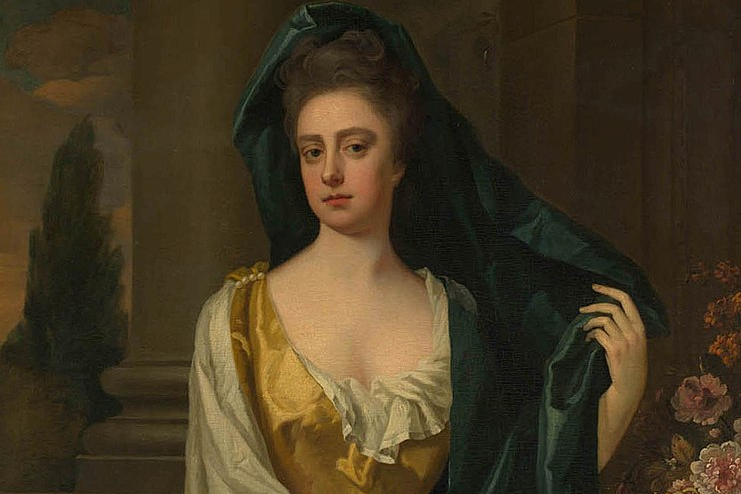
Featured image credit: Portrait of a Woman by Michael Dahl, c.1696-1743. Accessed via Wikimedia Commons: https://commons.wikimedia.org/wiki/File:Portrait_of_a_Woman_MET_26_Woman_a.jpg
 Retrospect Journal
